Showing posts with label Shinkansen. Show all posts

Wednesday, June 14, 2023

Life In Japan: Teaching Peace

As I write this, my wife Masumi is in Hiroshima with the entire 6th grade of her school, over eighty students. They’re on a field trip to visit the Peace Park and the Peace Museum.
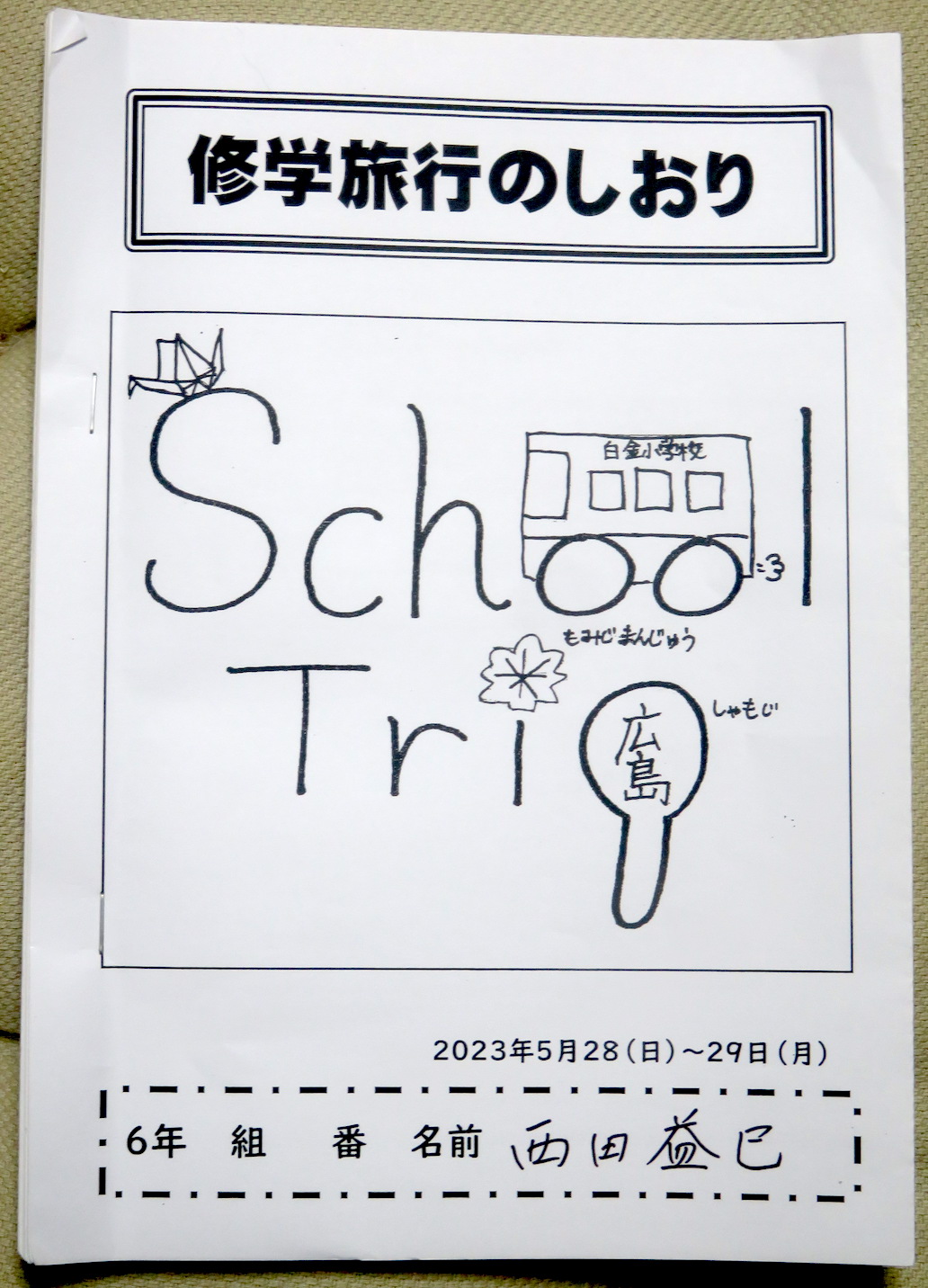
This trip is something that they do every year. And it’s common among the elementary schools here in Hyogo and other prefectures throughout Japan. When the kids are in their last year, they go to this world-famous city to learn about the horrors of war.

Not only is it a vital learning experience, but it’s quite an adventure, even if it’s only two days. Masumi’s kids took the Shinkansen — high-speed bullet train — from Kobe, and traveling at up to 320 km/hr (200 mph), it only took an hour-and-a-half to get there. By car it’s a five hour drive.

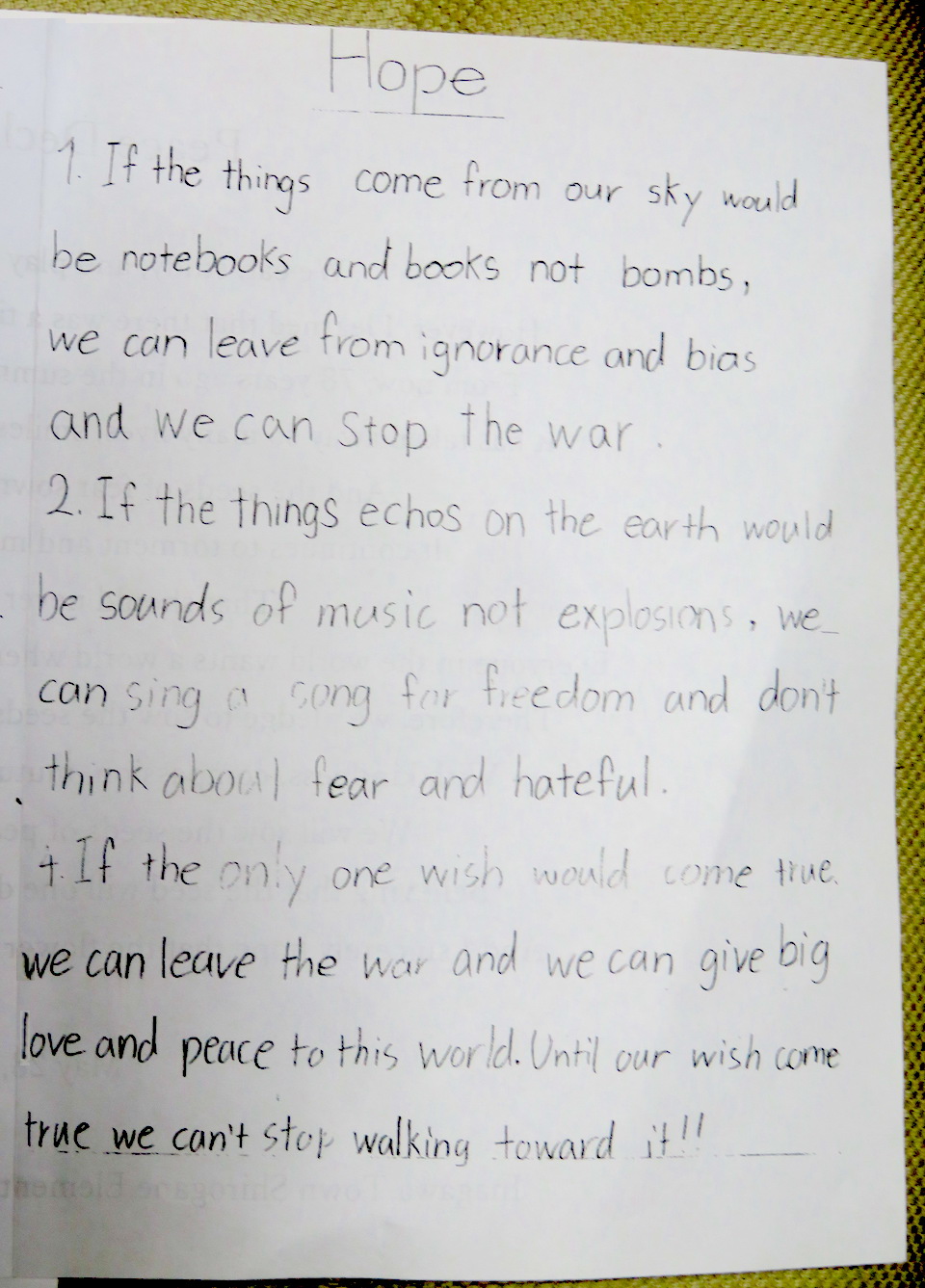
First day, they went to the Peace Park and sang a beautiful song called “Negai” — which means ‘hope’. I recorded Masumi’s piano performance of the song and she played that over a portable speaker at the park. The kids sang this beautiful, hopeful song.

Here are the lyrics.
There’s so much to see and take in. The museum is a phenomenal experience. Masumi took me to it years ago. When I left, I decided that everyone on the planet — especially Americans, who seem to think war is fun and games — should spend a couple days learning both the real truth about the atomic bombing of Hiroshima and Nagasaki, and understand that even having one nuclear weapon is sheer insanity. Currently, the US has 5,428. Russia has 5,977. Plus seven other nations additionally have 1,360 among them. Apparently, the human species has a death wish embedded in its DNA. Is there a vaccine for total madness?
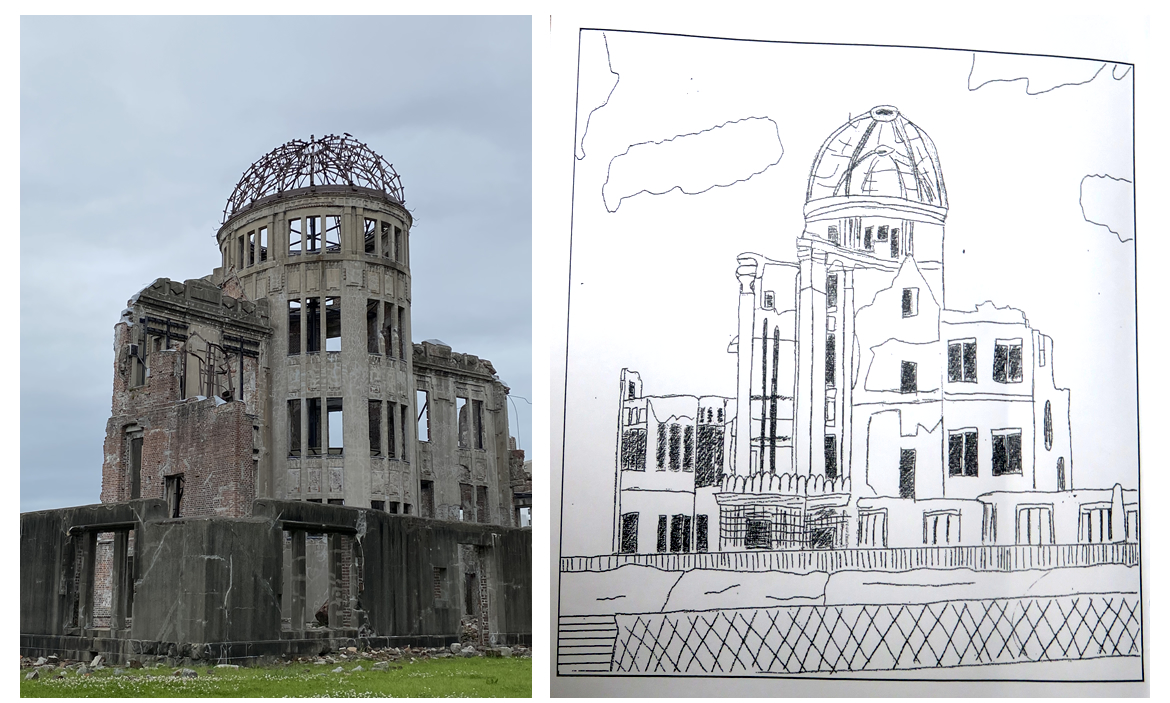
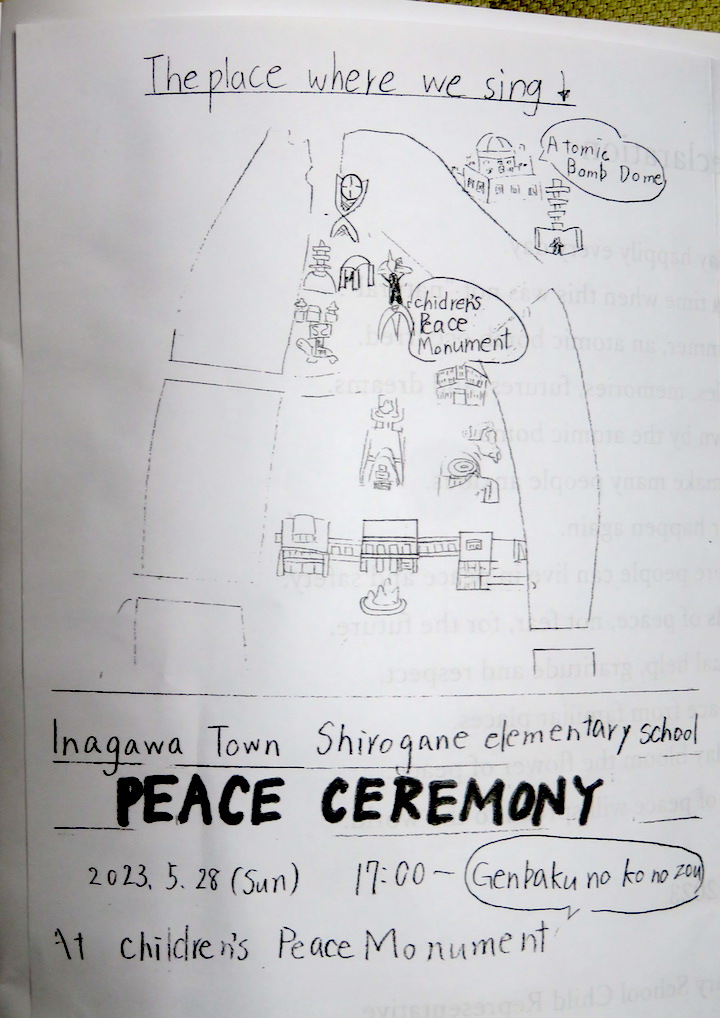
The “dome” is the only structure to survive the atomic bomb, which detonated about 500 feet directly overhead. The photo is what it still looks like, the drawing is a rendering by Masumi’s 6th grade students.

Japan has no nuclear weapons. According to its constitution, specifically and unambiguously stated in Article 9, Japan can only have a purely defensive military.

Unfortunately, the reality of the “defense” force here is not that squeaky clean. The U.S. right now is encouraging a more aggressive Japanese military, one that will support U.S. efforts to contain China and maintain its domination over the rest of the world. Perhaps it will come as a surprise that the U.S. currently has 56 military bases in Japan, meaning it is still an occupied country — from a war that ended almost eight decades ago!

Thus, there is internal tension here in Japan about war and peace, just as there is in the U.S. and most countries. The people if Japan — the everyday citizens — have long memories. Japan was almost totally destroyed as a result of their attempt to conquer this part of the world. Lesson learned. Even now, most regular people want no part of it.

BUT . . . there are highly nationalistic individuals who’ve stayed in power. The ruling party — the one initially installed and still favored by the U.S. warmongers — has been continuously in control of the things since the U.S. dictated the terms of surrender to Japan after World War II. The U.S. has kept them securely under its thumb, assuring that 1) Japan never entertains again the idea of becoming an independent world power, and 2) Japan dutifully serves the national interests and geopolitical ambitions of U.S. empire. World domination-obsessed American puppet masters play on the nationalistic leanings of this group, who proudly want a powerful Japan as a major player on the world stage, and promote divisiveness and hostility, making sure that Japan is never on amicable terms with any other regional entities. Though Japan officially claims to only be committed to “self-defense”, it has a formidable fighting force, including submarines, fighter jets, infantry — far more than it needs to defend the homeland.

Which makes the extra-curricular education of the trip to Hiroshima even more vital. As with America, it’s the people who must keep the government in check, applying constant pressure to the official leadership to embrace diplomacy and peace.

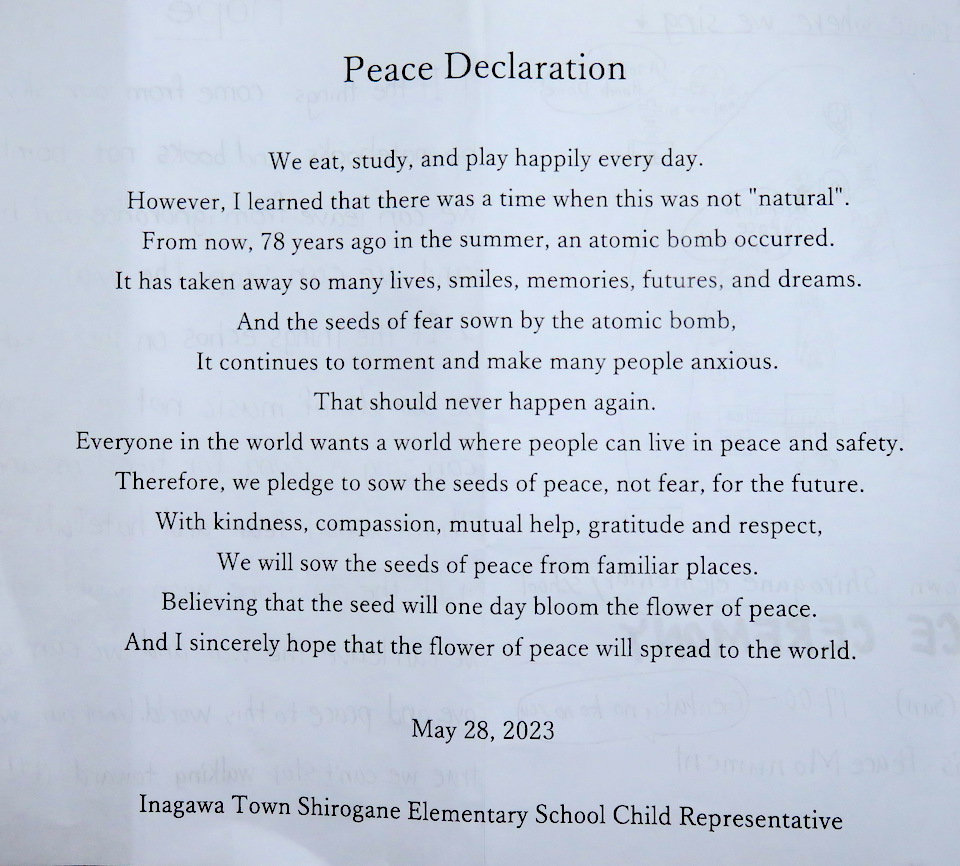
It’s obvious that Masumi’s students get it. They wrote this declaration for their visit.
I’m so fortunate to be married to someone as deeply committed to ending war as I am. Unfortunately, not everyone Masumi works with is so enlightened. Prompted by U.S. propagandists, the government and media — just like in the U.S. — spread fear, mainly of China and North Korea, and try to convince the everyday citizens of the need for a bigger, better-equipped military. Of course, much of the additional equipment would come from the U.S. weapons manufacturers. How convenient!

Peace is a tough sell in today’s world. All we can do is tell the truth and hope for the best.


[ This originated at the author's personal website . . . https://jdrachel.com ]


Life In Japan: Teaching Peace | John Rachel


Friday, June 24, 2016

Kingda Ka, oh baby!

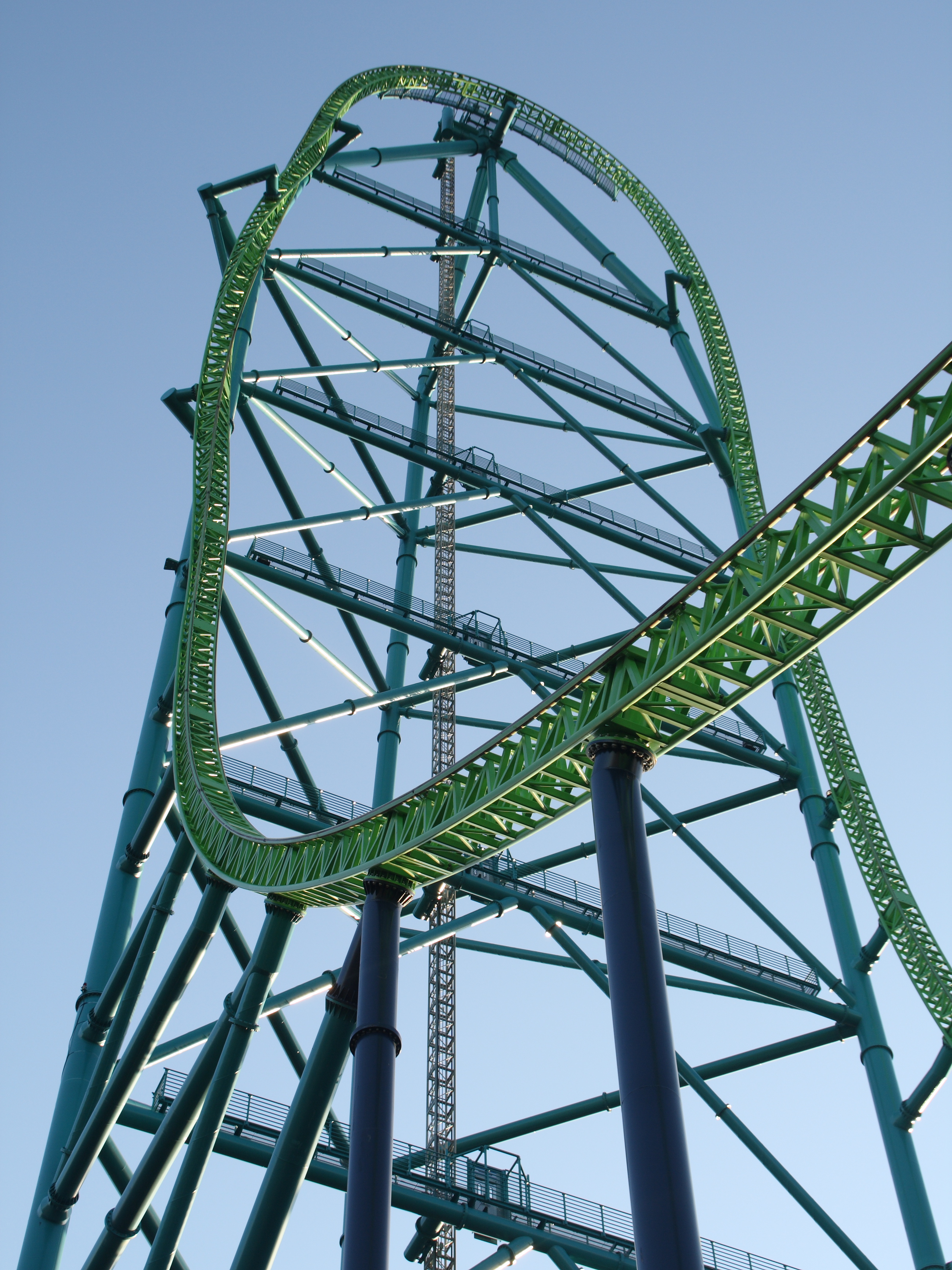
Kingda_Ka_Tower

I love my wife's perspective on America. 

She recently drew my attention to Kingda Ka, one of the world's fastest and probably most frightening roller coasters.  It whips riders straight up, then plunges them straight down, in a shrieking, brain-compressing drop of 418 feet.  Maximum speed?  128 MPH!  You can see from the POV YouTube video at the end of this posting, this ride is most definitely not for the faint-of-heart.

Kingda Ka is one of the main attractions at Six Flags Great Adventure in Jackson, NJ and has no shortage of takers.  These would be the same people who like base-jumping from the Eiffel Tower and bobbing for apples in a wingsuit in the jet wash of a 747.

Back to Masumi, my brilliant Japanese wife.


Her take on this?  Well, after I watched the video and read about this spectacular display of American ingenuity -- an astonishing engineering achievement by any measure -- she smiled and said:

"So . . . America can build a high-speed jet coaster [ roller coasters are called jet coasters here ] but they can't build a high-speed train?"

Now, this was not America-bashing.  Masumi has no particular problem with America -- that is, other than a couple of atomic bombs in 1945 and all of the raping and murders that go on in Okinawa because of the U.S. military base there.  Despite these minor caveats, she has no repressed antipathy toward America.

It was just a comment, an expression of astonishment at the incongruity of it all, as in:  "You can send a man to the moon but you don't have any way of sewing buttons on a shirt?"

Maybe this comes as a shock to most Americans:  But trains as a form of transportation are completely taken for granted in most of the industrialized world.  China, Italy, Great Britain, Switzerland, Austria, France, even South Africa, India, Malaysia, and Thailand, and of course Japan, are just some of the countries where I have personally used trains to get around.  In most places, trains are like flush toilets, running water, electricity, roads, and now WiFi.  They are a standard component of everyday life, just like cars in the U.S.  You want to go somewhere?  You take a train.  

Every day around 7:30 am, the trains here are full of kids on their way to school and businessmen on their way to work.

Beyond regular train service, high-speed trains -- high-speed is considered being able to sustain a speed of 200 MPH, though many go much faster -- are, among other places, up and running in China, Spain, here in Japan, France, Sweden, Turkey, the United Kingdom, Germany, Italy, South Korea, Russia, Finland, and even Uzbekistan.  China leads the world with almost 12,000 miles of high-speed rail, Spain is second with over 1,900 miles, and Japan is third with over 1,650 miles.

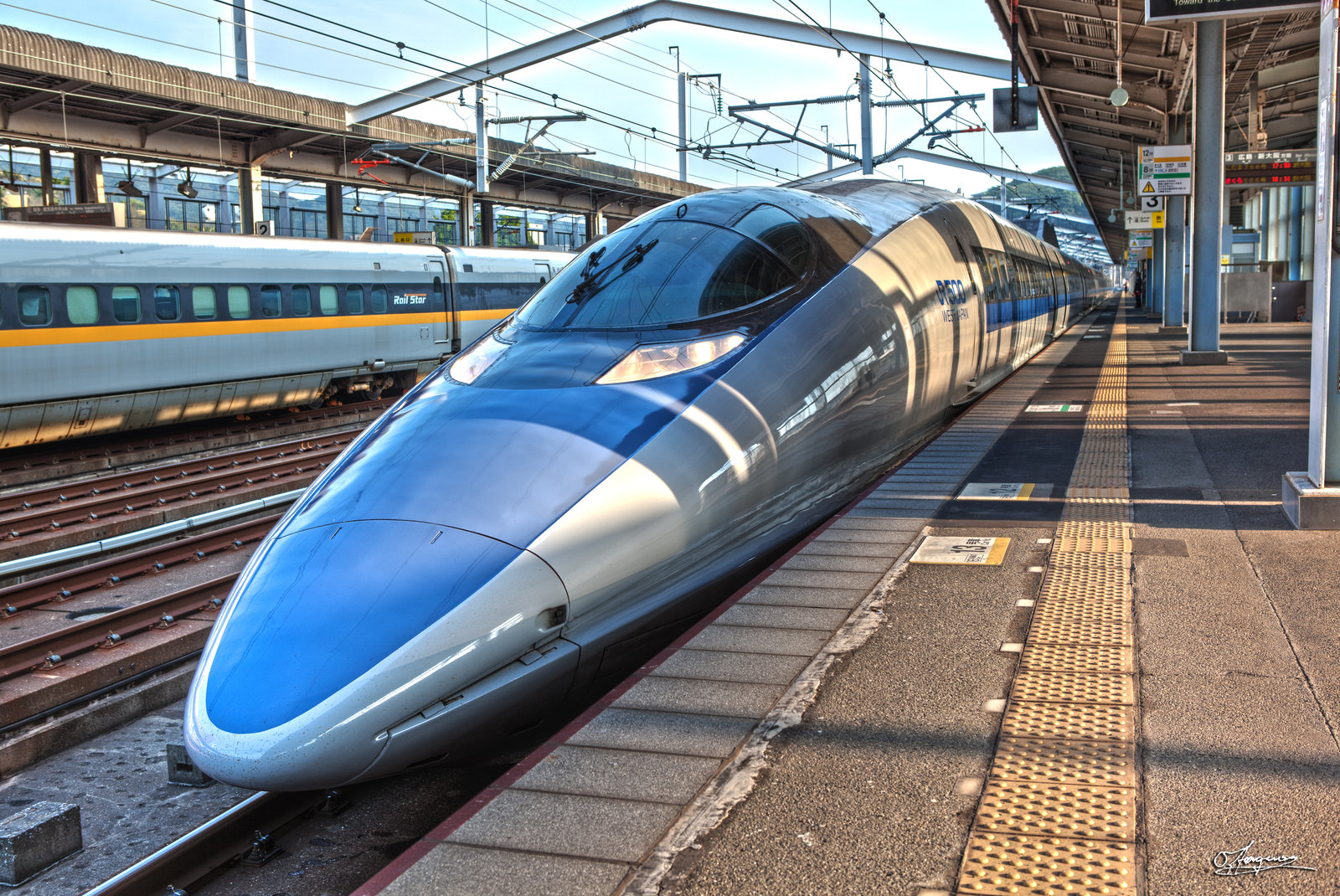
jr500_shinkansen 

To give you some perspective on the marvels and flexibility of travel by train just about everywhere in the civilized world:  I live way out in the country, in a small, traditional, rural farming community.  But if I want a mega-dose of big city life, I can leave in the morning, take a regular, then a high-speed train (called the Shinkansen) to Tokyo, go practically anywhere in the most populous city in the world by using the incredible subway system there, and be back here in my home town before sun down.  Note that I live almost 400 miles from Tokyo!  But using only my bicycle to get to the train station, I could have lunch in Tokyo and be back home in plenty of time for dinner.  No car!  No driving!  I could read a book or work on my next novel on my way there and back.

Yes, this is pretty standard fare.  In Europe and Asia, everything is connected.  All of the airports, both domestic and international, the trains, the subways, and the buses, are all engineered in vast intertwined and layered matrices to make transportation the least of anyone's worries.

If you want to get technical about it, Masumi is not entirely correct.  The U.S. does have one high-speed corridor.  It is part of the Acela Express service between Washington DC and Boston.  It's a 17 mile-long stretch where "theoretically" the train could reach the 200 MPH qualifying speed.  But the entire run is on rickety old regular railroad tracks and the train makes so many stops, the average speed for the trip is only around 65 MPH.  Good grief!  The normal everyday trains here in Japan go faster than that!

As if the U.S. were not already dismally behind just about every other advanced country -- and some not so advanced -- get this:  China and Russia are in the process of developing something called hyperloop technology, a system using magnetically-suspended pods to transport people and products across the expanses of their vast countries at -- are you ready for this? -- up to 750 MPH!  Seat belts are recommended.

"So America can build a high-speed jet coaster but they can't build a high-speed train?"

Actually, it could.  It just doesn't.

Until you can visit Six Flags Great Adventure personally, I'll just leave you with the next best thing.


[ This originated at the author's personal website . . . http://jdrachel.com ]


Kingda Ka, oh baby!