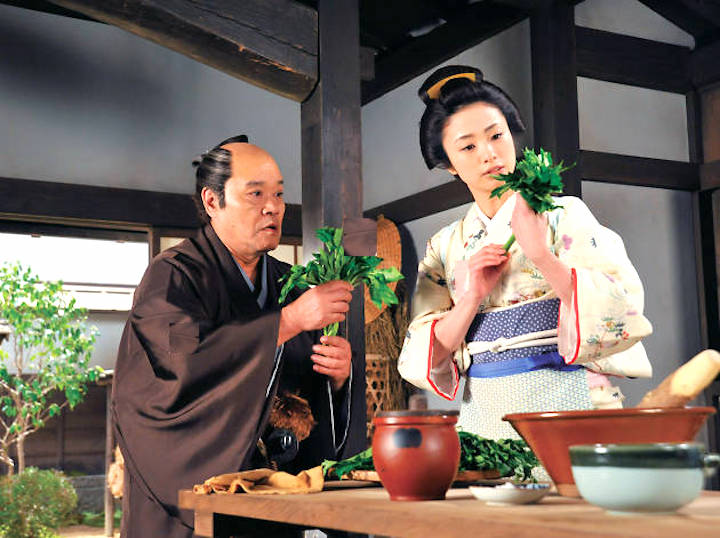
Japanese people are obsessed with food . . . looking at it, preparing it, eating it, thinking about it, remembering it, talking about it.
I don’t mean that as a criticism. I’m not complaining. It’s just that to my “Western mentality”, it seems odd, maybe a bit over the top.
For example . . .
There are hundreds of food and cooking shows on television here. Where in America, prime time TV — 7:00 till 11:00 pm — will consist of super-popular dramas or comedy shows, often times here in Japan, it’s some show about noodles or stir-fry or pastries. What? Making miso soup instead of riding around in a police car shooting unarmed citizens? Preparing udon — a type of Japanese noodle — from scratch instead of following the traumas tormenting the last survivors of a global pandemic sometime in the near-distant future?
Another example . . .
Every Saturday morning at 9:00, my wife and I watch a travel show. Interestingly it’s called Travel Salad and for twenty minutes they take a tour of some fascinating spot either in Japan or across the globe. Recently programs have gone to Cuba, Guam, Australia, Switzerland and Taiwan. What’s strange to my eyes is that after a few quick shots of typical tourist sights, they always end up in several restaurants. Or food stalls. Or taverns. It’s all about food and drinks!
Same with people. When I tell people here I’ve been in over 40 countries, after “Where?” it’s typically, “What was the food like?” or “What did you eat?”
Now I confess, I love food. In fact, moving to Japan has been a palate-pleasing, mind-opening, taste-expanding experience in every way. There are so many new, interesting foods I’ve learned to like. And it’s not just savoring edibles I’ve never eaten before — squid, octopus, ほっけ, 鯖, tempura, udon, ramen, soba — it’s the preparation and presentation. I’ve learned, for example, that to make something tasty does not required tons of sugar, barrels of butter, gallons of corn syrup, whip cream, ketchup, and mayonnaise.
Despite my love for food, now both Western and Eastern, I still can’t recall what the food was like or what food I ate when I lived for six months in India. Or five months in Uganda. Truth is, I have to struggle to remember what I ate yesterday!
Not so with the Japanese. And what’s my point? Stay with me. I think it’ll be mind-boggling.
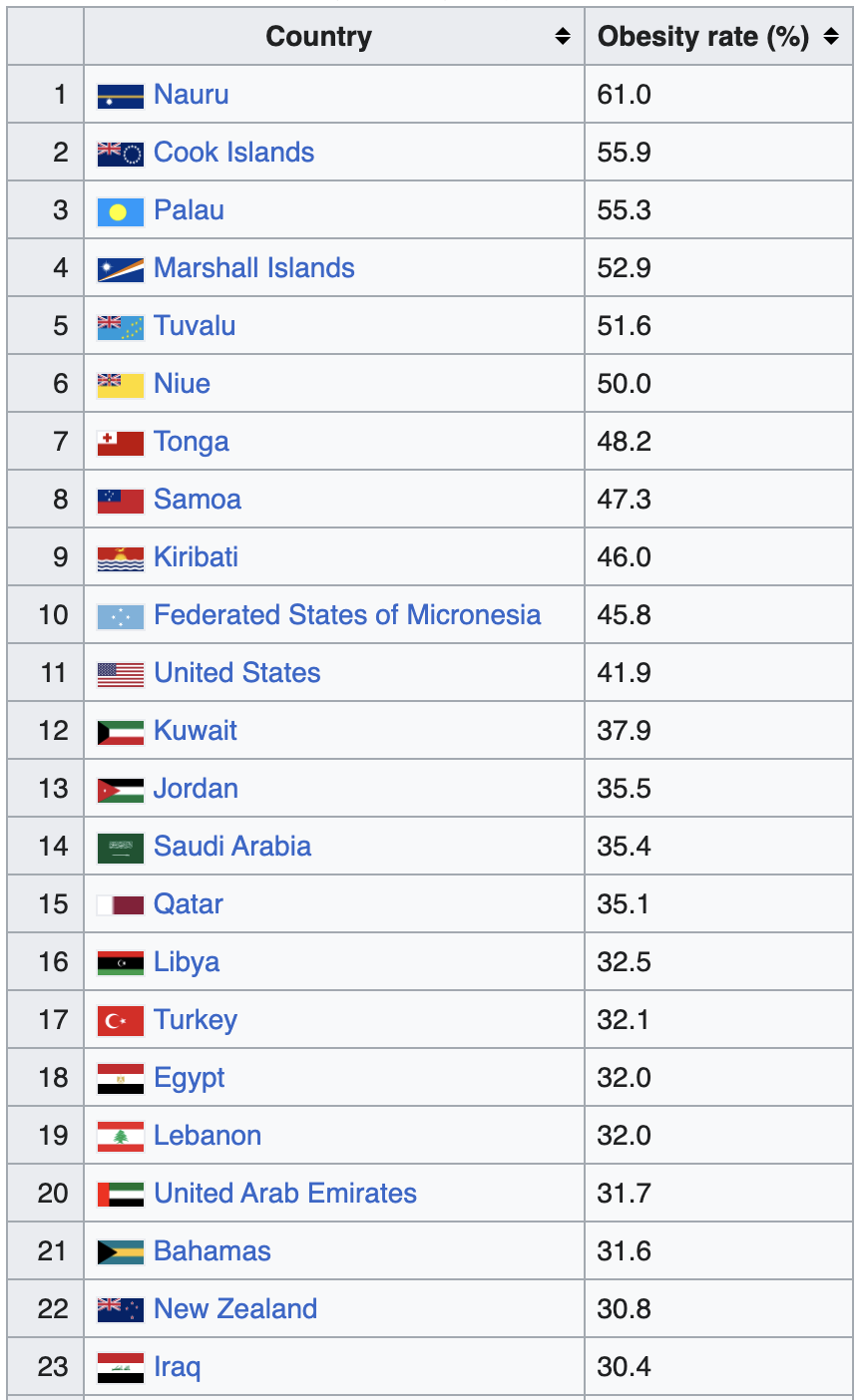
Despite its reputation for “other activities”, some not very savory, the CIA researches the entire world, I guess to better understand how the U.S. can dominate and plunder other countries. It publishes something called The World Factbook. This is the first section of a chart taken from that publication on obesity rates by country.
Ever heard of Nauru? I hadn’t. It’s the smallest nation in the world with the biggest people. Here are some of the natives of that country.
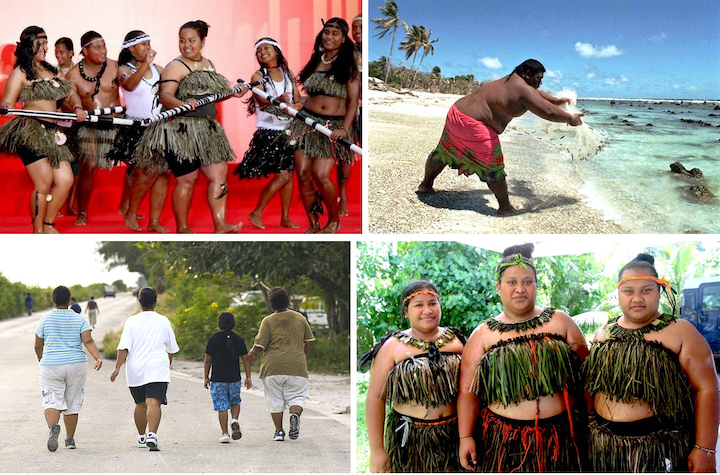
I have no difficulty believing they are world leaders in obesity rates. Since ‘fat’ has come under fire from the PC Police, they certainly appear — as my mom would have said — “full-figured”. My choice would be to call them ‘pleasantly plump’, putting a cordial spin on it.
Now, please note where the U.S. stands, confirming what we all already know about its excess weight problem. Out of 191 countries, the U.S. #11. Apologies go out to those core members of Team America who believe America is #1 at everything. While the distinction of being #1 in this respect is dubious, at the rate that obesity is increasing in the U.S., it may only be a matter of time before it captures top honors.
Moving on. Here now is the last portion of that listing.
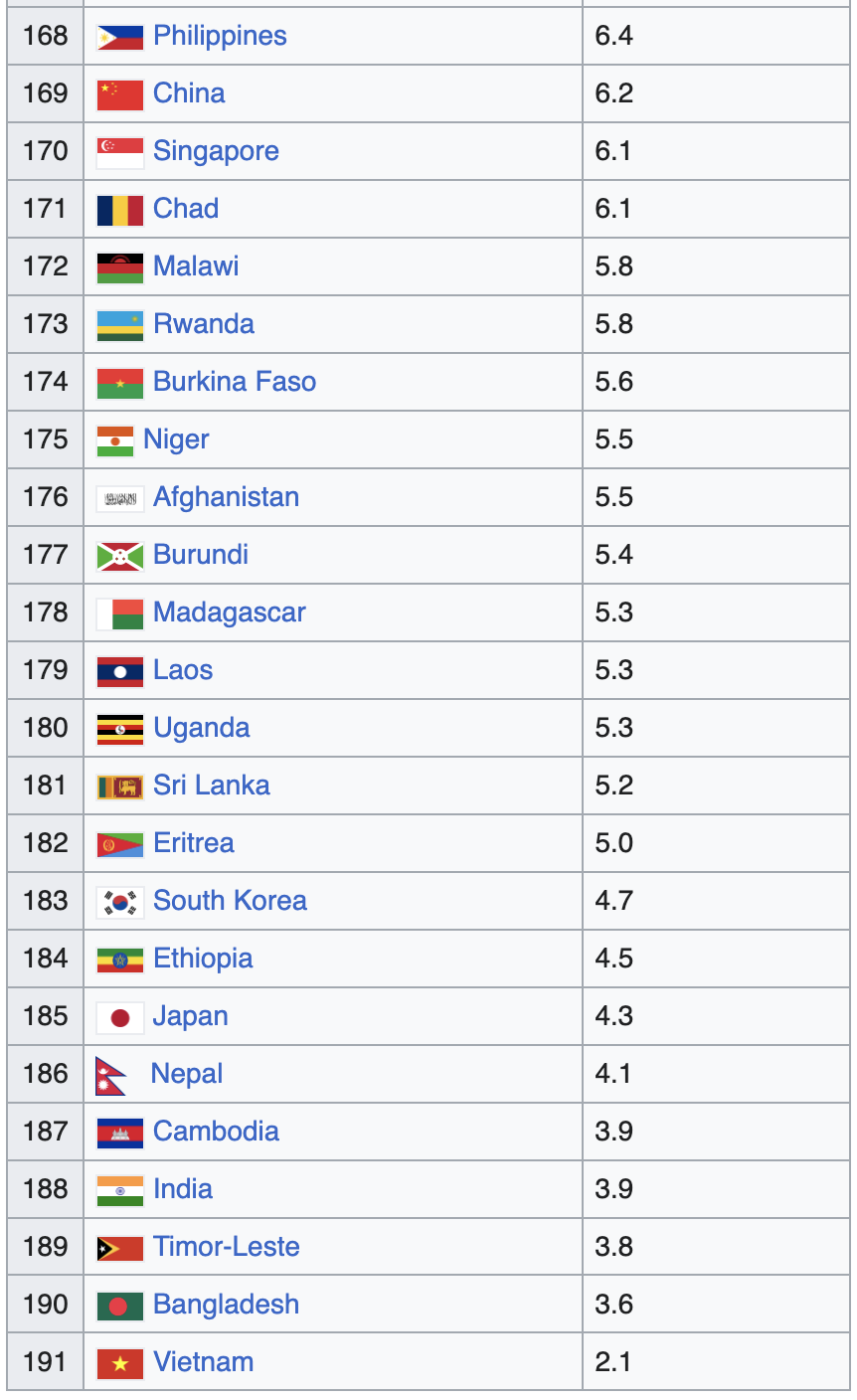
Ah hah! Now you must see where I’m going with this. YES, folks! Japan in terms of obesity is in the Bottom Ten, #185 out of 191.
Moreover, look where it sits. BETWEEN ETHIOPIA AND NEPAL!
I’m personally familiar with Nepal. I lived there for three months, and it’s a very poor country, not an abundance of anything. Food is a very precious commodity. As for Ethiopia, anyone who has paid any attention to food crises in the world knows that ‘Ethiopia’ is synonymous with famine and mass starvation. There’s no mystery about why the people of Nepal and Ethiopia are ‘thin’.
Then there’s Japan, sandwiched between them. Food is incredibly abundant here. You could eat at a different restaurant in nearby Osaka every day of your life and never come close to eating at all of them. I live in a farming community. Farming is an industry, a science, lifestyle and a religion. I’ve written extensively about my awakening from a city boy to an old boy, one who belatedly discovered a lot goes on before food ends up in a can, is shrink-wrapped or boxed, and finally shows up on the shelves of a supermarket. I live in the middle of vast fields growing every vegetable and fruit that can be grown here.
Trust me, there’s a lot of food here in Japan! And by the way, this includes some of the best chocolate I’ve ever eaten, incredible cakes and pastries, an entire panoply of snacks and treats, beer and a range of other alcoholic drinks. There are a lot of unhealthy foods to choose from!
So . . .
Why are Japanese, as obsessed as they are with food and eating, so svelte? I have a few ideas. But I’d like to hear yours. Any educated guess will be welcome in the comments below.


