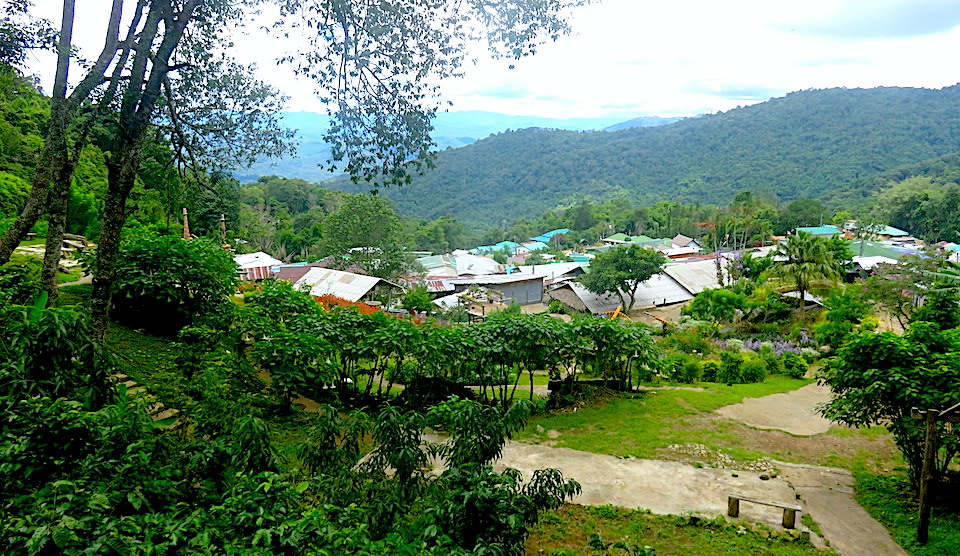
The Hmong are a unique indigenous people who have populated southern China for at least 8000 years. Unfortunately, in the 18th and 19th Centuries, they were targeted by the Qing Dynasty for extermination. This prompted most of them to migrate to other countries in southeast Asia: mainly Laos, Vietnam, and Thailand.
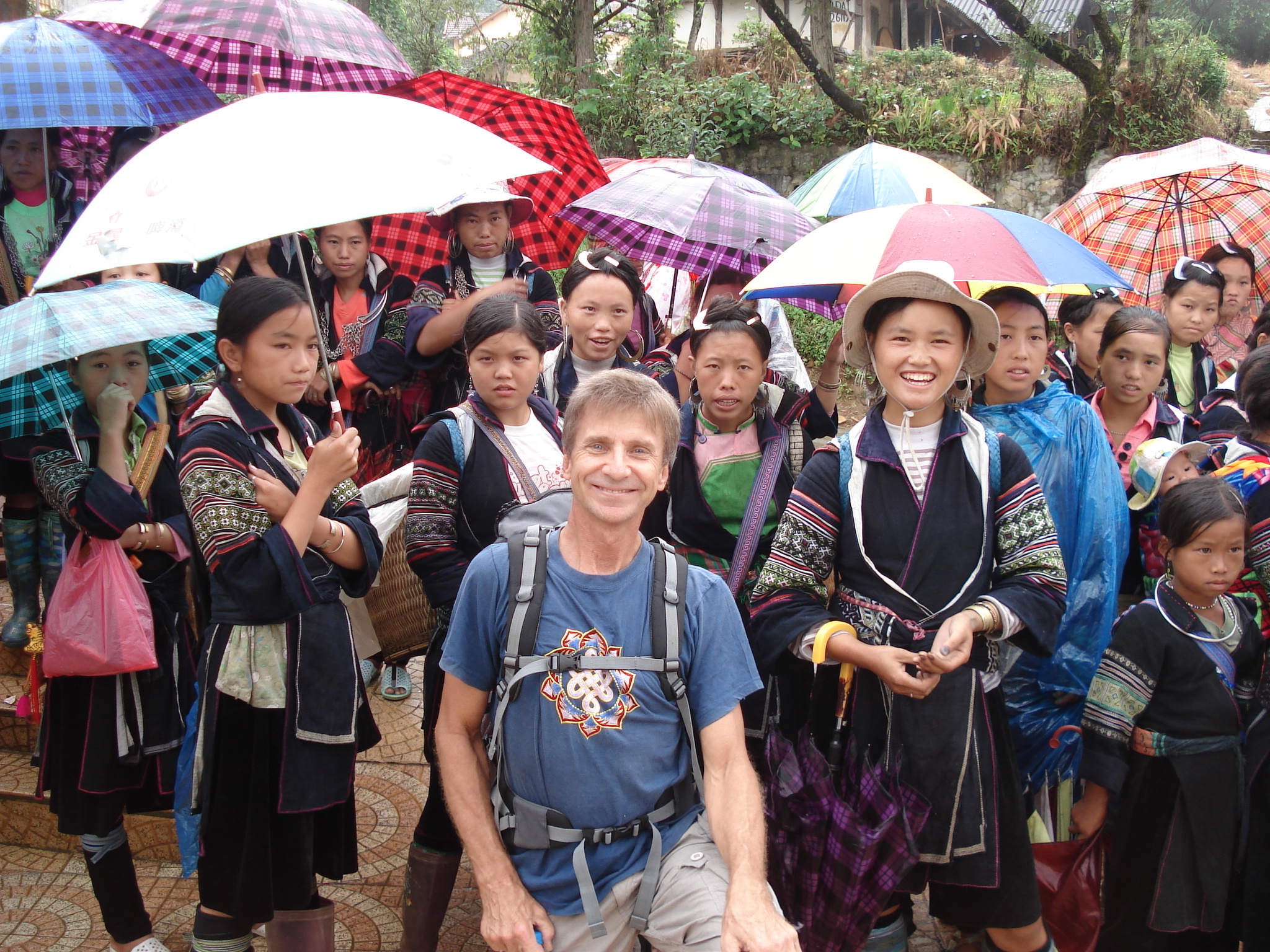
Masumi and I first encountered the Hmong in northern Vietnam in 2010. Here I am being greeted by them at the train station in Sapa, not far from the Chinese border.
More recently, on our return trip to Thailand — we were last there in December 2019, right before Covid shut down the world for travel — we visited a Hmong Village near Chiang Mai.
This is a real, functioning village. At the same time, it has been made “tourist friendly”, to encourage travelers to visit, learn about Hmong culture and crafts, and hopefully inject some money into their struggling community. It’s not easy for non-indigenous people to survive in Thailand. There are no factories or fast food restaurants to provide employment. All income for the town is generated within the closed, internal economic environment of the town.
There are some beautiful areas in the village, but most of it consists of bare-bone shops and rather shoddy residences, far from what could be called luxurious.
Let’s start with the gardens.


The town looked fairly typical of this part of the world. Lots of corrugated iron; crafts, clothing and jewelry shops; populated with friendly people and cute kids.


Without a doubt, that was the highlight of our visit!



I continue to be amazed at the level of education here in Japan. While test scores are falling in the West, those here and in China continue to rise.
Most concern about academic performance focuses on math and reading ability, but since my wife, Masumi, is a music teacher, I get to take a close look at music education. Schools here consider music an important part of overall development, realization of full human potential. I’m always astonished at what Masumi gets her students to do, culminating in a concert each year, attended by proud parents. Though she teaches 2nd through 6th grade, the musical pieces the kids master are by any stretch not simple.
It starts as soon as the kids arrive at school. Kindergarten is two years here, for four and five year olds. The following videos are from a school in Tokyo. We’ll start with a performance by five-year-old Kindergarteners.
Pretty amazing, eh? If that didn’t blow your mind, here are FOUR-YEAR-OLD kindergarteners from the same school.