Showing posts with label Japanese education. Show all posts

Wednesday, September 4, 2024

Life In Japan: The Triumph of the Lotus Plants

Five years ago, I posted an article about our local castle and its surrounding grounds. The castle has a moat, of little use now that it’s been over 600 years since the Mongols invaded Japan. These days, it serves as a playground for ducks and turtles, and of course, a reminder of the military history of our town. Tiny as it was, the castle was used by various samurai as they defended their territorial claims to Sasayama.

I described in that previous article how an area elementary school was using the moat for a school project. In one end of a section protecting the castle on its south side, they planted lotus flowers, purely to add some color to the huge puddle. At the time I wrote about it, the quickly growing plants only took up a limited area, maybe 20% of the total surface area of the water.

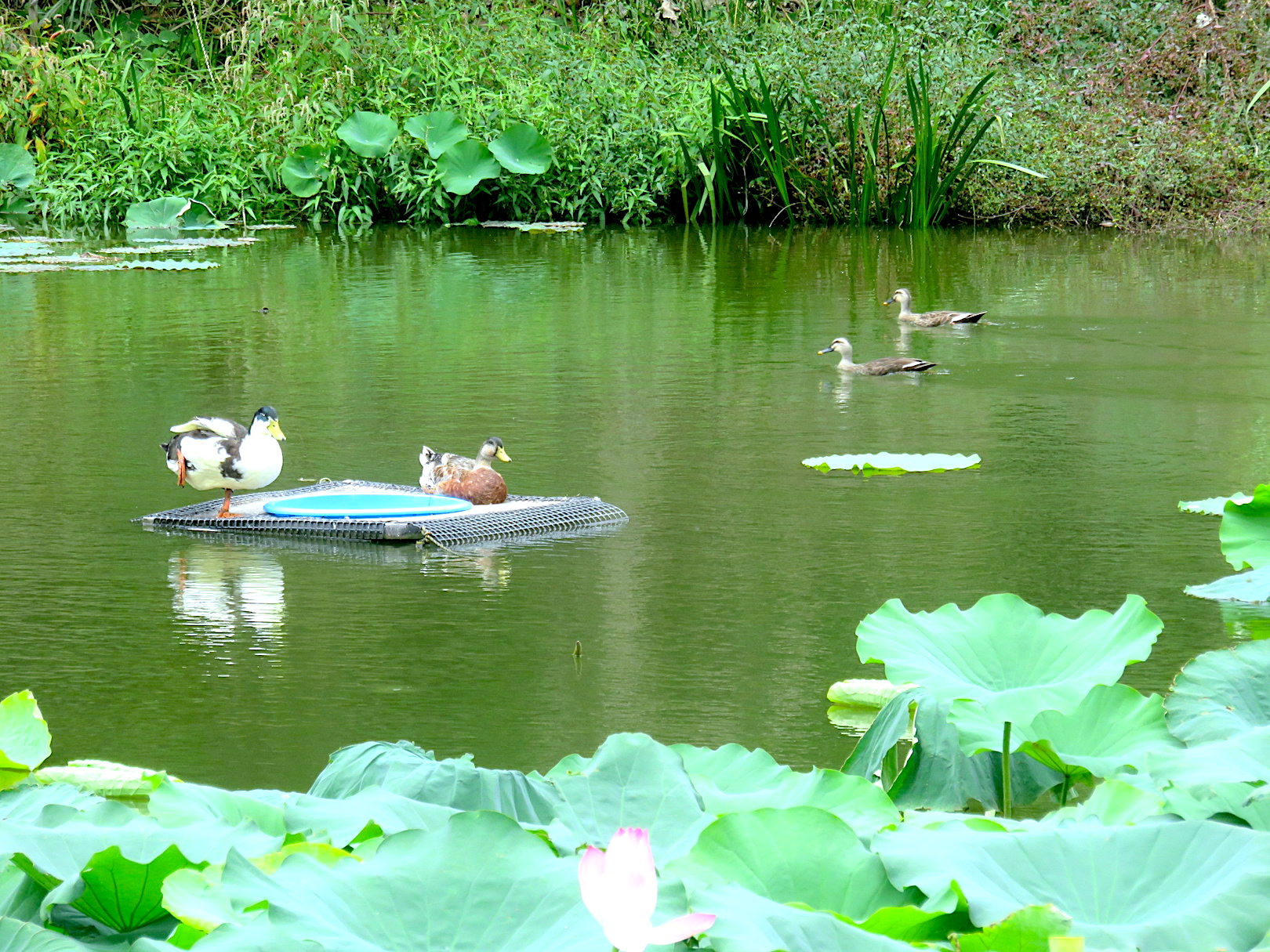
Their work — or was it an experiment? — has reached a dramatic climax. The entire section, from one end to the other, is now crammed with lotus plants. Here’s what it looks like now.

In the morning, the view is especially spectacular! The flowers open wide to greet the day. They gently wave in the breeze. It’s a gratifying sight.

What is the lesson in this? Well, if your moat is looking drab and uninspiring, or it’s just time for a needed change, consider planting lotus flowers. The rewards are abundant. The flowers individually are extremely lovely. Collectively, they offer a carpet of smileys.

Plus you’ll be doing yourself and the world community a huge favor. You’ll set an admirable example for your neighbors, who will seethe with envy, as they look at their own drab, boring, lifeless moats, damning themselves for their negligence, and hopefully be inspired to get off their lazy asses and do their part in making the world a more beautiful place.

You’ll be improving your carbon footprint to carbon midwifing ratio. And as a related bonus, you’ll be pumping much-needed oxygen into the atmosphere. Look at the size of those leaves! Good grief, they’re like oxygen factories, and there’s nothing that can match a good oxygen high. Breathing is free and oxygen keeps the metabolic fires burning.

You’ll be driving away the turtles — arguably the strangest, if not the ugliest, creatures to inhabit the Earth — and the noisy, repetitious ducks with their incessant and non-sensical quack-quack-quacking. I do worry a bit about the ducks. Where will they go? Are we flirting with creating a homeless duck problem?

Yeah, you can scoff. But it doesn’t hurt to consider both sides of the equation when considering a tradeoff. It’s one thing to leave a human being stranded to fight the elements and eke out survival by dumpster diving and panhandling. But a duck is defenseless, incapable of getting a good-paying job, short on communication skills, small and vulnerable to trucks, attacks by large dogs and alligators, and predatory raids by hawks and vultures.

Friends, brothers and sisters, much as I love our lotus-filled moat, it would break my heart to start seeing these everywhere.

Okay . . . I got a little off track. Whatever. Life is complicated. The world is complex. Truth is, sometimes it’s a fool’s errand to try to sort it all out.

By the way, something just occurred to me, and I’ll close with this. The last time I had a major encounter with lotus plants was when I was rowing a boat on one of the lakes in Srinagar, India.

That was in 2009! Time flies, eh?


[ This originated at the author's personal site . . . https://jdrachel.com ]


Life In Japan: The Triumph of the Lotus Plants | John Rachel


Thursday, April 27, 2023

Life In Japan: Excellence Begins Young

Every modern country is struggling to deal with the pressures of new technology, pressures which are accelerating exponentially as new technologies accelerate in number, sophistication, and appeal. YouTube, TikTok, Instagram, Facebook, games, smartphones, tablets are all in the mix, offering on the plus side unparalled opportunities for learning and communication, quick and easy ways of getting things done, but on the negative side pulling our focus, scattering our energies, wasting our time, and attenuating our capacity for deep, extended concentration.

We deal with this as adults. Similarly kids are more distracted and tempted with the fun, ease and convenience of technology than ever before. With each passing day, there are more and more technical shortcuts for just about any task.

Now with AI, we apparently have at our fingertips a tool to get just about anything done . . . EFFORTLESSLY! Type, hit enter, BINGO! A new song, a new poem, a novel, an article on just about any topic, a plan to conquer the world!

Maybe I’m too stuck in a legacy paradigm — after all, I am a product of celebratory mating prompted by victories over Germany and Japan . . . a Baby Boomer! — or maybe there are truisms which simply are timeless.

Here’s one I believe makes sense: Human satisfaction and personal reward is not necessarily in getting something done, but in doing that something, i. e. the effort to do it.

You can buy a computer program that plays an incredible game of chess. But the real reward comes from playing an incredible game of chess.

Same with music. I know I could buy some AI software which writes on command whatever kind of song I might want to hear. Is that supposed to somehow compare with the incredible child-like joy, the exhilaration I get from writing — however good or bad it turns out — a song myself?

That concept is not lost on teachers here in Japan. My wife, Masumi, teaches music in a nearby school system. She competes with computer games, the internet, iPhones, yes the entire array of distractions which her elementary students carry around with them — and the increasingly pervasive levels of ADHD which the foregoing produce — still manages to teach her kids how to play and how to appreciate music. She deserves a medal!

Masumi loves to show me success stories she comes across, examples of how the educational system in Japan serves the real needs of students and doesn’t abandon its core mission by pandering to the latest technological fads.

Here are two such examples. These are not Masumi’s students, because she teaches grades 2 through 6, elementary level. These examples are — are you ready for this? — nursery school kids! That means 5 and under! Try to process that as you watch the Yayoi Nursery School orchestra play a piece from Phantom of the Opera.


Here is a performance at the Toddler Music Festival, playing excerpts from Camina Burana.


Are you impressed?

I know I am!


[ This originated at the author's personal website . . . https://jdrachel.com ]


Life In Japan: Excellence Begins Young | John Rachel