Showing posts with label Tambasasayama. Show all posts

Sunday, February 8, 2026

Life In Japan: Winter Storm

I was born and lived in Michigan, for over thirty-four years. I lived that entire time through Michigan winters. They were both brutal and beautiful. We had snow on the ground two to three months out of every year. It would typically snow once or twice a week. 1” – 4” was the routine. Since the temperatures in late December up through March were usually well below freezing, the snow remained.

Obviously, that all changed dramatically when I moved to Los Angeles, California. The only “snow” I saw was on the inside of my freezer. It was hardly enough for a snowball, much less enough to make a snowman.

When I then moved to Portland, Oregon, then finally where I now permanently live in Japan, on rare occasions the white stuff fell from the heavens — three or four times a year — but then usually melt either the same or the next day. I still find it amusing that there’s so much drama when we get so little snow. Granted, people neither are used to it, as I was in Michigan, nor is there any of the necessary equipment and staff to deal with it. But only the slightest thin blanket coats the roads and sidewalks. And since it’s gone within 24 hours, it’s hardly a worry.

Well … this past weekend, I was transported back in time four decades! We got hit with a real blizzard! When the storm subsided, we had over 30 cm (12 inches) of snow to deal with, along with three days of sub-freezing weather. I have to say, while I sympathize with the locals who have little clue how to drive in this, I’m nostalgically ecstatic! I feel like I’m back to my original home.

I even made a couple snowballs and gave them a good toss!

It sure is good that this doesn’t happen very often. I don’t have snow tires for my bike!


[ This originated at the author's personal website . . . https://jdrachel.com ]

Life In Japan: Winter Storm | John Rachel


Tuesday, October 8, 2024

Life In Japan: An Interview

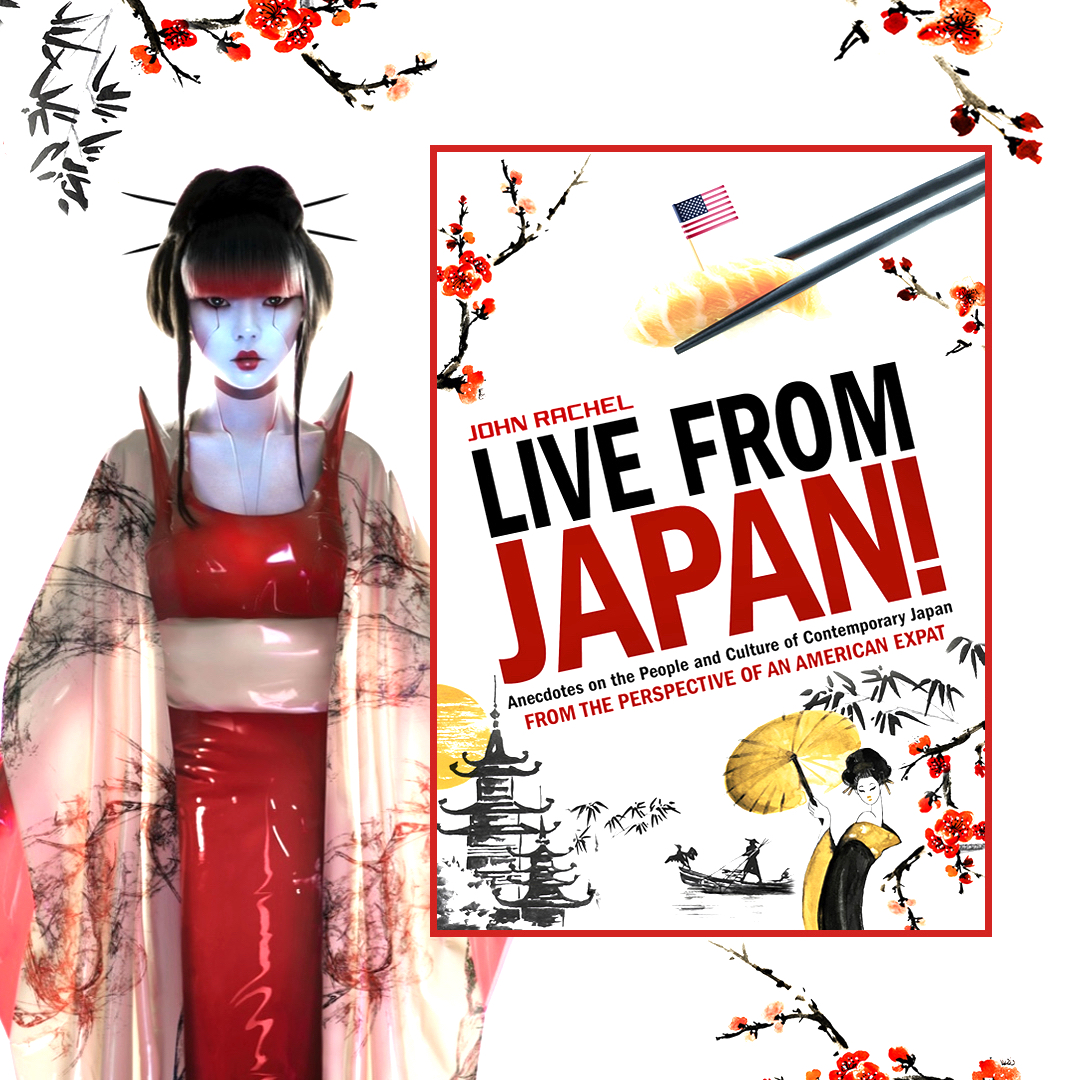
About two months ago, I was interviewed locally about my book Live From Japan! Anecdotes on the People and Culture of Contemporary Japan from the Perspective of an American Expat.

The organization that interviewed me was the Sasayama International Center of Understanding, aka Kokusai Rikai 日本国際理解教育学会.

This is a non-profit and my connection with them goes all the way back to 2008. I taught English there three times a week for the entire year. The people there are wonderful and we’ve kept in touch.

They have a host of wonderful programs and activities, all dedicated to promoting knowledge and appreciation of other cultures. We have a variety of people from other countries here in Tambasasayama, including Peru, Brazil, Vietnam, South Korea, Philippines, even African nations like Senegal, and of course, the United States (like me!). Japanese language courses are made available to the immigrants, and English is taught to local Japanese who wish to build on the basic skills they got in elementary and high school. That was where I came in.

By the way, here is the message featured at the top of the home page for the organization:

戦争は人の心の中で生れるものであるから, 人の心の中に平和のとりでを築かなければならない。Since wars begin in the minds of men, it is in the minds of men that the defences of peace must be constructed. — Preamble of the UNESCO Constitution

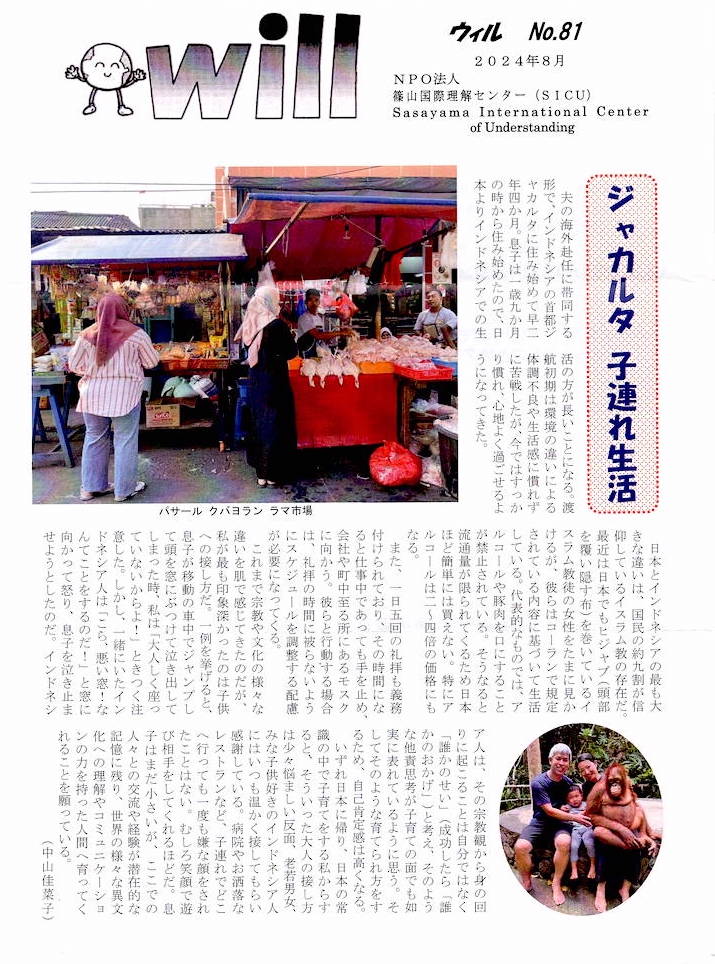
In any case, one of my students from all the way back in 2008 who I’ve kept in touch with — she’s into organic farming, sustainable agriculture, and during her high school years was an exchange student somewhere in Florida — recently took a job at Kokusai Rikai. She alerted them to my Live From Japan! book. Next thing I know, I’m getting interviewed for a monthly publication they do (pictured on the left).

I thought the interview went well. It certainly was fun!

They asked me what page people should visit first. Without a doubt, The Naked American! Then they wanted to know my favorite story. That would be “There is beauty everywhere!” Finally, they wanted to know what my three favorite things were here in Tambasasayama.

  1. My wife.
  2. Riding my bike all around town.
  3. The beauty of Tambasasayama — the mountains, shrines, temples, rice and bean fields.

Here is the interview. It helps if you can read Japanese . . .

Indeed . . . it’s like living in a fairy tale!

By the way, if you’re interested in the book, in addition to the stories about living here in Japan, there are over 450 photos . . .

An Apple iBOOK is available HERE.

A B&N Nook Book is available HERE.

Other popular ebook formats are available HERE.

A deluxe full-color paperback from the printer HERE.

A deluxe paperback is available from Amazon HERE.

A deluxe full-color paperback is available from B&N HERE.


[ This originated at the author's personal website . . . https://jdrachel.com ]


Life In Japan: An Interview | John Rachel


Wednesday, September 11, 2024

Life In Japan: Clouds

I suspect most people share my fascination. I’ve always had a thing for the sky. When I was a boy, I had a refractor telescope and spent hours looking at stars, planets, the moon. During the day — this will bring back some childhood memories for many folks — my friends and I would lie on a blanket, looking for “special” shapes in the clouds: animals, faces, things of religious significance (I was a completely brainwashed Catholic back then).

Clouds! What a gift! What a wonder!

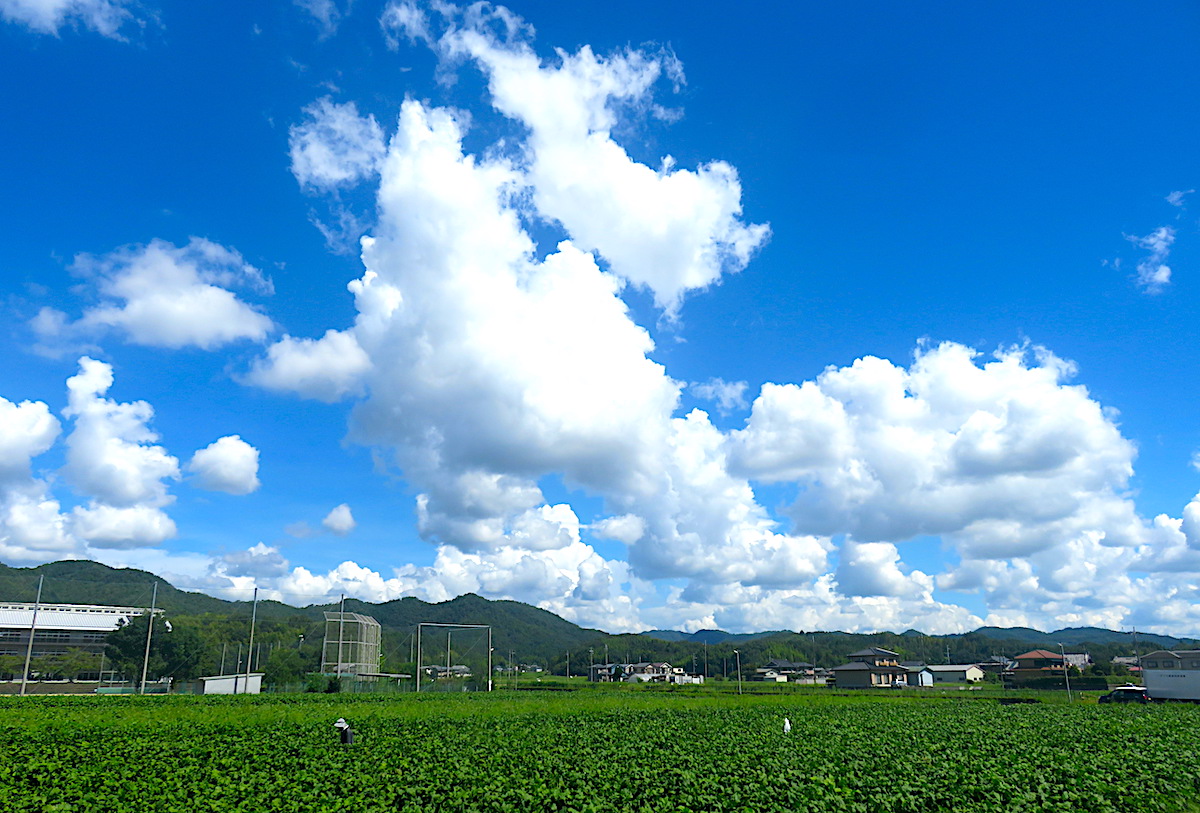
Not all of the time but often enough, we have some truly majestic skies here in my hometown. Yesterday was just such a day. My bike ride was especially splendid.

I’m sure it helps that Tambasasayama is far from any congested, urban area. Though I have to say, compared with, for example, Los Angeles — I lived there for 15 years — the skies over Osaka, Kyoto and Kobe are pristine.

Anyway, only two hours after these photos were taken, here’s what we got . . .

Did I ever mention how crazy the weather is here? Granted, we don’t get snow in the summer, but just about everything else rolls around, alternating from clear skies to lightning, thunder, light rain, heavy rain, wild windy storms, back to clear skies, beautiful clouds.

It rained for about 40 minutes. Then an hour after that, it looked like this . . .

Could it be much more unpredictable? Shifting? Whimsical?

Returning to clouds. They sure carry a variety of messages, encourage some wild imaginings, evoke a range of reactions and sentiments. I know someone who said it best! One of my all-time favorite artists/singer/songwriters!


[ This originated at the author's personal website . . . https://jdrachel.com ]


Life In Japan: Clouds | John Rachel


Wednesday, September 4, 2024

Life In Japan: The Triumph of the Lotus Plants

Five years ago, I posted an article about our local castle and its surrounding grounds. The castle has a moat, of little use now that it’s been over 600 years since the Mongols invaded Japan. These days, it serves as a playground for ducks and turtles, and of course, a reminder of the military history of our town. Tiny as it was, the castle was used by various samurai as they defended their territorial claims to Sasayama.

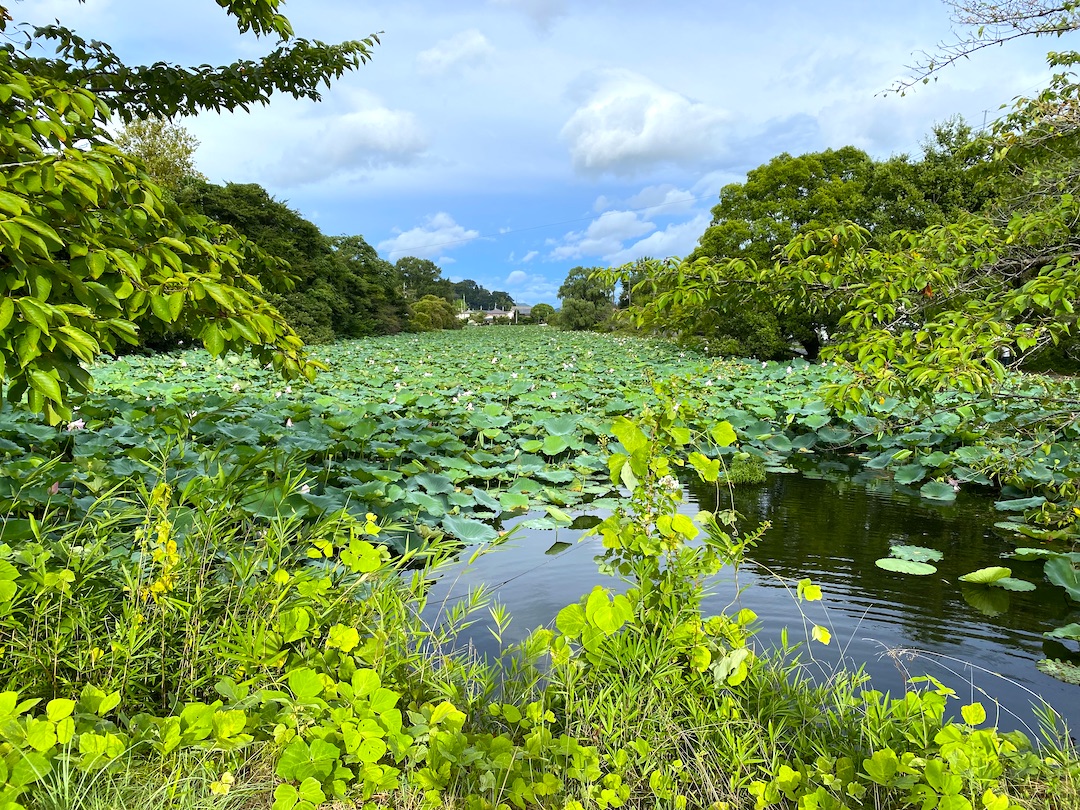
I described in that previous article how an area elementary school was using the moat for a school project. In one end of a section protecting the castle on its south side, they planted lotus flowers, purely to add some color to the huge puddle. At the time I wrote about it, the quickly growing plants only took up a limited area, maybe 20% of the total surface area of the water.

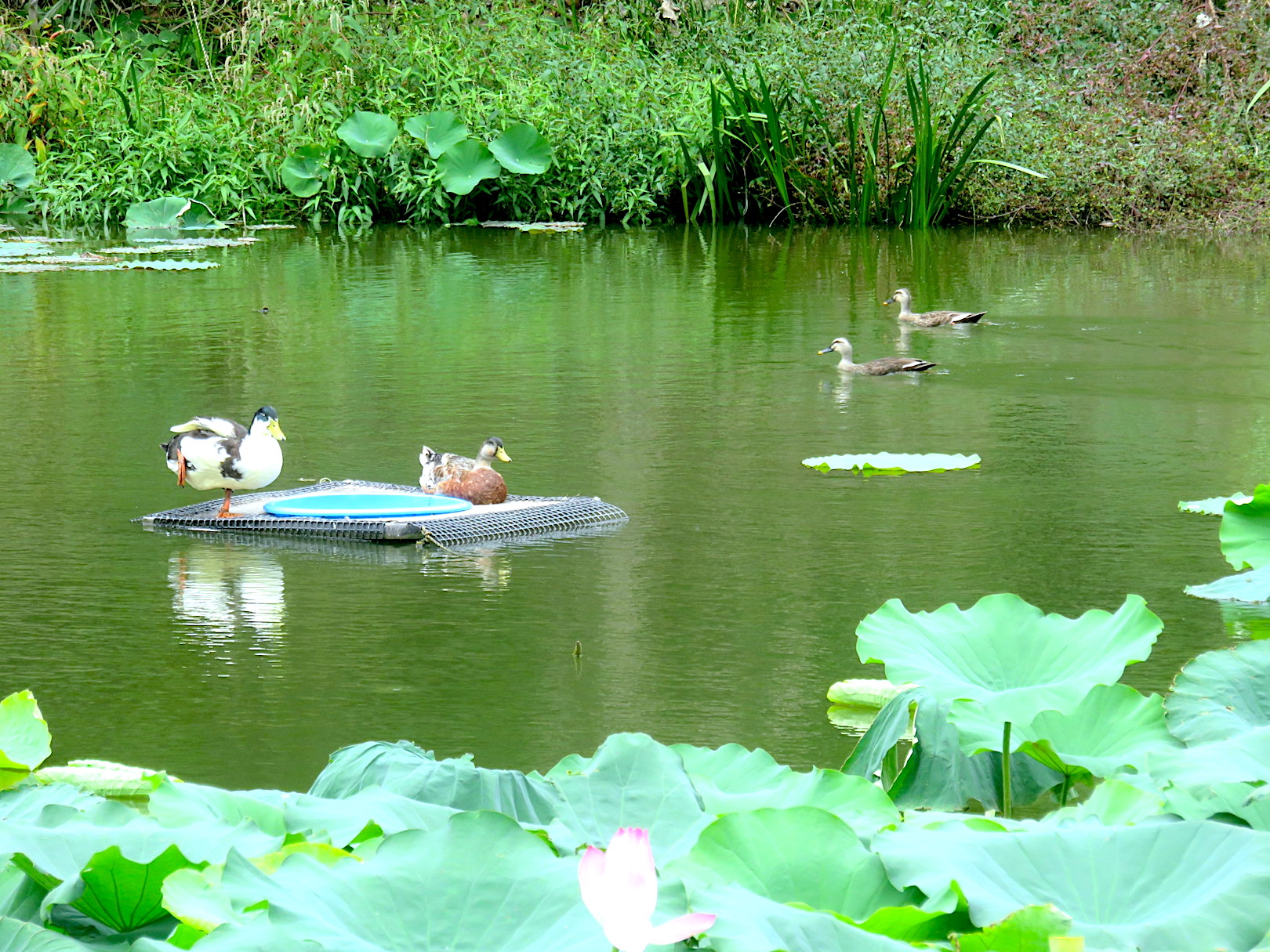
Their work — or was it an experiment? — has reached a dramatic climax. The entire section, from one end to the other, is now crammed with lotus plants. Here’s what it looks like now.

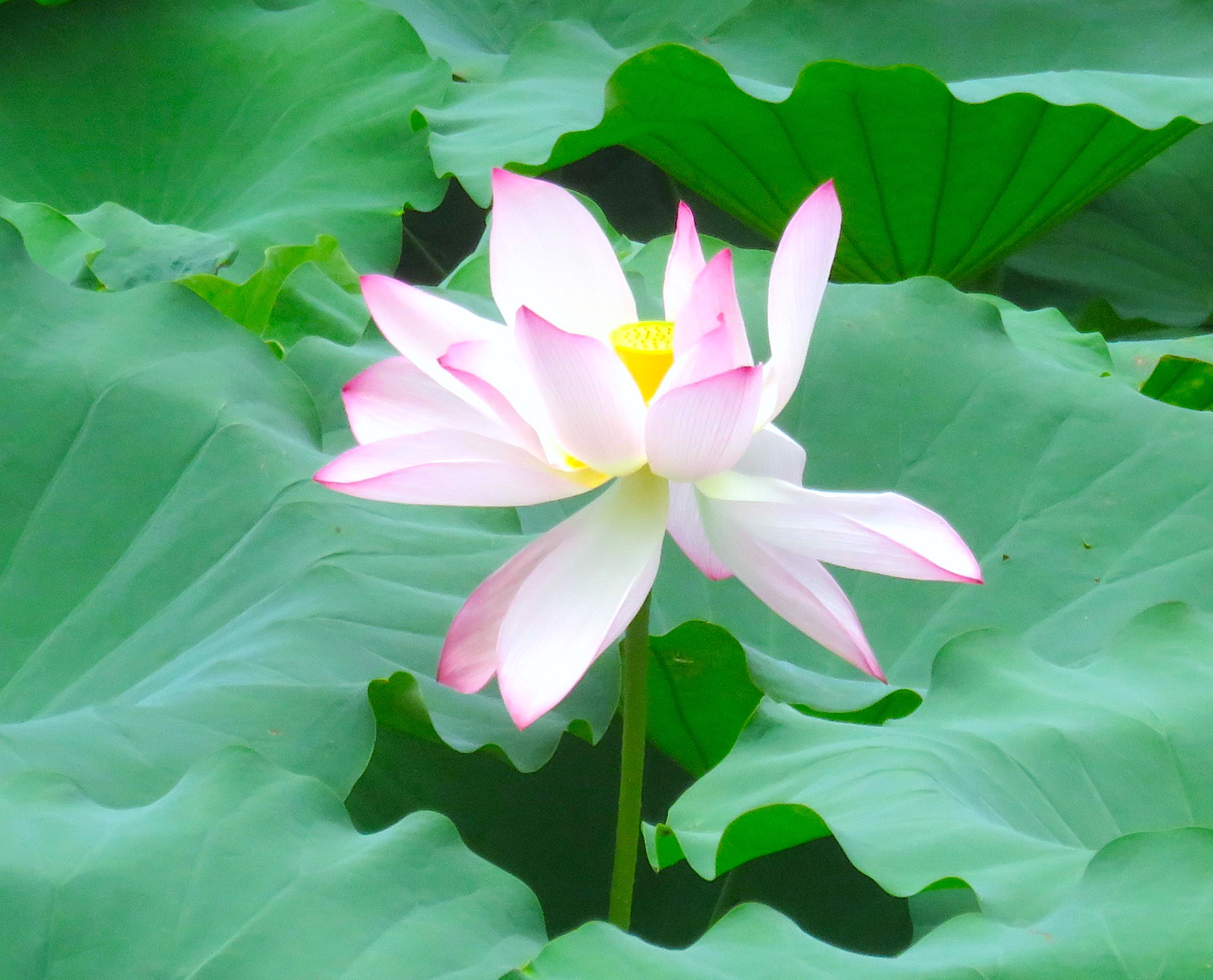
In the morning, the view is especially spectacular! The flowers open wide to greet the day. They gently wave in the breeze. It’s a gratifying sight.

What is the lesson in this? Well, if your moat is looking drab and uninspiring, or it’s just time for a needed change, consider planting lotus flowers. The rewards are abundant. The flowers individually are extremely lovely. Collectively, they offer a carpet of smileys.

Plus you’ll be doing yourself and the world community a huge favor. You’ll set an admirable example for your neighbors, who will seethe with envy, as they look at their own drab, boring, lifeless moats, damning themselves for their negligence, and hopefully be inspired to get off their lazy asses and do their part in making the world a more beautiful place.

You’ll be improving your carbon footprint to carbon midwifing ratio. And as a related bonus, you’ll be pumping much-needed oxygen into the atmosphere. Look at the size of those leaves! Good grief, they’re like oxygen factories, and there’s nothing that can match a good oxygen high. Breathing is free and oxygen keeps the metabolic fires burning.

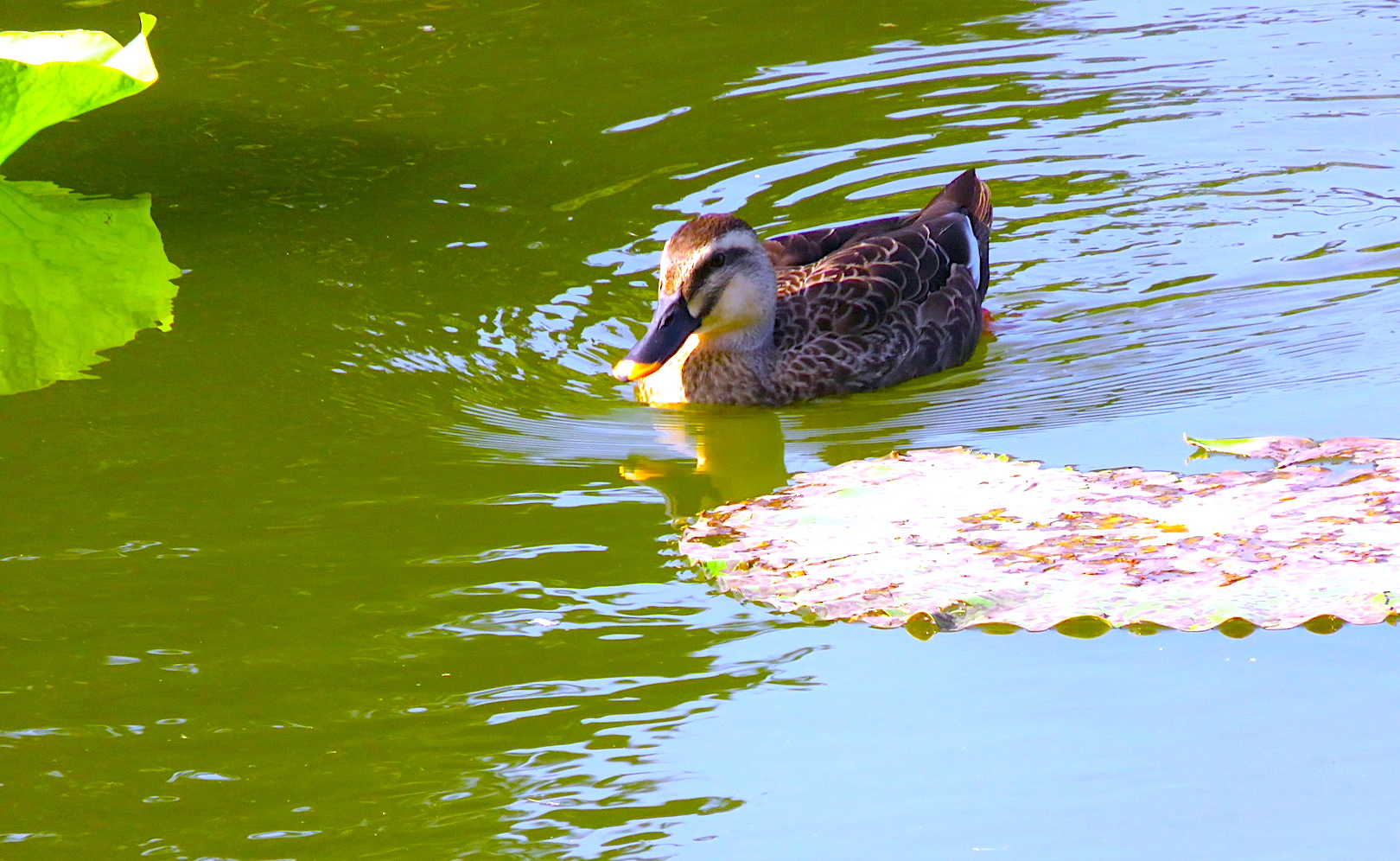
You’ll be driving away the turtles — arguably the strangest, if not the ugliest, creatures to inhabit the Earth — and the noisy, repetitious ducks with their incessant and non-sensical quack-quack-quacking. I do worry a bit about the ducks. Where will they go? Are we flirting with creating a homeless duck problem?

Yeah, you can scoff. But it doesn’t hurt to consider both sides of the equation when considering a tradeoff. It’s one thing to leave a human being stranded to fight the elements and eke out survival by dumpster diving and panhandling. But a duck is defenseless, incapable of getting a good-paying job, short on communication skills, small and vulnerable to trucks, attacks by large dogs and alligators, and predatory raids by hawks and vultures.

Friends, brothers and sisters, much as I love our lotus-filled moat, it would break my heart to start seeing these everywhere.

Okay . . . I got a little off track. Whatever. Life is complicated. The world is complex. Truth is, sometimes it’s a fool’s errand to try to sort it all out.

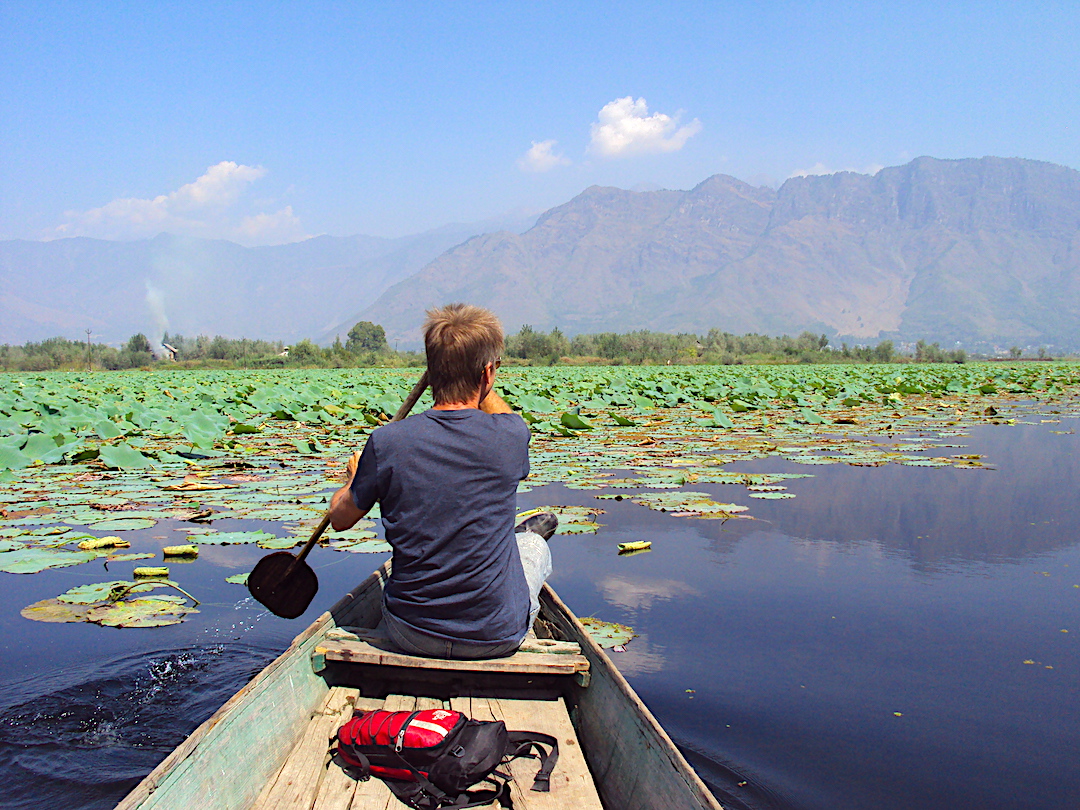
By the way, something just occurred to me, and I’ll close with this. The last time I had a major encounter with lotus plants was when I was rowing a boat on one of the lakes in Srinagar, India.

That was in 2009! Time flies, eh?


[ This originated at the author's personal site . . . https://jdrachel.com ]


Life In Japan: The Triumph of the Lotus Plants | John Rachel


Sunday, August 18, 2024

Life In Japan: Dekansho 2024!

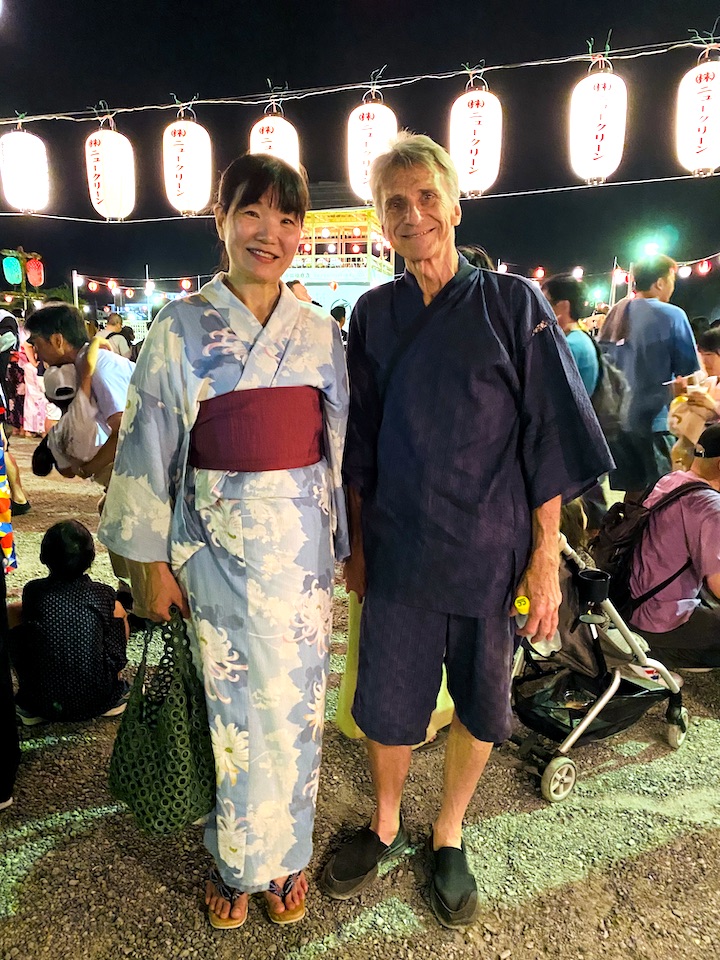
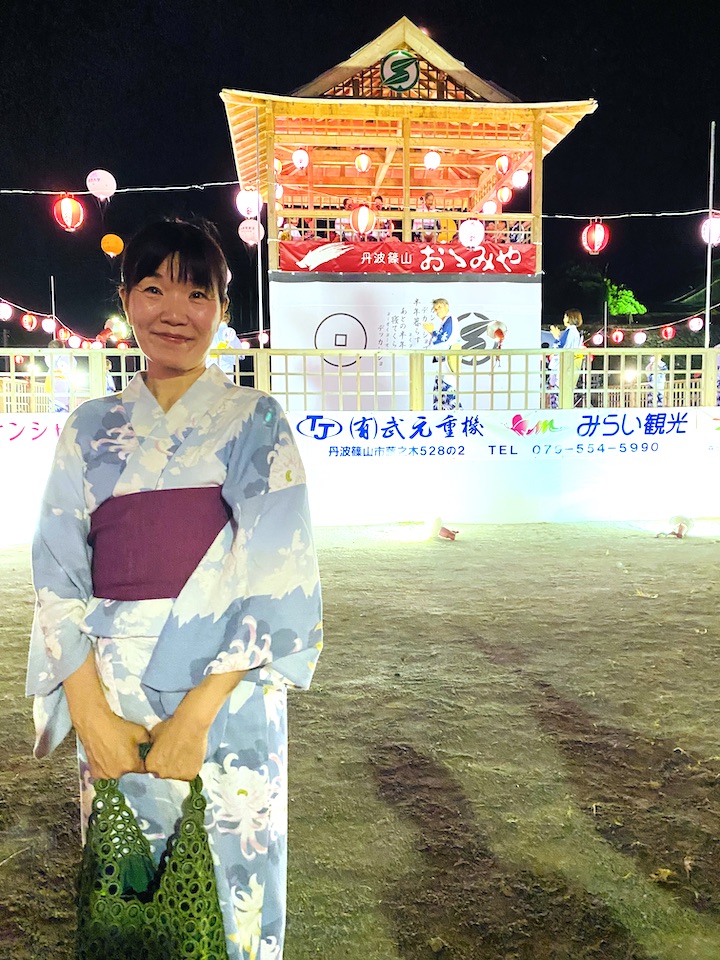
This year, Masumi and I pulled out all of the stops for the annual Dekansho Festival. We wore traditional clothing, me a jinbei and her a yukata. Jinbei is summer wear for men, and a yukata is the summer version of a kimono, since a regular kimono would be way too hot this time of year.

The festival was especially groundbreaking for me, since I learned the Dekansho dance! Both evenings Masumi and I danced with the crowd, circling the stage countless times. The music, of course, is performed live. It’s a great feeling dancing with thousands of smiling people, folks of all ages, heights, weights, some shy, some outgoing. What a total hoot!

Which makes me realize why this festival is so special, why it’s becoming more and more popular each year — this year it was often shoulder-to-shoulder, particularly by the food and souvenir booths — with visitors coming from all around to experience this unique celebration.

Dekansho is not just a “spectator festival”. It’s a “participant festival”. It’s like a big party!

If you watched the video, you heard the music and got a quick glimpse of the dancing. Frankly, it’s impossible without using an airborne drone to capture how many people were doing the Dekansho dance. Half of the festival grounds was covered with dancers. Some alone, some in pairs, many in groups of ten to twenty.

You might have also noticed a celebrity appearance by the Japanese mascot/destroyer/mutant, Godzilla. And while we didn’t get a photo of him, Spiderman was there too! The kids loved it.

Yes, the kids. And the old folks (like me). And swarms of teens. And everyone in between.

This is how life should be. A whole community coming together, laughing, smiling, dancing, singing, eating, drinking. Joined by people from surrounding communities, who double or triple the joy of the occasion.

By the way, I thought Masumi looked great! It’s rare I get to see her dressed in traditional Japanese garb.

We were there both days. Despite there being how many attendees? — 10,000? 20,000? — we saw quite a number of folks we know. We ran into two of Masumi’s daughters, their closest friend and her new husband. We saw neighbors from our village. We saw Yuka and Dan. They’re married. Yuka is Japanese, Dan is British. I met Yuka as her English teacher back in 2008. We saw Bodi, a friend from Pokhara, Nepal, who manages a local Nepalese restaurant.

My only regret is that Dekansho only lasts two days. Like I said, isn’t this what life should be like all of the time? Then again, I suppose it wouldn’t be so special if we had it every week or every month.

I guess we just need to figure out how to make every day special, each in its own unique way.

I think I’ll start each day by dancing.

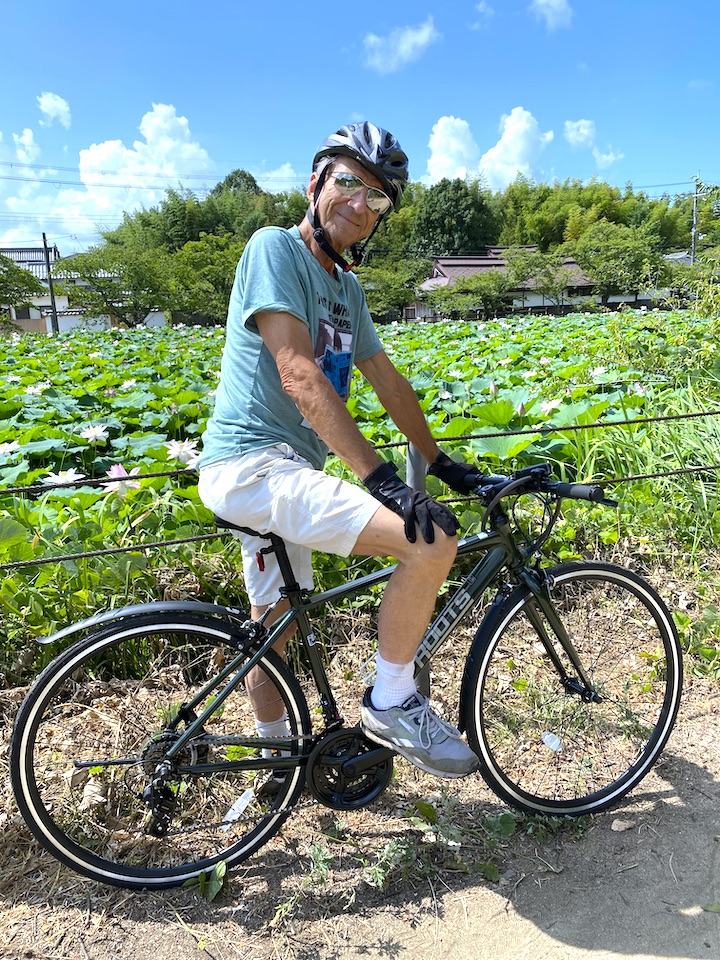
Or maybe I’ll sing as I ride my new bike through the rice and soybean fields . . .

. . . songs about peace . . . friendship . . . kindness . . . celebration . . . love.


[ This originated at the author's personal website . . . https://jdrachel.com ]


Life In Japan: Dekansho 2024! | John Rachel


Sunday, June 23, 2024

Life In Japan: Monkey Attack!

In all the years I lived in America, I can honestly say I never had what happened to me this morning ever occur even once. Not in Michigan, Florida, Oregon. Not even in California, where there are no limits on the craziness.

My wife and I were finishing breakfast this morning and when we looked out the back window on the forest that is adjacent to our property, there was a MONKEY!

I know the photo makes it look like it’s watching TikTok on an iPhone, but he was actually munching on a potato he got from someone. Maybe us?

While usually such sightings are quite rare, monkeys are very much a part of the “fabric of like” here. Let me elaborate.

Understand that they can be very troublesome. Several monkeys can wipe out an entire garden in one raid, the veggies it took two or three months to grow. At the same time, our city officials don’t want to mercilessly eliminate them. After all, before we humans came along, this was their land. They are part of the eco-system here that has thrived for millennia.

We have five groups of monkeys — groups are extended families or communities — A through E. Group D is the most aggressive, or as we humans might say, the one that shows the most initiative. The groups are dispersed throughout the area, but it’s Group D that makes its presence felt around our house. Lucky us!

The monkey groups are tracked by the city government. There are chips inserted in members of each group. When possible, the city lets us know when a raiding party is moving in on a particular location.

Citizens report sightings as well. Right after we saw the monkey this morning, I alerted a neighbor, a gentleman who serves as the unofficial monkey policeman. Immediately, another neighbor phoned a report into City Hall. Our own monkey sheriff grabbed some fireworks launchers — these are hand-held tubes that fire a round of three explosive charges high into the air — and he set them off. The explosions are very loud, but I have a suspicion the monkeys are used to them and just ignore them.

It was community work day, so I left to work. While I was cutting weeds around our village shrine . . .


. . . my wife Masumi had two more visits by our encroacher.

I can’t blame the monkey. It’s spring and there is an inviting assortment of vegetables growing all around to select from. Time to catch up on eating after the sparse winter months.


As I’ve often said, the excitement never lets up here!

Do you doubt it?


[ This originated at the author's personal website . . . https://jdrachel.com ]

Life In Japan: Monkey Attack! | John Rachel


Wednesday, May 15, 2024

Life In Japan: A rose is a rose is an onion . . .

I was trying the other day to imagine what went through my mind when I was 25. It’s both a difficult and amusing exercise.

It requires erasing a lot of experience, history, knowledge, wisdom, joy and pain — maybe ‘ignoring’ is a better term — and seeing what sparse caricature of reality is left to assemble into a marginally coherent view of the world, recognizing that “hindsight” is still at play here, sabotaging the mechanics of memory.

It also requires recalling — painful and even embarrassing as it might be — what dreams and expectations I entertained at the time, as immature and undeveloped as I was.

I can’t say I came up with anything very interesting or startling. One thing I can assert with absolute certainty . . .

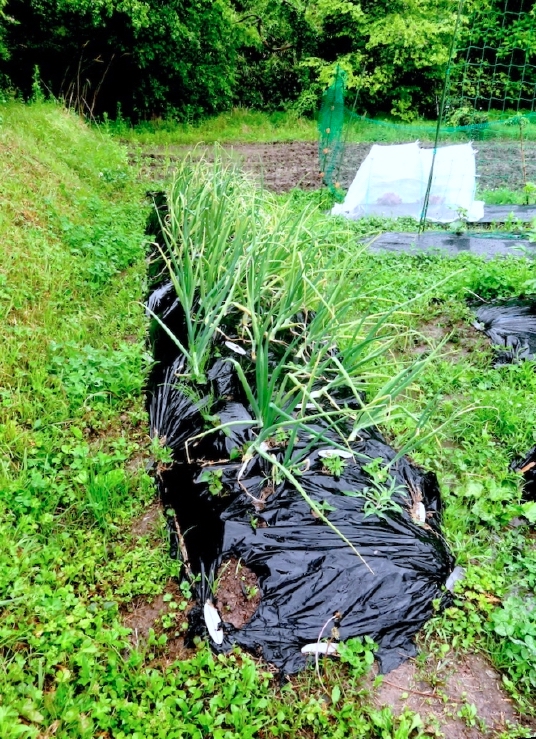
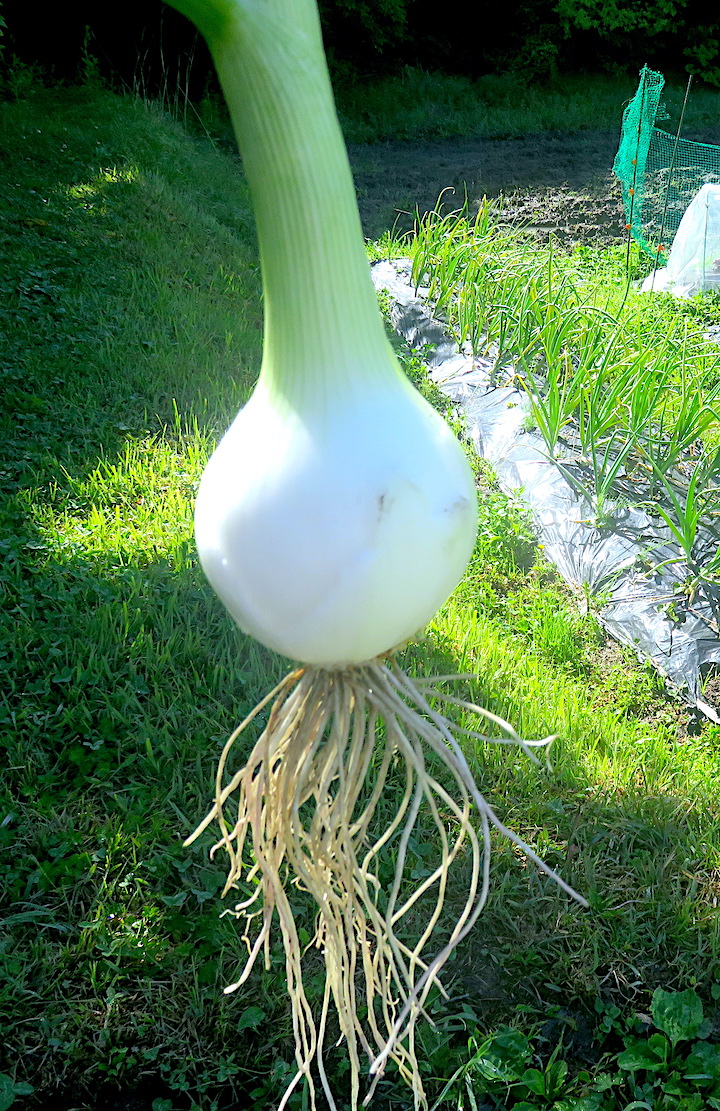
I never imagined I would at this stage in my life be living in Japan growing onions in my modest garden!

Not that I have anything against onions. On the contrary, onions are spectacular! They have a lot of symmetry and are about as essential as it gets in the kitchen.

It’s just that at 25 I was still living in my home state of Michigan. And I was more pre-occupied with exhaust fumes than fertile soil or keeping monkeys from stealing me blind. True, I was no longer in Detroit. And 25-years-of-age was post-university. But avoiding the exhaust fumes of pompous college professors had replaced avoiding the exhaust fumes of automobiles and factories.

Anyway here I am. And I’m a “proud papa”! Just look at this fine specimen . . .

Yes, a lot has happened over the many years, and a lot has changed. So my life is not just about vegetables. I write novels and unique — some would say eccentric — creative non-fiction books. More importantly, much of my focus these days is on political activism, specifically anti-war activism. You can get the flavor of my efforts HERE and HERE.

Oh . . . one last thing. The inspiration for the title of this article was Gertrude Stein. Here is the story from Wikipedia: “The sentence ‘Rose is a rose is a rose is a rose’ was written by Gertrude Stein as part of the 1913 poem Sacred Emily, which appeared in the 1922 book Geography and Plays.” As if you didn’t already know that.


[ This originated at the author's personal website . . . https://jdrachel.com ]


Life In Japan: A rose is a rose is an onion . . . | John Rachel


Thursday, April 18, 2024

Life In Japan: Yosakoi Festival

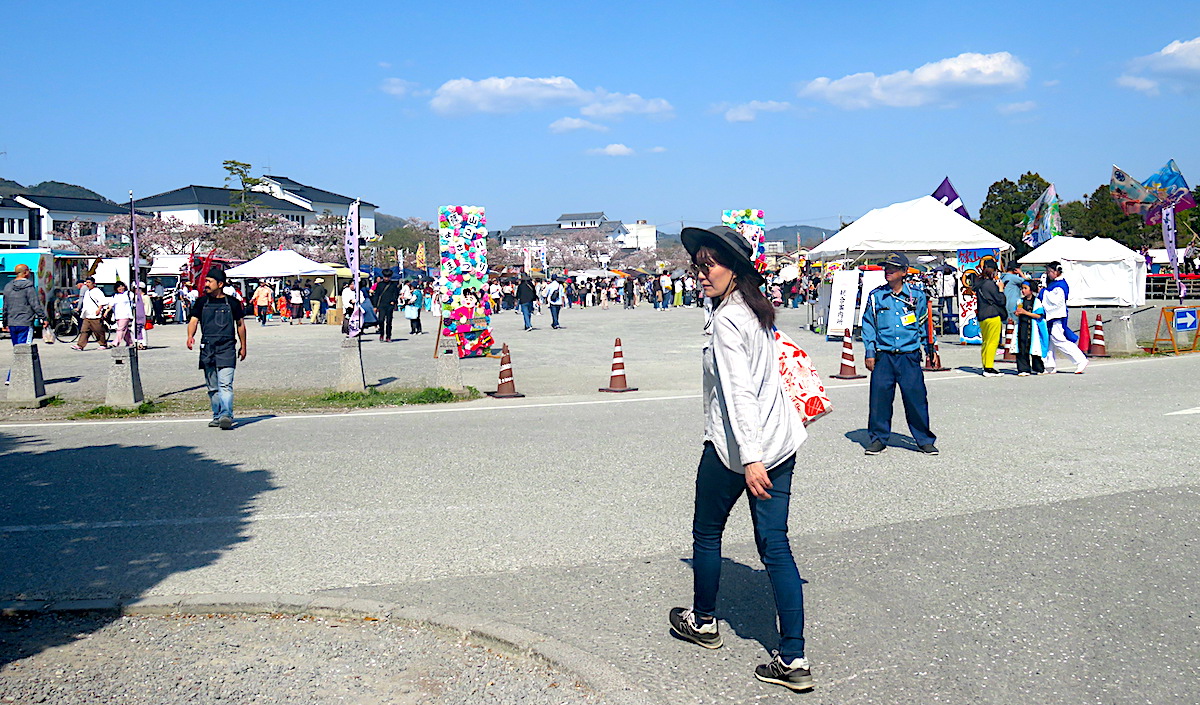
The fun and excitement never lets up here. This past weekend, there was another festival here in Tambasasayama, a somewhat unusual one. Mind you, the previous weekend we had our splendiforous, annual Cherry Blossom Festival, celebrating — you guessed it — the blooming of the cherry blossom trees, which populate the landscape here in the thousands. So, neither Masumi or I expected yet another festival so soon.

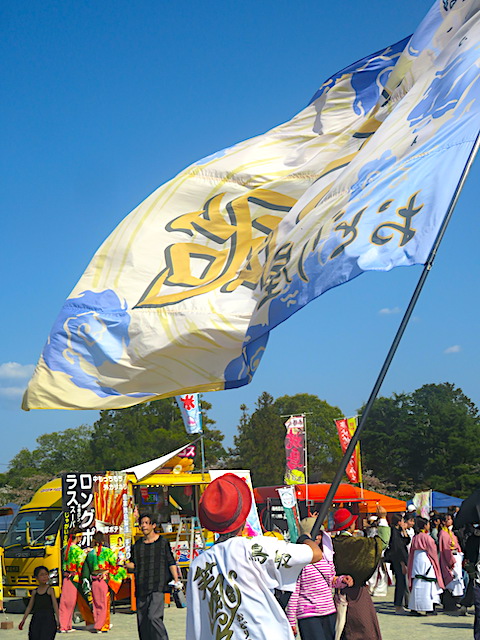
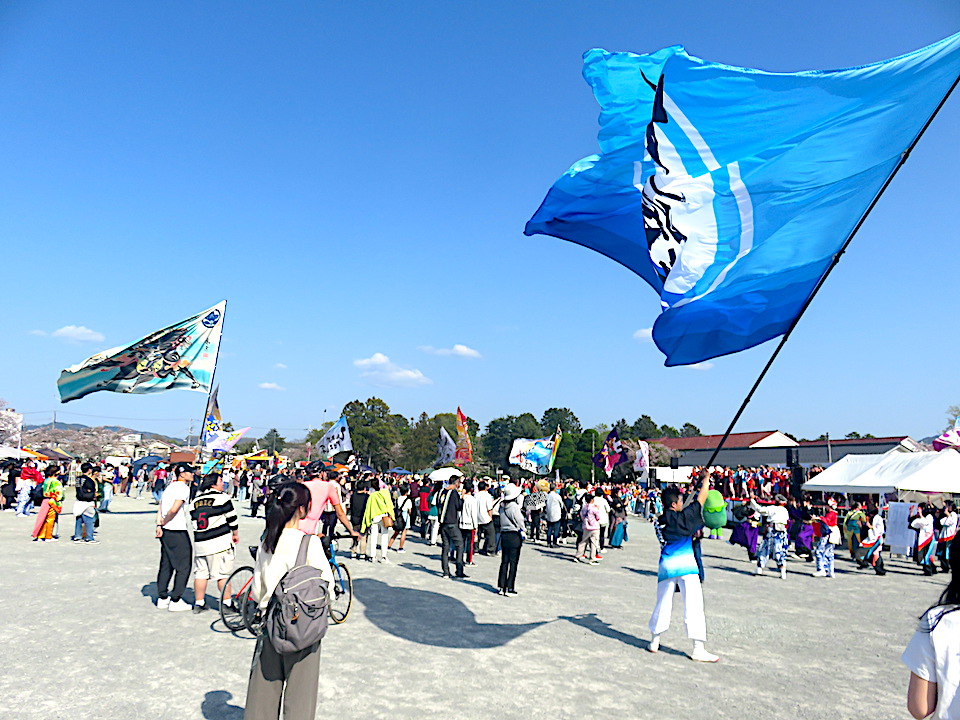
I should point out that Masumi warned me that this surprise festival, the Yosakoi Matsuri, is a noisy, obnoxious affair. Specifically, the music is loud, grating, and frankly impossible to categorize. It’s modern, has a big cosmic beat, uses modern instrumentation, and borrows from multiple genres — hip hop, electropop, jazz, rock — occasionally hints at “traditional” Japanese music without sounding in the least traditional. Its primary purpose is to support the dancing and flag waving on and near to the main stage. In terms of the dancing, there we see again, a blend of dance moves drawn from all over the map. There’s a short video at the end of this article, which offers the overall “look” but is not at all representative of most of the performances. It has a very traditional vibe. Most of the rest of the dancing looked like high school dance teams.

Anyway, it’s all good fun. People seem to enjoy the performance, though the music reminded me I need to carry my earplugs wherever I go. You just never know.

Here are some random shots of the festival . . .


And here is a very short video of the type of action we saw on stage . . .


There you have it, folks. What can I say? Life in Japan, out here in the countryside, never loses its charm.

facebook sharing button Share
twitter sharing button 


[ This originated at the author's personal website . . . https://jdrachel.com ]


Life In Japan: Yosakoi Festival | John Rachel


Saturday, September 16, 2023

Life In Japan: Hyogo Prefecture, Breadbasket of Asia | John Rachel

Without wanting to sound like a broken record, living in an agricultural region — and this could be anywhere in the world — is still an adventure for me, with fresh epiphanies and surprises a regular occurrence. Watching the cycle of plant, grow, harvest puts life on a unique timeline. I love it!

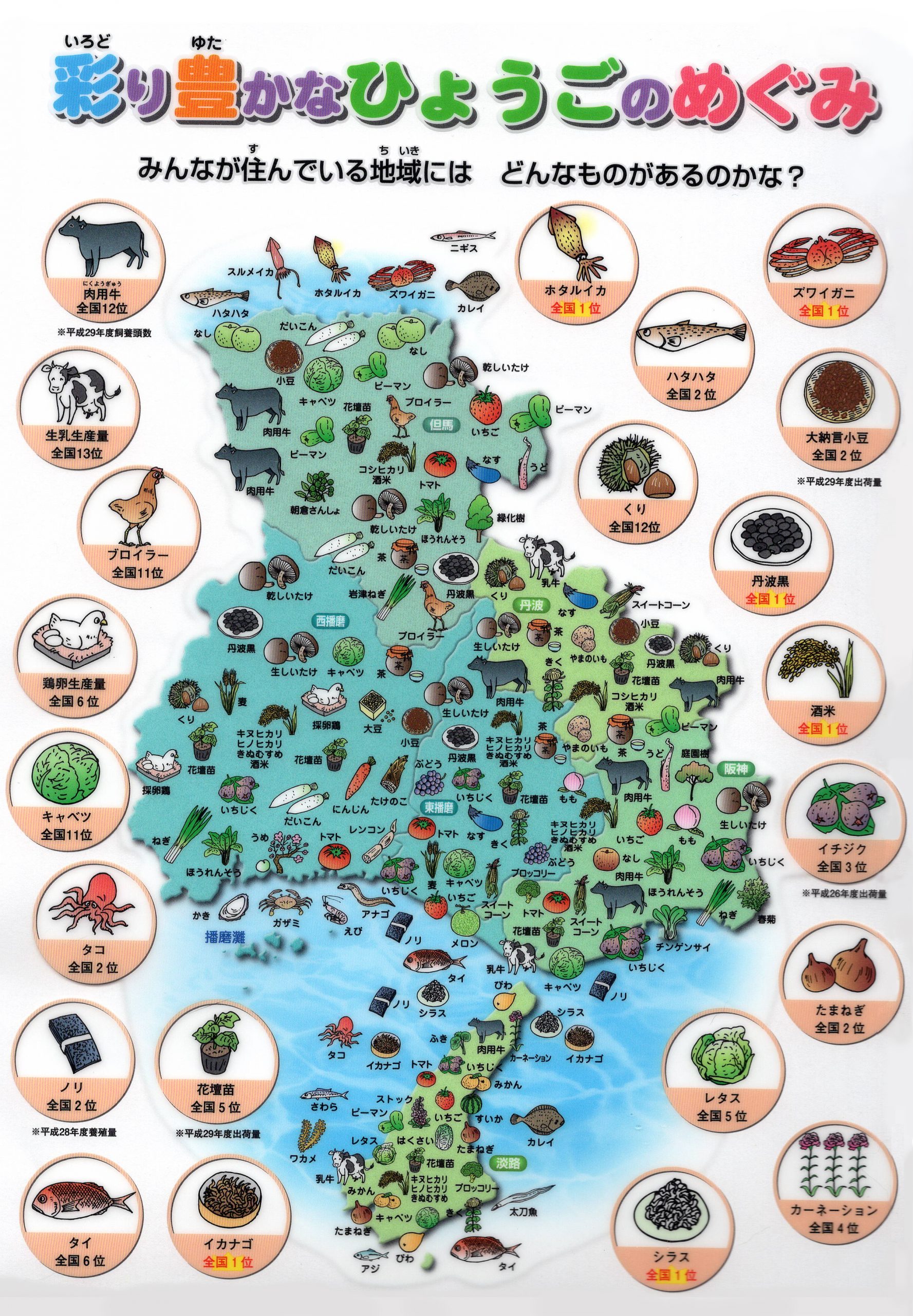
We live in the middle of farm fields. Most of what is being grown appears to be rice and soybeans, which are called kuromame [ 黒豆 ] i.e. black beans. Tambasasayama is famous across Japan for its black beans and the streets are packed with tourists at harvest time.

Little did I know that Hyogo Prefecture — the equivalent to a state or province — is among the top producers in a host of other agricultural products. As you can see from the mapping above, the abundance is astonishing. For the record, these are at the top of the list for all of Japan:

#1 Crab 
#1 Black Soybeans 
#1 Sake Rice
#1 ShirasuIkanago
#2 Onions 
#2 Red Beans 
#2 Seaweed Paper
#2 Octopus

Why am I telling you this?

Darn good question!

Maybe a better question is . . .

Why are you reading this?


[ This originated at the author's personal website . . . https://jdrachel.com ]


Life In Japan: Hyogo Prefecture, Breadbasket of Asia | John Rachel