Since leaving America August 2006, I have traveled to sixteen countries. A great deal has happened. This site is to share my thoughts, photos, music, writings, travel experiences, and developing political/social commentary with you. I hope you find it interesting and informative.
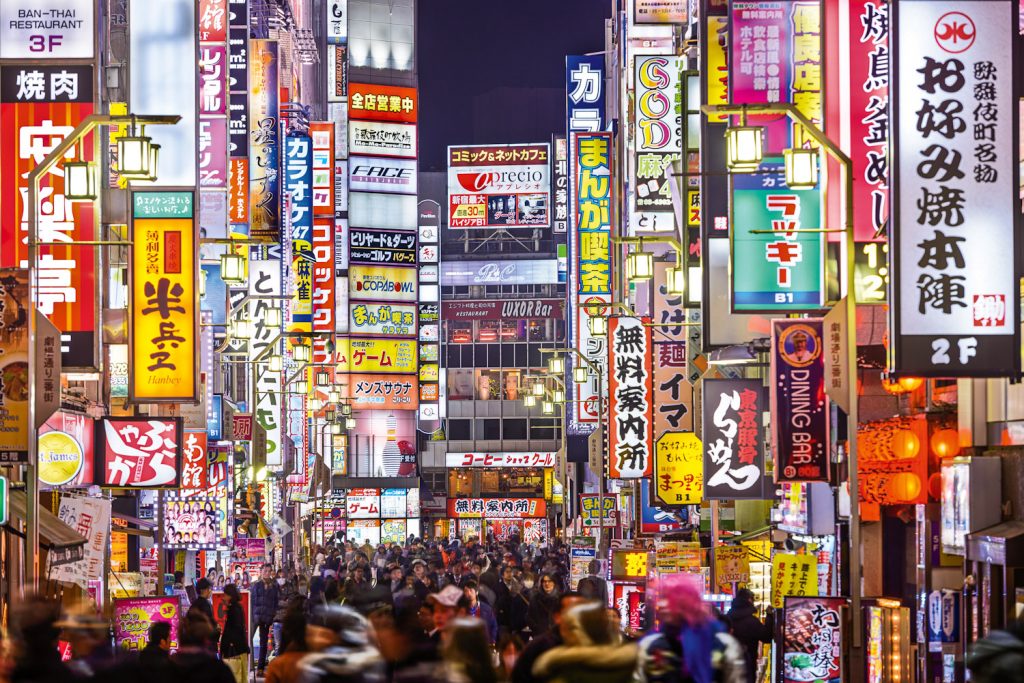
Lots of buildings, cement, gaudy lights, flat-panel displays, high-tech dazzle.
The truth is that 70% of Japan is covered with forests.
As I describe in my book LIVE FROM JAPAN! and make vividly apparent with over 450 photos, my Japan is beautiful green fields of rice, soybeans, and many other vegetables, flowering and fruit trees, domesticated and occasional wild animals — monkeys, foxes, ferrets, raccoons, wild boar, even bears — countless varieties of birds.
But proof positive from my camping trip last week, after living here for almost 13 years, I still haven’t seen it all. Every time I venture into a new area of this relatively small country, I’m astonished by some side of Japan I couldn’t have imagined.
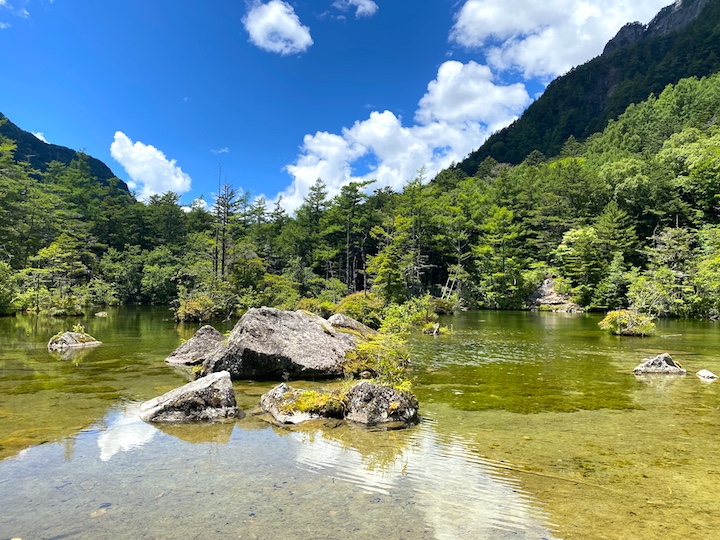
My wife and I just spent three days in the “Japanese Alps” — Kamikochi — a mountainous region in Nagano Prefecture. We hiked, checked out the scenery, breathed the refreshing clean mountain air, viewed the deep blue of a sky that is only rivaled by perhaps the Swiss Alps or the rich azure we experienced in Leh, Ladakh (northern India) some years back.
Words completely fail to capture the beauty of Kamikochi. So feast your eyes on some pics!
Pandas are not native to Japan. They’re from China. But Japanese people love them, my wife among their biggest fans. And as close as I can determine, there are eleven of these beautiful, fascinating creatures, living here in Japan right now: seven at Adventure World in Wakayama, one in Kobe, three in Tokyo.
A baby panda was just born in Wakayama this past November. At first they thought it was male, but panda experts arrived from Chengdu, China and on closer examination, little 楓浜 — Fuhin is the name given to the baby panda and you can even watch the naming ceremony on YouTube — turned out to be a female.
Why are panda births such newsworthy events?
Aside from all the usual complications and obstacles which impede successful fertilization and full-term pregnancies, then the newborns striving to survive their frailty the first month or so, giant pandas are only fertile in the spring of each calendar year for 12-25 days, and “in the mood” — receptive to mating — for 2-7 of those days.
Thus typically, a giant panda only gets pregnant every two years.
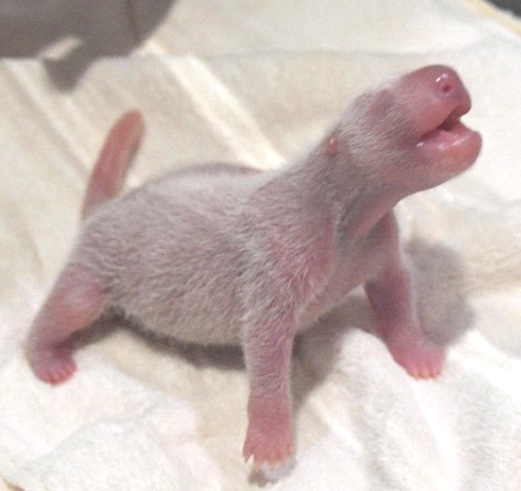
When baby pandas are born, relative to their mothers, they are very tiny, usually around 100 grams (3 1/2 ounces).
Fuhin is now 4 1/2 months old and it’s almost impossible to believe how much she has grown since the above photo, taken soon after she was born. Here is a very recent video.
Anyway, my lovely wife with her unique fascinations, and I, curious and always open to encounters with new species, set out in a joint pursuit of “panda love”, spending a couple days in Wakayama, a splendid area of Japan to the southeast of Osaka. We saw three giant pandas, but not baby Fuhin, who was still safe in her private quarters, not on public view.
Then ten days later, we went to Kobe to visit Tan Tan, who is a mature 25-year-old female — that’s the equivalent of 60-70 in human years — notable for her very short legs. She has been a favorite among panda watchers for over 20 years now!
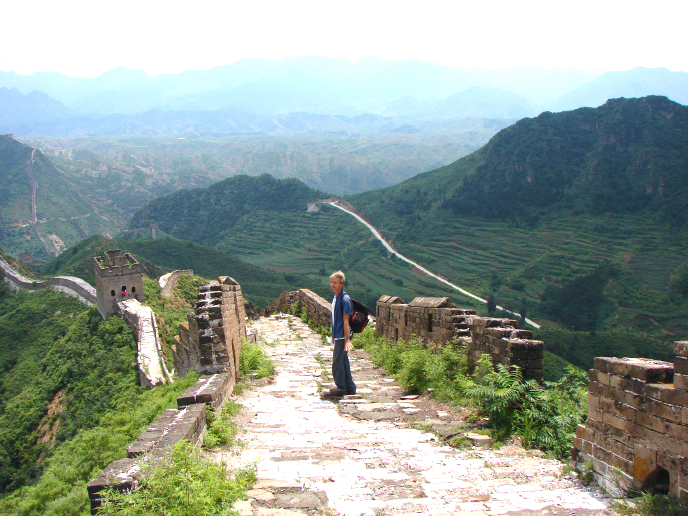
Let’s see. That leaves three more to see in Tokyo. Then we’ll just have to go directly to Giant Panda headquarters in Chengdu, China. I’m embarrassed to say that I personally was in Chengdu back in 2009 but didn’t visit the panda breeding center there. What can I say? I only had seven days there and Chengdu is a huge city with a host of very interesting attractions and things to do. I did make it to the Great Wall!
Watch for updates. Our new found panda obsession will not be going away soon.
When attending a pop concert in Japan, often you are confronted with a difficult choice: Do you watch the audience or the stage?
At least that was the case with my first major concert here, which was Lady Gaga in Kobe, April 2010. She was near the peak of her international acclaim. Understandably, this was a big event by any measure in any country -- at least in terms of pop culture extravaganzas -- an arena concert with tens of thousands of adoring fans, expectations maxed out by all of the hoopla and press lavished on Gaga over the previous two years, as she started pumping out hit song after hit song and became the megastar talk of the town -- which included every town on the planet that had electricity and TV screens.
The Lady was in good form. But honestly, the audience provided more than its share of fun and excitement. It was pop diva cosplay at its finest!
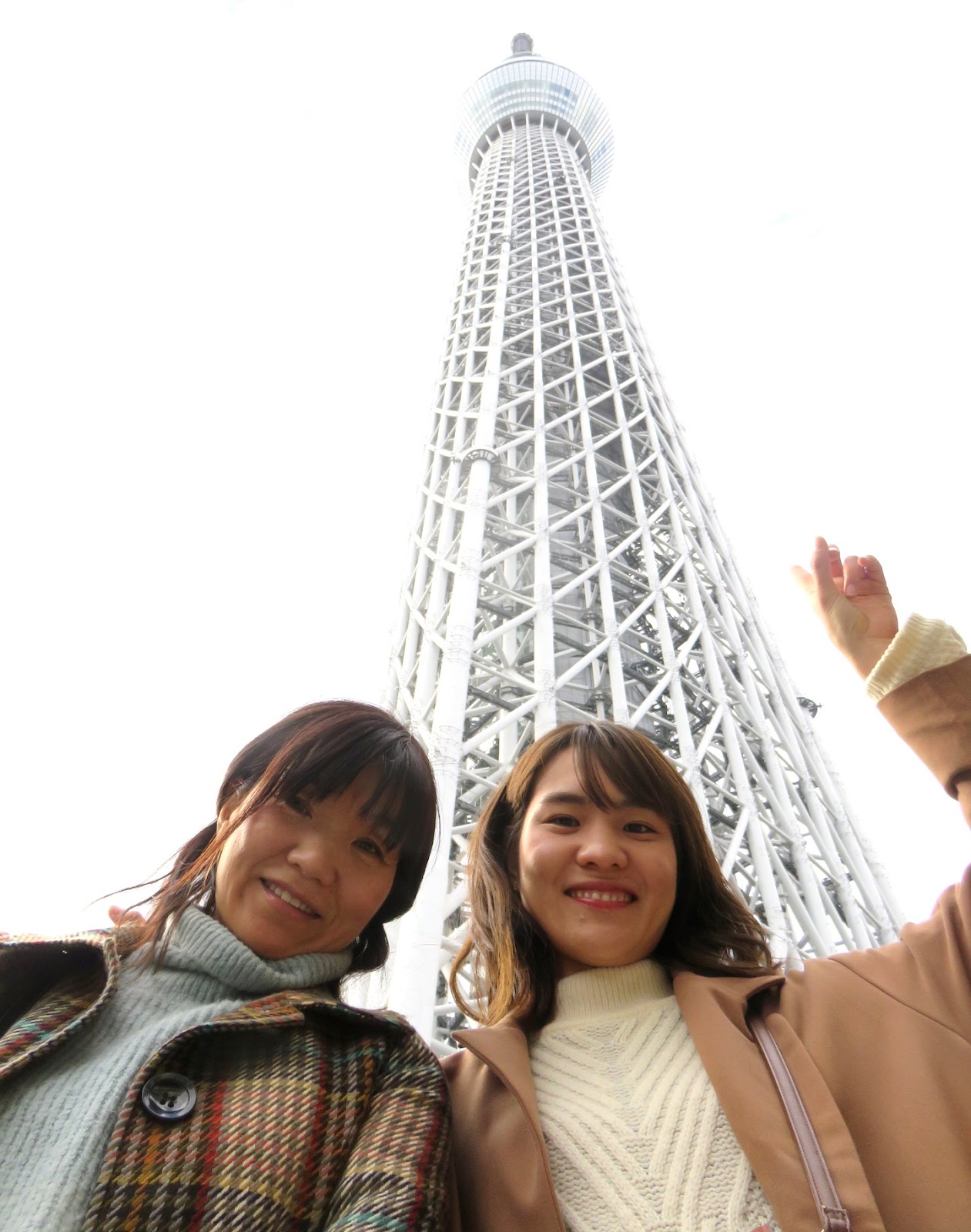
Fast forward 8 1/2 years -- OMG! has it been that long? -- my wife Masumi, her daughter Izumi, and yours truly take the overnight bus to Tokyo and kill the day seeing the sights.
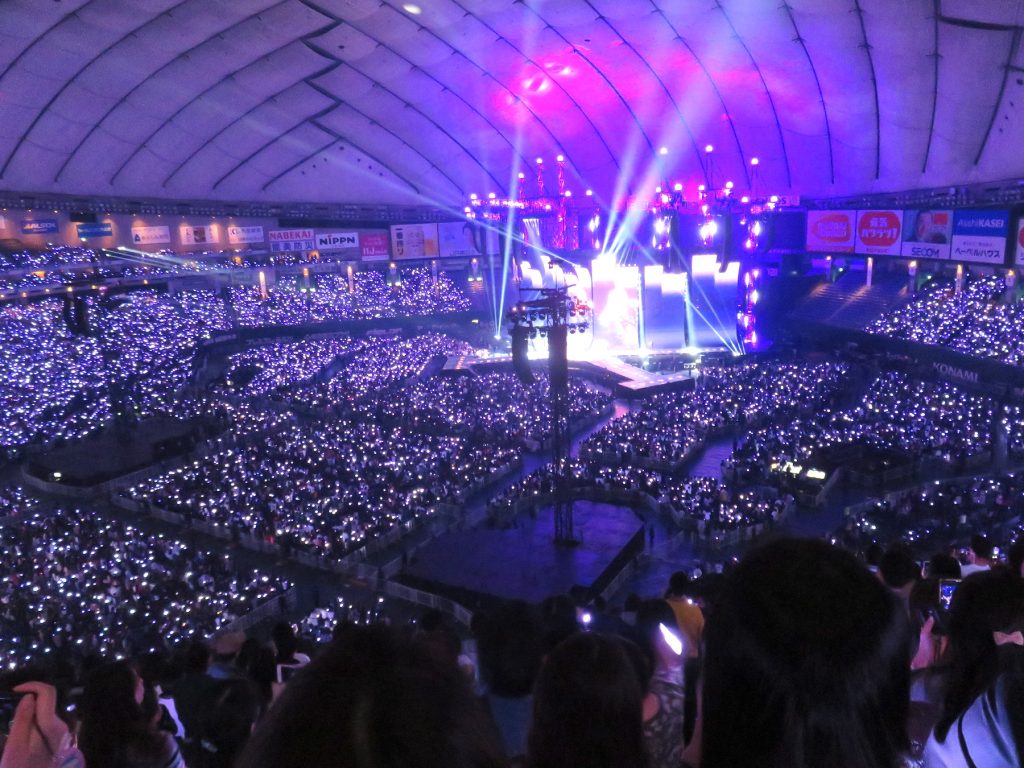
Finally, we ambled like sheep with close to 50,000 other folks into the Tokyo Dome for an evening of pop entertainment featuring Charli XCX and Taylor Swift.
The audience again was a big part of the action. But it wasn't so much the result of hordes of Taylor Swift wannabees. It was because we were actually wired into the lightshow itself. Maybe 'wired' is a poor choice of terms. Every member of the audience was given an LED wrist band as we entered the arena, each of which was wirelessly connected to the computer-controlled light board. It was mind-blowing to see whole sections light up and flash in one color, the other sections different colors. Sometimes a huge wave of color swept around the arena, other times the entire audience sparkled like tens of thousands twinkling stars. Technology! Things had come a long way since my last stadium tour experience in Kobe, which by comparison now seems almost primitive.
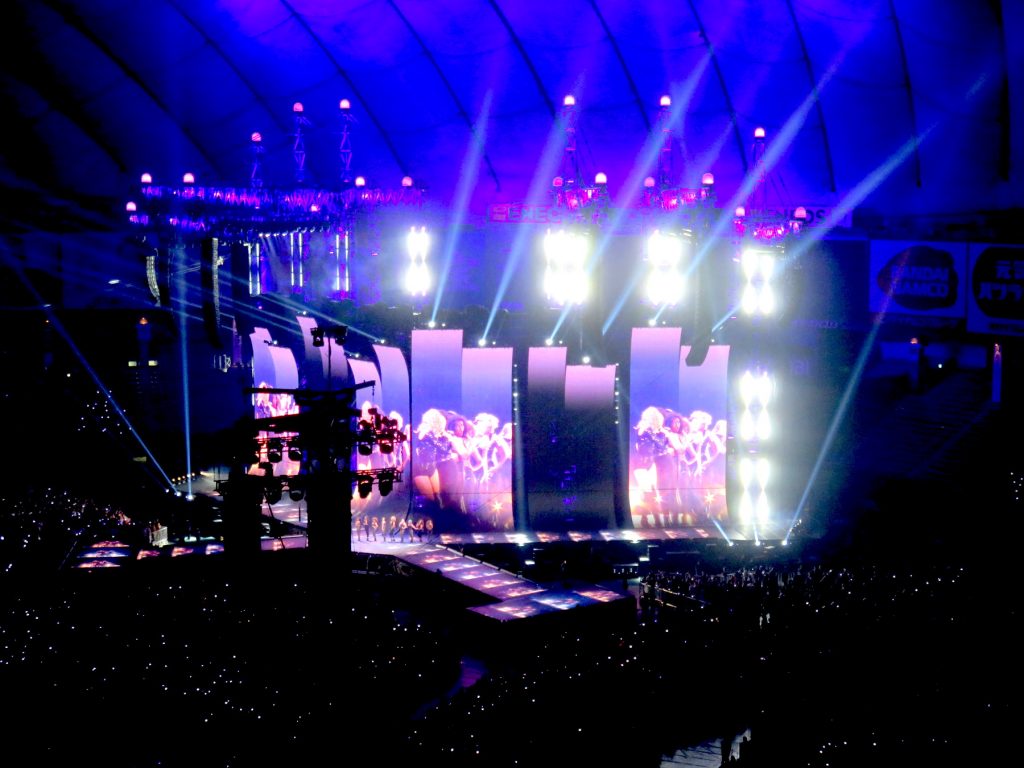
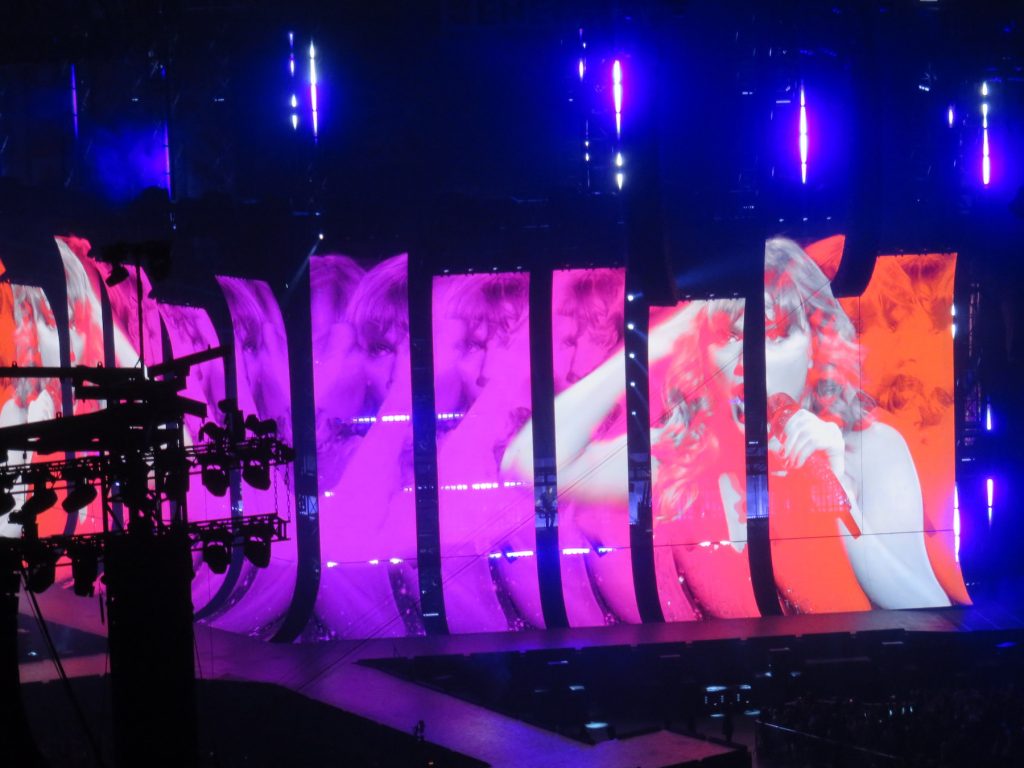
Of course, enormous flat-panel screens have been around for quite some time. But for Ms. Swift, the show's producers spared no expense. I didn't take any video. It wasn't allowed. There was even talk that they'd be confiscating all cell phones and digital cameras at the door. That fortunately didn't happen, so at least I got a few still shots.
Was I impressed? Taylor Swift has some great songs. But regardless of the incredible advances made in audio and lighting, an arena is an arena and it sounds like an arena. It was loud and a bit cacophonous. despite Taylor's best efforts to connect with each and every one of us as her much treasured fans, songs which might be savored at home with earbuds or headphones in a dimly lit room with a banana daiquiri at your side, or even danced to in a club with good friends and good cheer all around, were as personal as the opening ceremonies at the Olympics. Lots of spectacle, not much soul, and absolutely no heart. Sorry, Taylor. My advice: Never hold a cocktail party in an airplane hangar.
At the same time, we all knew what we were getting in to. So the audience loved it. Smiles all around, everybody had a good time. There was a lot of love in the Tokyo Dome from beginning to end.
Of course, I've always heard that Western artists love to play Japan, because the fans are always so warm, enthusiastic, and appreciative. They are!
I wrotebefore, about Japan's love affair with Western culture, especially pop culture. While it makes sense for obvious reasons, it's still somewhat a source of bewilderment -- or is that reverse cultural chauvinism? It makes sense because Western culture driven by multinational capitalism is turning the world into a big homogenous cream puff. And who doesn't like cream puffs? Even so, having traveled as much as I have over the past 14 years, sampling if only superficially the cornucopia of cultures, dress, art, music, food, lifestyles, community and family organization, spiritual landscapes, and social values that are still out there, I hate to see everything replaced by cream puffs.
In many ways, the Westernization of Japan highlights those highly traditional aspects of the country which make it uniquely Japan. But the question arises: How far can this go? How Americanized can Japan become before it just becomes a bad copy of a once-great nation which has become a faltering empire facing inevitable decline and dissolution? Perhaps, if nothing else, Japan might start looking for a better role model.
None of this, of course, came up at the Taylor Swift concert. Why would it?
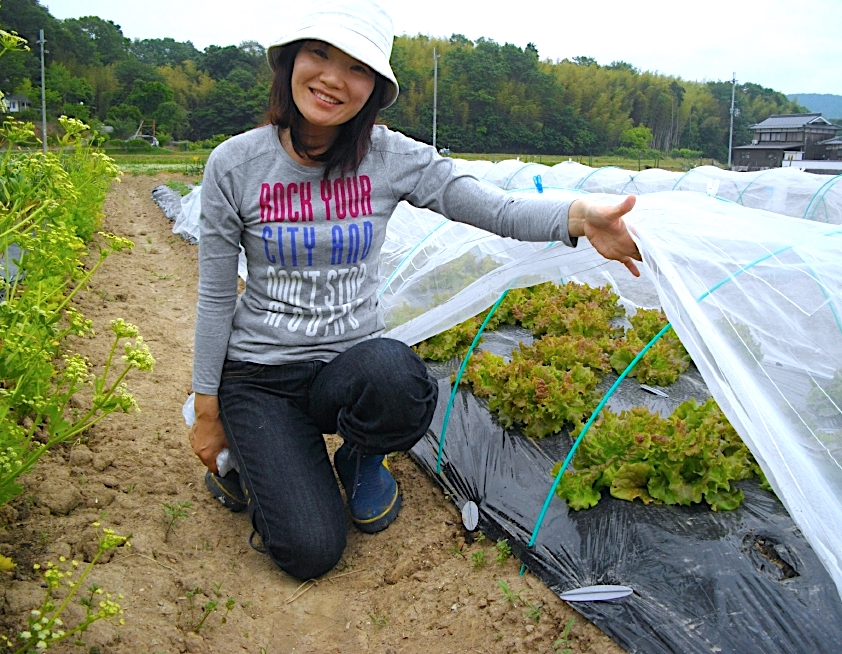
Gardens are the thing here in Japan, especially vegetable gardens.
Growing food for personal consumption is such a part of Japanese culture, even in Tokyo, by population the largest city in the world, there are plot-share farms, rooftop gardens, and at least one major company that devotes a significant amount of its office floor space to growing an impressive variety of fruits and vegetables.
It's commonly known that land use by the Japanese is extremely efficient, meticulous, ingenious. Everything I've experienced here over 12 years, substantiates that. Even out here in the sticks where I live, hardly under the pressures associated with the population density of cities, every patch of terra firma is treated as a valuable asset.
It's entirely obvious why this is the case. Compare Japan with the United States.
While both are highly-industrialized, complex and extremely modern societies, with very mobile populations, large cities, vast swaths of land allocated to industrial-service sectors and for housing millions of people, Japan comes up short from the get go. The total area of the U.S. is 3,531,905 square miles (9,147,592 square km). Japan is only 145,925 square miles (377,944 square km). Meaning it's just over 4% of the size of the U.S. -- Japan is about the size of Montana, just one of the 50 U.S. states.
Yes, Japan has fewer people. The U.S. now has just over 330 million people, Japan just under 127 million. It's still vastly disproportionate: Japan's 38% of the U.S. population must use land that is at best about 4% the size of America, a continental landmass which stretches sea to shining sea, embracing vast undeveloped, underdeveloped and natural tracts in between. Visit states like Wyoming, Nevada, Utah, Montana, Arizona, New Mexico, North and South Dakota, Texas, and you'll see what I mean.
Moreover, a considerable amount of land in Japan consists of mountainous terrain. Japan was formed in ancient times by volcanoes. While this offers beautiful landscapes and good trekking, the short of it is that there's much less usable land in Japan. Much less! Only 12% of the land in Japan is arable, compared to 20% for the U.S.
So Japanese put every square meter they do have to good use, and make it work for them.
Add to that the nutritional benefits of eating food that's not produced by factory farming, but grown in small amounts without machinery and a minimum -- sometimes none at all -- of chemicals. The result is in Japan, vegetable gardens are ubiquitous. Here in my own community of Sasayama, it seems like everyone has a vegetable garden.
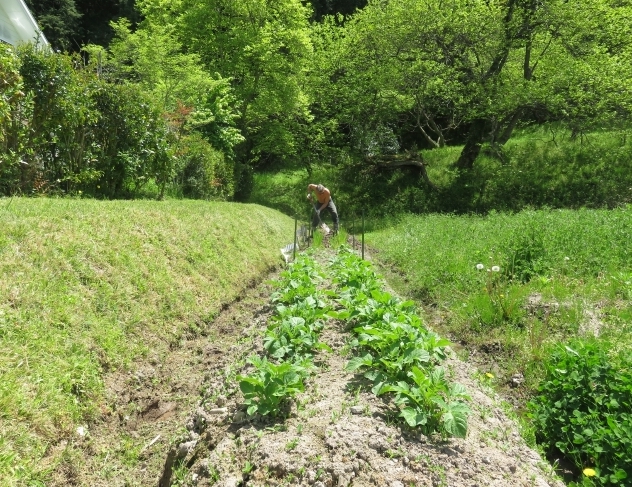
Even yours truly gets in on the action from time to time. As a city-boy born and raised in the industrial heartland of Detroit, Michigan I have to confess to a bit of awe when a seed or two actually sprouts, grows, and I end up with the fruits and vegetables of my personal labor on the dinner table. Here is the naked American getting things ready to plant some seedlings.
That was last season, working our vegetable row, a single strip my wife and I rent from a neighbor. We ended up with tomatoes, bell peppers, zucchini, eggplant, onions, garlic, a couple melons which got stolen by some local monkeys, then late in the season soybeans.
Credit where it's due: Masumi actually knows what she's doing. I pretty much defer to her on anything agricultural. On the other hand, she doesn't know how to rebuild a Ford V-8 engine. We each have our specialties.