Showing posts with label Westernization. Show all posts

Friday, April 14, 2023

Life In Japan: Time Machine

I’ve lived in Japan, coming and going, for sixteen years, and I’ve discovered that every major city in this country has a unique personality. This really should come as no surprise. Would anyone in the U.S. think that Miami and Detroit aren’t dramatically different? Cleveland and San Francisco? Seattle and Washington DC?

But we carry preconceptions, prejudices when we go to foreign lands. We are at first probably overwhelmed by the dramatic shift in scenery and gravitate toward cultural commonalities, seeing all the things that cities and communities and the culture in general have in common, meaning in this instance, identifying and focusing on what we expect to see wherever we go in Japan: those cultural, social, religious, architectural features which make Japan . . . Japan.

Eventually, hopefully sooner than later, the scales fall from our eyes and the perceptual filters are replaced with more sensitivity and perceptiveness, a clear and objective view.

It took a while for me. I’m no different than anyone else who grew up in the West, saddled by prejudices and misconceptions, stereotypes we are relentlessly bombarded with in the bubble of U.S. “exceptionalism”. We get these from every direction: the media, movies, television. For example, I imagined Japan pretty much all looked like downtown Tokyo. The amazing truth is, 70% of this country is covered with forests. This is a land of stunning natural beauty, not cement, glass and glaring lights.

Eventually, I began to objectively “process” what I was seeing, hearing, smelling, touching, tasting — this last one being very important in such a food-centric society.

As anyone who follows me here knows, I live in Hyogo Prefecture with my Japanese wife, Masumi — we just celebrated our 11th wedding anniversary! We live close to three major cities: Kobe, Kyoto, and Osaka. Talk about distinct personalities! Kobe is our favorite, though Kyoto is the one best-known by international travelers for its geishas, and exotic temples and shrines. Osaka is exciting and fun, to say the least. But Kobe is originally the home of Masumi’s family, though they’re now scattered about.

Over the course of our courtship and marriage, we’ve been all over Japan, from Hokkaido in the north — a stone’s throw from Russia — all the way down to Hateruma, the southernmost island in Okinawa — a stone’s throw from Taiwan.

Even so, there was one place 13 hours west of us by car, we yet had to visit.

NAGASAKI!

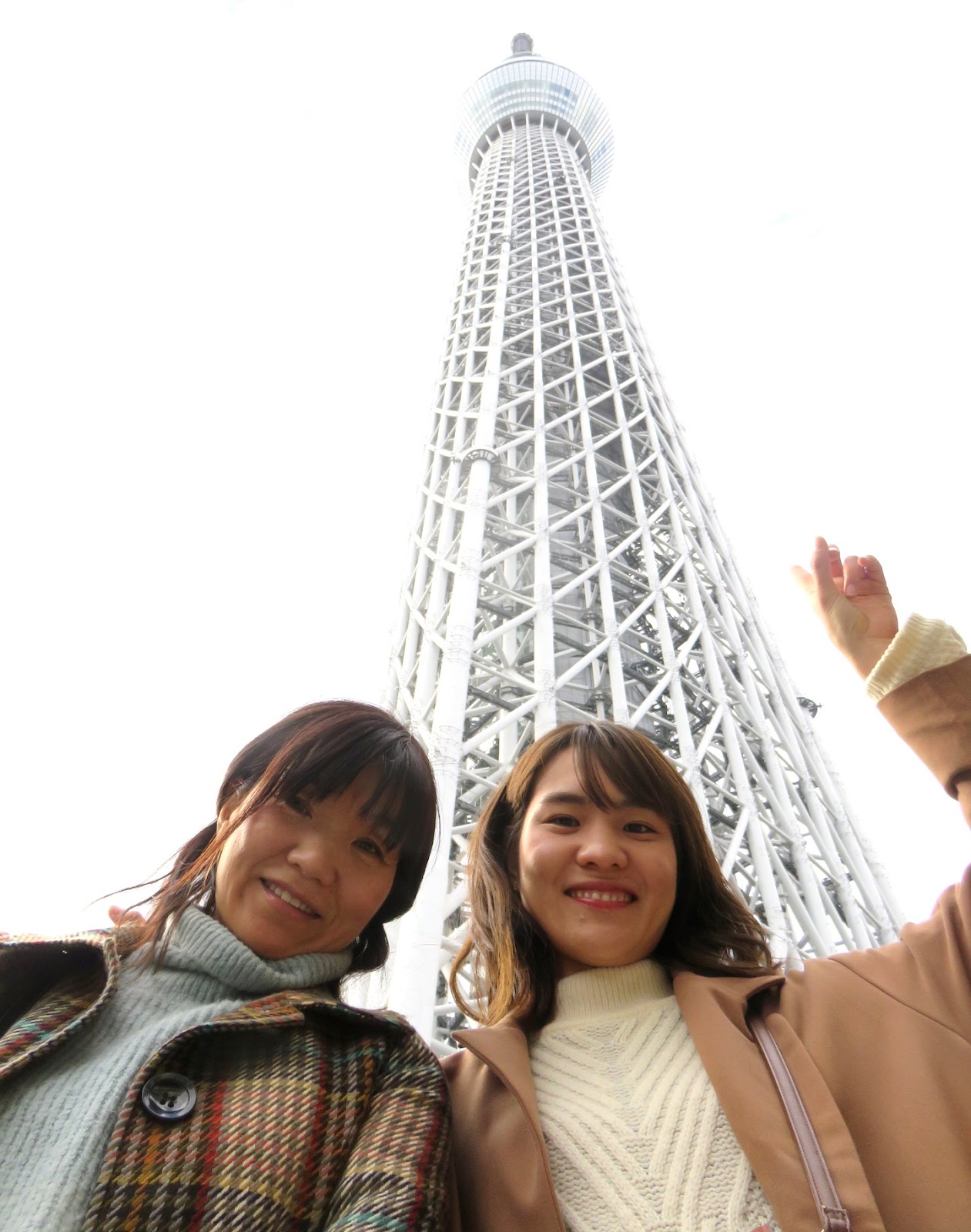
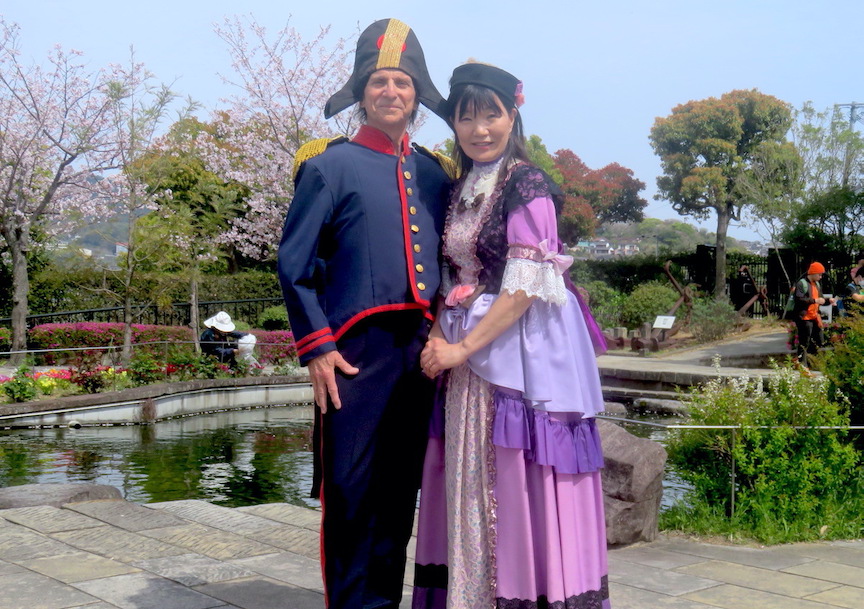
It’s easily the most Westernized city in Japan. See for yourself.
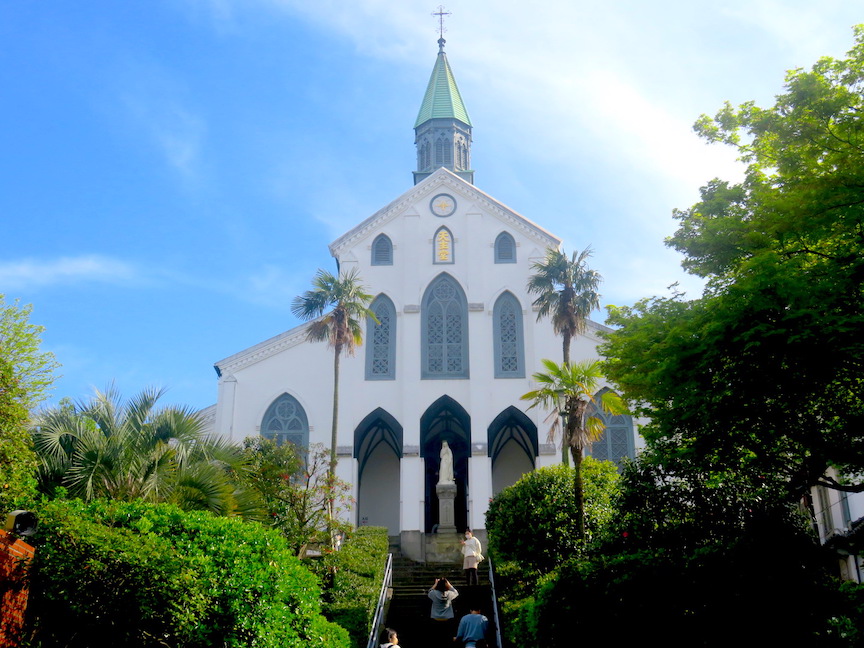


Maybe I should have called this article ‘Life In Japan: Culture Machine’. As you can see, we weren’t just transported in time, but were given a taste of a completely different culture, that of Europe in the 19th Century.
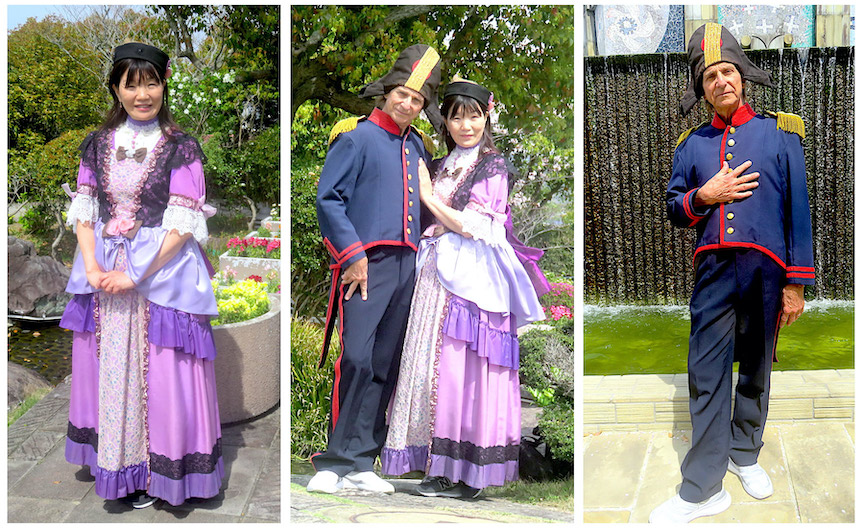
While I thought Masumi looked spectacular, I can’t tell you how ridiculous I felt in that outfit. At the same time, I’m generally feeling pretty ridiculous these days. Should I embrace a whole new persona on Facebook? To heck with peace. Fire the cannons!
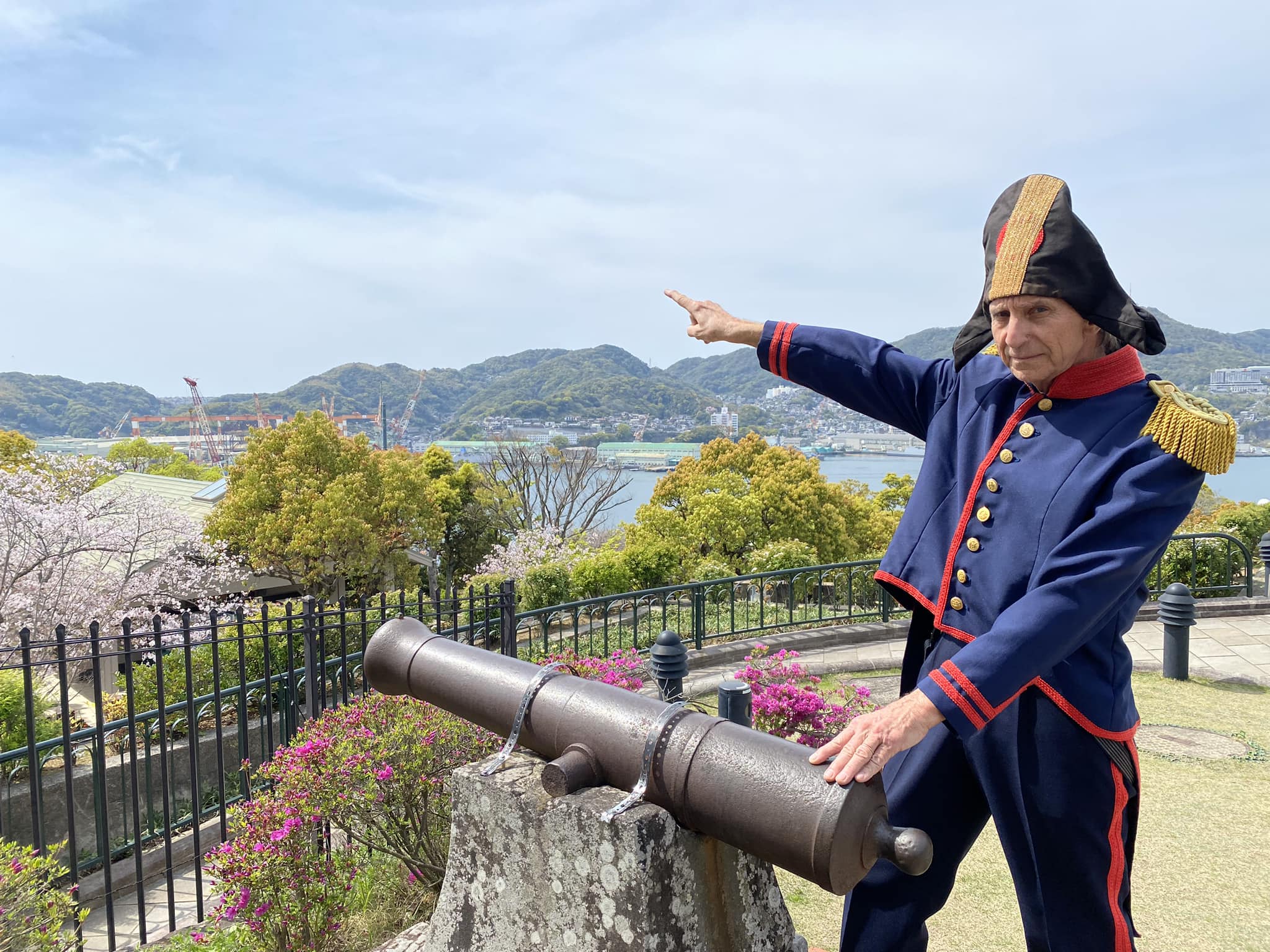
By the way — and I’ll make this short and sweet — the reason for the “Westernization” is very straightforward. During the Meiji Restoration, Japan finally opened itself up to trade with the West. The influx of traders was led by the Portuguese, then the Dutch, who carted everything they needed to feel at home in the Land of the Rising Sun: clothing, diet, churches, religion, architecture, etc.

This is not to suggest the Japanese welcomed the cultural “pollution”. In fact, at first visitors were confined to an artificial island in the harbor of Nagasaki, so they couldn’t mix with the local population. This area is called Dejima. It has been reconstructed near the original wharf, which is where we took a few photos. When ships arrived, the sailors and businessmen had a military escort take them to directly Dejima. Obviously, there was some interaction within the confines of the island, as the traders made deals with the local Japanese. Also, since there were no women accompanying the travelers, Japanese consorts were allowed in to service the needs of the all-male population. But for a long time mobility was extremely limited.

As we all know from the McDonald’s restaurants in Paris and Beijing, cultural creep can be insistent. Eventually, more and more of the West infiltrated Nagasaki. Houses and churches — though for many years Christianity was aggressively oppressed by the Japanese — eventually were built outside of Dejima on the mainland, and it is these remaining structures which give Nagasaki its truly distinctive Western character.

[ This originated at the author's personal webpage . . . https://jdrachel.com ]


Life In Japan: Time Machine | John Rachel


Friday, March 20, 2020

Life In Japan: Taylor Swift in Tokyo


When attending a pop concert in Japan, often you are confronted with a difficult choice: Do you watch the audience or the stage?

At least that was the case with my first major concert here, which was Lady Gaga in Kobe, April 2010. She was near the peak of her international acclaim. Understandably, this was a big event by any measure in any country -- at least in terms of pop culture extravaganzas -- an arena concert with tens of thousands of adoring fans, expectations maxed out by all of the hoopla and press lavished on Gaga over the previous two years, as she started pumping out hit song after hit song and became the megastar talk of the town -- which included every town on the planet that had electricity and TV screens.

The Lady was in good form. But honestly, the audience provided more than its share of fun and excitement. It was pop diva cosplay at its finest!


Fast forward 8 1/2 years -- OMG! has it been that long? -- my wife Masumi, her daughter Izumi, and yours truly take the overnight bus to Tokyo and kill the day seeing the sights.


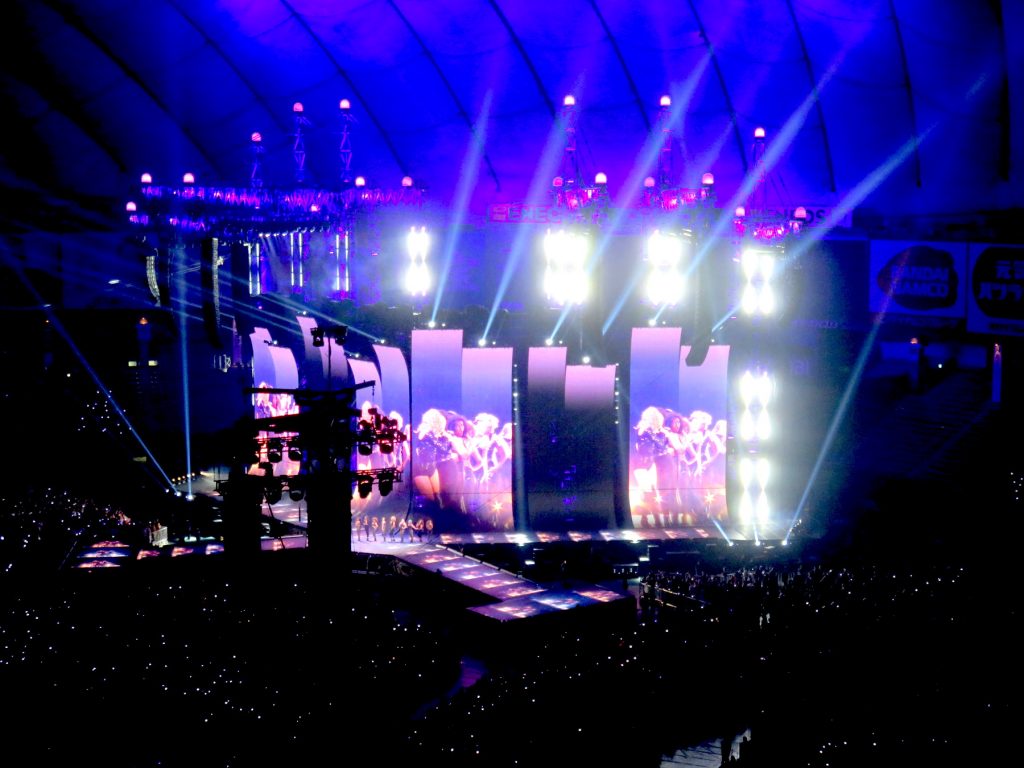
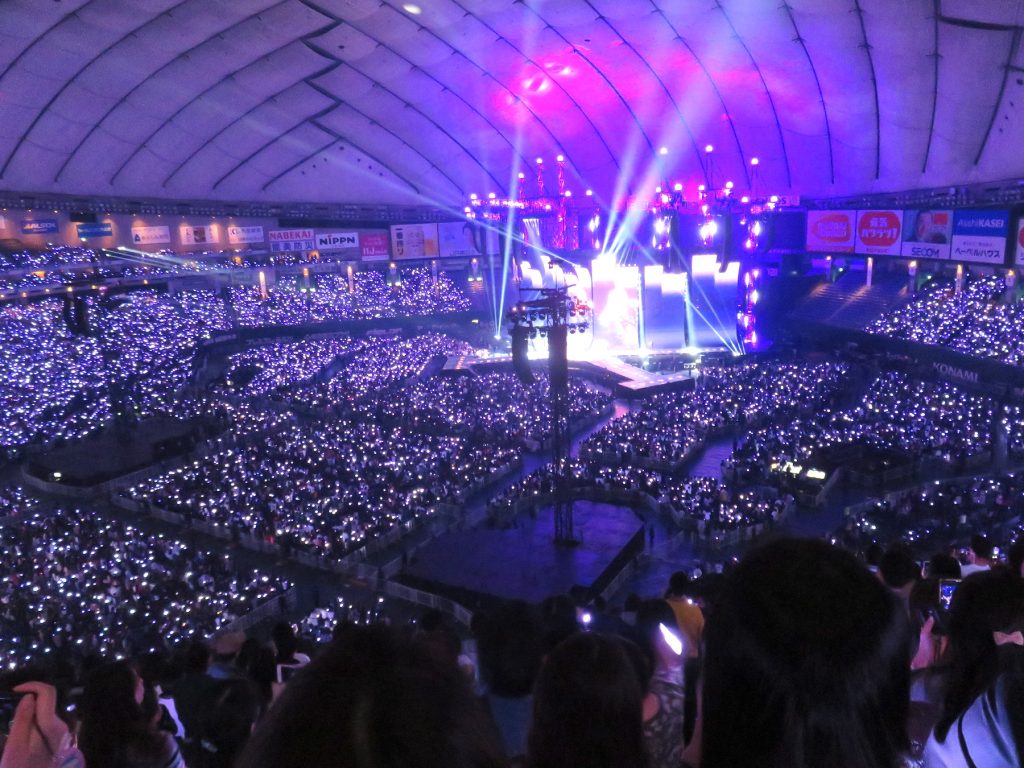
Finally, we ambled like sheep with close to 50,000 other folks into the Tokyo Dome for an evening of pop entertainment featuring Charli XCX and Taylor Swift.

The audience again was a big part of the action. But it wasn't so much the result of hordes of Taylor Swift wannabees. It was because we were actually wired into the lightshow itself. Maybe 'wired' is a poor choice of terms. Every member of the audience was given an LED wrist band as we entered the arena, each of which was wirelessly connected to the computer-controlled light board. It was mind-blowing to see whole sections light up and flash in one color, the other sections different colors. Sometimes a huge wave of color swept around the arena, other times the entire audience sparkled like tens of thousands twinkling stars. Technology! Things had come a long way since my last stadium tour experience in Kobe, which by comparison now seems almost primitive.
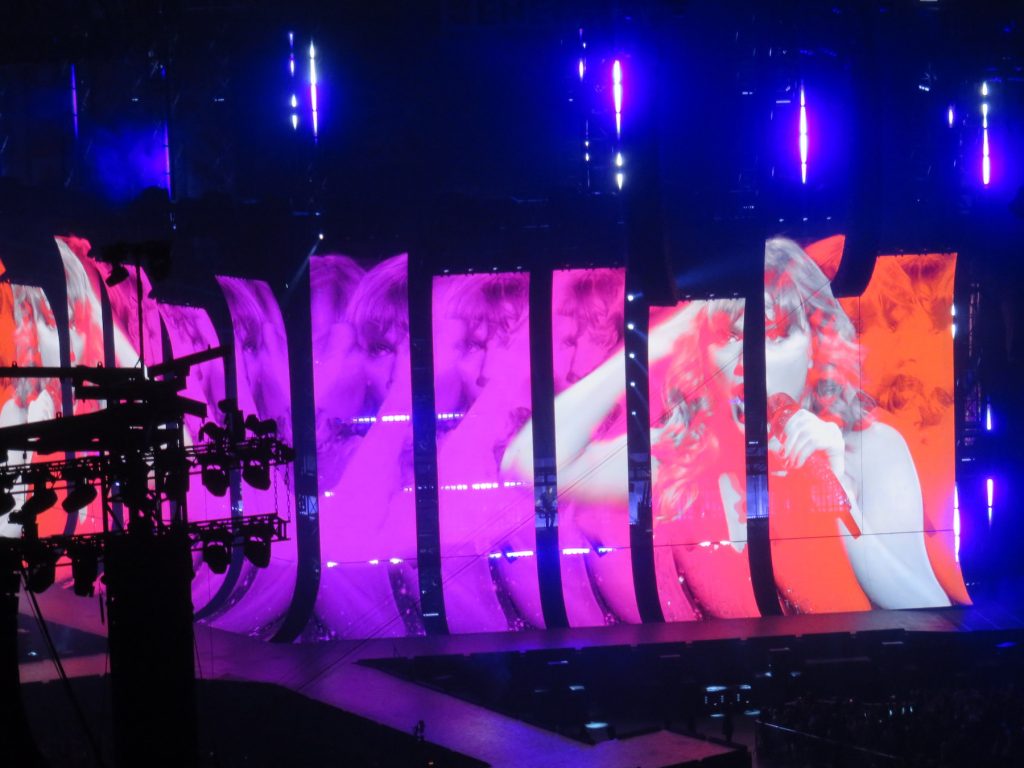
Of course, enormous flat-panel screens have been around for quite some time. But for Ms. Swift, the show's producers spared no expense.
I didn't take any video. It wasn't allowed. There was even talk that they'd be confiscating all cell phones and digital cameras at the door. That fortunately didn't happen, so at least I got a few still shots.

Was I impressed? Taylor Swift has some great songs. But regardless of the incredible advances made in audio and lighting, an arena is an arena and it sounds like an arena. It was loud and a bit cacophonous. despite Taylor's best efforts to connect with each and every one of us as her much treasured fans, songs which might be savored at home with earbuds or headphones in a dimly lit room with a banana daiquiri at your side, or even danced to in a club with good friends and good cheer all around, were as personal as the opening ceremonies at the Olympics. Lots of spectacle, not much soul, and absolutely no heart. Sorry, Taylor. My advice: Never hold a cocktail party in an airplane hangar.

At the same time, we all knew what we were getting in to. So the audience loved it. Smiles all around, everybody had a good time. There was a lot of love in the Tokyo Dome from beginning to end.

Of course, I've always heard that Western artists love to play Japan, because the fans are always so warm, enthusiastic, and appreciative. They are!

I wrote before, about Japan's love affair with Western culture, especially pop culture. While it makes sense for obvious reasons, it's still somewhat a source of bewilderment -- or is that reverse cultural chauvinism? It makes sense because Western culture driven by multinational capitalism is turning the world into a big homogenous cream puff. And who doesn't like cream puffs? Even so, having traveled as much as I have over the past 14 years, sampling if only superficially the cornucopia of cultures, dress, art, music, food, lifestyles, community and family organization, spiritual landscapes, and social values that are still out there, I hate to see everything replaced by cream puffs.
In many ways, the Westernization of Japan highlights those highly traditional aspects of the country which make it uniquely Japan. But the question arises: How far can this go? How Americanized can Japan become before it just becomes a bad copy of a once-great nation which has become a faltering empire facing inevitable decline and dissolution? Perhaps, if nothing else, Japan might start looking for a better role model.


None of this, of course, came up at the Taylor Swift concert. Why would it?


[ This originated at the author's personal website . . . https://jdrachel.com ]


Life In Japan: Taylor Swift in Tokyo


Thursday, July 26, 2018

Life In Japan: Western Arts – Part 2


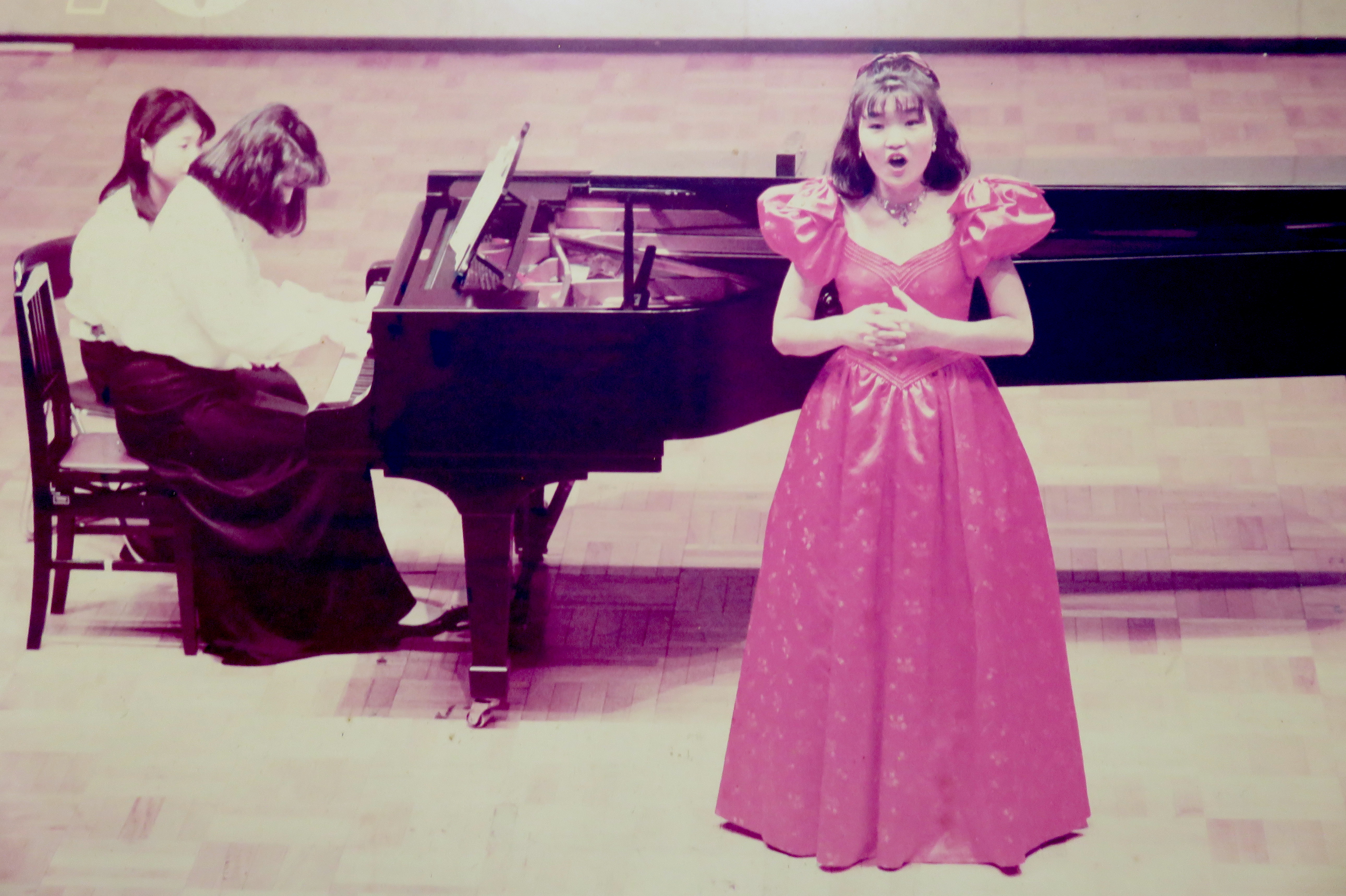
This is a photograph of my wife, Masumi, at age 20 singing Il Bacio by Italian composer Luigi Arditi.  She has been singing opera all her life, plays beautiful classical piano, and dances ballet as a pastime.

I find it a fascinating question why Japan is so enamored with Western art forms, not that I've made any progress coming close to a conclusive answer.


Of course, Japan has always been an eclectic culture.  It has adopted much from the West, including English letters and words, integrated via Romanji, one of their alphabets.  Entire English words were Japanized and have become a part of the ever-evolving vocabulary, e.g. resutoran レストラン (restaurant), aisukurimu アイスクリーム (ice cream).  Going way back, certainly quite a bit has been "borrowed" from the Chinese, most notably, Kanji, another of the alphabets in everyday use.  And in the 19th Century, Japan replaced its cumbersome numbering system with Western Arabic integers.

All of this is the normal cross-pollination of cultures, which occurs when borders become more permeable, trade encouraged and opportunities for tourism pervasive.

Yet, there are some things that either don't translate well, resist integration, because they are simply entirely incompatible with established social traditions and cultural legacies.

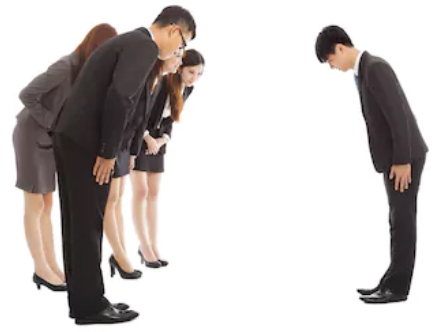
Westerners are touchy-feely, given to open, sometimes histrionic expressions of emotion.  Japan is entirely the opposite.  I suspect it will always remain so.  A respect for privacy in both directions, each individual's large inviolable personal space, shyness and reserve, all are too thoroughly entrenched in the Japanese psyche.  Yes, they may dress like Westerners here, but you're not going to see chest-bumping or hugs and kisses at the mall, or simulated sex on the dance floor.  It's just not going to happen.  Bowing is about as wildly intimate as it gets in public.

That, of course, is an example of steadfast social training. 

But I would have suspected that another type of training would be just as determinant.  I'm referring to ear training.

The Japanese scales -- actually all Asian scales -- are microtonal.  When they don't sound randomly annoying, they sound intentionally grating, at least to my Western ears.  I'm just not used to hearing -- literally not trained to hear -- the two or three notes that purposely occur between C and C# or between E and F.  I'll admit that in my band days I was often accused of tuning my guitar microtonally but that was just a way of saying I had a really lousy sense of pitch.


Regardless of how much their melodies may torment us Westerners, Asians will swear by the beauty of the music they create and listen to.  Their ears are trained to hear, accept, embrace what sounds cosmically wrong to us.

At the same time, Western music and the fundaments for making it have gripped Japan.  And in every form: pop, rock, jazz, classical, blues, rap, hip hop.

Recognize that there are Western arts chauvinists who would say this is inevitable.  They will make a very convincing argument that Western scales are fundamentally superior, more accessible and natural to the homo sapiens physiological mechanisms involved in processing music.

There is a very appealing mathematics to the Western scale.  The 37th key on an 88-key piano is A.  It vibrates at 220 cycles per second (Hz).  The 49th key is also an A, but it's one octave above, vibrating at 440 Hz.  The 25th key is an A that's one octave below, vibrating at 110 Hz.  Nifty, eh?  This suggests the mathematical foundation underlying the tonal relationships among the notes of the Western 12-tone scale.  In fact, this holds together quite nicely until we get to the very bottom and top of the useful musical range.  The math has to be adjusted a bit.  Pianos tuned to mathematical perfection tend to sound sharp at the very top and bottom, requiring at the extremes that the scale be "stretched" to make the piano sound in tune to the human ear.  This is not a flaw in the mathematics.  It's a consequence of the physical properties of the strings of the piano, a stiffness which causes inharmonicity at the extremes.  Thus this need to "temper" the scale doesn't diminish the essential elegance of the theory.


Zeebra, a very popular hip hop artist here in Japan
(Click on pic to see a video.)

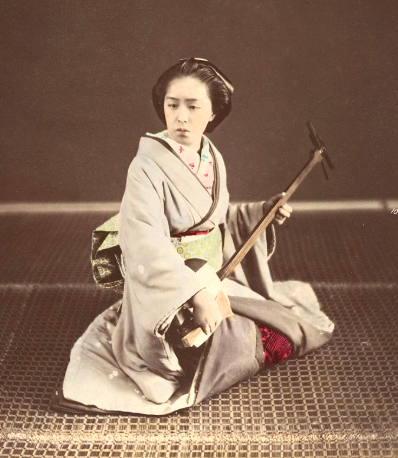
So as I say, it's easy for music experts in the West, the ones juxtaposing Fibonacci spiral graphs on the human cochlea, to posit the intrinsic superiority of a viola over a shamisen, an oboe over a hichiriki, or a flugel horn over a horagai, put in the service of playing the Sound of Music.

They may be right.  But the bottom line is there's really no way to objectively settle the matter.  An anecdotal aside:  I mentioned to my wife the other day that one of my English students sings Japanese folk songs to me.  The lady is very proud of her voice and the songs she had spent her life mastering.  My wife asked me if they were traditional or modern folk songs.  I didn't know there was a difference.  Turns out that traditional folk songs are the original microtonal versions.  Now there are modern versions of those folk songs which make the melodies fit the Western 12-note scale.  Think about that!  They take these amazing songs from time immemorial and update them -- literally Westernize them musically -- for the prevailing tastes of contemporary Japanese listeners.

This seems to suggest some greater inherent appeal in the mathematically-based music system of the West.  But I say it's just a sign of the times.  We have Burger King in Beijing, KFC in Kuala Lumpur, McDonald's in Moscow.  There are rappers and hip hop artists in every country that has electricity, except maybe Bhutan.

My wife, Masumi, of course continues to teach Westernized music to elementary students in a nearby community here in Japan, as part of the official school curriculum.  The kids play recorders, xylophones, accordions, keyboards, snares, bass drums, bongos, congas, and other percussion -- all instruments from the West. And since she still loves singing, she even gives an occasional vocal performance under the auspices of the vocal teacher she's studied with for three decades.  Usually she sings opera, though she occasionally helps me out on my original songs, in my informal home recording studio.

Here she is earlier this year in concert at a gathering in Osaka.


[ This originated at the author's personal website . . . http://jdrachel.com ]


Life In Japan: Western Arts – Part 2