Showing posts with label Nagasaki. Show all posts

Tuesday, May 9, 2023

Life In Japan: The Atomic Bombing of Nagasaki

Several years ago I visited Hiroshima. Very recently I was in Nagasaki. As is common knowledge, these were the Japanese cities on which the U.S. dropped atomic bombs, the only time in history nuclear weapons have been used in war.

Both cities have peace parks, peace memorials, and peace museums honoring the victims of these war crimes and making a noble attempt to get the world to completely abolish these horrifying weapons of mass extermination once and for all.

My reaction after spending several somber hours at each location was: ‘Everyone should be required to see this, learn the truth about the bombings, and come to fully understand the profound existential threat nuclear arms truly are.’
The problem is that the people who visit these sites are folks like Masumi and I who already want peace. And the people who really need to visit them never do, and even if they by chance were somehow to stumble on them would not take any of it in with an open mind, with love in their hearts, with a desire to learn and develop an appreciation of their fellow human beings. They worship war and view those of us who want peace as sentimental fools.

The museums offer a wealth of important insights, insights that are suppressed by our sociopathic “handlers” who know the truth but want to keep it from us normal sane folks, because we would then understand the pure evil that possesses them, their pathological agenda, and the self-destructive obsessions at the core of their desire for world conquest.

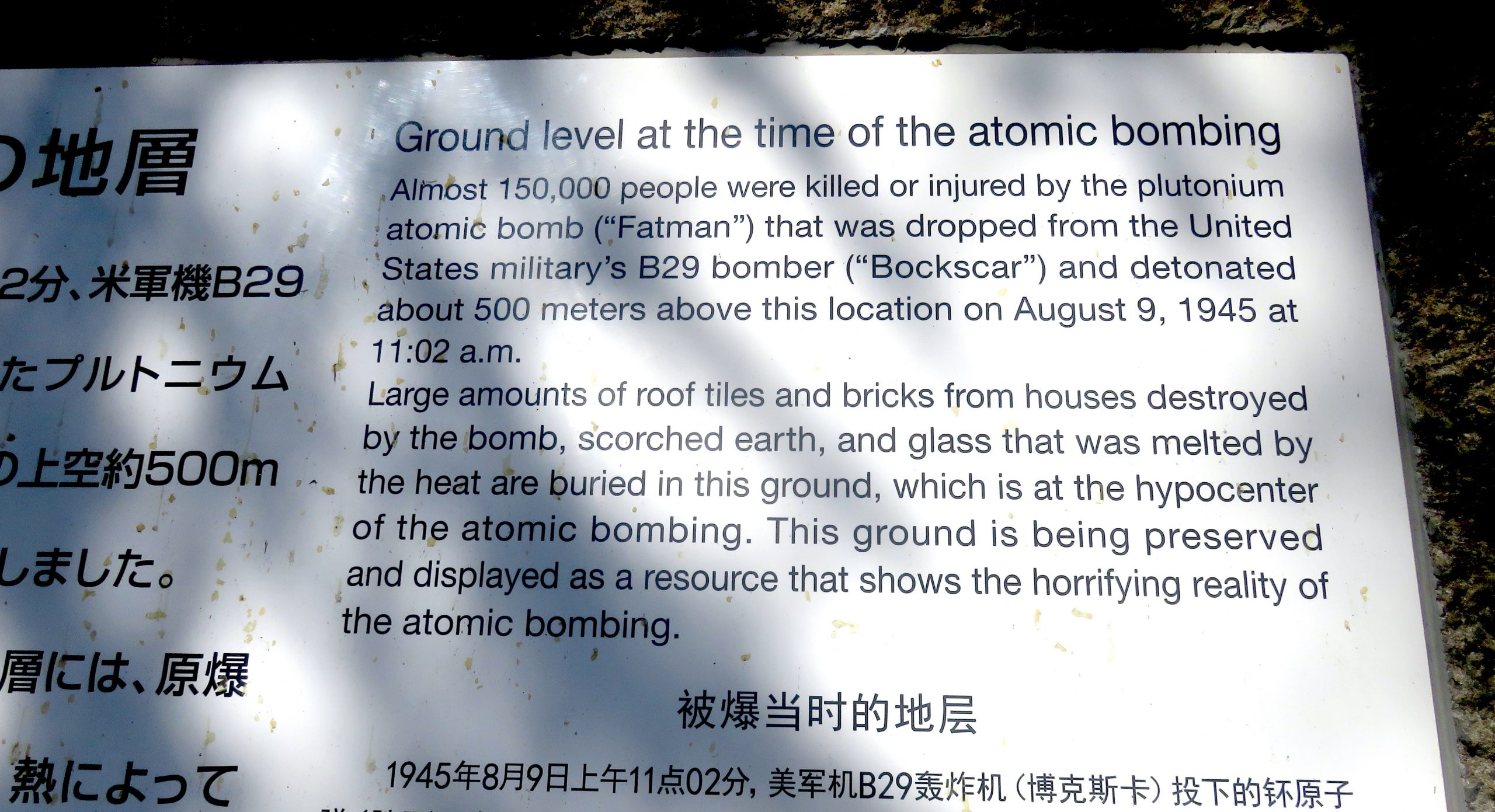
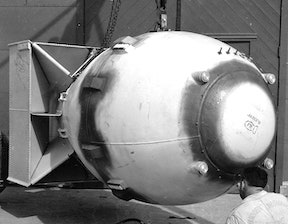
Here are three shocking facts both the Hiroshima and Nagasaki peace museums rigorously document, indisputable evidence that the dropping of the atomic bombs were war crimes.
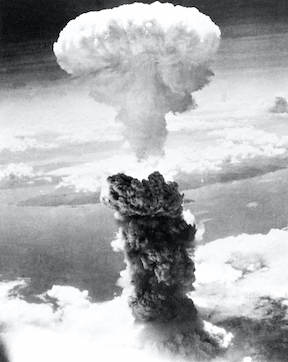
Mushroom cloud over Nagasaki, Japan, Aug. 9, 1945. (AP Photo)

1) The bombs purely targeted civilians. There were no legitimate military targets near the epicenters of the blasts. The Nagasaki plutonium weapon exploded directly above hospitals, elementary and high schools, churches, a college campus, and residential buildings.

2) The dropping of the bombs was “scientific” fact finding, to determine under real conditions how effective they would be, meaning exactly what the devastation would look like. Documents from the U.S. government confirm this.

3) The dropping of the bombs was not a military necessity, but a political statement. It put the world on notice — directed especially at the Soviet Union — who would wield the ultimate power in the post-WWII world.

As has horrifyingly become apparent, there would be nothing unique about this merciless and unnecessary slaughter of Japanese civilians. Over the coming decades, the U.S. would go on a genocidal rampage: more than 1.5 million innocent North Korean citizens in the Korean War; 2 million Vietnamese non-combatants in the Vietnam War; at least 176,000 killed over twenty years in Afghanistan, from of a war we started; nearly 500,000 Iraqi deaths the direct result of our invasion of that country. More deaths in Syria, Libya, now Ukraine, all directly attributable to U.S. military aggression and imperial hubris.

But Hiroshima and Nagasaki was when our hyper-savagery initially went into high gear.

This is why we should — and must — talk, and talk honestly, about these events that occurred in the frenzy of war almost 78 years ago.

But I fear we won’t. Instead, we’ll continue to rationalize and lie, sugar-coat the truth, immerse ourselves in fairy tales, glorify war, and tolerate the worst among us to lead us closer and closer to the abyss of human annihilation. There are war planners in the MIC who now are saying we can win a nuclear war. Someone must be putting LSD in the water coolers at these think tanks!

How can we end this madness? Where can we find the courage to confront the destroyers of dreams, the killers of innocents, the psychopaths who risk the lives of every human on earth?

Don’t we owe to ourselves and this amazing human experiment to do something?

War is bankrupting us morally, economically, socially, spiritually!

Nuclear war threatens all life on the planet!

We must end the insanity!

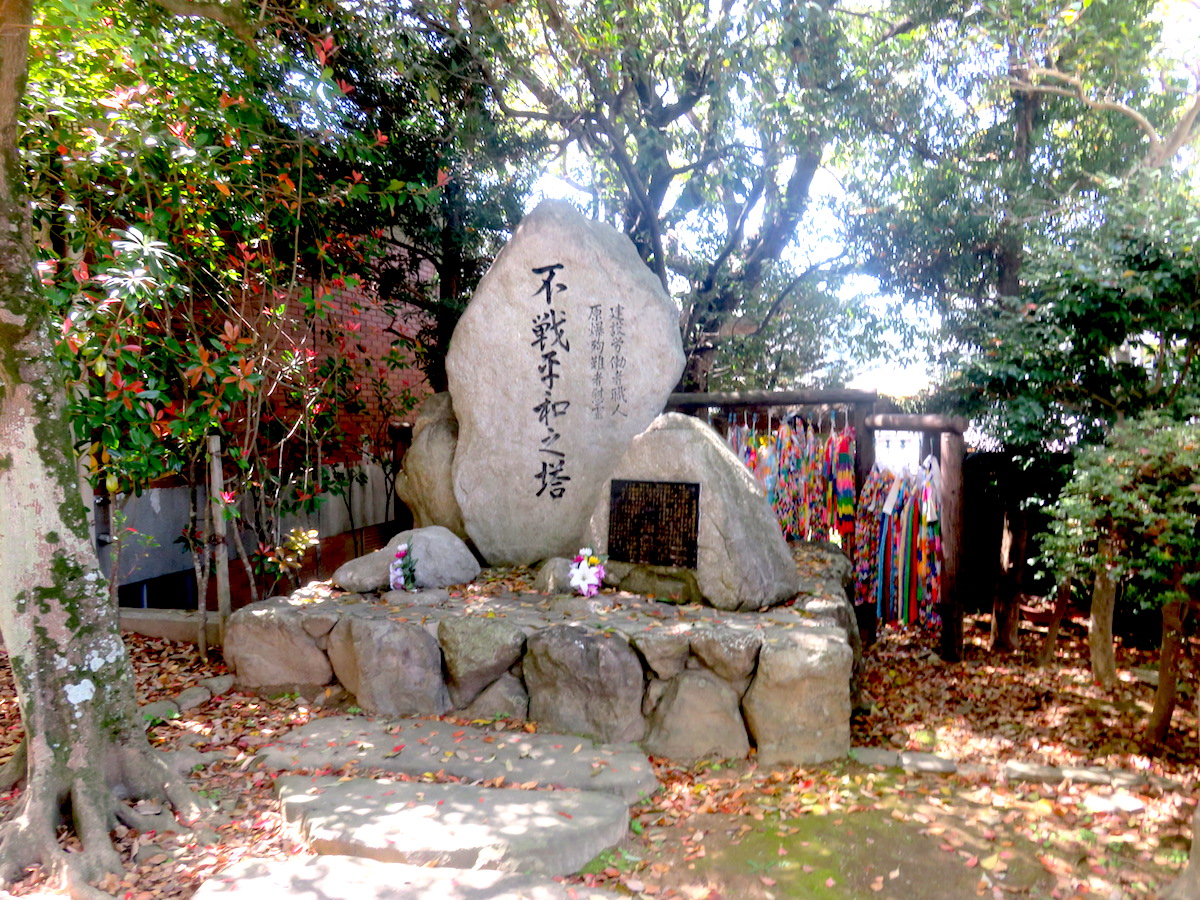
While you’re thinking about these last few remarks, here are a few photos of the Nagasaki Peace Park, and the memorial garden which sits right in front of the peace museum.



[ This originated at the author's personal website . . . https://jdrachel.com ]


Life In Japan: The Atomic Bombing of Nagasaki | John Rachel


Friday, April 14, 2023

Life In Japan: Time Machine

I’ve lived in Japan, coming and going, for sixteen years, and I’ve discovered that every major city in this country has a unique personality. This really should come as no surprise. Would anyone in the U.S. think that Miami and Detroit aren’t dramatically different? Cleveland and San Francisco? Seattle and Washington DC?

But we carry preconceptions, prejudices when we go to foreign lands. We are at first probably overwhelmed by the dramatic shift in scenery and gravitate toward cultural commonalities, seeing all the things that cities and communities and the culture in general have in common, meaning in this instance, identifying and focusing on what we expect to see wherever we go in Japan: those cultural, social, religious, architectural features which make Japan . . . Japan.

Eventually, hopefully sooner than later, the scales fall from our eyes and the perceptual filters are replaced with more sensitivity and perceptiveness, a clear and objective view.

It took a while for me. I’m no different than anyone else who grew up in the West, saddled by prejudices and misconceptions, stereotypes we are relentlessly bombarded with in the bubble of U.S. “exceptionalism”. We get these from every direction: the media, movies, television. For example, I imagined Japan pretty much all looked like downtown Tokyo. The amazing truth is, 70% of this country is covered with forests. This is a land of stunning natural beauty, not cement, glass and glaring lights.

Eventually, I began to objectively “process” what I was seeing, hearing, smelling, touching, tasting — this last one being very important in such a food-centric society.

As anyone who follows me here knows, I live in Hyogo Prefecture with my Japanese wife, Masumi — we just celebrated our 11th wedding anniversary! We live close to three major cities: Kobe, Kyoto, and Osaka. Talk about distinct personalities! Kobe is our favorite, though Kyoto is the one best-known by international travelers for its geishas, and exotic temples and shrines. Osaka is exciting and fun, to say the least. But Kobe is originally the home of Masumi’s family, though they’re now scattered about.

Over the course of our courtship and marriage, we’ve been all over Japan, from Hokkaido in the north — a stone’s throw from Russia — all the way down to Hateruma, the southernmost island in Okinawa — a stone’s throw from Taiwan.

Even so, there was one place 13 hours west of us by car, we yet had to visit.

NAGASAKI!

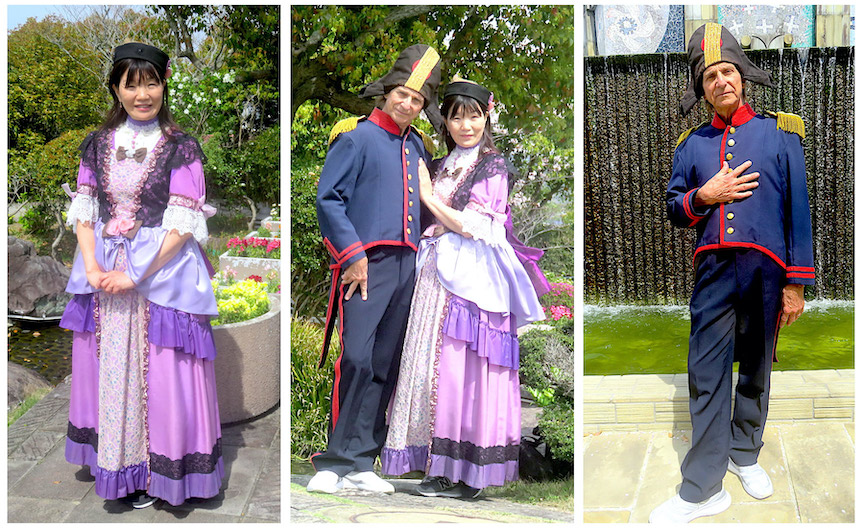
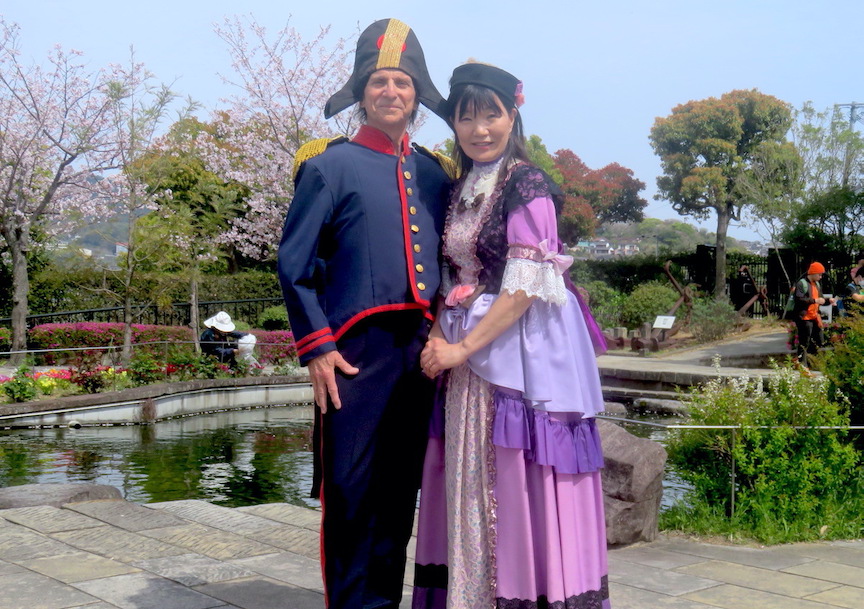
It’s easily the most Westernized city in Japan. See for yourself.


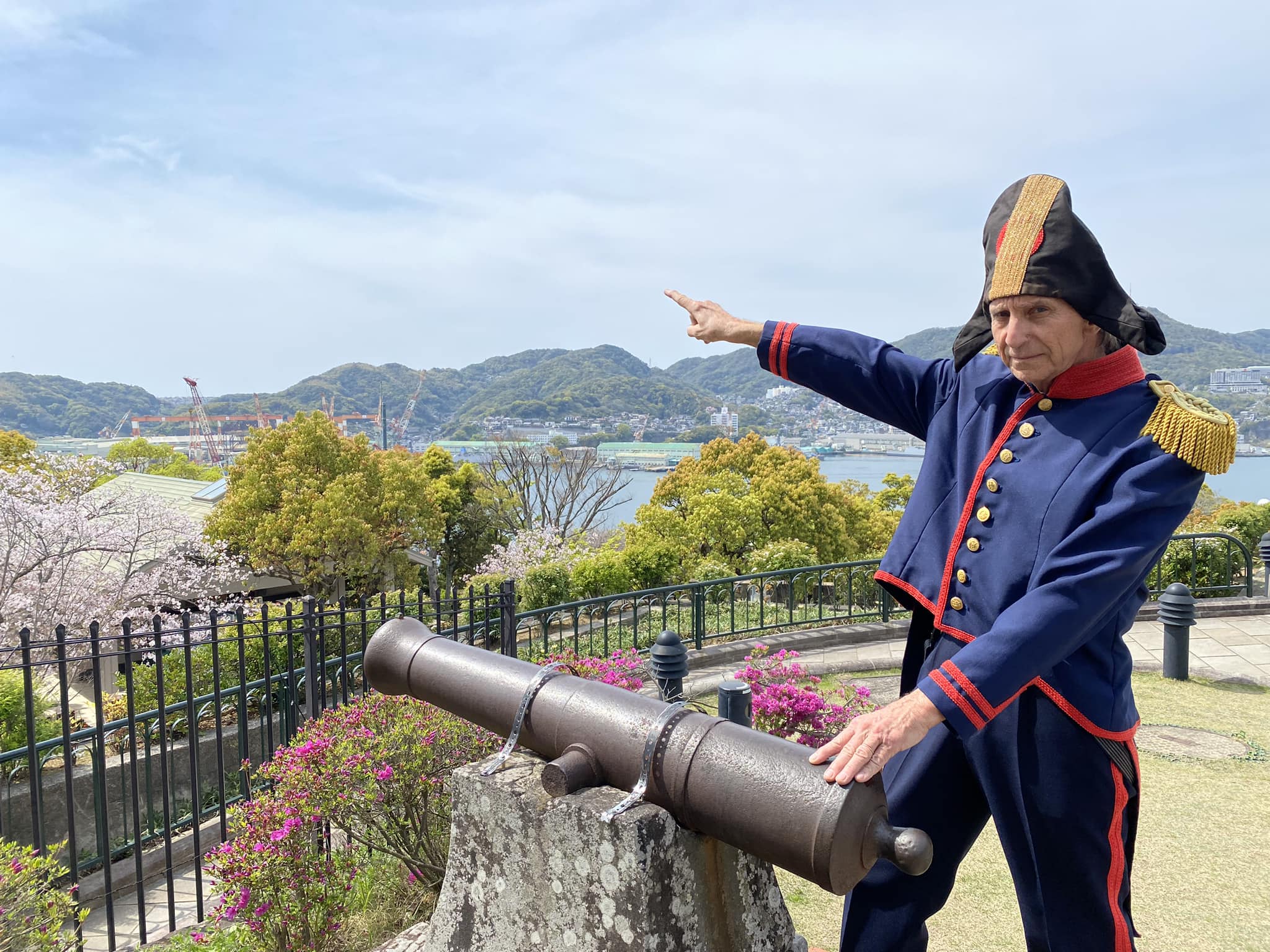
Maybe I should have called this article ‘Life In Japan: Culture Machine’. As you can see, we weren’t just transported in time, but were given a taste of a completely different culture, that of Europe in the 19th Century.

While I thought Masumi looked spectacular, I can’t tell you how ridiculous I felt in that outfit. At the same time, I’m generally feeling pretty ridiculous these days. Should I embrace a whole new persona on Facebook? To heck with peace. Fire the cannons!

By the way — and I’ll make this short and sweet — the reason for the “Westernization” is very straightforward. During the Meiji Restoration, Japan finally opened itself up to trade with the West. The influx of traders was led by the Portuguese, then the Dutch, who carted everything they needed to feel at home in the Land of the Rising Sun: clothing, diet, churches, religion, architecture, etc.

This is not to suggest the Japanese welcomed the cultural “pollution”. In fact, at first visitors were confined to an artificial island in the harbor of Nagasaki, so they couldn’t mix with the local population. This area is called Dejima. It has been reconstructed near the original wharf, which is where we took a few photos. When ships arrived, the sailors and businessmen had a military escort take them to directly Dejima. Obviously, there was some interaction within the confines of the island, as the traders made deals with the local Japanese. Also, since there were no women accompanying the travelers, Japanese consorts were allowed in to service the needs of the all-male population. But for a long time mobility was extremely limited.

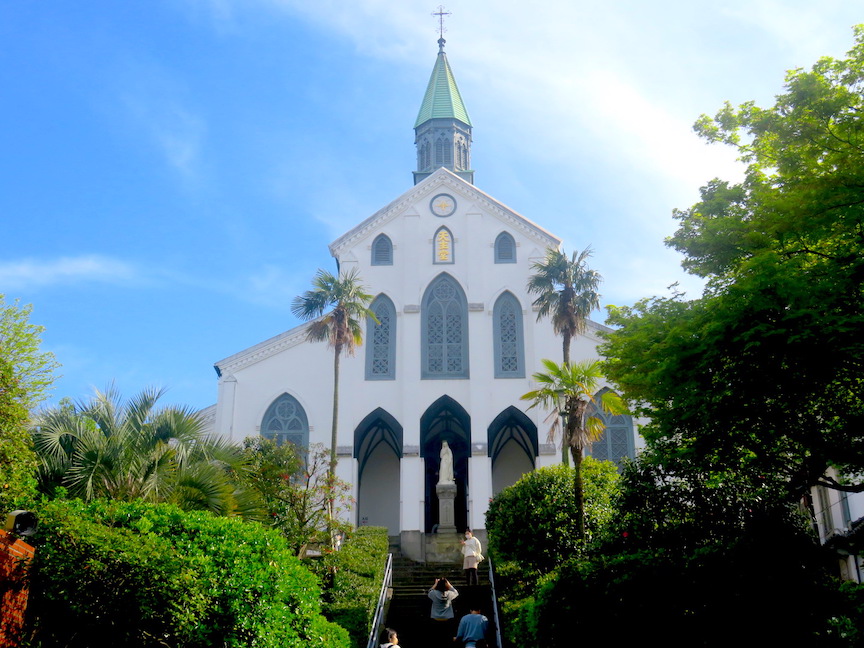
As we all know from the McDonald’s restaurants in Paris and Beijing, cultural creep can be insistent. Eventually, more and more of the West infiltrated Nagasaki. Houses and churches — though for many years Christianity was aggressively oppressed by the Japanese — eventually were built outside of Dejima on the mainland, and it is these remaining structures which give Nagasaki its truly distinctive Western character.


[ This originated at the author's personal webpage . . . https://jdrachel.com ]


Life In Japan: Time Machine | John Rachel


Monday, April 10, 2023

Life In Japan: Nagasaki Streetcars

Japan is among the most technologically advanced countries in the world. It has phenomenal IT, the most efficient transportation system, including 3,384 km (2103 miles) of high-speed rail lines, with beautiful sleek “bullet trains” traveling at up to 320 km/hr (199 mph).

Japan has a robust high-technology manufacturing sector, which includes many world-class electronics firms like Panasonic, Sony, Hitachi, Fujitsu, Sharp, NEC, Canon, Nintendo, Toshiba, Casio. And it’s home to many major automobile manufactures — Honda, Toyota, Nissan, Isuzu, Mitsubishi, Mazda, Subaru, Suzuki.

At the same time, it is a “hybrid” society which is protective of age-old customs and traditions, preserving those legacy institutions and practices which are defining characteristics of Japan as a nation and culture.

I had a dramatic reminder of this ability to balance the efficiency and appeal of the modern with the utility and charm of the traditional, in my first-time visit to Nagasaki last weekend.

Streetcars!

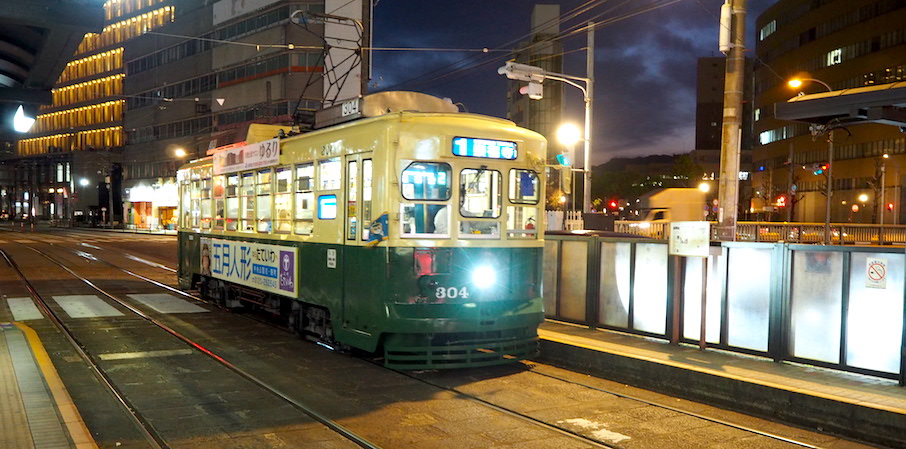
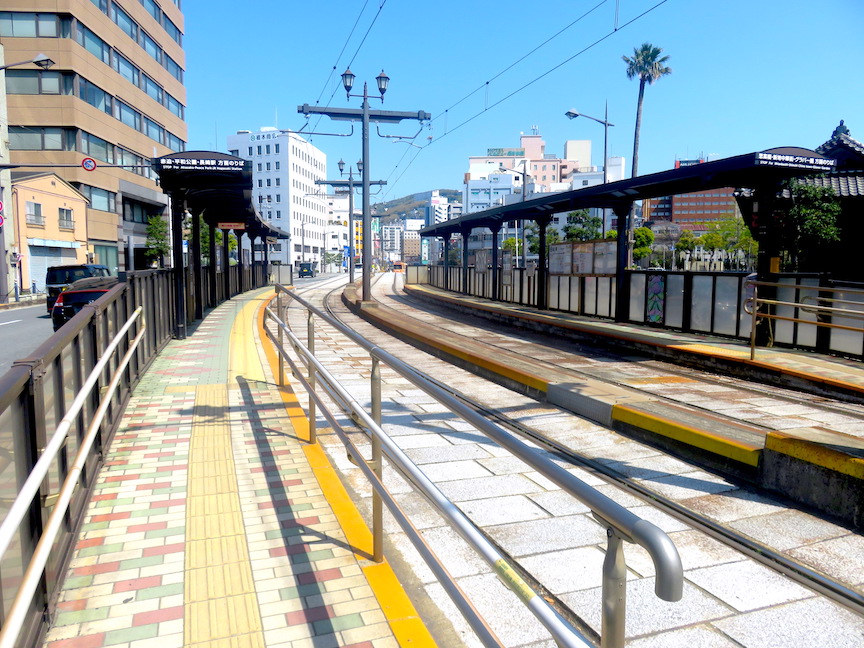
There are dozens of streetcars — also called trams — rumbling and squeaking and clanking all throughout downtown Nagasaki. And it’s definitely the best way to get around. They’re fun and very inexpensive. Regardless of distance, it’s 140 yen ($1.05) for adults, 70 yen for children. You get on. You get where you’re going. You get off. And how convenient! No descent into the cavern of a subway. Just stand at one of the many stations spaced every two or three blocks — which are everywhere — climb aboard, check in with a pre-pay electronic card like the one I have (beep!), which incidentally works on every public train, subway, bus or tram everywhere in Japan . . .

Then pay on your way out (beep!), smile at the driver, step down to the station platform. You’re on your way. To Chinatown, Glover Garden, Peace Park, the central train station, wherever.

1-Approaching-

Mind you, the streetcar system is over a century old. But it still works and apparently city planners regard it as a part of Nagasaki history they see no need to retire.

The message is this: You can leave your heart in San Francisco. No problem.

Just come to Nagasaki! They have streetcars, no homeless and nobody is packing a gun.


[ This originated at the author's personal website . . . https://jdrachel.com ]


Life In Japan: Nagasaki Streetcars | John Rachel


Saturday, February 13, 2016

Peace is as American as . . . ?

peace-sign-soldier-stencil

Has America ever really had a peace movement?

Yes, there was an anti-war movement in the late 60s, early 70s.

But it was an anti-war movement . . . specific to one particular war.

The Vietnam War.

Why?

Because young people -- I was the perfect age and in the thick of it -- didn't want to get blown away in some rice paddy in some country in Asia they could barely find on a map.

It's was survival.  Demonstrate.  Burn your draft cards.

Stay alive!

To be in principle for peace means you are values-driven.

But Americans for the most part are results-driven.

Get the job done.  Get the job done right.  Have a beer.

Which troublingly is a short leap to "the ends justify the means".

To see how that works out, just ask the civilian survivors of Dresden, Hiroshima, Nagasaki.

Ask the citizens of Iraq, Afghanistan, Libya, Haiti, Honduras, Nicaragua, Kosovo, Yemen.

Get the job done.  Get it done right.  Watch the Super Bowl.

Peace is a warm and fuzzy idea. It's something you can wriggle right up to, get all friendly, pinch its cute little cheeks, coddle it like a newborn, smile for the camera.

Yes, peace is really awesome!

As long as you don't have to be peaceful.

Therein lies the conundrum.

America likes to kick ass!  It's our way or the highway.

It's our way or you better head for a bomb shelter, mofo!

America is tough.  You know where America stands.

America wears its temperament on its sleeve.

It open-carries its guns . . . fair warning.

Don't even think about it!

Fuck with me and you're dead meat!

Doesn't exactly sound like fertile ground for a peace movement, eh?

pink_blue_glittered_peace_sign%5B1%5D

However, peace signs are great!

Simple and attractive.

Make a great tattoo.  Charm bracelet.  Bumper sticker.

They're compact, symmetrical.

Fit nicely anywhere.

FUCK YEAH!  PEACE, BROTHER!


[ This originated at the author's personal website . . . http://jdrachel.com ]


Peace is as American as . . . ?