Showing posts with label Western classical music. Show all posts

Sunday, October 23, 2022

Life In Japan: Excellence

Whether you like, love or hate classical music, please watch at least one of the videos below. I have things to say about them which I think will astonish you. So fasten your seat belts, sit back, and let the music flow through you like cannabis oil aroma therapy.

Okay. Ready? Here’s the scoop …
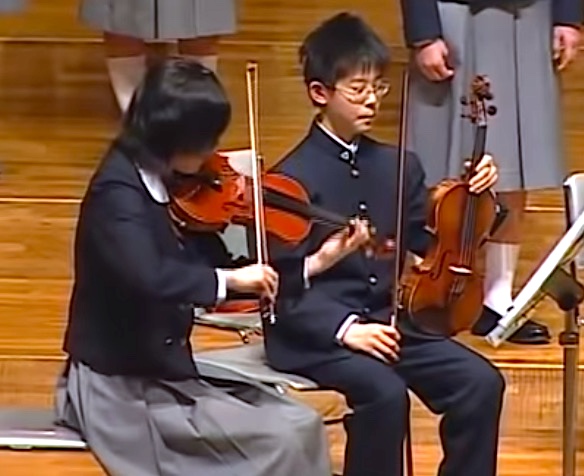
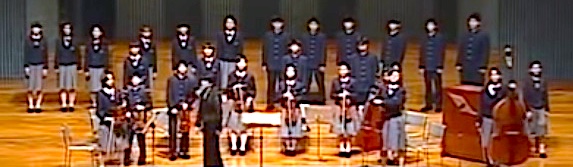
These are junior high school students, at a school in Fukushima. Yes, that Fukushima, where the massive earthquake in 2011 caused the nuclear reactors to melt down. But that’s not what I’m here to talk about.

Instead, let me get to what I want you good folks to wrap your heads around. First …

Being junior high school students, everyone except the conductor is 13-15 years old. Not seasoned adults. Not college graduates. Young adolescents! What talent, eh?
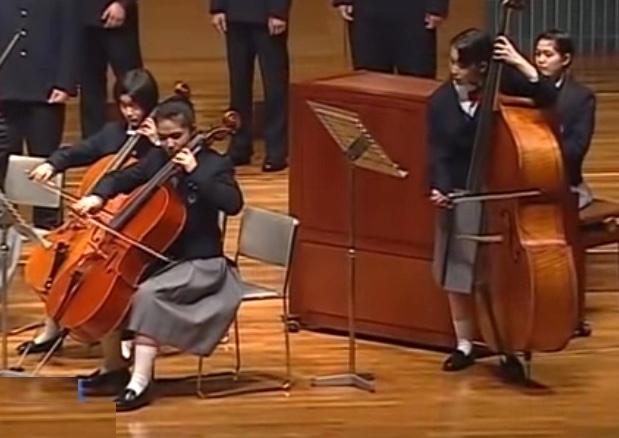
It gets better: This is not a special school for music or any other area of study. It’s not some private school for rich kids — yes, we have exclusive, private schools here in Japan just like practically every other developed country. This particular school is no such uppity institution. No folks . . . THIS IS A PUBLIC SCHOOL!

And here is, what in my mind is the most jaw-dropping aspect of this tale: Participating in this choral orchestra is not part of the official school curriculum. This is not a music class. The students are not getting any credit for this. Everything, the individual mastering of the instruments, the hours of practice, the orchestra and vocal rehearsals, the concert performance, is purely voluntary. It’s an AFTER-SCHOOL CLUB!
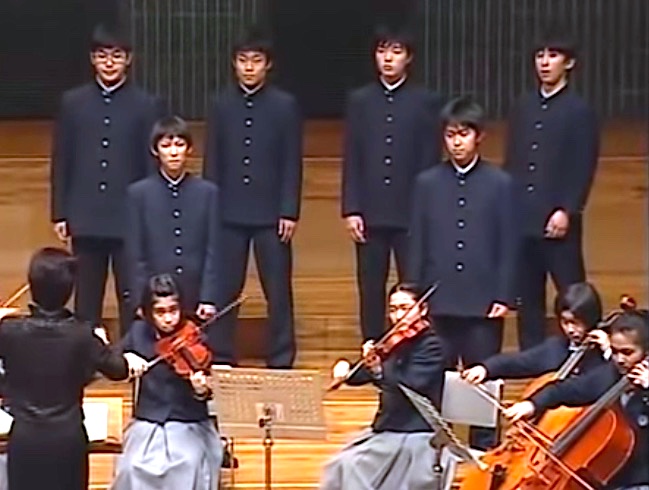
I recall my school had a French Club, Photography Club, a Glee Club, an Astronomy Club. It’s just like that. Only these junior high kids, as members of this club, are performing — at a sophisticated level — Mozart and Bach.

What do you think? Honestly? Aren’t you a bit impressed?

I have to admit: I’m awestruck! Almost at a loss for words . . . but not quite.

Here are my final thoughts: The world is going through some very strange and difficult times. Technology, political turmoil, economic crises, environmental crises, leadership crises. We can’t keep up with it all. Unfortunately, young people get totally blindsided by all of this. They’re dropped into a world not of their making, facing catastrophes that were in the works before they were in the womb. Supposedly, societies do what they can to bring the young up to speed and equip them to take the reins when their time comes.

U.S. schools are a more relaxed
educational environment.

Here are my final thoughts: The world is going through some very strange and difficult times. Technology, political turmoil, economic crises, environmental crises, leadership crises. We can’t keep up with it all. Unfortunately, young people get totally blindsided by all of this. They’re dropped into a world not of their making, facing catastrophes that were in the works before they were in the womb.

Supposedly, societies do what they can to bring the young up to speed and equip them to take the reins when their time comes. In the U.S., as with every highly-developed Western nation, it is the public education system which provides the basic skills and knowledge needed to function in the world.

Now, I’m hardly in a position to judge the current state of public schools in the U.S., which by far the majority of young people there attend for 12+ years at minimum. True, I went to public school for 6 years but that was around 200 years ago, give or take a few decades. Moreover, as you probably know, I haven’t lived in the U.S. for sixteen years. Meaning, I can’t overcome either the generational gap or the geographical gap. So I’ll let you folks be my eyes and ears on this.

Here’s a straightforward question for you American readers: How are things going there?

Is anything resembling what you see in the above videos occurring there?

I know I have trouble imagining it. But that’s just me.


[ This originated at the author's personal website . . . https://jdrachel.com ]


Life In Japan: Excellence | John Rachel


Thursday, July 26, 2018

Life In Japan: Western Arts – Part 2


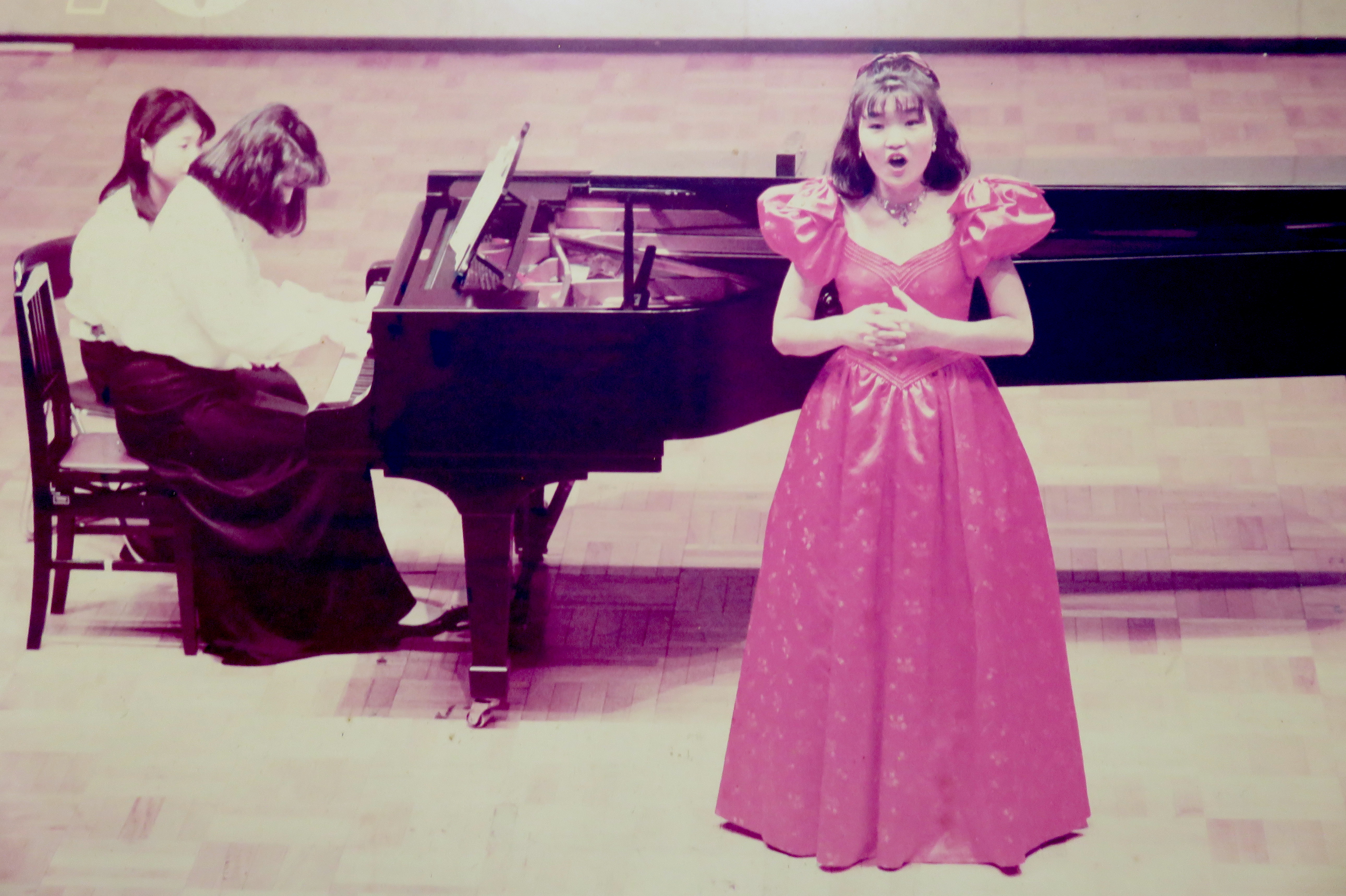
This is a photograph of my wife, Masumi, at age 20 singing Il Bacio by Italian composer Luigi Arditi.  She has been singing opera all her life, plays beautiful classical piano, and dances ballet as a pastime.

I find it a fascinating question why Japan is so enamored with Western art forms, not that I've made any progress coming close to a conclusive answer.


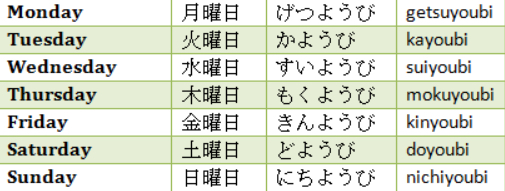
Of course, Japan has always been an eclectic culture.  It has adopted much from the West, including English letters and words, integrated via Romanji, one of their alphabets.  Entire English words were Japanized and have become a part of the ever-evolving vocabulary, e.g. resutoran レストラン (restaurant), aisukurimu アイスクリーム (ice cream).  Going way back, certainly quite a bit has been "borrowed" from the Chinese, most notably, Kanji, another of the alphabets in everyday use.  And in the 19th Century, Japan replaced its cumbersome numbering system with Western Arabic integers.

All of this is the normal cross-pollination of cultures, which occurs when borders become more permeable, trade encouraged and opportunities for tourism pervasive.

Yet, there are some things that either don't translate well, resist integration, because they are simply entirely incompatible with established social traditions and cultural legacies.

Westerners are touchy-feely, given to open, sometimes histrionic expressions of emotion.  Japan is entirely the opposite.  I suspect it will always remain so.  A respect for privacy in both directions, each individual's large inviolable personal space, shyness and reserve, all are too thoroughly entrenched in the Japanese psyche.  Yes, they may dress like Westerners here, but you're not going to see chest-bumping or hugs and kisses at the mall, or simulated sex on the dance floor.  It's just not going to happen.  Bowing is about as wildly intimate as it gets in public.

That, of course, is an example of steadfast social training. 

But I would have suspected that another type of training would be just as determinant.  I'm referring to ear training.

The Japanese scales -- actually all Asian scales -- are microtonal.  When they don't sound randomly annoying, they sound intentionally grating, at least to my Western ears.  I'm just not used to hearing -- literally not trained to hear -- the two or three notes that purposely occur between C and C# or between E and F.  I'll admit that in my band days I was often accused of tuning my guitar microtonally but that was just a way of saying I had a really lousy sense of pitch.


Regardless of how much their melodies may torment us Westerners, Asians will swear by the beauty of the music they create and listen to.  Their ears are trained to hear, accept, embrace what sounds cosmically wrong to us.

At the same time, Western music and the fundaments for making it have gripped Japan.  And in every form: pop, rock, jazz, classical, blues, rap, hip hop.

Recognize that there are Western arts chauvinists who would say this is inevitable.  They will make a very convincing argument that Western scales are fundamentally superior, more accessible and natural to the homo sapiens physiological mechanisms involved in processing music.

There is a very appealing mathematics to the Western scale.  The 37th key on an 88-key piano is A.  It vibrates at 220 cycles per second (Hz).  The 49th key is also an A, but it's one octave above, vibrating at 440 Hz.  The 25th key is an A that's one octave below, vibrating at 110 Hz.  Nifty, eh?  This suggests the mathematical foundation underlying the tonal relationships among the notes of the Western 12-tone scale.  In fact, this holds together quite nicely until we get to the very bottom and top of the useful musical range.  The math has to be adjusted a bit.  Pianos tuned to mathematical perfection tend to sound sharp at the very top and bottom, requiring at the extremes that the scale be "stretched" to make the piano sound in tune to the human ear.  This is not a flaw in the mathematics.  It's a consequence of the physical properties of the strings of the piano, a stiffness which causes inharmonicity at the extremes.  Thus this need to "temper" the scale doesn't diminish the essential elegance of the theory.


Zeebra, a very popular hip hop artist here in Japan
(Click on pic to see a video.)

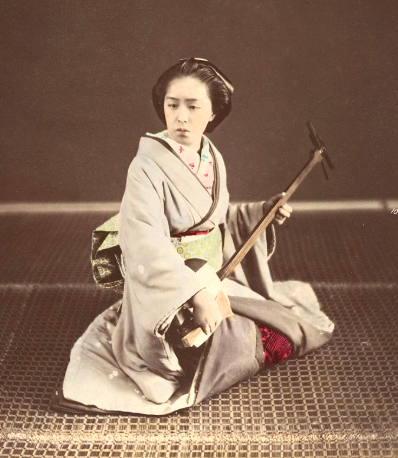
So as I say, it's easy for music experts in the West, the ones juxtaposing Fibonacci spiral graphs on the human cochlea, to posit the intrinsic superiority of a viola over a shamisen, an oboe over a hichiriki, or a flugel horn over a horagai, put in the service of playing the Sound of Music.

They may be right.  But the bottom line is there's really no way to objectively settle the matter.  An anecdotal aside:  I mentioned to my wife the other day that one of my English students sings Japanese folk songs to me.  The lady is very proud of her voice and the songs she had spent her life mastering.  My wife asked me if they were traditional or modern folk songs.  I didn't know there was a difference.  Turns out that traditional folk songs are the original microtonal versions.  Now there are modern versions of those folk songs which make the melodies fit the Western 12-note scale.  Think about that!  They take these amazing songs from time immemorial and update them -- literally Westernize them musically -- for the prevailing tastes of contemporary Japanese listeners.

This seems to suggest some greater inherent appeal in the mathematically-based music system of the West.  But I say it's just a sign of the times.  We have Burger King in Beijing, KFC in Kuala Lumpur, McDonald's in Moscow.  There are rappers and hip hop artists in every country that has electricity, except maybe Bhutan.

My wife, Masumi, of course continues to teach Westernized music to elementary students in a nearby community here in Japan, as part of the official school curriculum.  The kids play recorders, xylophones, accordions, keyboards, snares, bass drums, bongos, congas, and other percussion -- all instruments from the West. And since she still loves singing, she even gives an occasional vocal performance under the auspices of the vocal teacher she's studied with for three decades.  Usually she sings opera, though she occasionally helps me out on my original songs, in my informal home recording studio.

Here she is earlier this year in concert at a gathering in Osaka.


[ This originated at the author's personal website . . . http://jdrachel.com ]


Life In Japan: Western Arts – Part 2