Since leaving America August 2006, I have traveled to sixteen countries. A great deal has happened. This site is to share my thoughts, photos, music, writings, travel experiences, and developing political/social commentary with you. I hope you find it interesting and informative.
Showing posts with label socialized medicine. Show all posts
Showing posts with label socialized medicine. Show all posts
No . . . NOT THAT type of crown. One for a tooth that fell apart. It had a crown from long ago but that fell out leaving a jagged mess of a molar.
Now, we have in Japan what most Americans would call “socialized medicine”, a one-payer, government health insurance program, strict controls which prevent profiteering, and national standards for everything medical.
Uh-oh! Socialized medicine! That means long waits to get help, crowded waiting rooms, inferior service, all the problems that come with massive bureaucracy.
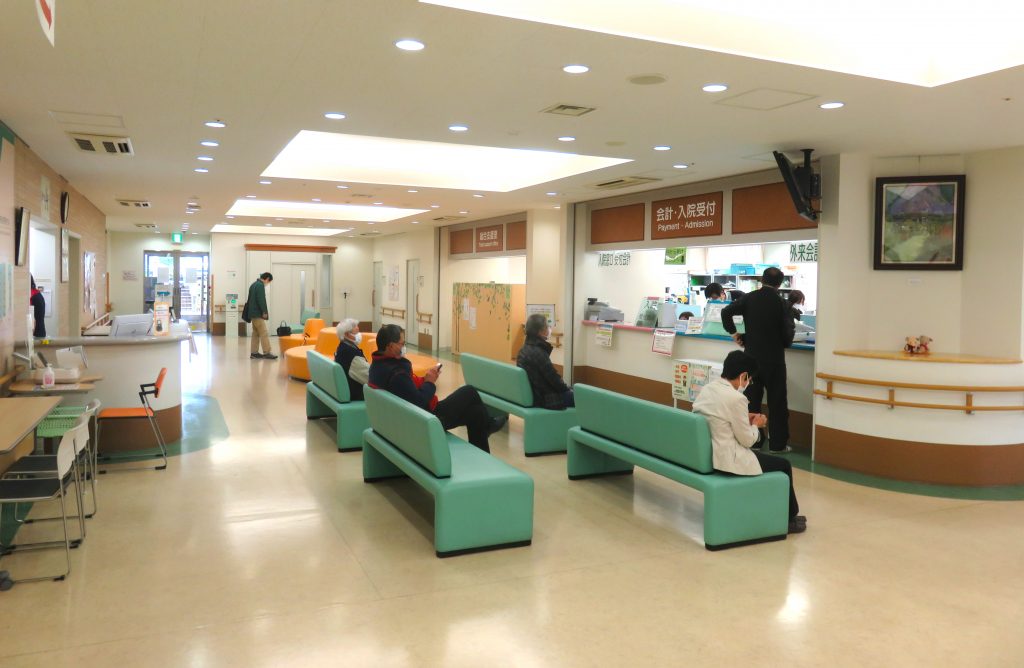
Well, I got an initial appointment within 48 hours, and only waited about ten minutes to get in to see the dentist. He took an X-ray, an impression, then filled the exposed area of the tooth with a temporary filler. One week later, after maybe a five minute wait in the reception area, he cemented in the new crown — which, by the way, fit perfectly and didn’t require any grinding or adjustments — and sent me on my way.
Two appointments, a total of less than 40 minutes in the dentist chair, and I had a new crown!
Now some research (here and here) tells me this: “Typical prices in the U.S. for a molar dental crown range from about $800 to $3,000 per tooth before insurance, depending on factors such as the material used (metal, porcelain‑fused‑to‑metal, zirconia, etc.), geographic location, and any additional procedures required. With dental insurance, out‑of‑pocket costs often fall between $400 and $1,200, but exact amounts vary by plan.”
Here are my receipts for the two visits:
According to XE Currency Converter, 1340 yen = $8.55 and 2560 yen = $16.33, meaning the total cost for my new molar crown was $24.88. Of course, I used the “socialized” one-payer national health insurance, as I do for all my medical care.
$24.88 … vs. … $400 to $1200.
Do you think that the bad rap that socialized health care gets in the U.S. — as with anything remotely suggestive of SOCIALISM — might just be a big pile of propaganda, to keep the gravy train of bloated profits for the broken system in America rolling along?
An entertaining array of similar stories can be yours as a perfect adornment for your coffee table. Live From Japan! is a large-format, full color paperback with 58 anecdotes and over 450 photographs, offering a heart-warming, funny, and informative look at contemporary Japan, through the eyes of an American expat — ME!
A deluxe full-color paperback from the printer HERE.
The clinics here vary in size. Some are like a doctor’s office. Some are facilities attached to hospitals. When you need medical attention, unless it’s an emergency, you go to a clinic.
I rarely have problems with my health. But I’ve been a permanent resident here now for over eight years, and I have used medical services in Japan a few times. One time a very bad fall from my bike required some very extensive care. I broke my collar bone — I don’t recommend it as it’s very painful — which involved several sessions with an orthopedic doctor and physical therapist. Other occasions were more typical: one time I had an extremely sore throat, another time a kidney infection. Common types of things.
People back in the U.S. are always asking me what it’s like to have universal “socialized” medical care. They’ve been fed all the propaganda by the inefficient but certainly very profitable health care industry there: expect long waits, impersonal care, low standards, lousy doctors, etc. These stories, of course, are generated by the insurance companies, the for-profit clinics and hospitals, the mega-wealthy specialists, rock-star surgeons, all the vested interests who are beneficiaries of the windfall of hard cash that the current system in the U.S. generates for them, and who selfishly but predictably want to keep things the way they are.
I have one story that accurately represents how it works here, straight from my perspective as a patient. Let me say up front, I’m completely blown away by health care in Japan, but I’ll let you judge for yourself the merits of centrally organized and controlled health care.
My wife, Masumi, and I were planning on spending three weeks in the U.S. starting the last week in July. We’d be visiting some of my friends back there, staying at a couple B&Bs, camping at the national parks, even couchsurfing with a retired music teacher in Seattle.
About two months before we were to leave, I started noticing tightness in my chest, and a feeling like my lungs were being compressed. Not a good sign. Red flags immediately went up! What if I have a serious problem while we’re on vacation? I have no health insurance in the United States. And I had serious doubts about the availability of emergency services, based on the stories I regularly hear about the inadequacies and outright failures of health care back in America. Scary!
As the symptoms persisted for a few days, I became certain my discomfort had something to do with my heart. Back in 2010 when I had my back surgery in Seoul, South Korea, they discovered one of my ventricular valves was only functioning at 68% efficiency. Maybe it had fallen apart and was now flapping like bedsheets in a summer breeze!
I decided to take action. The best place for this was a ten-minute bike ride from my house.
Are you ready for my harrowing tale? Because here’s exactly what happens when you have to depend on “socialized” universal health care.
I showed up at 8:45 am with no appointment, bearing a note in Japanese describing my symptoms and suspicions. Twenty minutes later I was interviewed and examined by a heart specialist. He scheduled testing.
Another fifteen to twenty minutes later, I was taken to a special room and wired up for an electrocardiogram. My heart was monitored both as I rested, and as I did “stress testing”. That meant going up and down a small set of steps, which made my heart work harder. The entire procedure took maybe twenty minutes.
I went back to the waiting area for maybe ten or fifteen minutes. Then I was taken into another special room where using ultrasound echocardiography, they observed my heart function in real time, its rhythm, contraction, the operation and efficiency of the valves. This was put on video. After being edited by Stephen Spielberg, scored by Hanz Zimmer, it is now available on Netflix. Okay okay . . . I made up that last part. But the ultrasound of my beating heart was recorded and entered into the system as part of my medical record.
Back to the waiting area. Within no more than thirty minutes, I was escorted back to the office of the heart specialist. He had a printout of my electrocardiogram spread out on the desk before him and was watching my ultrasound as it played on his computer monitor.
Would I need an artificial heart? A transplant? Or maybe it was simply too late!
Actually, my heart was in great shape. The doctor explained there was absolutely nothing that I should be worried about. This, in fact, turned out to be accurate. Whatever the weird symptoms were that I had been experiencing went away after a few days — maybe I’d been eating too many marshmallows or my t-shirts had shrunk — and since then I’ve never had any problems with my heart. Knock on wood, as they say.
Now . . . the part that can often truly give a person a heart attack.
[ Cue dark tremulous scary cello and trombone music. ]
THE BILL FOR MEDICAL SERVICES RENDERED!
Summarizing . . .
At least twenty minutes consultation with a heart specialist. A complete electrocardiogram including a stress test with a nurse. A recorded ultrasonic echocardiography session with a nurse and a technician. I’d been in their clinic for over two hours.
OMG! Will I have to get a job? Get a second mortgage on the cat?
I heard my name called and walked with great trepidation to the payment window and was handed my invoice . . . 3600 yen . . . 3600! THREE THOUSAND SIX HUNDRED YEN!
Why that’s . . . that’s . . . $33.
Unbelievable, eh?
$33 for the entire thing.
No appointment. No waiting. Qualified heart specialist. Comprehensive testing.
$33. No tipping.
Any folks out there who want to offer an estimate of what this would cost in the U.S.?
One last side note on the horrors of socialized medicine. When I tell Japanese people that an ambulance trip in the U.S. can cost $2,000-5,000 . . . they look at me in total shock. Ambulances here are completely free.