Tuesday, August 27, 2019

The Richest Sociopath in the World


[ This article appeared almost a year ago at OpEdNews and Dissident Voice.  It was written before Jeff Bezos divorced his wife, MacKenzie, after 25 years of marriage. While the final settlement affects his total net worth, the important calculations and the overall thrust of the article are still solid.  Wealth inequality of this level is a grotesque, socially destructive artifact of capitalism.  I think I was able to capture the scale of Mr. Bezos's wealth and mind-numbing callousness to his employees and the country which has been instrumental in helping him build his empire.  Mr. Bezos had better hope that the "camel through the eye of a needle" warning was just the mad ravings of a smelly proto-hippie wandering in the desert way back a couple millennia ago. ]

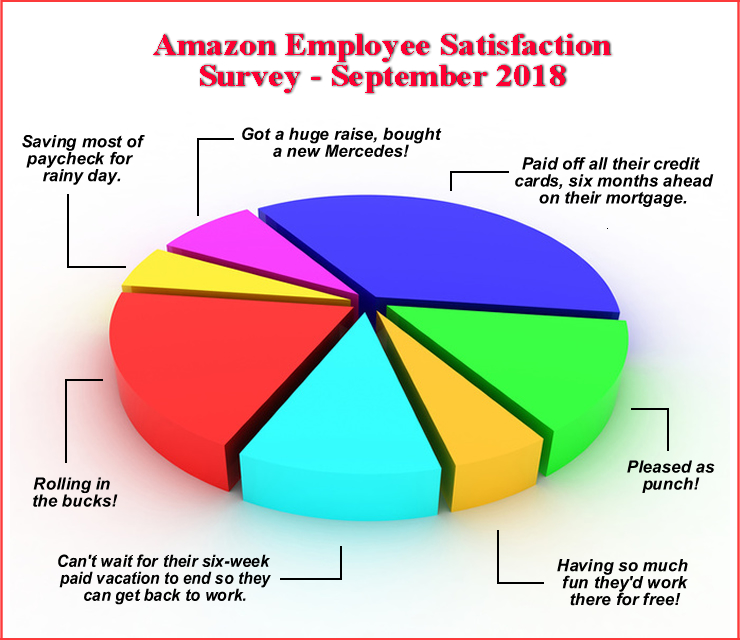
Obviously the above pie chart is a put-on.  It is well-documented that working conditions for most employees of Amazon are abysmaldehumanizing, bordering on the abuse we normally associate with slavery.

Moreover, the median employee's salary under Jeff Bezos' imperial lordship is $28,446.  No one working a regular job there has paid off their credit cards and is driving to work in a Mercedes.
Jeff Bezos is referred to as The Richest Man in the World and his personal fortune, while growing by $191,000 each minute, is currently estimated at $168 billion.

So "$28,446 vs. $168,000,000,000? While I can acknowledge the simple math, I find the contrast of such numbers on a gut level difficult to grasp.

To get a handle on such inequality, let's try approaching it from different angles.

One way to put the disparity into perspective is to recognize it takes Bezos just under nine seconds to earn what Amazon's median worker does in an entire year.

Another is to recognize that for a worker to go through Jeff Bezos' current personal fortune -- and of course, it continues mounting at accelerating levels as I write this -- at his/her current median annual income of $28,446 per year, WOULD TAKE 5,905,927 YEARS! That's close to 6 million years!
For Jeff Bezos himself to go through his current $168 billion, assuming his earnings stopped dead this very moment -- which as you and I know they won't -- SPENDING $1,000,000 A DAY, would take NEARLY 460 years. Yes, even spending $1 million a day, in the year 2475 he'd still have plenty of cash, tens of million of dollars mad money.  We can feel confident that he wouldn't be foraging through the dumpster behind 7-11.

Now, further consider that while the $28,446 median salary is above the national poverty line for a single individual if that person is the sole breadwinner for a family of four, it is marginally above it, which is why many Amazon employees must rely on government assistance to keep from starving.
As well as calculation, I did some speculation -- a simple exercise in imagination.

Apparently Bezos' wealth generating machine is raking it in so fast, he's currently making $11.5 million per hour ... every hour ... 24 hours a day ... seven days a week. $11,500,000 per hour!

So here's what I was picturing in my mind's eye ...

If for 40 hours of the 168 hours in a week, Bezos were willing to scrape by on a mere $5,840,000 per hour, he could give every one of his 566,000 Amazon employees a $10 per hour raise.  Of course the remaining 128 hours in each week, Bezos could continue earning his normal $11.5 million per hour, not having to share any of it with the pathetic slobs who work for him.

Rhetorical question: Does Jeff Bezos have any concept of what that $10 per hour increase would mean to his employees?

I'm not going to even suggest here I'm offering this for Bezos to entertain.  There are so many advantages to him both as a putative member of the human race and the employer of over a half million workers -- advantages that are so OBVIOUS -- if they haven't occurred to him by now, then his brain functions in ways beyond my understanding.  For one thing, he could point to his new fig leaf of "generosity" and ask people to stop calling him a selfish prick.  Second, Amazon employees I'm sure would respond to his largesse with greater company loyalty and increased tolerance for his onerous working conditions.  And he'd still be the richest SOB on the block and could mock the pauperish Bill Gates and Warren Buffett as pitiable wannabees.

Consider . . .

The most poorly paid Amazon employee now makes $12 per hour.  The $10 per hour raise I proposed would boost those $12 per hour workers right up there with Costco employees, who make an average of $21 per hour.  And with the across-the-board $10 per hour increase, Bezos' higher paid employees would be earning among the finest wages in the world provided by a major corporation.
And by golly, there's a plus side to the plus side . . .

Bezos's bold and gracious gesture would result in a public relations coup of cosmic proportions!  Amazon would no longer be demonized -- well, not quite as much -- by us bleeding-heart lefties as a capitalistic scourge and one-way ticket to Hell for the future of mankind, even if its environmental record is appalling and its business model generally the stuff of steroid-laced neo-feudalism.

Granted, Bezos would have to do some belt-tightening.  He'd have to watch his pennies but could probably manage it, eh?  Maybe he could skip a couple meals and do some of his own weeding at his estate.  After all, after lavishing the $10 per hour raise on all of his employees, he'd only be pulling in $1,705,600,000 per week.  I know I know!  Like me you're probably getting all teary-eyed for the poor guy.

Let me get to the extremely anti-climactic conclusion of this lament qua analysis.

Since nothing will change until the system itself changes, meaning the one in place now that creates, incentivizes, and lionizes the obscenely wealthy -- reference current holder of the Office of President of the United States of America -- I can only recommend this ...

We have been labeling Jeff Bezos as 'The Richest Man in the World'.  Yet, quite honestly I don't personally know any human, man or woman, who behaves like this gluttonous chunk of self-indulgent meat.  It actually makes me nauseous to think we're members of the same species.

Thus, from now on let's use the correct terminology.

Let's call Jeff Bezos what he really is . . .

THE RICHEST SOCIOPATH IN THE WORLD.

We could probably order bumper stickers to help correct the record . . . from Amazon, of course.


[ This originated at the author's personal website . . . https://jdrachel.com ]


The Richest Sociopath in the World


Sunday, August 4, 2019

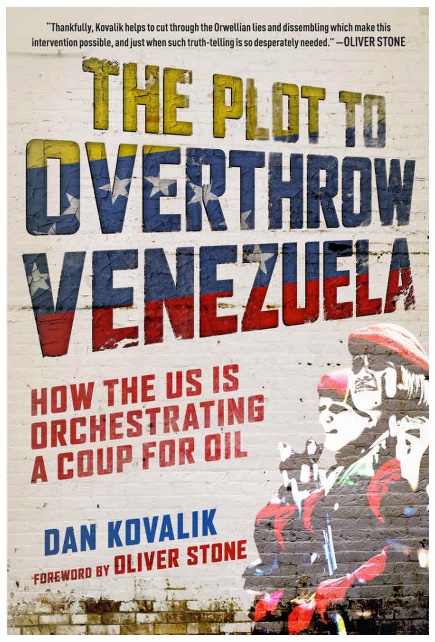
Book Review: “The Plot to Overthrow Venezuela” by Dan Kovalik


In one concise statement, Dan Kovalik sums up the criminal if self-serving and for now effective foreign policy of the U.S. across the planet:

“The US appears to be intentionally spreading chaos throughout strategic portions of the world, leaving virtually no independent state standing to protect their resources, especially oil, from Western exploitation.  And, this goal is being achieved with resounding success, while also achieving the subsidiary goal of enriching the behemoth military-industrial complex.”

A divided Korea, a decimated Vietnam, endless war in Afghanistan, a barely functional Iraq, a destroyed Libya, ongoing destruction of Syria and Venezuela, relentless attacks and incipient war on Iran, give us more than a glimpse into the awesome power of America’s military might, its malice and ruthlessness in projecting that power, its no-holds-barred no-moral-qualms no-body-count no-questions-asked ends-justify-the-means tactical use of genocide, its jaw-dropping hypocrisy in portraying itself as a force of good, its psychopathic exceptionalist world view which judges all other nations and their populations as dispensable, and its ultimate loyalty to a tiny autocratic ruling elite who use “democracy” as just another tool in their bag of tricks to promote absolute corporate tyranny the framework of fascism Sheldon Wolin calls inverted totalitarianism and global hegemony.  It’s for good reason that the U.S. is now often referred to as the Empire of Chaos.

The Plot to Overthrow Venezuela: How the US is Orchestrating a Coup for Oil, as the title suggests, more specifically focuses on the horrors inflicted by the U.S. government on Venezuela.  This thorough, extremely well-researched, and fully supported exposé covers the current crises in and about Venezuela, intentionally and purposefully instigated by the U.S. to overthrow its current government and plunder the country’s rich oil reserves.  Just as importantly it offers rich and revealing historical accounts of America’s past dealings with Venezuela and almost identical scenarios with other Latin American nations, detailing the darkness and corruption that lies at the heart of U.S. foreign policy, and how that has cast a pall of oppression over the entirety of South and Central America, the nations of which have the geographical misfortune of being in America’s self-declared hemisphere of influence — read that as hemisphere of total domination and ruthless exploitation.  From Chile to Haiti to Panama to Honduras to Nicaragua to El Salvador to Colombia, we see the brutal deployment of U.S. political and military assets leaving whole countries impoverished, the poor without hope — often deprived of even food and water — and piles of nameless corpses in escalating numbers, dismissed by the U.S. government and its lapdog media as collateral damage of the Great Imperial Project. 

By the end of Kovalik’s chilling indictment of U.S. malfeasance in its war on the people of Venezuela, what is astonishing and shocking is that the U.S. is again getting away with such overt and illegal aggression, by not only using the same play book, but by using the same players.  With Mike Pompeo as Secretary of State, John Bolton as National Security Advisor, and Elliot Abrams as Special Envoy to Venezuela, at the helm of the project to take Venezuela’s government apart and replace it with the puppet regime of the unelected Juan Guaido, we have three of the most notorious of the notorious murderous, lying thugs doing the dirty work.  All three have sordid histories of inciting war and orchestrating regime changes.  Abrams was indicted and convicted for lying to Congress about the Iran-Contra affair.

The thought-provoking Plot to Overthrow Venezuela is very well-written, with a clarity, accessibility, and erudition which puts it in a class with the best works of Noam Chomsky.  The Foreword by Oliver Stone is a worthy and deserving way to get things started.  I give it the highest possible recommendation, truly one of the most engaging and informative books I’ve read in ages.


[ This originated at the author's personal website . . . https://jdrachel.com ]


Book Review: “The Plot to Overthrow Venezuela” by Dan Kovalik


Thursday, July 18, 2019

Life In Japan: Japanese Maples


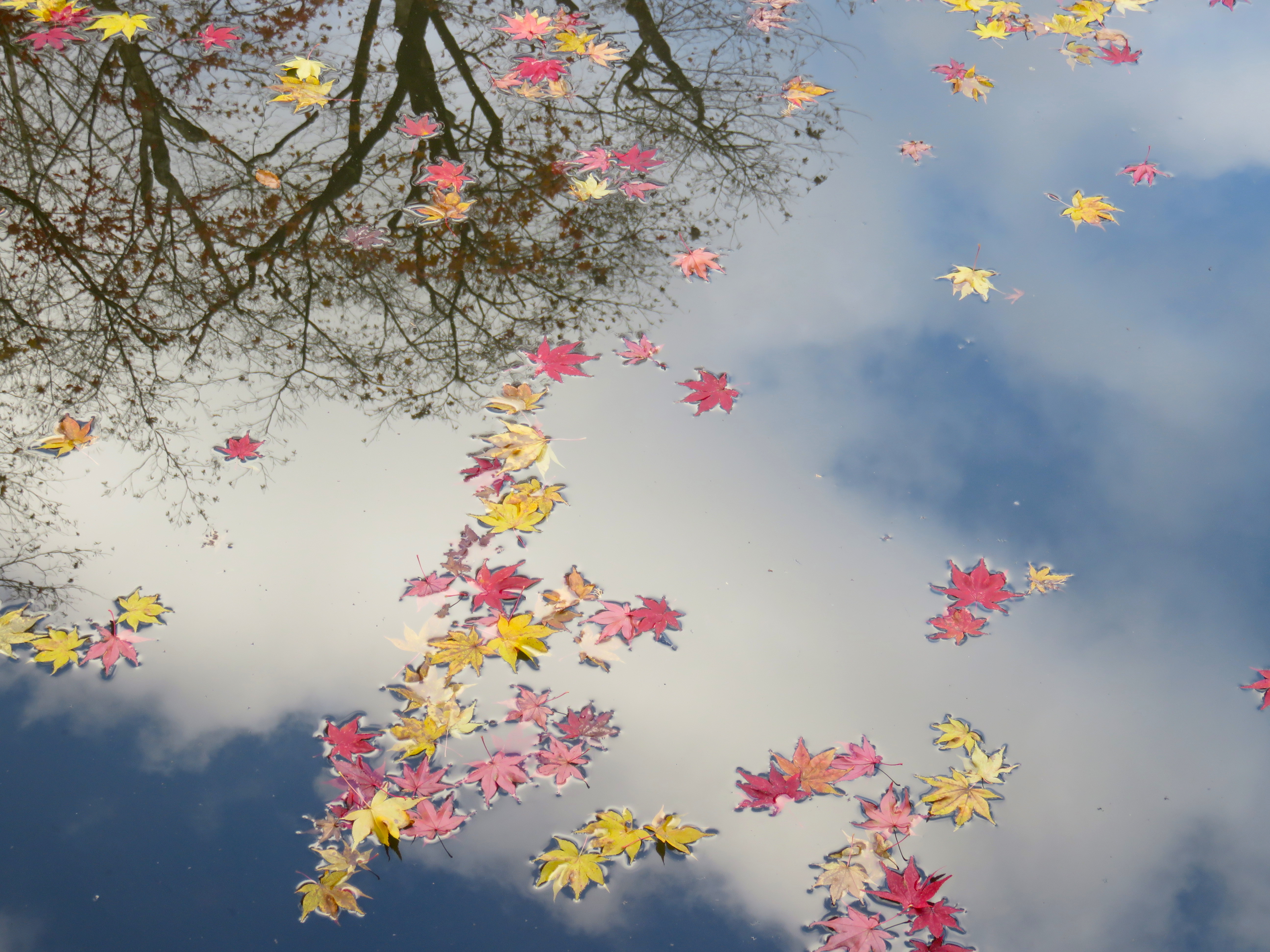
熊野新宮神社, Kumanoshingu Shrine, is not too far from our house.  It's famous around here for its spectacular Japanese Maple trees, which in November turn fire red, yellow, orange, brown, and every shade in between.

We make a point of going there every year, as do many other people.

Temples and shrines are everywhere here.  They come in all shapes and sizes, from huge sprawling complexes which take up several hectares, to single buildings sitting on a tiny patch of dedicated land.  There are the obvious ones which are located on main streets but I personally love the ones that are tucked off in a copse of trees, that are at the end of a trail up a mountain, or just sitting somewhere in isolation.

Temples are Buddhist.  Shrines are Shinto.


[ This originated at the author's personal webpage . . . https://jdrachel.com ]


Life In Japan: Japanese Maples


Tuesday, July 16, 2019

Life In Japan: Passion For Reading


Does anyone in the U.S. read anymore?  I mean read something longer than a tweet, or a comment on Facebook.  Do people have time to read a book?

Recent statistics tell us that literary reading in the U.S. is in steady decline, despite the fact that the number of people with bachelor degrees or higher has almost doubled since 1982.

To the chagrin of those who think the revolutionary introduction of digital books -- ebooks -- may make these numbers skewed, these stats include ebooks.

What are people reading?  The ingredients labels on their protein bars?

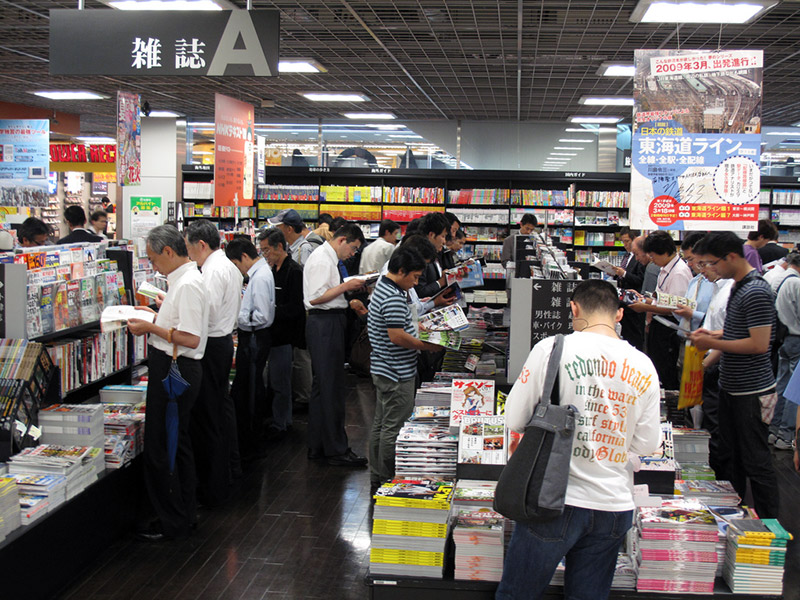
I can also report that, much to the detriment of the forests in the world, printing on paper is very alive and well here in Japan.  Japanese love their books, magazines, travel guides, self-help owners manuals, printed and hand-held.  People regularly pack bookstores the way Americans flock to Walmart for Black Friday -- on a regular basis!

I'm not sure what any of this definitively says about Japanese culture vs. Western culture.


I do know, as a person who used to never go anywhere without a book, and used every spare moment waiting in line, between this something-or-other and that something-or-other, on a coffee or lunch break, traveling, during awkward silences in a conversation, to read, I feel right at home here.

Everyone's different.  If you feel good about carrying a soccer ball everywhere . . . just do it!

[ This originated at the author's personal website . . . https://jdrachel.com ]


Life In Japan: Passion For Reading


Tuesday, March 12, 2019

Life In Japan: The Nesting Tree


We have an enormous variety of birds here in Japan.  Not just homegrown types.  Some very interesting breeds, for example, migrate from China and Siberia.  Colorful, exotic, fascinating to watch.  My house is on the edge of a forest, in a very quiet setting.  I often just sit and view them from my rear window as they come and go.

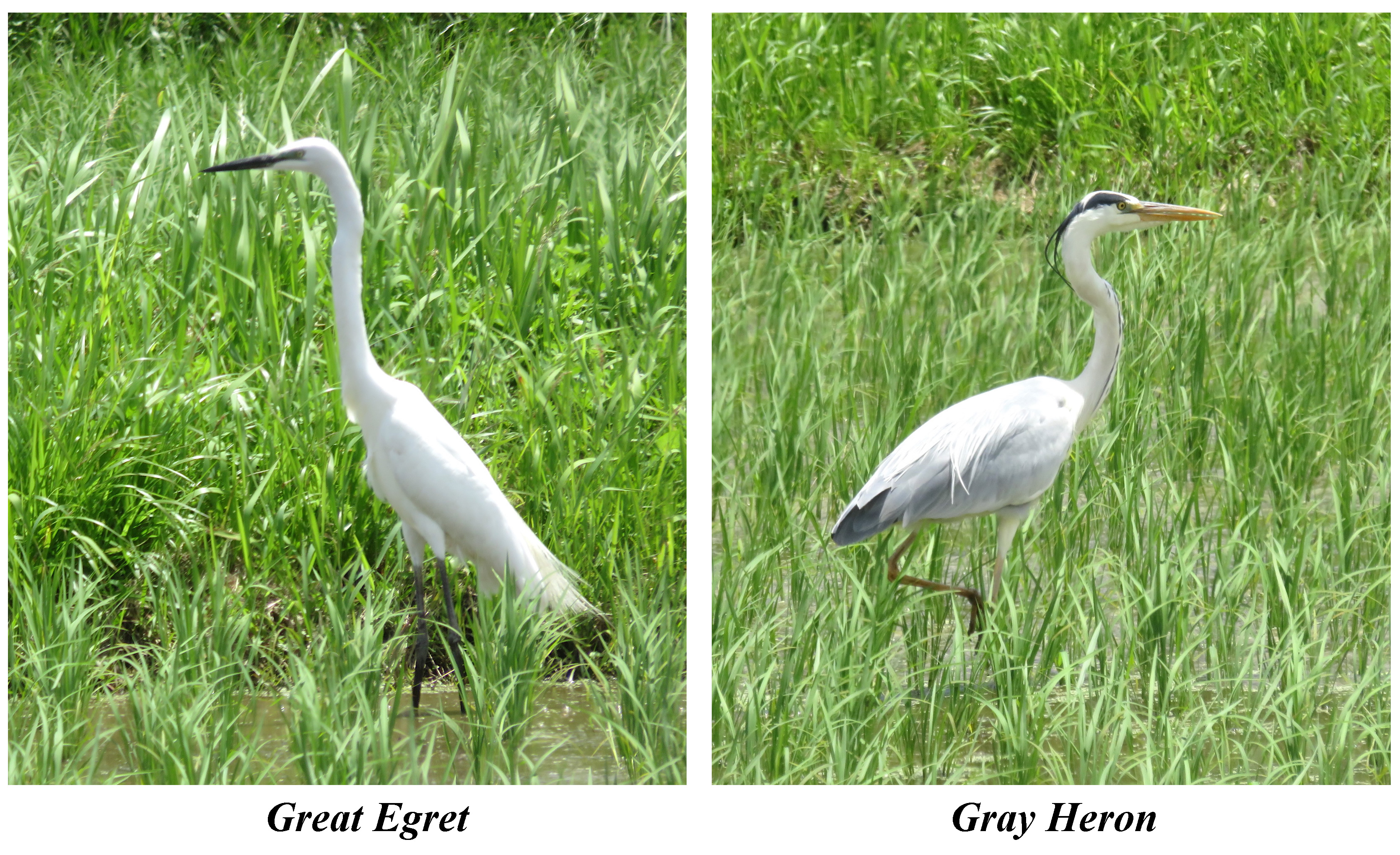
There are two large, majestic birds that most definitely migrated here many decades ago but now are permanent residents.  They can be seen everywhere, along the riverbanks, in the rice fields, soaring high overhead above our rustic town.

I'm referring to the great egrets and gray herons, which must number in the hundreds here in Sasayama.
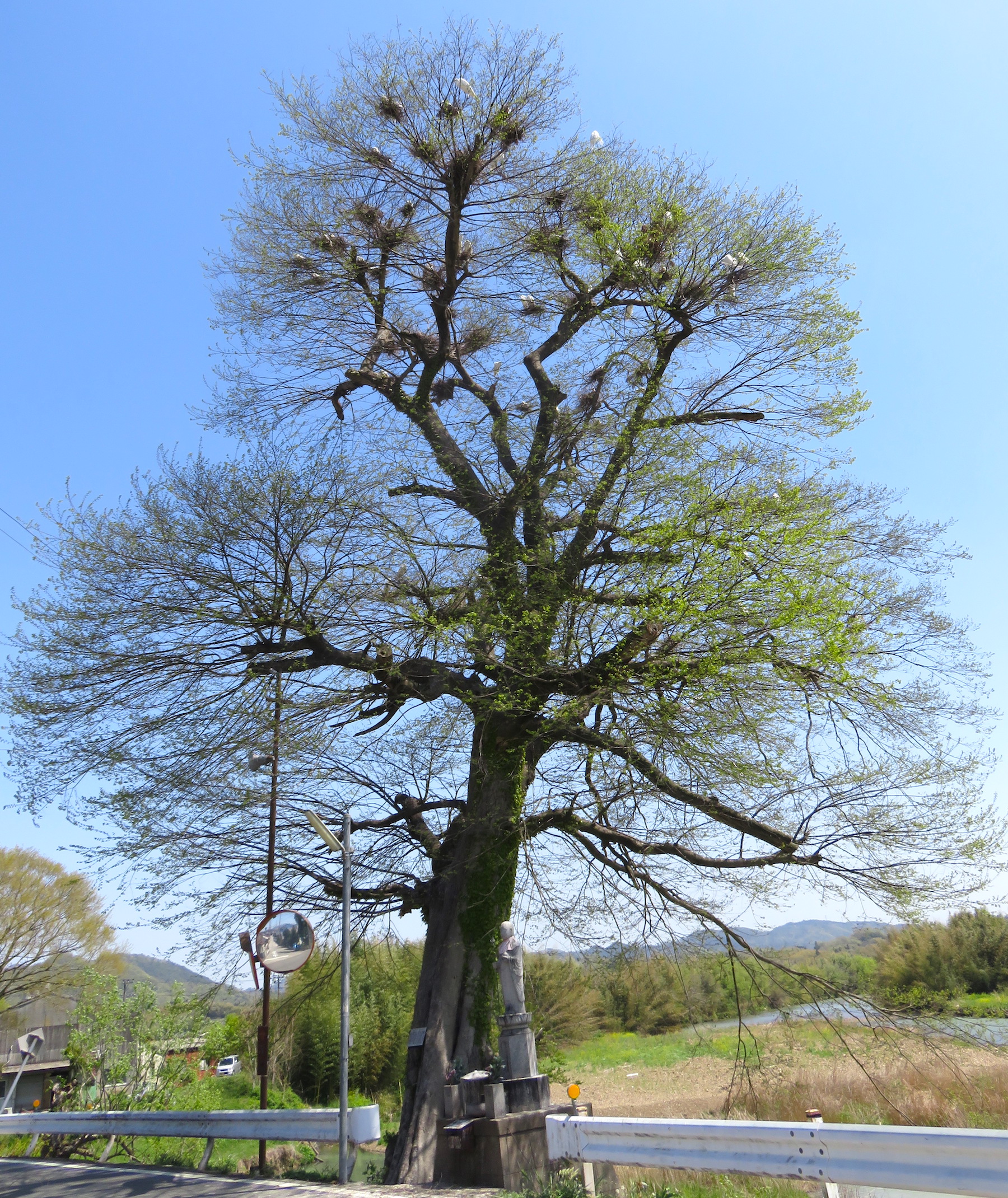
They have a nesting tree -- actually several in various locations in the region -- very close to my home.  I pass it everyday when I ride into town to buy groceries and other sundries. 

Every spring the great egrets build nests, lay eggs, and give birth to their next generation.  I've never seen any gray herons there.  I'm not certain where their maternity ward is.


Anyway, here's a short movie.  Both Tom Cruise and Bruce Willis turned me down for the lead role.  It is what it is.


[ This originated at the author's personal website . . . https://jdrachel.com ]


Life In Japan: The Nesting Tree


Saturday, March 2, 2019

Life In Japan: Persimmons

I confess.  I never saw, much less tasted, a persimmon until I came to Japan.  I must have heard the term before.  Maybe I read it in Walden Pond or some Emily Dickinson poem.  Persimmon trees definitely didn't grow where I lived in Michigan during my formative years.  Actually nothing much grew at all in Detroit other than racial tensions and poverty.

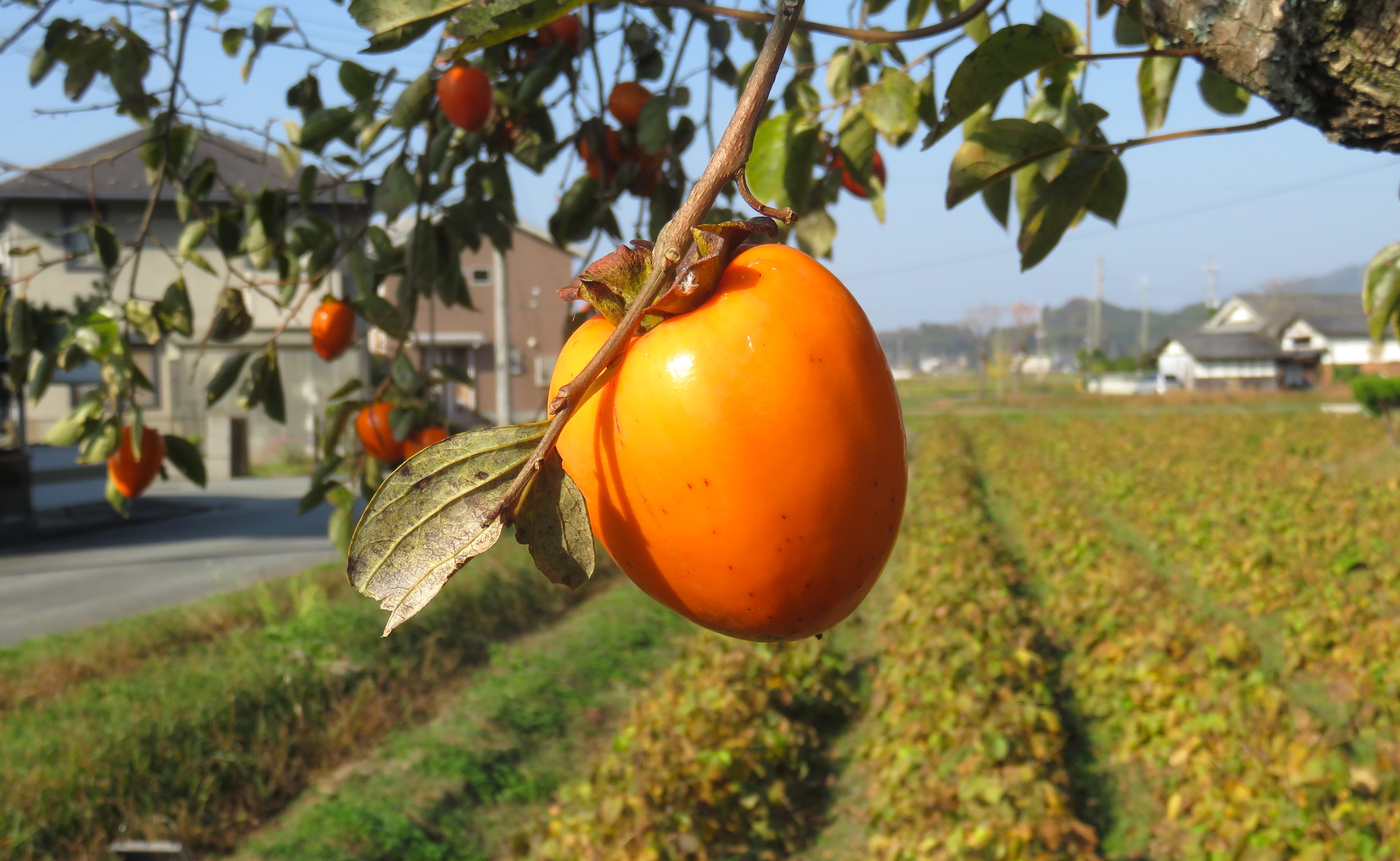
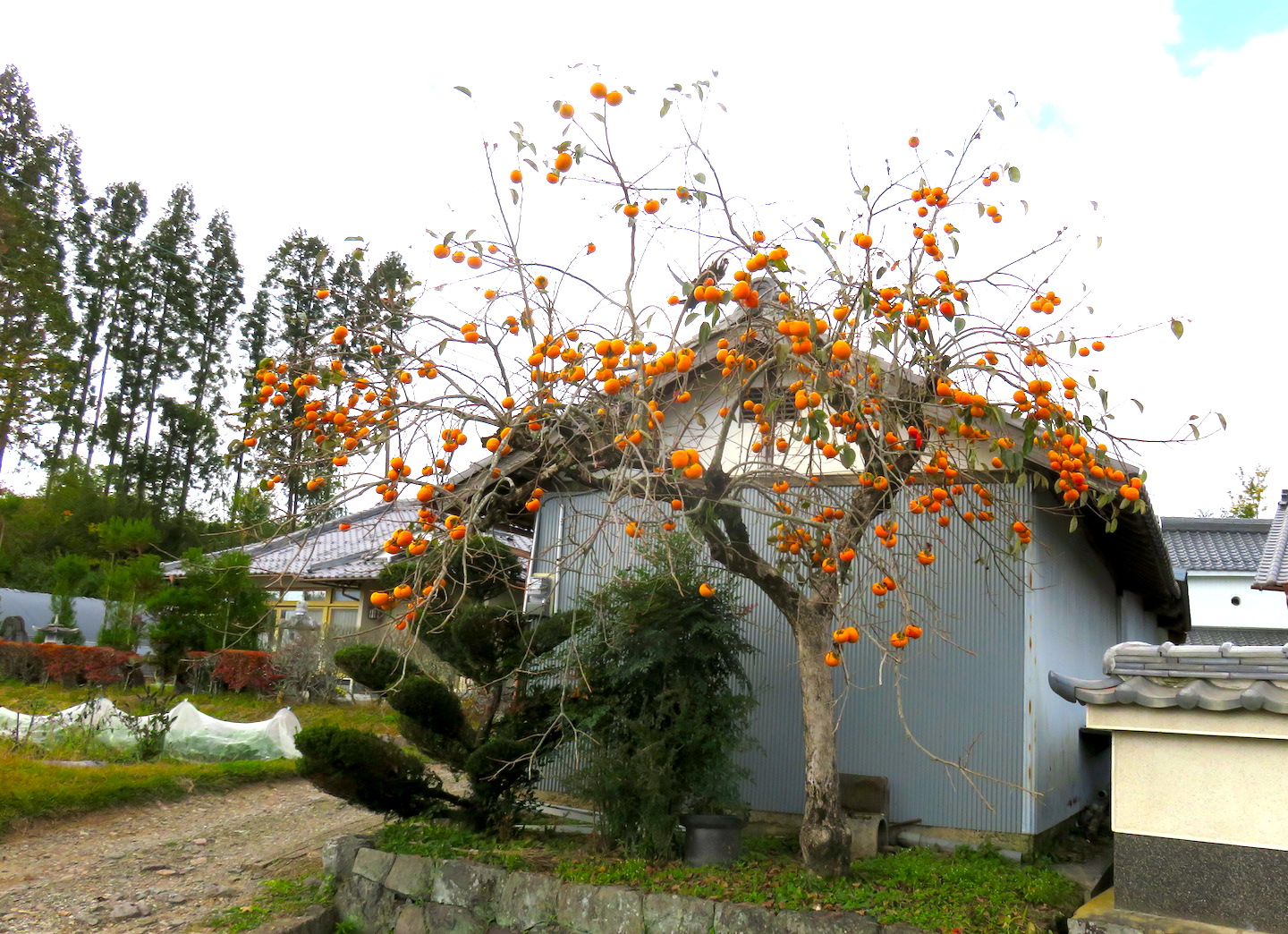
You have to be here the right time to see persimmons.  Meaning, my first time in Japan, consisting of a month in July 2007, I certainly didn't spot any.  The fruits come out in all of their orange majesty late October.  So it must have been 2008, when I was here for the entire year.


I find it very difficult to describe the flavor of a persimmon.  It's completely unique.  Of course, as a fruit it tastes like a fruit, as opposed to pork ribs or licorice.  But even as a fruit, it's different, delicious in its own special way, with a waxy skin and a crunchiness to the meat more like an apple than a banana.  Until they are very ripe, at that point turning to slime, they aren't very sweet, which is probably why Japanese people like them so much.

What I truly love about persimmons is the way they decorate the landscape.  Every tree becomes sort of a Christmas tree but with only orange bulbs, and obviously no flashing lights, tinsel, or star on top.


Hmm . . . usually I talk politics, philosophy, metaphysics.  And here I'm carrying on about a fruit.  Does that make me sound like a fruitcake? 

I like it here in Japan.  I pay attention to different things.  Most of the people around me are farmers.  They know things I didn't even know I didn't know.  All this is still quite new to me.  How many people at my age can say honestly that life is still full of surprises and wonder?

Three times a day, I hear the ringing of temple bells at a local Shinto shrine.  How do you set your watch?  I don't even own one.  When I hear about some horrible incident going on in this chaotic, increasingly hostile world, I can honestly say:  That'll never happen on my watch.  The worst thing that could happen to me at this point is, late in October, I might get hit on the head by a falling persimmon, as I ride my bicycle to town to buy groceries.


[ This originated at the author's personal website . . . https://jdrachel.com ]


Life In Japan: Persimmons


Wednesday, February 27, 2019

Life In Japan: Festivals

                                             Masumi at the Daikokuji Tea Festival

While Japan is called The Land of the Rising Sun, my personal preference actually would be The Land of the Festivals.  The entire calendar is littered with fascinating, extremely entertaining, family-oriented festivals.

I can think of no equivalent in the U.S. to what goes on here.  Yes, we have rock festivals and various other extravaganzas.  But they are very specific to a type of event and usually local.  Here in Japan, the festivals are both a local and a national phenomenon. 


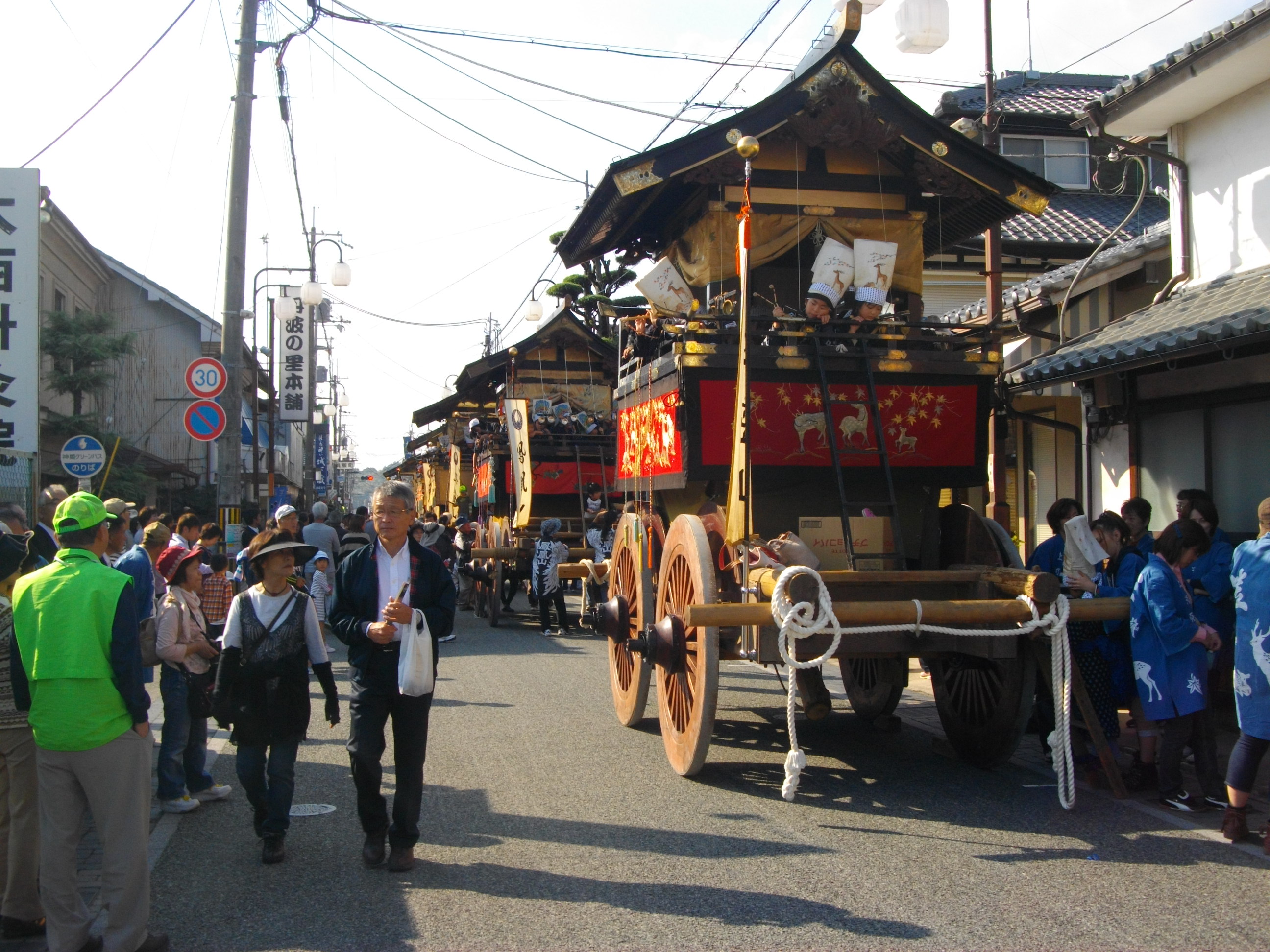
                     Festival of the Portable Shrines

Some local festivals are unique to a town or region.  Here in Sasayama, we have the Wild Boar Festival that fits into that category.  Not really too many wild boars running loose in Osaka or Tokyo that I know of.  We also have our Black Bean Festival, because Sasayama is renowned across Japan for the quality of its soybeans (black beans are soybeans which have ripened and dried on the vine and are black in color).


                     Cherry Blossom Festival

The big festivals are national.  Yes each locale or region has a celebration.  But the festival being celebrated usually is being celebrated across all of Japan at the same time.  Examples of this are the Cherry Blossom Festival early April and the Festival of the Portable Shrines in late October.

Obon is yet another national celebration, actually an annual Buddhist event first half of August, commemorating one's ancestors.  It is one of the three busiest times of the year in Japan for travel and taking a holiday break.  Everywhere in Japan, there are Obon festivals being held.

This year, my wife Masumi and I headed north to Tohoku for two weeks of camping and attending some of the most famous of these Obon events in the country.

Everywhere we went, there were fireworks, parades, singing and dancing.  Here are a few of the highlights.

Aomori

This is reputed to be one of the most spectacular festivals in Japan.  The giant internally-lit paper floats are astonishing.  The crowd is rowdy -- well, as rowdy as it gets here in Japan -- the drumming tribal.  Quite a show!


Yamagata

This was my favorite festival.  The participants sang and danced.  I loved the song they were singing.  The costumes, the choreography, the town itself ... superb!


Sendai

Sendai -- famous for its proximity to Fukushima -- was more of a gallery affair than a rollicking good-time festival.  Hanging in the promenades which are ubiquitous in urban settings here in Japan were beautiful hanging paper sculptures, literally thousands of them.


We returned from our excursion just in time for the Dekansho Festival, this one unique to our town and one of my favorite local annual events.  The music is traditional and live, and everyday folks perform the Dekansho folk dance.  The event celebrates the harvesting of the rice and is hundreds of years old, representing the long agricultural roots of this community.


[ This originated at the author's personal website . . . https://jdrachel.com ]


Life In Japan: Festivals