Tondo Matsuri festivals are held all over Japan, the second weekend of the new year, at all levels. There are major festivals with thousands of people, as well as more modest local celebrations. The central feature of the Tondo Matsuri is a bonfire, much appreciated since it tends to be cold in January, thanks mostly to the sub-zero winds that blow our way from Siberia.
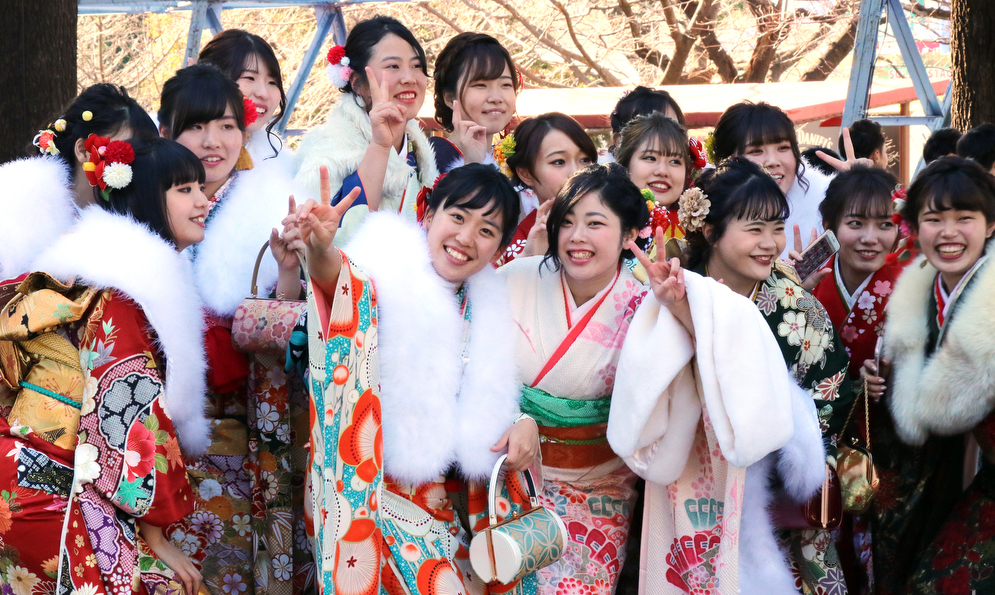
This year Tondo Matsuri was held on the same day as Coming of Age, a national holiday celebrating every person turning 20, a welcome to full adulthood. Thus most people had the day off from work, making attendance convenient. Of course, the coronavirus “crisis” is cautioning people across the globe against large gatherings, sneezing on one another, licking door handles and one another’s eating utensils, and the most notorious disease spreader of them all, French kissing.

My village of Noma here in Tambasasayama wasn’t daunted by the threat of viruses. We got together, and granted, our bonfire didn’t leap 20-30 meters into the sky, as is common practice the major festival sites, but we still managed some truly heartfelt camaraderie and warmed ourselves against the winter chill in splendid fashion. Our bonfire was next to Benten Shrine where many similar get-togethers take place.
Once the Tondo bonfire is going, there are two key rituals.
One is burning the decorations, talismans, rakes, arrows, amulets, wreaths, blessings, and other votive goods, from the previous year, to be replaced over the new year with new ones. Many of these are items bought from local shrines and temples to bring good fortune and health. They are tossed onto the fire. After they are incinerated, each family collects some of the ashes, which are then taken back home. These ashes are called shimenawa — しめ縄 — and are considered sources of good luck and positive developments for the coming year.
Very light paper banners, with sayings and wishes written in beautiful calligraphy, are thrown onto the fire as well. They instantly burst into flames, then are caught in the updraft of the bonfire, soaring heavenward as they turn to ash. This takes the messages they contain up up up, and makes them part of the invisible energy of the universe. While this probably is more just silly superstition than a serious spiritual exercise, it reminds me of the prayer wheels of Tibetan Buddhism, which in a parallel fashion send into the divine ether the thousands of prayers the wheels contain on scrolls hand-written by the monks, usually pleas for peace and harmony in the world.

Once the Tondo bonfire is going, there are two key rituals.
One is burning the decorations, talismans, rakes, arrows, amulets, wreaths, blessings, and other votive goods, from the previous year, to be replaced over the new year with new ones. Many of these are items bought from local shrines and temples to bring good fortune and health. They are tossed onto the fire. After they are incinerated, each family collects some of the ashes, which are then taken back home. These ashes are called shimenawa — しめ縄 — and are considered sources of good luck and positive developments for the coming year.
Very light paper banners, with sayings and wishes written in beautiful calligraphy, are thrown onto the fire as well. They instantly burst into flames, then are caught in the updraft of the bonfire, soaring heavenward as they turn to ash. This takes the messages they contain up up up, and makes them part of the invisible energy of the universe. While this probably is more just silly superstition than a serious spiritual exercise, it reminds me of the prayer wheels of Tibetan Buddhism, which in a parallel fashion send into the divine ether the thousands of prayers the wheels contain on scrolls hand-written by the monks, usually pleas for peace and harmony in the world.

The second ritual is cooking mochi — 餅 — by placing it near the fire. Mochi are rice cakes and there’s absolutely no equivalent to them in the West. When grilled, they are thick and gooey with a crispy exterior, and incredibly delicious, especially with sweet red bean soup or soy sauce.

Yes, the food is very unique here, for sure.
So . . . that was our Tondo Matsuri. There were no fireworks, parades, or 21-gun salutes. The Blue Angels aerial acrobatic team didn’t fly over. No sign of a marching band or baton twirling cheerleaders.
But we still had an outstanding time!
Did I mention? . . . I love Japan!