Showing posts with label respect for the elderly. Show all posts

Tuesday, September 20, 2022

Life In Japan: Where Aging Is Valued

Yesterday was a national holiday here in Japan.

I didn’t give it much thought. Of course, I was extremely glad that Masumi, my wife, had time off from teaching school, and we could spend the entire day together. Moreover, a major typhoon was heading our way, so we were preoccupied with preparing the house and garden for a combative assault by Mother Nature.

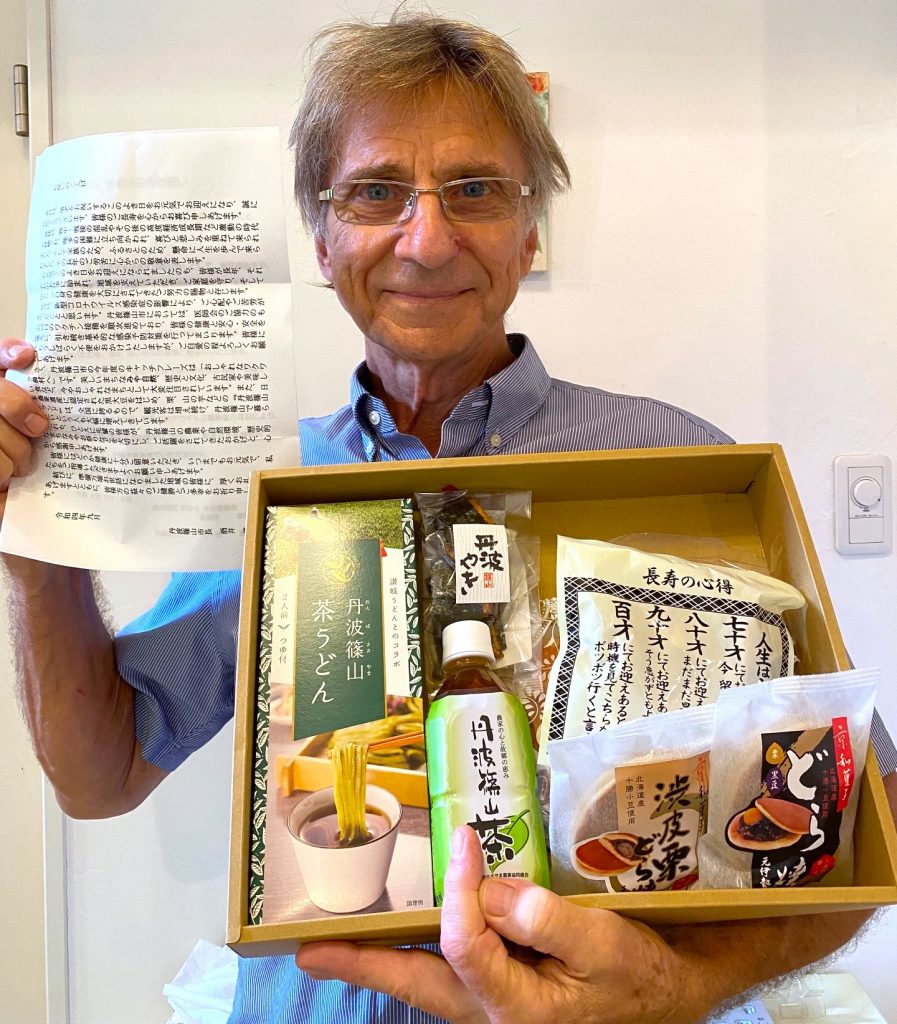
Then the doorbell rang. I answered it and there stood a gentleman from my local village. He handed me the gift package pictured above. Then it hit me . . .

It’s Respect for the Aged Day!

As I’ve explained before, national holidays here in Japan are by Western standards rather unique. Overall they are not nationalistic. They are more cultural. But they’re not like Mother’s Day or Father’s in the West, which are more like National Cat Day or National Talk in An Elevator Day, which aren’t official holidays at all. These national holidays, which celebrate everything from coming of age (turning 20) to mountains and children, are official holidays! The banks, post offices and most businesses are closed.

Now get this! Because yesterday was Respect for the Aged Day, every person in my small city of about 50,000 people who was 75 or over, received a gift package from the city. Let that sink in!
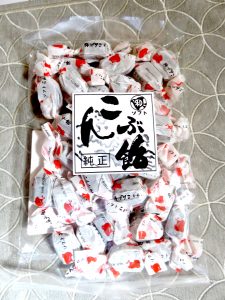
The package consisted of Japanese tea, and various treats. There were a couple cakes that were scrumptious! But I admit that I find some snacks here a little odd. In this package, there were seaweed crackers, pancakes filled with red bean sauce, green tea flavored udon (noodles). What you see on the right is kelp candy. No, that’s not a typo. It’s chewy candy made from kelp, harvested from the sea. It’s like munching on licorice that has no flavor.

As they say, it’s the thought that counts. And the thought here is one of extraordinary generosity and kindness.

By the way, there was a special letter included in the box. It conveyed a charming message of appreciation. Paraphrasing, it said: “You’ve lived many years, faced difficult challenges in your life, struggled against adversity. The people of Tambasasayama want to thank you for your hard work and your dedication and service to others. May you continue in good health and live a long and happy life.”

As ‘racism’ is discrimination based on race, in the West, ‘ageism’ is discrimination based on age. Someone is elderly, thus they are not accorded the same rights and courtesies as someone younger. They are dismissed personally as less able, and socially as less worthy. But here in Japan, ‘ageism’ — if there is such a thing — has the opposite effect. Ageism here accords an elderly person greater respect, preferential treatment, additional courtesies and admiration based on their advanced age.

What a completely different, and for me at 76, awe-inspiring attitude! Getting older may be inevitable. But in Japan, it doesn’t equate to being “disappeared” or forced to live in the margins of someone else’s life. The kids here don’t shuttle mom and dad off to some convalescent home when they get old, then visit them once a month, if they’re not too busy. The kids here make a room for them in their own home and they all live together again as a family.

Let that sink in!


[ This originated at the author's personal website . . . https://jdrachel.com ]


Life In Japan: Where Aging Is Valued | John Rachel


Wednesday, August 24, 2022

Life In Japan: ‘Japan Pom Pom’

They claim proof in this video that age is a state of mind. Well, I’m not quite convinced of that. If a toddler just had a different attitude, he could start using chopsticks or master the Argentine Tango? When your heart stops beating or your kidneys quit functioning, it’s because you’re looking at things wrong? I don’t think so.

At the same time, state of mind is important in achieving a balanced, healthy perspective on age, whatever the number turns out to be. That’s the real message and it’s a good one.

At my advanced age, I love Japan, and Asia in general, because here they don’t demote or disappear people just because they were born a long time ago. The youth culture — should I say ‘youth-worshipping’ culture? — of most Western countries requires that old people be written off as persona non grata, once they get crows feet, or most certainly when they are no longer reproductive-capable. Or as my now deceased friend, British TV character actor David Rayner, liked to say: “We become invisible.”

Morita-san here is in his 70s, his parents in their 90s. They lived with him until they passed away, a few years after I took this photo.

By contrast, older folks here are respected, often revered, assigned a special, important place in their communities and families. Where it’s standard protocol in the West to get gramps and grannie into a retirement home or elderly care facility — out-of-sight out-of-mind — as soon as the old codgers agree to live in a pre-death camp, here it is extremely common for the oldest members of the family to live with their sons and daughters and their spouses until they die. I had an English student in his 70s whose parents, both pushing 100, lived with him and his wife until they passed away. This is customary.

At 84.67 years, Japan has the second-highest life expectancy in the world, right behind Hong Kong. This is largely attributed to diet and an excellent health care system. I’m sure “state of mind” plays some role. First, Japanese expect to live a long time. Second, they do not let age hinder them from fully participating in society, at whatever level makes sense. Many refuse to retire and work into their 70s, 80s, 90s. I wrote back in November 2020 about Silver-san, aka Jinzai Centers. Jinzai — 人材 — means human resources. But what makes these work centers special is they only employ people over 65.

Then again, it’s not just about work. Contrary to stereotypes about Japanese people, they do like to have fun. Which brings me to the central topic of this piece . . . Japan Pom Pom!

As you already suspect, this is a cheerleading squad. But what makes it unique is all of the ladies in it are over 55, the average age being 70. Their nickname is ‘The Cheerleading Grannies’. It’s the brainchild of Fumi Takino, an 85-year-old resident of Tokyo, who wolfs down pizza, and drinks beer and Coke like a 16-year-old high school exchange student.

The video at the top tells the entire story. I really have nothing to add, except this: If you’re feeling old and thinking about just surrendering to deterioration, convinced that your “old age” has condemned you to hopelessness and inevitable decline, watch the Cheerleading Grannies. If you don’t find it a shot of inspiration or a strong case for unfettered optimism, I’m confident you’ll at least enjoy a smile.

Bonus video: If you’re really in need of a good jaw-dropping, check out this performance by 94-year-old Johanna Quaas, from Germany — the oldest active gymnast in the world!

Age is a state of mind? Only if your state of mind is ageless.


[ This originated at the author's personal website . . . https://jdrachel.com ]


Life In Japan: ‘Japan Pom Pom’ | John Rachel