Showing posts with label soybeans. Show all posts

Thursday, February 13, 2020

Life In Japan: Harvesting Soybeans


It probably seems late to be writing here in December about harvesting anything.

But soybeans are an interesting crop.

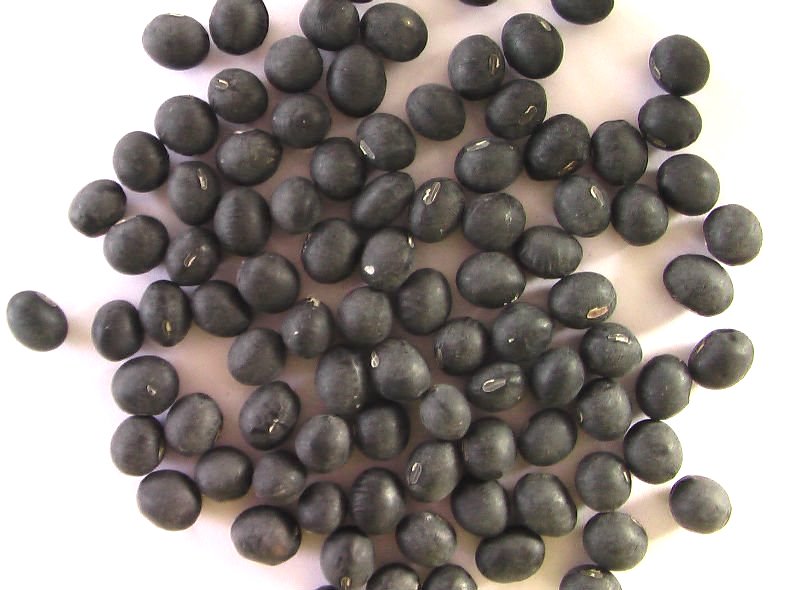
First off, soybeans are called kuromame -- 黒豆 -- here in Japan, literally 'black beans'.  Because when they are left on the vine to completely mature, they dry, become very hard, and are a deep ebony color.

In actual fact, soybeans are harvested at two distinct stages.
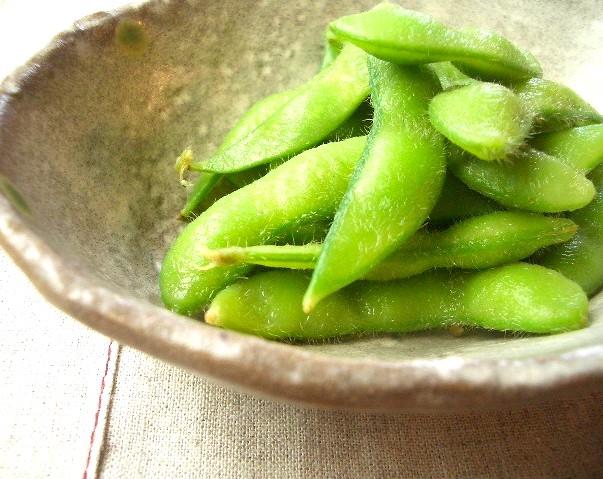


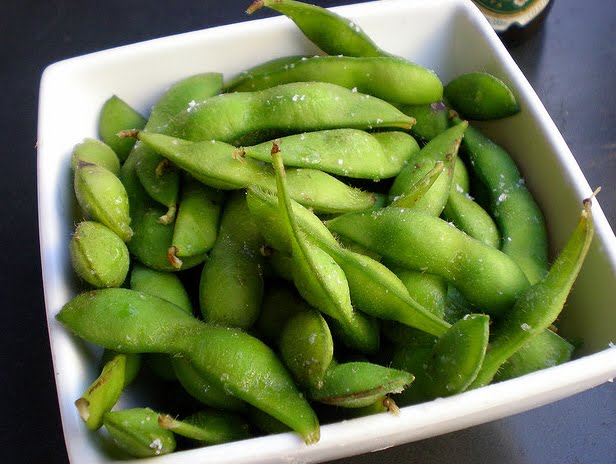
The first harvest comes about a month after the appearance of the new bean pods.  These soybeans are green and fairly soft.  When the pods are boiled and lightly salted, they are called edamame -- 枝豆 -- which translates to 'stem pea' or 'branch pea'.  Edamame is among my favorite treats both at home and at a restaurant.  It makes a great snack or an appetizer.

It's right after this first harvest that our prefecture -- a prefecture is the equivalent of what is called a 'state' in the U.S. and there are 47 prefectures in Japan, ours is named Hyogo -- has our annual Black Bean Festival.
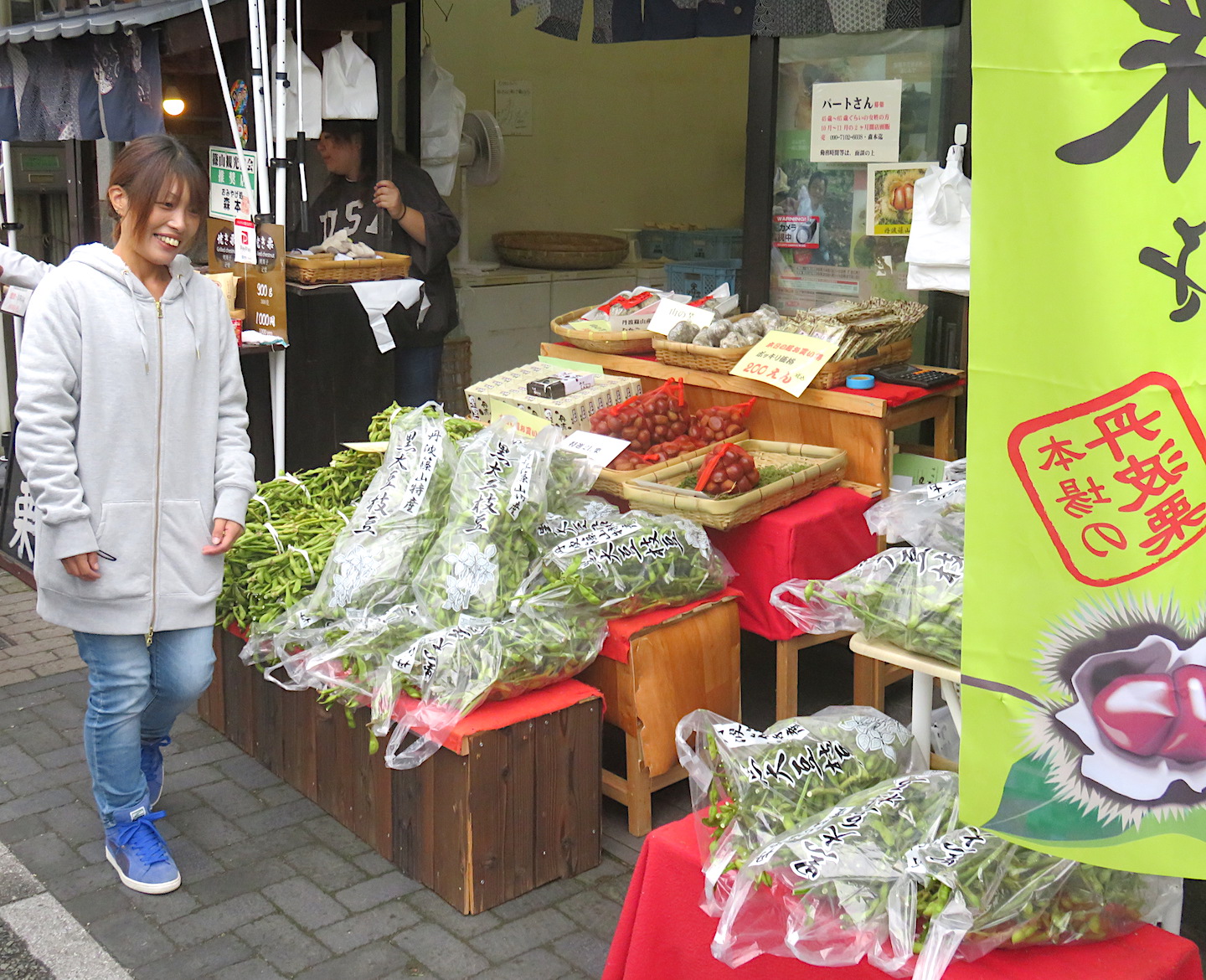


Because our beans are reputed to be among the best in Japan, people come from all over Japan to buy them, or send them out as gift packages.
This first harvest either must be eaten quickly or frozen.  The green soybeans will spoil within a week of being harvested.

Which is in sharp contrast to black beans.  They will have completely dried out, are hard as a rock, and will last almost as long as most rocks, as long as they're not attacked by insects or radioactive zombies.  At the same time, in order to make them edible, they must be boiled for hours and hours.
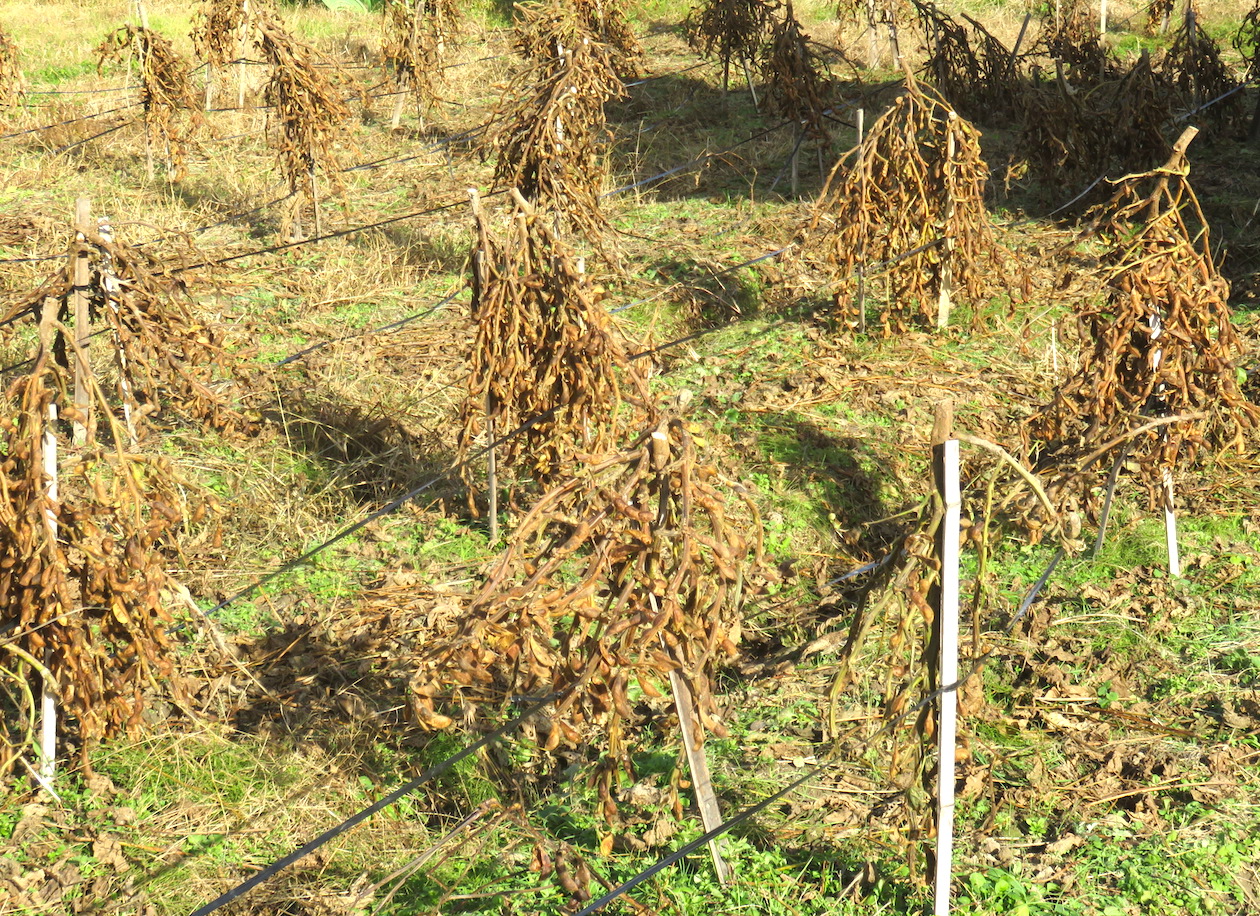


To arrive at this petrified state, black beans are left on the vine for two to three months.  They are monitored and at some point their stalks are cut and they're flipped over and either left upside-down on the ground or hung up to dry out.  So here we are in December and many local farmers are just getting around to collecting their black beans.  Some will leave them out for another month or so.



Here's an interesting side note.  Black beans taste very different than the early-harvest green soybeans.  They're roasted to eat as a snack, boiled and made into a healthful soup, soaked in sugar and used for various desserts.  They're turned into a sweet paste and used as a filling in dessert cakes, the way we Westerners might do with custard or whip cream.  Or sometimes the beans are sweetened and inserted in a cake or sweet roll the way we might do with raisins or chocolate chips.  This all seemed pretty weird to me at first, but I'm getting used to it finally.



Actually, the Japanese have quite an array of splendid confections unlike anything I've ever experienced before: dumplings, starch balls, rice cakes, hakuto jelly, tokoroten, higashi, dango, dorayaki, mochi.  They have great affection for honey toast, sugar toast and every imaginable variety of crepe.  There are crepe shops and stands everywhere!

One thing I definitely haven't figured out yet:  Japanese love their sweets, love their treats, and in general love to eat!  But they're so slim.  It's not like every other building is a gym or there's a raging pandemic of bulimia or anorexia.  If you could bottle whatever slimming mechanism is going on in this strange land -- call it Svelte Fat Melt Magic Elixir #9 -- you'd become a billionaire overnight!


[ This originated at the author's personal website . . . https://jdrachel.com ]


Life In Japan: Harvesting Soybeans


Sunday, December 22, 2019

Life In Japan: Planting Soybeans


Sasayama, the traditional rural town I live in, is famous throughout Japan for two food items.
One is wild boar.  We even have a wild boar festival!  Can't say I get very excited about wild boar, either in the wild, or tearing up the local farm land, or on the plate.  Cooked it looks like pork but to my taste buds has a weird flavor.

The other item is black beans, better known as soybeans. 

Soybeans are eventually harvested in two stages.  When they first mature, they are green and relatively soft.  They are best eaten fresh, right off the vine, boiled for 12-15 minutes. 


When you go to a Japanese restaurant and order edamame -- 枝豆 -- this is what you're eating.  They are served in the pod, which is boiled and lightly salted, and you pop the green beans into your mouth.  Delicious!  And nutritious!

Many of the soybeans are left on the vine to mature to the second stage of harvesting.  They become very dry and extremely hard, and they turn BLACK!  The advantage is that these can be stored without refrigeration and used throughout the year for a whole variety of recipes.  Black beans are even extensively used in very sweet soups and pastries.

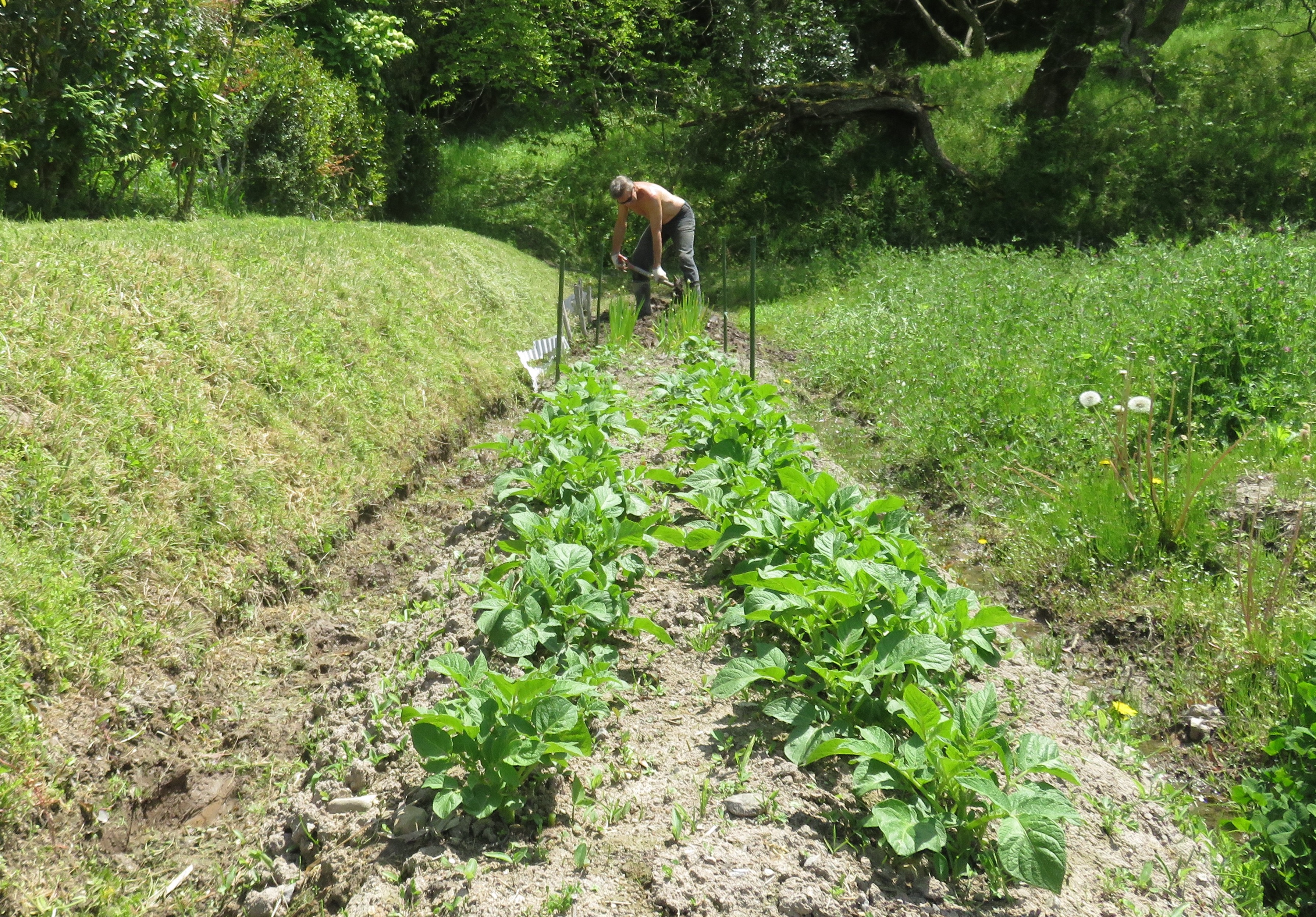
Regardless of whether they end up as "immature" young green beans or black beans, the whole business starts in spring with the planting.  My wife Masumi and I even get in on the action, planting a couple rows we rent from our neighbor.


Fasten your seat belts. The excitement builds fast as we make some holes, then insert greenhouse-grown seedlings, push the dirt back in the hole, wait, read a book, build an atomic submarine in a bottle out of used match sticks, wait some more, fertilize the plant a couple times in the summer, keep waiting (patience is very important in farming) as momentum on the soybean growing scene steadily keeps gathering steam.  Did I mention there's quite a bit of waiting involved?  Then finally sometime in October it all climaxes in a earth-shaking, rib-rattling, jaw-dropping, game-changing finale (I've dedicated a separate article to the harvest).

Whew!  I'm surprised they haven't made a Movie-of-the-Week out of it.

Anyway, sarcasm notwithstanding, the soybean fields are quite beautiful.  And the farmers are very hard-working folks.  Masumi and I are hobbyists.  The growers are the real deal.


[ This originated at the author's personal website . . . https://jdrachel.com ]


Life In Japan: Planting Soybeans


Thursday, October 24, 2019

Life In Japan: Festival of the Portable Shrines


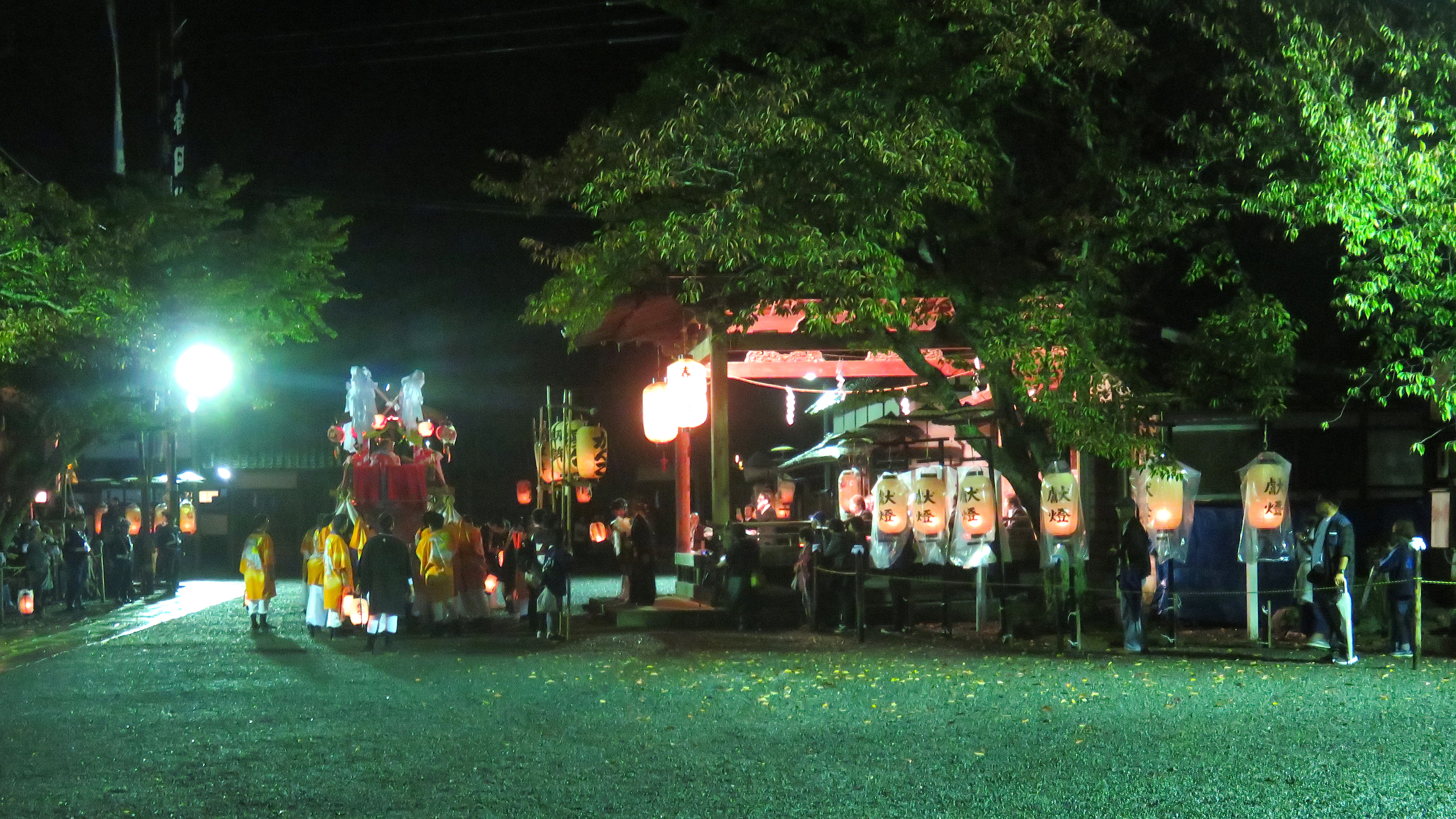
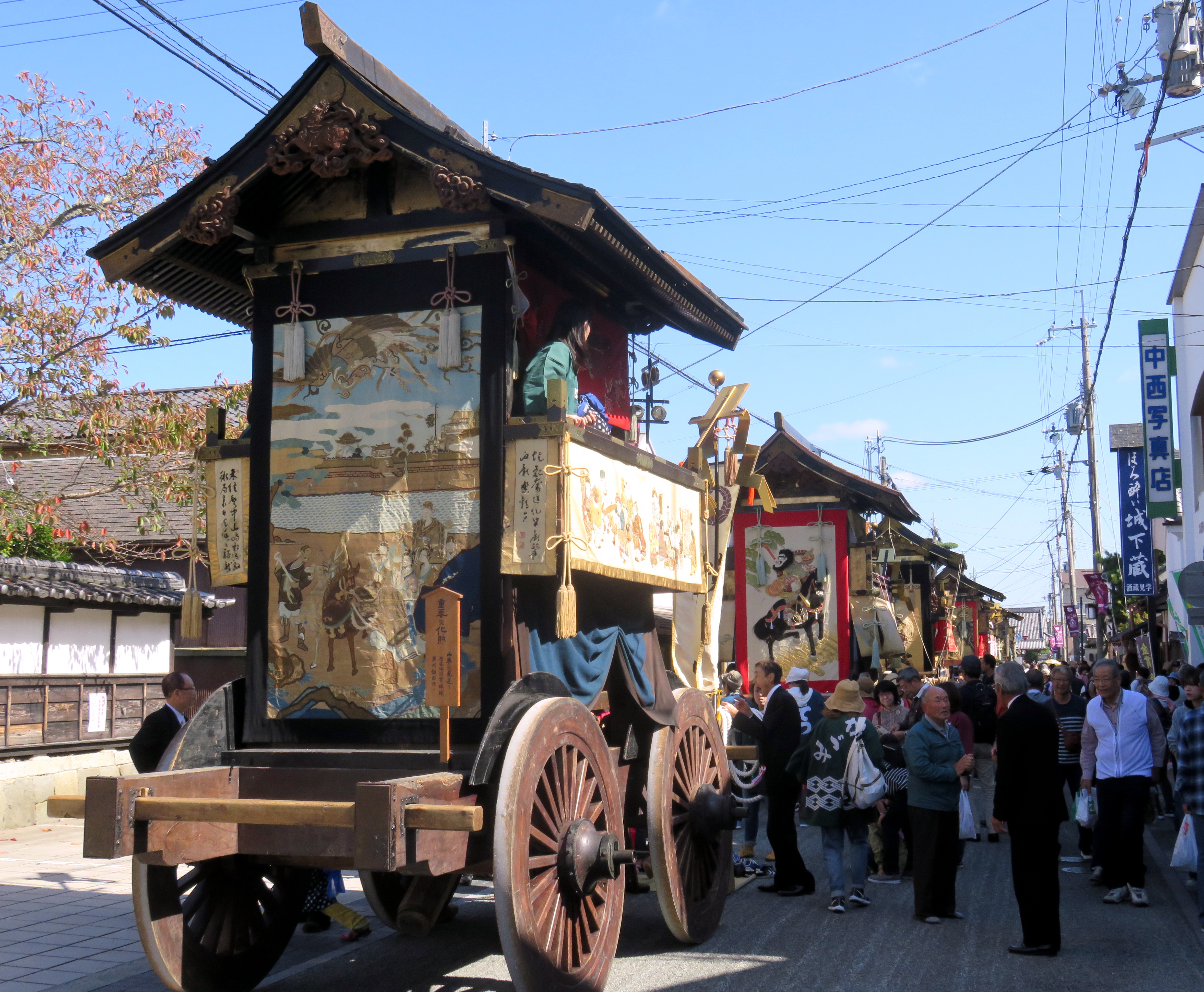
Every year during the third week in October we have a most unique and marvelous festival here called the Festival of the Portable Shrines.

I don't exactly know either its "purpose" or how to describe it.  Hopefully the photos and video will offer some idea what an exhilarating two days we have here in Tambasasayama, as the streets fill with colorful costumes, huge shrines either on wheels or being carried by the heartier men -- many of whom are extremely inebriated on local sake -- and visitors from all over who come to enjoy the festivities.

We see a lot of unfamiliar faces.  This festival coincides with the soybean harvest, and our town is known for having the most delicious soybeans in Japan.  So we see Japanese from all the surrounding prefectures -- the Japanese equivalent of states in the U.S. -- even from as far as Tokyo, which is over 500 kilometers (320 miles) away.  There's also a decent mix of Westerners in town.  ALTs -- Assistant Language Teachers who typically teach English in the area junior and senior high schools -- converge from the entire region.  This is also the time that the exchange students arrive from Walla Walla, Washington -- which is Tambasasayama's sister city in the U.S. -- to experience a two weeks concentrated dose of Japanese culture.


And here's a short video compilation from just last week.


See you next year!  Bring your smiles.


[ This originated at the author's personal website . . . https://jdrachel.com ]


Life In Japan: Festival of the Portable Shrines


Monday, October 22, 2018

Life In Japan: A Lost Wallet


Every year in October, we have here in Sasayama -- my hometown -- the Festival of the Portable Shrines.  It's one of my favorites!

It coincides with the black bean harvest.  Soybeans are called black beans because if they are left on the vine, they turn black and harden, making them easy to store and use over the coming year.
The town is famous over much of Japan for the quality of its black beans.  This means that the weekend of the festival, Sasayama is flooded with tourists.

A gentleman arrived here from Kobe, which is about an hour away.  He came to purchase black beans, but when the moment came to pay, he discovered his wallet was missing.

There are no pickpockets here, so obviously he had dropped it somewhere in town.

He went to the nearest Koban.  There are many here in Sasayama, as there are all over Japan.  A Koban is a mini-police station.  In the U.S. there is much lip service given to community policing, having friendly cops in the neighborhood to address problems which come up in the local area.  In Japan, it's a reality and an integral part of a functioning community.

The policeman on duty -- considering Kobans are, despite being extremely useful and efficient, very limited affairs, often just a two-room building with one parking space for a patrol car, there was probably only one or at the most two officers there -- took a report, then got on the phone.  He called all the other Kobans in the immediate area, anywhere close to where the gentleman had parked his car, then walked into the main part of town.

He passed along the man's name and a description of the wallet.

Now get this . . .

While he was on the phone with another Koban, someone walked in with the wallet and handed it to the policeman on duty there.

The gentleman from Kobe walked the short distance to the other Koban, and retrieved his wallet. 

The contents -- credit cards, ID, cash -- were intact.  Not a single item had been stolen.

I'm not going to moralize.  Draw your own conclusions.  Imagine dropping your wallet wherever you live and decide how the story would have ended.

I'll say it again . . . I love Japan!


[ This originated at the author's personal website . . . http://jdrachel.com ]


Life In Japan: A Lost Wallet


Sunday, June 28, 2015

I love Japan!


For a number of reasons I don't need to get into here, I don't own a smart phone.

But two days ago, I regretted not having one with me. Or at least a camera.

I was doing my daily 20 km bike ride. Most of my preferred riding is through pastoral areas, soybean and rice fields, often skirting Buddhist temples and Shinto shrines, and sometimes through the heart of town by the 400-year-old castle ruins we have here.

But there was one stretch for that particular day's ride which took me down a secondary road __ not really a highway and not all that busy, but it is a route regularly used by cars, buses, and heavy trucks.

That's when I saw him.

I so wish I'd been able to take a photo to post here.

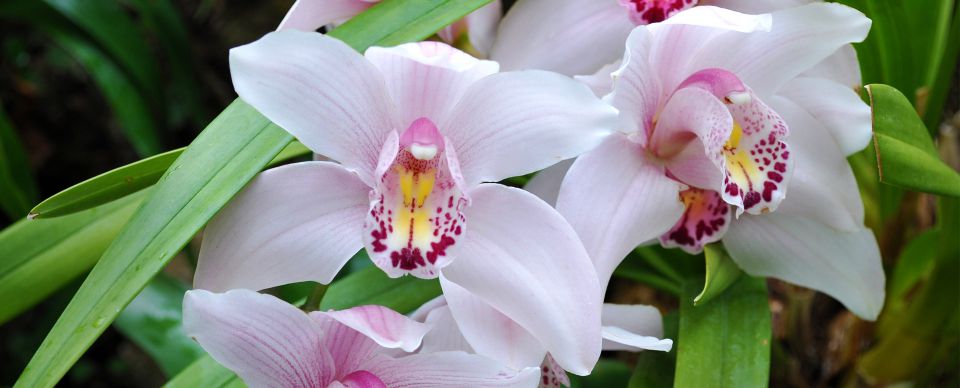
A large delivery truck was pulled to the side of the road. The driver was bent down before some beautiful orchids growing in a garden adjacent to the road.

He did have a smart phone and was taking pictures.

Whatever important items were on their way to wherever important items go, would just have to wait patiently in the bed of his massive truck, because this gentleman spotted some splendid flowers along the route, and wanted to show them to somebody.

His wife . . . his kids . . . his mom or dad . . . his best friend?

Just a common truck driver.

But an uncommon man.

Which is pretty common around here.


[ This originated at the author's personal web site . . . http://jdrachel.com ]