Showing posts with label community policing. Show all posts

Wednesday, March 17, 2021

Life In Japan: Police Power III

The police in America are in the news a lot these days. More on that later.

No one likes being stopped by the police for running a stop sign or failing to wear a seat belt. That’s true everywhere. Such interactions with enforcement officers mean a ticket and a fine. At the same time, if you were in violation of the law, regardless of how minor the infraction, they’re just doing their job, there’s no reason to resent, hate, or fear them.
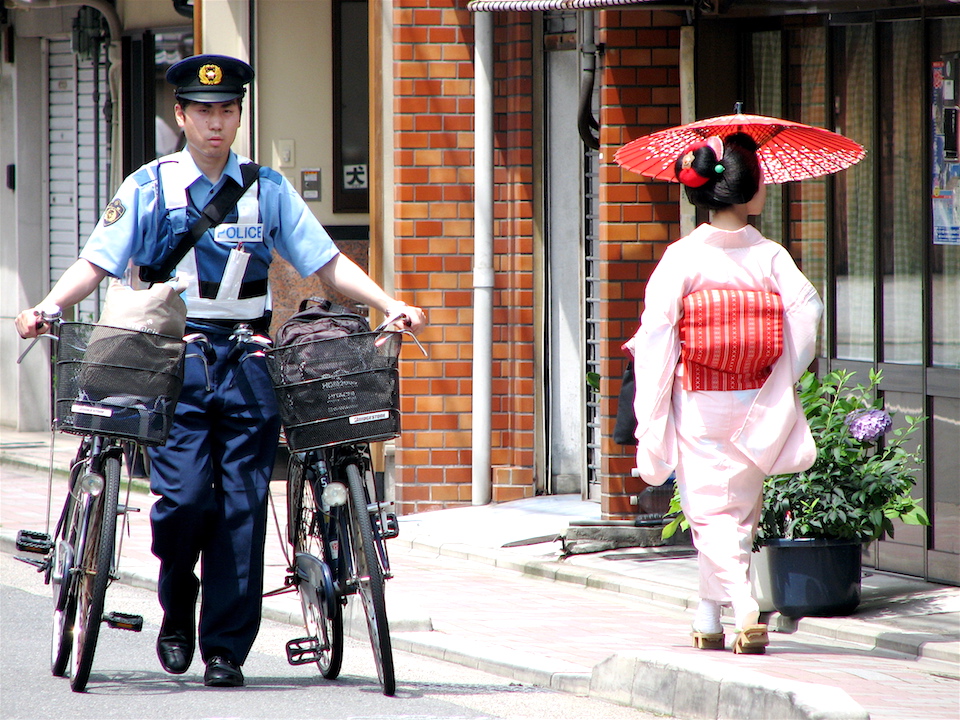
The other side of the coin is that on rare occasions, calling the police yourself is the best option in handling a situation. It’s certainly quite helpful to be able to request professional assistance. A stranger is wandering around in your back yard. A stray dog is foaming at the mouth, leaping in the air, apparently infected with rabies. A person has just crashed their car into a tree and is slumped over unconscious behind the wheel. You do what you have to do and a trained, concerned, professional police officer is an obvious place to start when dealing with many emergencies.

In over twelve years, I’ve only had three interactions with the police here in Japan. All were fine, not in the least unpleasant.

One time early in the evening, I was driving down the main street here in town, came to a stop at a T-intersection, and two officers stepped up to my car. They didn’t even ask me for identification. They simply wanted to know if I’d been drinking. I replied, “I don’t drink.” They thanked me and I went on my way. 

Another occasion I wrote about in the article Life In Japan: Koban. That was a very intense situation with the police helping a disoriented lady I found laying on the side of the road, who miraculously hadn’t been run over before I walked her to the police station. The officer was extremely polite and highly professional, asked questions and took a lot of notes for his report on the incident. He got the lady safely back to the retirement facility she had wandered away from.

One other time, I was riding my bike and an officer on a motorbike stopped me, looked at the registration tag on my bike to make sure it was current and my bike not on their stolen list. The whole thing took about 30 seconds and I went on my way. Yes, they patrol on motorbikes. And yes, they are meticulous about stopping bicycle theft.

Which brings me to the actual theme of this particular article, the vast difference between policing here and what appears to be going on back in the U.S. 

“Can I have some ammo with my fries?”

I’m not here to rag on the police in America. They do what they do in a completely different environment, one where crime is more of an acceptable — sometimes the only — lifestyle choice, violence is a admired national pastime, and guns are as available to and common among the general public as chewing gum. The main point here is how dramatically different life in Japan is from life in the U.S.

Whereas the police in America are frequently viewed as adversaries, not to be trusted, to be avoided, sought as a last resort in many communities — especially communities of color — here in Japan, they are still viewed as trusted public servants. Being a police officer is a highly-regarded, admired profession. As I was brought up to believe way back in the 20th Century, a police officer is a member of the community and your friend.

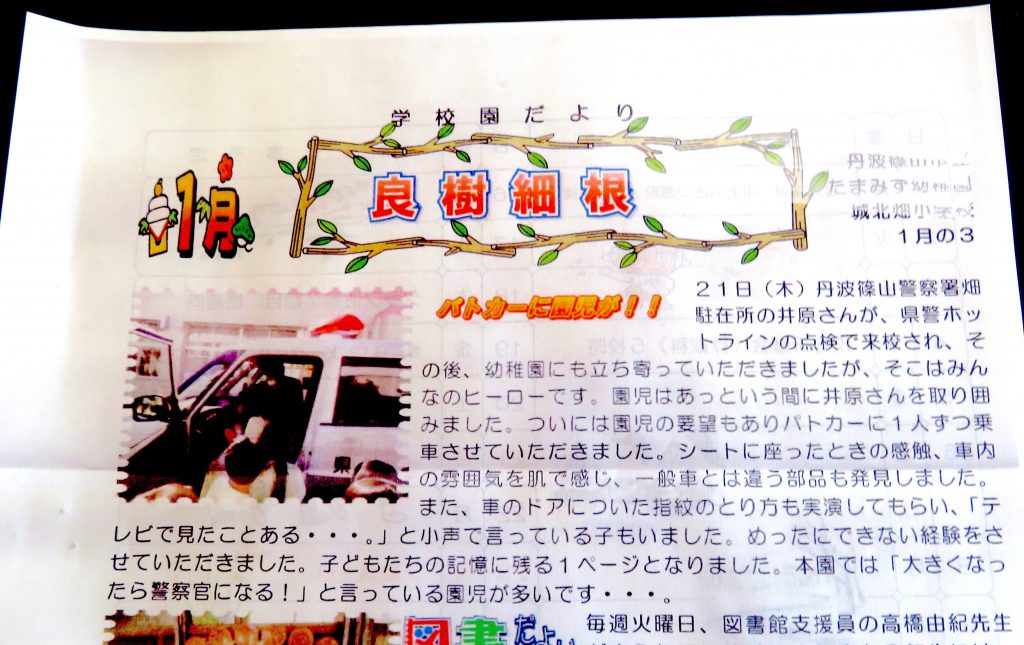
The article posted at the top is about a visit by police officers to a local school to show the students a typical police van. The kids were extremely excited and fascinated by the way it was outfitted. And the officers ended up giving the students a ride in the vehicle. That’s the way the police like to be seen and regarded here, by citizens of all ages.

My wife’s daughter, Izumi, teaches kindergarten here locally. The police occasionally are invited by her school to meet with the kids, who regard their visits as a special occasion. Last time they came by, they worked in the school’s garden with the children, harvesting sweet potatoes. Students and police then took the fresh potatoes inside, baked them and had lunch together.

Perhaps nothing sums up how unique the police are here than this story. Here we meet Yemon, a cat which has been recruited to work in Yoro Station in Miyazu, Kyoto.

I have a feeling that being a “cat burglar” is not a very good idea in this police precinct with Yemon on the job.

Police Power I and Police Power II are part of my collection of 62 anecdotes about life in the REAL JAPAN for me as an expat. It’s getting fantastic reviews and I believe it will put a lot of smiles out into the world, as well as valuable insights into this fascinating country. Available across the globe for the asking . . .

As a Kindle ebook from Amazon (US)
As a deluxe paperback from Amazon (US)
As a Kindle ebook from Amazon (Canada)
As a Nook Book from Barnes & Noble
As an iBook from the Apple Store
As an ebook from Scribd
As an ebook from Kobo (US)
As an ebook from Kobo Indigo (Canada)
Your choice of ebook formats at Smashwords 
As a deluxe paperback direct from the printer



[ This originated at the author's personal website . . . https://jdrachel.com ]


Life In Japan: Police Power III | John Rachel


Monday, March 30, 2020

Life In Japan: Koban

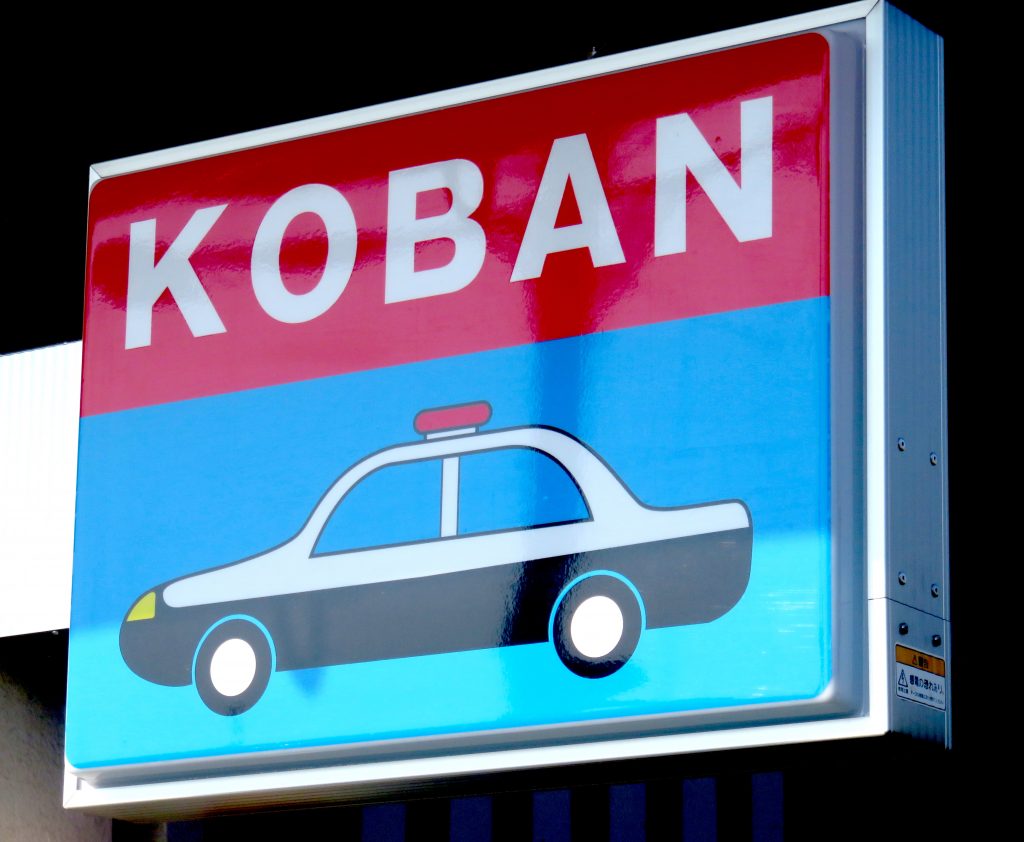
The Koban is the heart of community policing in Japan.
Remember community policing?  Yes, it was a big buzzword in the U.S. during the 90s, a decade that featured a brutal police beating of Rodney King, an unarmed black man, which sparked riots in Los Angeles.  The idea was to have policemen be participating members of a neighborhood, an integral part of community life. This would promote good relations between citizens and the men in uniform, acquaint the police with the citizens and unique activities of the people living near the community policing stations, giving them first-hand familiarity with the “players” there, good and bad. People would see police as humans just like them, police would experience citizens on a personal level. Moreover, if there were a problem requiring their attention, the police would be in the vicinity right on the scene.
It turned out to be more of a PR stunt in most cities in the U.S. and the approach finally buckled under the tensions it created, fueled by suspicion, lack of real trust, the sense that the cops weren’t there to help but to spy on the locals, using their insertion in the locale to better subject the everyday citizens to the strong-arm tactics and “establishment” bullying law enforcement is often rightly accused of. 
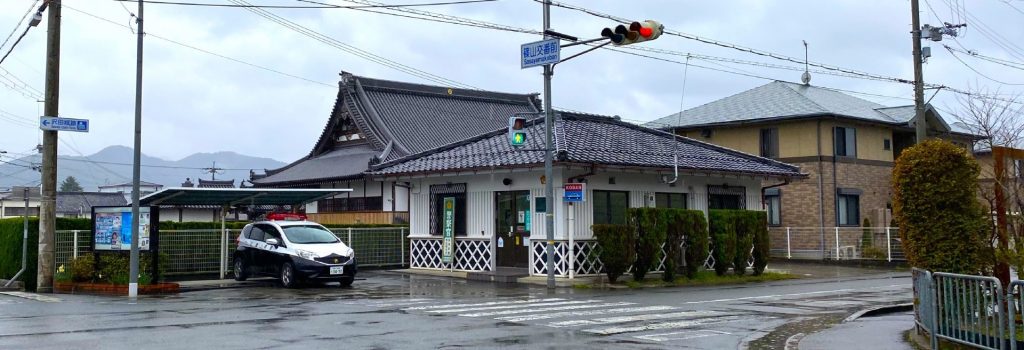
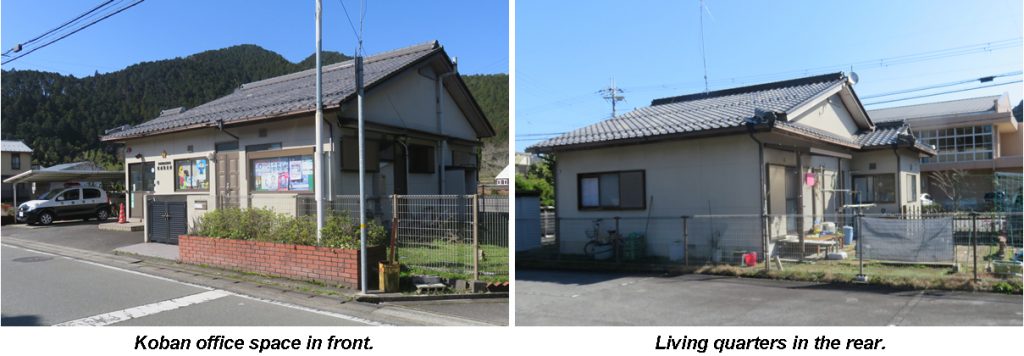
Community policing is not just a PR campaign here in Japan. It’s a reality. If there’s a problem and it’s not an emergency, you turn to the officers at the local Koban to get help. They truly are members of the community, living in the housing usually at the rear of the building, often with their own families.
There are a number of these in my home town here, and thousands all across Japan. Even in the big cities. I’ve seen them in Osaka and Tokyo.
Let me tell a story to see how this approach actually functions here. And please understand that I’m not trying to portray myself as some hero. What I did in this situation is exactly what 99.999% of all of the folks living here would do.
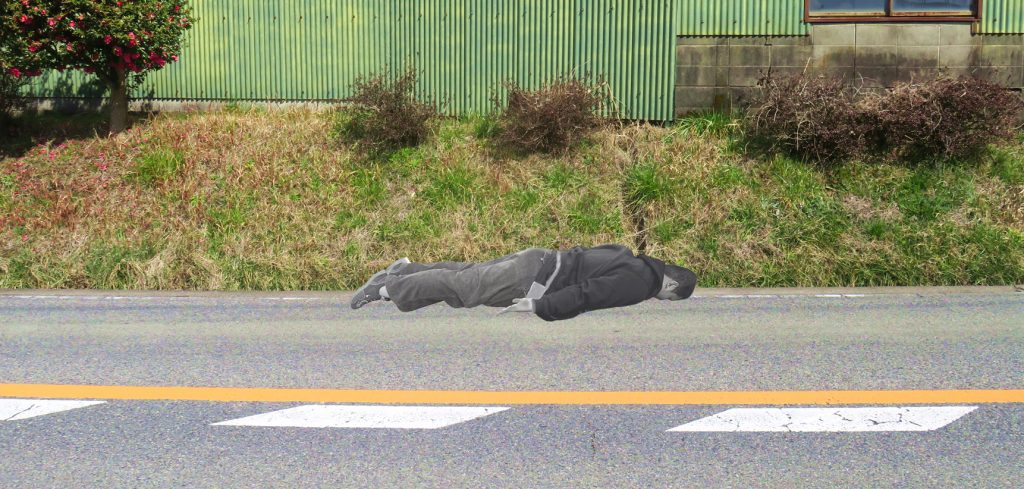
Masumi and I were on our way to a nearby town, if I recall, to visit her mom. It was a nasty day, rainy and windy, visibility was poor. I was driving. We approached an intersection and as I slowed down, I looked out the side window of her Mazda. This is what I saw.
Obviously, that was not the woman. I Photoshopped the pic to illustrate what happened.
I immediately braked, signaled to the car behind me to stop. Then I went over to the body laying in the road.
It was an elderly woman, probably in her 80s, and she was conscious, laying exactly as you see in the above pic, just staring straight into to cold, wet pavement.
The man in the car which was following me came over. We talked to the lady and helped her to her feet. She was fine. Just confused and lost.
There was a Koban not more than 100 meters away, around the corner of the intersection.
We walked the lady there, sat her down. The police officer on duty got a blanket, probably one of his own from the private quarters, and it greatly helped the lady warm up. It was a cold, miserable day.
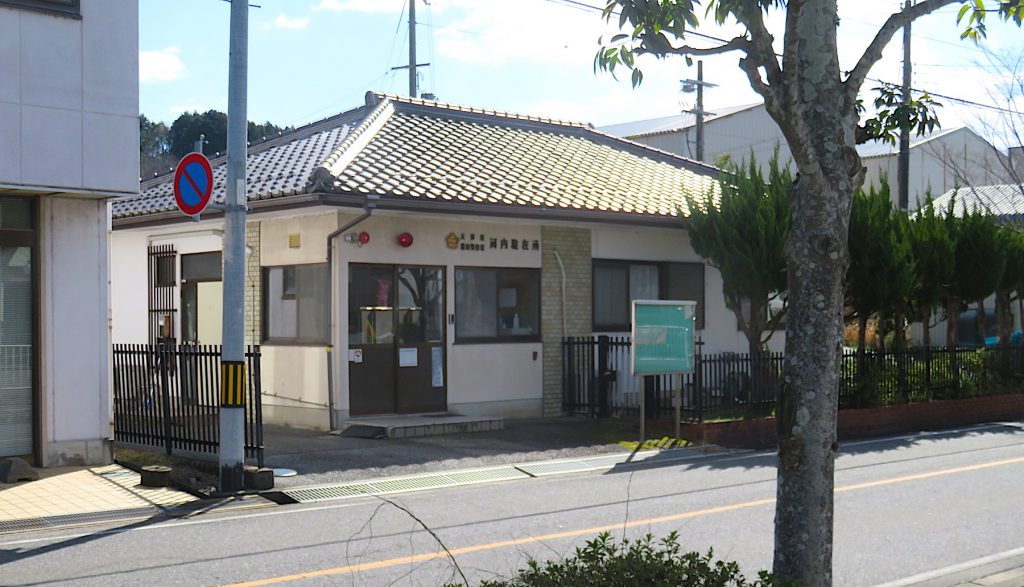
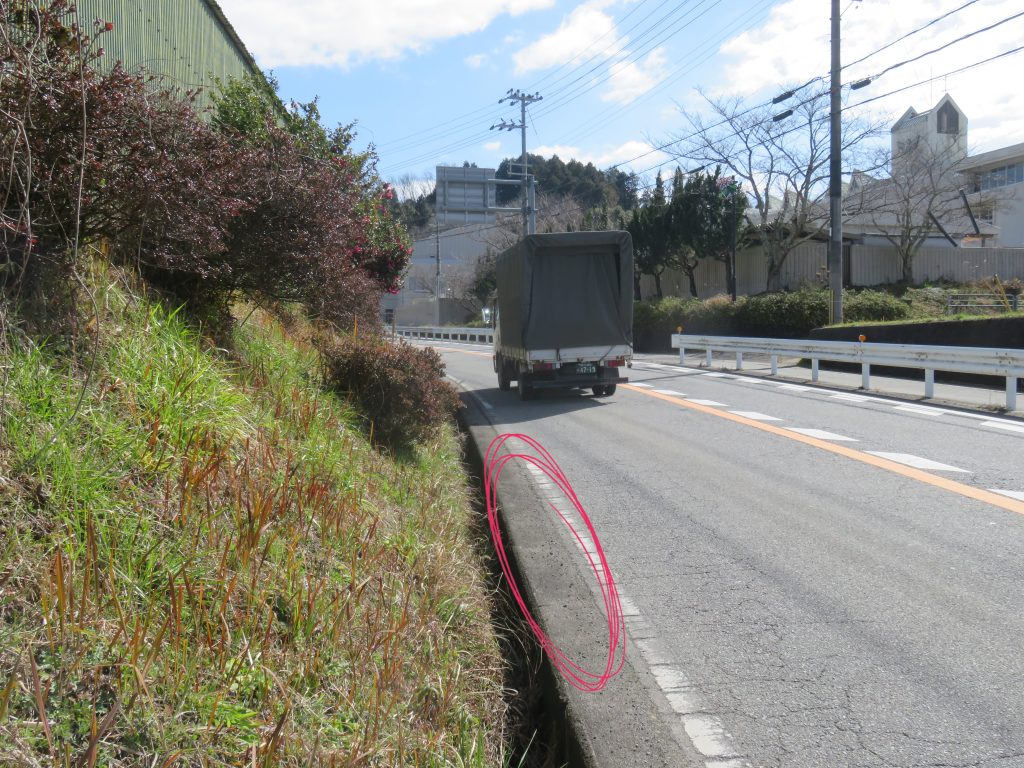
Before I go on, let me show you the tiny strip on this narrow street where she was laying.
It was a miracle she wasn’t run over! As I already mentioned, the day this happened was gray and cloudy, it was raining, visibility was very poor. And this is a well-traveled road. To make things even more precarious, she was dressed in a long overcoat a color that almost matched to pavement.
The police officer tried to get some basic information from her. Sadly, I think she was a victim of severe dementia. But . . . because he was right there in the community, he knew exactly who to call. Yes, there’s a nursing home nearby. One phone call later, the staff at the nursing home confirmed a lady fitting her description was missing. They sent someone over and took her back to the comfort of her residential care facility.
See how easy this works? No calls to central headquarters, checking databases for missing persons, trying to piece together a narrative to explain and identify this lost woman. Being right there in the neighborhood cuts through a lot of red tape and guesswork.
The officer interviewed Masumi and I, as well as the other driver, got all the details, filled out the requisite paperwork — Japanese love paperwork! — and thanked us for our service. He was very professional. It was obvious he took his job seriously and liked his work.
Community policing works. Especially if the police are dedicated and honest.

[ This originated at the author's personal website . . . https://jdrachel.com ]


Life In Japan: Koban


Monday, October 22, 2018

Life In Japan: A Lost Wallet


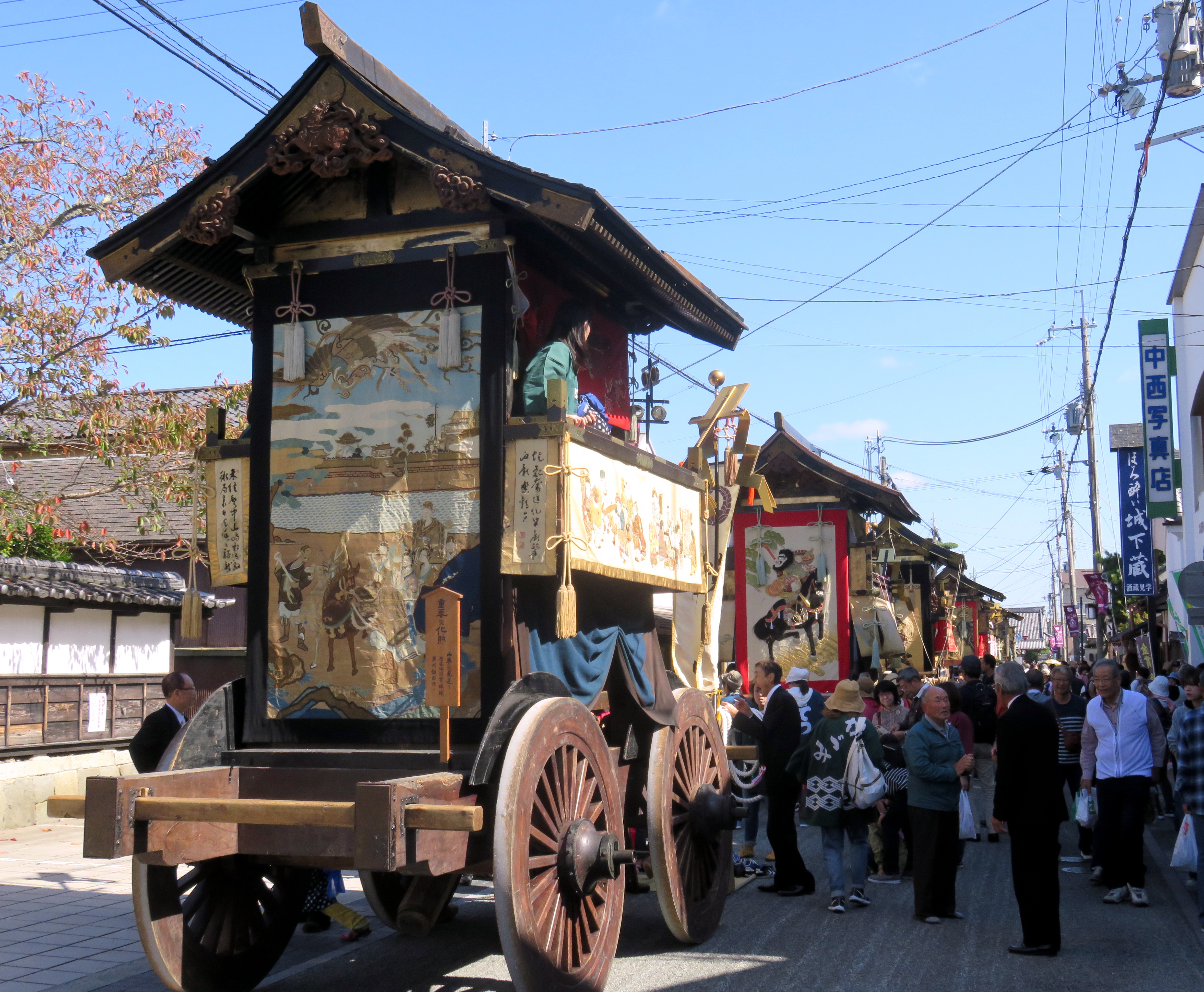
Every year in October, we have here in Sasayama -- my hometown -- the Festival of the Portable Shrines.  It's one of my favorites!

It coincides with the black bean harvest.  Soybeans are called black beans because if they are left on the vine, they turn black and harden, making them easy to store and use over the coming year.
The town is famous over much of Japan for the quality of its black beans.  This means that the weekend of the festival, Sasayama is flooded with tourists.

A gentleman arrived here from Kobe, which is about an hour away.  He came to purchase black beans, but when the moment came to pay, he discovered his wallet was missing.

There are no pickpockets here, so obviously he had dropped it somewhere in town.

He went to the nearest Koban.  There are many here in Sasayama, as there are all over Japan.  A Koban is a mini-police station.  In the U.S. there is much lip service given to community policing, having friendly cops in the neighborhood to address problems which come up in the local area.  In Japan, it's a reality and an integral part of a functioning community.

The policeman on duty -- considering Kobans are, despite being extremely useful and efficient, very limited affairs, often just a two-room building with one parking space for a patrol car, there was probably only one or at the most two officers there -- took a report, then got on the phone.  He called all the other Kobans in the immediate area, anywhere close to where the gentleman had parked his car, then walked into the main part of town.

He passed along the man's name and a description of the wallet.

Now get this . . .

While he was on the phone with another Koban, someone walked in with the wallet and handed it to the policeman on duty there.

The gentleman from Kobe walked the short distance to the other Koban, and retrieved his wallet. 

The contents -- credit cards, ID, cash -- were intact.  Not a single item had been stolen.

I'm not going to moralize.  Draw your own conclusions.  Imagine dropping your wallet wherever you live and decide how the story would have ended.

I'll say it again . . . I love Japan!


[ This originated at the author's personal website . . . http://jdrachel.com ]


Life In Japan: A Lost Wallet