Showing posts with label human rights. Show all posts

Wednesday, April 8, 2020

Life In Japan: Public Restrooms


Japanese folks will wonder why in the world am I writing about public restrooms. They take it for granted that when you gotta go, you just go. Restrooms are plentiful, clean, safe, well-maintained and open to the public everywhere here.
I can explain why this is a big deal. I’ll answer with a question: Have you ever tried to pee in New York City?
Without checking into a hotel?
Without sitting down to a meal at a restaurant?
Without buying an ensemble you didn’t need at a department store?
Or let’s say you do happen to stumble on one of the extremely scarce public toilets.
If you don’t encounter a homeless family who have set up housekeeping . . .
. . . if you don’t see a junkie shooting up over in the corner . . .
. . . if you don’t have to step over dead body or two . . .
. . . if you don’t find perverts having sex through a glory hole between adjoining stalls . . .
. . . then the stench will drive you out, because the place hasn’t been cleaned since they laid off some janitorial city worker six months ago to give tax breaks to Wall Street execs.
Let me be clear.
I consider peeing-on-demand a basic human right. Like breathing, going to the bathroom is not a lifestyle choice.
Japan completely respects the inevitability and the all-too-often urgency of nature’s call.
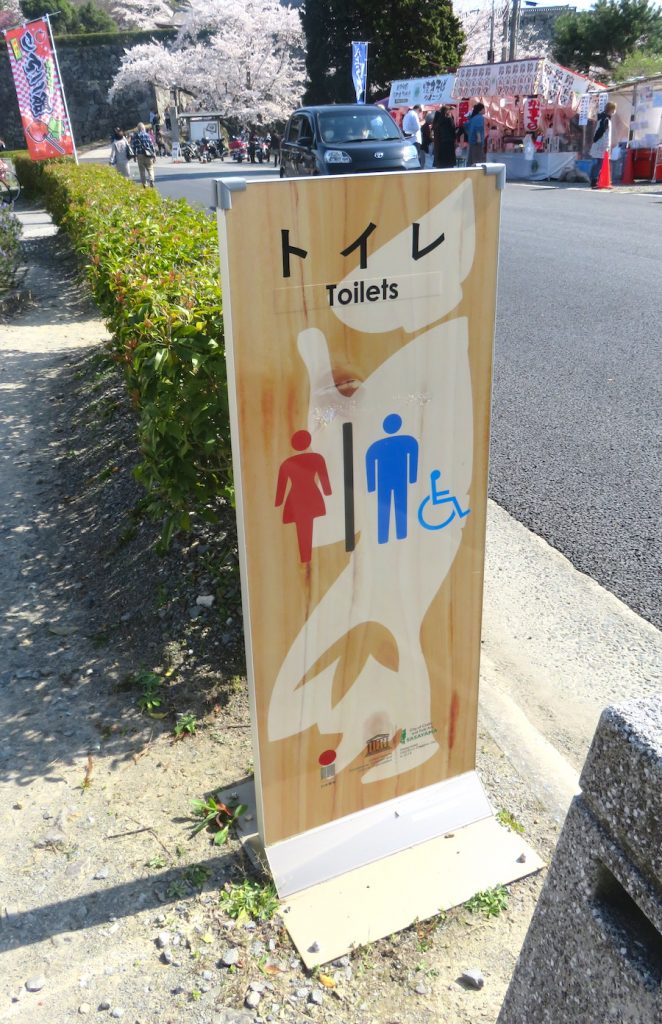
Here in my hometown of Tambasasayama, in the eight or ten block area which comprises the center of our town, I counted no less than four public toilet facilities. As restrooms go, they’re fine. Nothing fancy. But clean, properly kept up to the high standards and hygienic expectations of the citizens here.
Public Toilets 01


Additionally, there are restaurants, temples, public buildings, stores which have toilets. I’ve never seen a ‘Restrooms For Customers Only’ sign anywhere in Japan.
Along with the four public toilets downtown is an outdoor one at a supermarket . . .
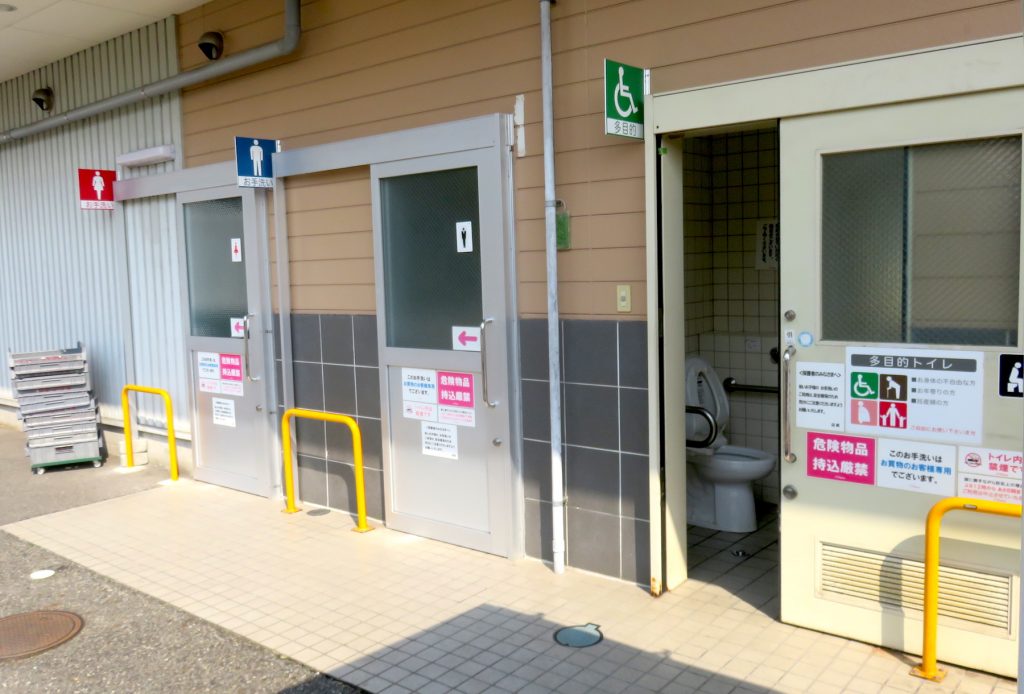
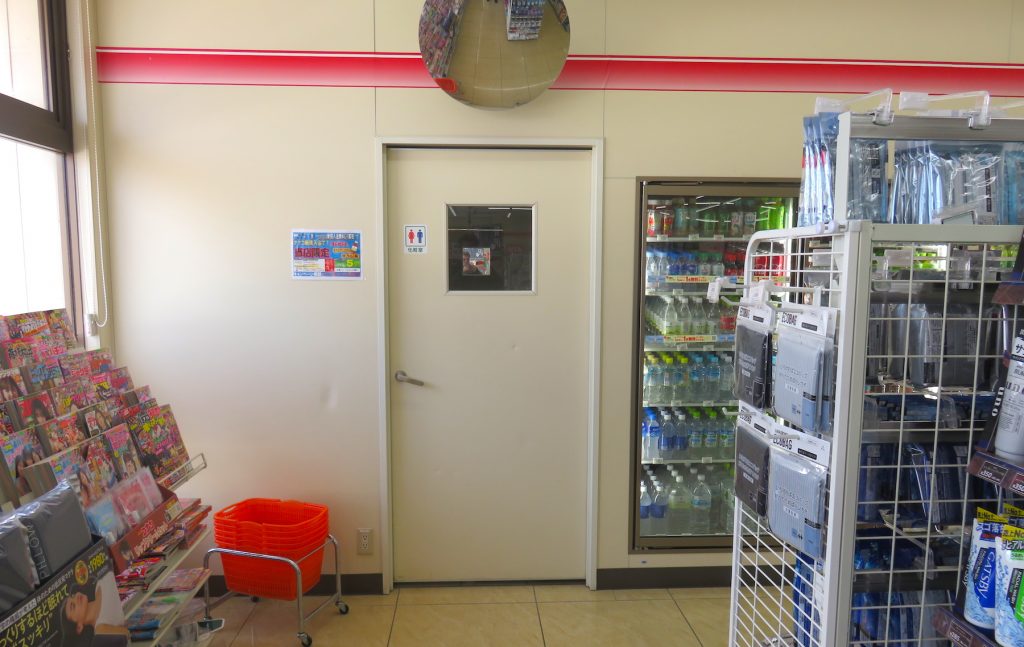
. . . another at a 7-11 convenience store . . .
. . . and yet another at a curios shop/restaurant.
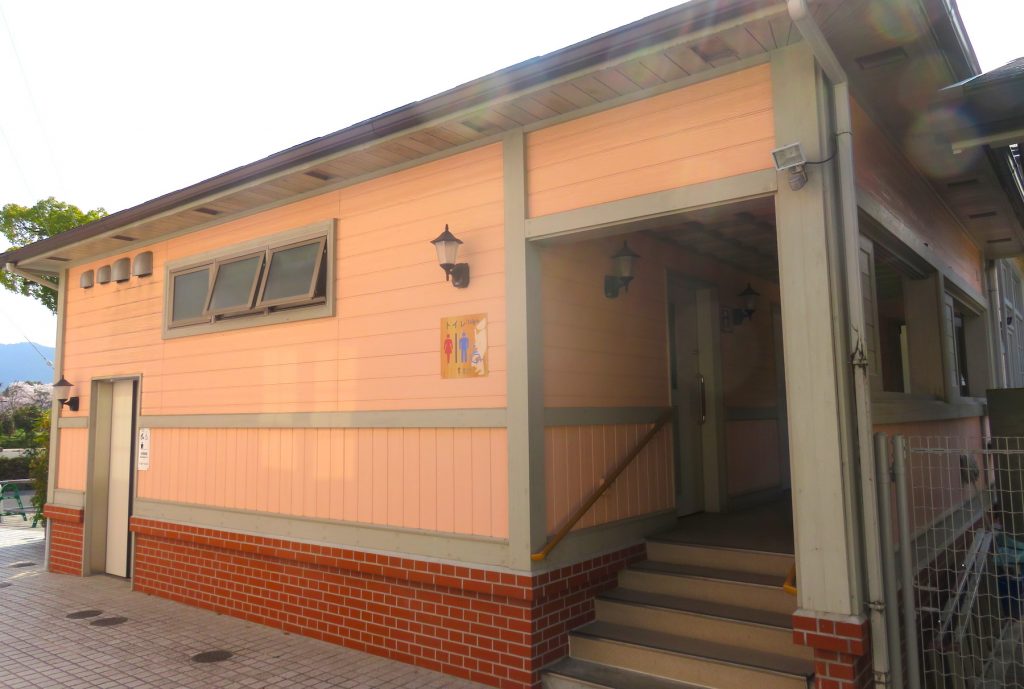
Could relief be any more accessible? Adult diapers? (Ugh!)
Granted, there are those who might accuse me of focusing too much here on the mundane. Come on! Toilets?
Just remember. Sometimes it’s taking care of the little, simple things in life, which makes the much bigger, more complex things possible. Try to enjoy that stroll through Greenwich Village or taking in the sites at Times Square when you’ve had to hold it in for four hours.

[ This originated at the author's personal website . . . https://jdrachel.com ]


Life In Japan: Public Restrooms


Sunday, December 25, 2016

Take it to the streets!


March on the capitol!

March in front of the White House!

Everyone loves a good rally or demonstration.

It's exciting.  Sometimes we even get to see heads busted!

Yep!  Nothing like a whole bunch of people waving hand-drawn signs.

Except these days . . . no one notices.

It used to be the way the "voice" or the "concern" or even the "rage" of the masses could be heard.  We could make those folks at the top of the power pyramid listen to us . . . or else!  Rallies with hundreds, thousands, tens of thousands of chanting, marching, yelling, fired up protestors appeared to portend big changes, or at least the potential for them.  These public events -- some massive like the Million Man March in Washington DC on October 16, 1995 -- represented "people power" and grass-roots democracy in its rawest, perhaps most effective, form.  Or so we believed at the time.

Modern mythology would have it that it was the campus protests of the late 60s and early 70s that stopped the Vietnam War.  That feminists burning their bras ushered in the era of equal rights for women.  That the Civil Rights marches beginning with Martin Luther King Jr. leading historic protest marches in Selma and Montgomery, Alabama created critical momentum for historic changes in civil rights laws and an end to persecution of African-Americans.  Even going back to the 30s, we credit demonstrations coupled with various other forms of political and personal activism, with monumental breakthroughs in the improvement of wages, job security and working conditions.

How important these highly visible street demonstrations were to ultimately changing the landscape of America is debatable.

The durability of their effects is not.  Everything went forward, then went in reverse.

Yes, things changed.  There were positive developments which came out of street protests.

But look at the state of things now!

The labor union movement has been all but destroyed.  Wages have been stagnant now for decades.  Union membership is pathetically low.  Worker benefits are being slashed.  Job security is measured in weeks, not years.

Yes, we're out of Vietnam but we're currently engaged in six other wars, have spread our military footprint to 147 nations with over 900 bases, have specials operations and proxy fighters in Africa, Asia, South America -- everywhere! -- doing under the cloak of secrecy whatever these "invisible" fighters do on behalf of the empire builders, using incidentally your tax dollars to wreak havoc across the globe and increase the threat of terrorism.

The assault on women's rights is a 360ยบ affair, with the juggernaut against choice ramping up, the struggle for equal pay going down the same road as the struggle for livable wages, a President-elect who is more known for articulating the advantages of pussy-grabbing than anything resembling coherent policies, females more and more rendered as sex objects in every form of media and entertainment.  Patriarchy is healthily ensconced in the agencies of government and the power centers of crony capitalism.

Set-backs in eliminating racism are prominent on many fronts these days.  Muslims are openly vilified, blacks marginalized, refugees of all shades of brown bartered as political pawns.  Racist slurs, vulgar stereotypes, xenophobic tirades, ultra-nationalistic and even White supremacist memes appear regularly with less salient blow back than we've seen in sixty years.  With our first African-American president we witnessed the fortunes of the African-American community go backwards.  Obama promised early in his presidency to have an adult conversation on race.  He apparently forgot.  Now we have an openly racist incoming administration, a frightening assembly of socially conservative autocrats, which promises to further divide and polarize a frustrated and angry citizenry.

All of these longstanding challenges and crises certainly were well-represented and each had in some forgotten past their 15 minutes of fame and expression in well-organized and highly visible street protests.  Even more recently, we witnessed the promise of the same in the Ferguson and Black Lives Matter marches.

But let's bravely confront some new realities and draw some honest conclusions. 

Apparently, even the best attempts at facilitating reform by mass demonstrations might in the short run be effective, but whatever good comes of it will through steady attrition and relentless pressure by the rich and powerful eventually be undone, often leaving us worse off than when we started.

Look at our democracy.  Well . . . you can't look at our democracy.  It doesn't exist now.  This is our reward for attempting election cycle after election cycle to make adjustments and incremental improvements in the mechanisms of our electoral process.  We used the accepted, official, approved channels to try to make voter registration more efficient and accessible, make ballot counting more transparent and free of error, allegedly make real choice at the polls pervasive.  What we have is a rigged system where literally millions of citizens are denied their constitutional right to vote, electronic voting machines can be programmed to switch votes and leave no paper trail, and the two major parties taking turns gerrymandering any representative verisimilitude out of our local districts.  

As a result, at least for now, our representative democracy is a representative sham.

What can we do?  Protest?  March on our state capitals and Washington DC?

The evidence is unambiguous.  It has recently become obvious that street demonstrations are pretty much a non-starter.  Any attempts at public assembly are so curtailed by police control, protestors are catalogued for future harassment, many are arrested and booked for no better reason than just being there, attempts to document police malfeasance and excessive brutality illegally but no less finally crushed.

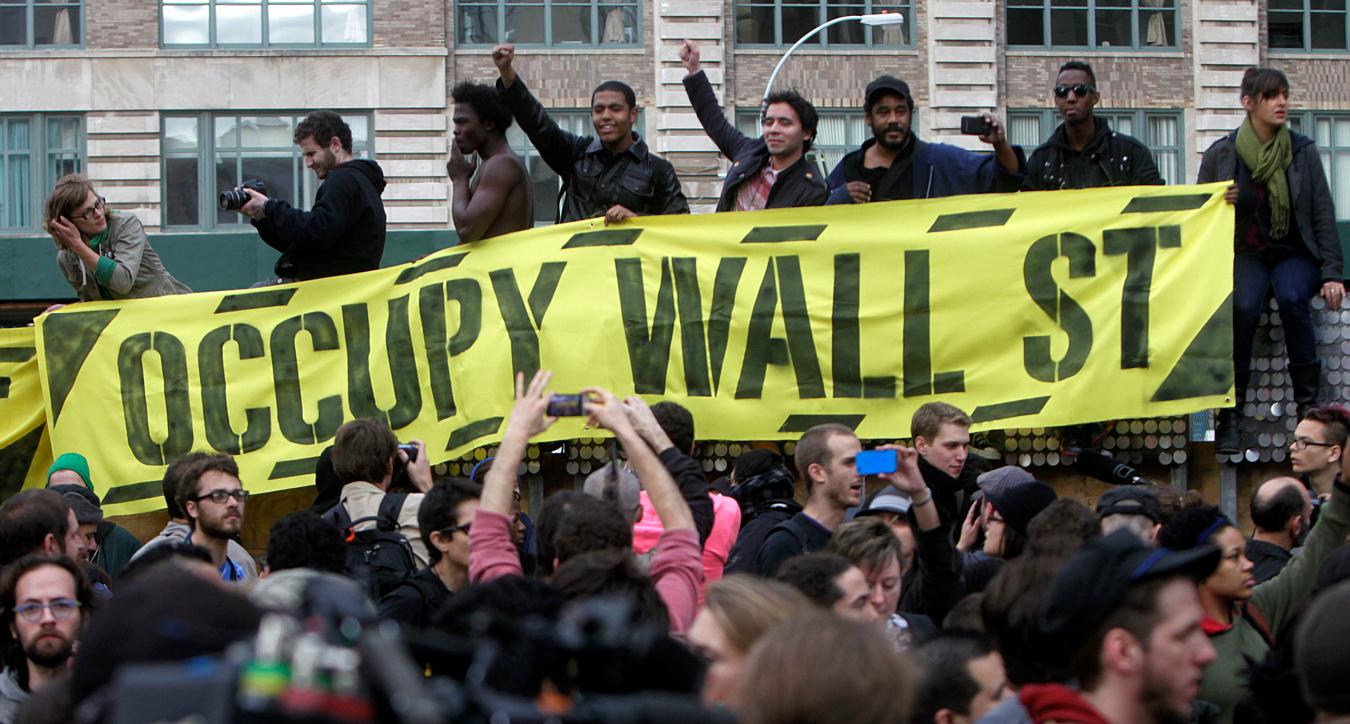
Point in case:  Once the "establishment" realized that Occupy Wall Street was gaining serious momentum, it was just a matter of a couple weeks before it was completely taken apart.  The movement was infiltrated by the FBI and local undercover officers, all sorts of new health and safety regulations suddenly popped up, the protesters were intimidated, cleared out, and/or arrested.  This was coordinated from the top and took place nationally in a remarkably well-organized, perfectly-orchestrated eradication of the movement.

The suppression of free speech -- the constitutionally-guaranteed freedom of expression and dissent -- has been assured by corporate and state control of the media. "Perception management" is the new tool of choice -- which is just a euphemism for creating official narratives which bear no relation to actual events but serve the purposes of the ruling class.  The latest assault has taken the form of a neo-McCarthyism, the heavy-handed maligning of dissenting views as fake news and smearing non-establishment journalists and protestors as anti-American thugs, just tools and agents of foreign governments.

The predictable result is that when people get out in the streets to make their voices heard, either they get no media coverage, or they are vilified as anti-patriotic, stray members of a lunatic fringe, or threats to national security.

Even one of the self-identified founders of Occupy Wall Street, Micah White, in a recent interview characterized the use of mass demonstrations as now being largely ineffective.

So what can we do?

Let me propose something which on the surface sounds ludicrous but I believe holds the key to our success.

We need to hide in plain sight!

No, I'm not joking.  In future articles, I'll explain in detail exactly what I mean.  For now, here's a preview of what I'm suggesting . . .

The corporate state now keeps us in check by perpetuating two illusions:  1) We are free, even encouraged to offer input into the system through a number of established channels; and 2) we ultimately express our will and affect the direction of the country by voting.

Thus, we can organize petitions because the powers will just ignore them.

We can conduct opinion polls because they can just discredit and ignore them.

We can organize community groups because that will keep us busy and distracted.

We can vote because ultimately the elite intend to install their own puppets anyway.

Fine!  If in order to prevent an insurrection and real revolution, the rich and powerful wish to continue promoting the myths that we are self-governing, that we have a voice, that our votes count, I say we call their bluff.  They can't complain if we're just being good citizens.  They can't attack us if we appear to be following the rules.

We work within the official channels because . . .

I believe that all of these approved mechanisms can be used to organize the vast majority of Americans into an enormous voting bloc.  We have much more uniting us than dividing us.  But currently we do not control either the conversation, the narrative, or the agenda.  I believe that if we take control of the conversation and narrative, then create -- or 'discover' might be the operating term -- an agenda which aligns with our priorities and needs, not that of the rich and powerful ruling elite, we can mount a soft revolution in this country.

We can do this in plain sight, apparently just being good, obedient citizens.

This will require some creative thinking, thorough planning, and rigorous discipline.

We will definitely need to think way outside the box.  But trust me . . . it can be done!

What we've been doing thus far, street demonstrations being now high on the list, is not working.  

Time for fresh thinking, exciting new tactics, innovative new strategies.


For a preview of where I'm heading with this:

Fighting for the Democracy We Deserve was published in September 2015 and also is available both in every popular ebook format and as a deluxe paperback . . .

!!!FFTDWD_Cover_200x300 
Amazon (Kindle) . . . amzn.to/1VMf2Ft
Amazon (Print) . . . amzn.to/1L9SdIC
Apple (iTunes) . . . apple.co/1JD1YAg
Barnes & Noble . . . bit.ly/1ZUJUpn
Kobo (Indigo) . . . bit.ly/1IX6rO4
Smashwords . . . bit.ly/22PXWLf
Direct from printer . . . bit.ly/1i7ISFM


The Peace Dividend: The Most Controversial Proposal in the History of the World is now available both as an ebook and deluxe paperback at many of the usual outlets . . .

  
Amazon (Kindle) / US . . . amzn.to/2cpIRfQ
Amazon (Print) / US . . . amzn.to/2cEhnCb
Amazon (Kindle) / UK . . . amzn.to/2cKXFsV
Amazon (Kindle) / Canada . . . amzn.to/2ciZKdl
Amazon (Kindle) / Japan . . . amzn.to/2cbf3TO
Barnes & Noble . . . bit.ly/2cWxvzd
Kobo (Indigo) . . . bit.ly/2cI8cB6
Apple iTunes . . . apple.co/2cqw7an
Smashwords . . . bit.ly/2cb6Cse
Direct from printer . . . bit.ly/2c3mJsl


[ This originated at the author's personal website . . . http://jdrachel.com ]


Take it to the streets!

https://www.youtube.com/watch?v=KkyRe18ICeA


Saturday, September 27, 2014

Will they put a meter on my peter?


Pepsico, Nestlรฉ, Coca Cola, and several other major suppliers have frequently
been caught bottling tap water and selling it back to the public under
exotic and appealing monikers such as Ice Mountain Water, Aquafina

and Dasani.

Then there's the former Nestlรฉ CEO, Peter Brabeck making the surreal claim
that water isn't a human right but a foodstuff, claiming it's just another
item we must purchase from corporate profiteers, like padded bras
and tennis rackets.


Why did this selfish, narrow-minded corporate manikin even get air time to spout
this sort of self-serving nonsense? Why wasn't he viciously mocked? Why
wasn't he discredited and shamed into hiding so we never have to look
at his tanned, country club face as he explains how every aspect of
human life must serve rampaging corporate greed?


The drive by corporations to own and monopolize everything is a classic case of . . .

To a hammer everything looks like a nail.

To a corporate CEO, everything is a commodity and an opportunity to make money.

So several giant multinational corporations have
unilaterally decided that H2O, which happens to cover 75% of the
Earth's surface and comprises about 67% of the human body, is just
another item in their catalog of products.


The heads of these monolithic corporate monsters, who are willing to cannibalize
their own species just to make a buck, seem to have forgotten __ or
probably never learned __ that in a self-determining system of
government, if we decide that everyone has a right to water, then it's everyone's right!


Thus, many groups are actively fighting back.

The corporations, naturally, are putting a friendly face on their attempt at absolute 
control over the Earth's most abundant single resource. They talk about spearheading 
and funding conservation efforts, trying to achieve minimum quality standards worldwide, 
and so on.

They promise profound improvements in the standard of living and the quality of life.

They always do, don't they?

Corporations can spin it however they want, but having a corporation's first
priority __ the bottom line __ trump every facet, even the most fundamental aspects, 

of human habitation of the planet is an indisputable recipe for species extinction __ ours.

What can we expect if the corporate coup is tolerated __ even lionized as it is in today's 
business press __ and we accept their dysmorphic portrayal of progress?

Will Monsanto file a patent claim on breast milk and every time a new mother wants 
to nurse her baby, she has to ante up?

Will Pantene trademark hair? So unless you are 100% bald every place on your body, 
you have to pay a licensing fee for your body hair?

Will GlaxoSmithKline convince the FDA that air should be a prescription item, so that 
if we don't wish to suffocate, we'll have to buy breathing tanks from our local pharmacy?

Will they put a meter on my peter, so that every time I take a wiz or make love to my wife, 
I have to pay a users fee?


[ This originated at the author's personal page . . . http://jdrachel.com ]


Saturday, July 19, 2014

Character Witness


I make no secret of this.  I have a book which was just published this year that I 
hope will change the world.

Two-and-a-half years in the making, it's not just more pulp fiction to add to the
pile. I wrote this with serious intentions of making a difference __ a
huge difference __ in the way America goes about its elections.


The great thing about writing a novel is being able to speak through the characters. 
Martin Truth is my main character for An Unlikely Truth. Martin is a third-party 
congressional candidate making his fourth attempt at ousting a duplicitous, 
blowhard, right-wing incumbent in Ohio's conservative 3rd District. Like many 
__ how about most? __ politicians these days, the incumbent says one thing, then
does the exact opposite. His loyalty is to big campaign donors, corporate
sponsors, and deep-pocketed oligarchs, at the expense of his
well-meaning but gullible constituents. In baffling but predictable
lockstep, people keep voting this guy back in, even though it's
ultimately against their own interests __ sound familiar?


Martin wants to put some integrity back into politics, at least in his
district, and fights an incredibly difficult battle against near
impossible odds and the ruthless tactics and brutal smear campaign of
his opponent, driven by a naive but firm belief in the fundamental right
of voters to be properly represented.


Here is a key passage from the book . . .
"What did Martin Truth stand for?
As the Green Party candidate he obviously believed in protecting the
environment. Something had to be done to stop global warming, if it
wasn’t too late already. We had to end our addiction to fossil fuels,
especially oil. There should be huge private and public investments in
renewable alternative energy sources: wind, ocean, solar. We had to
reverse deforestation. End desertification. Halt the privatization of
water and other basic necessities. Encourage local food production,
promote organic agriculture, and reduce the use of pesticides and GMO
seeds. In general, the world needed to back off corporatizing everything
and return to local production and control. With bold and determined
political leaders on the front lines, it needed to confront and defeat
the multinational corporate juggernaut that was polluting and destroying
the Earth.
As might be expected, Martin’s progressivism extended broadly from his
commitment to environmental causes to a number of co-related social
issues. He categorically took exception to the every-man-for-himself
madness of the right wing and believed that all of us through
representative government should take a greater role in helping others,
especially those who were less able to fend for themselves. This
included the old, the infirm, victims of racism and other forms of
discrimination. And those who had lost their jobs and fallen on hard
times. The poor. The undereducated. Children. Most definitely children!
Without a doubt, Martin would be labeled as a bleeding-heart liberal by
the crass law-of-the-jungle conservatives, who he thought lacked both
compassion and common decency, people who called themselves Christians
but somehow missed the most obvious and critical aspects of Christ’s
teachings: Feed the hungry, clothe the poor, heal the sick, tend to the
needs of the less fortunate.
'For I was hungry, and you gave Me something to eat; I was thirsty, and you gave Me something
to drink; I was a stranger, and you invited Me in; naked, and you
clothed Me; I was sick, and you visited Me; I was in prison, and you
came to Me … Truly I say to you, to the extent that you did it to one of
these brothers of Mine, even the least of them, you did it to Me.'  –  Matthew 25:35/36/40
Hardly what could be called a Bible-thumper, questionably even a Christian at
all by any conventional standards, Martin had used that passage in his
campaign literature last election season. Very few voters seemed to
appreciate its relevance to the progressive ideals he espoused. If they
did, they still managed to forget about him when it came time to vote.
Martin was also deeply committed to human rights, under relentless assault
long before humankind even recognized what they were. It was ironic that
now in many countries which had long had an onerous record of human
rights abuses, there were significant improvements, while in America
itself, allegedly champion of humane and just treatment, fairness, and
respect for all, human rights was suffering dismal setbacks every day.
He was especially concerned about the intrusive levels of officially
unacknowledged surveillance, and the constant push for locking up more
and more citizens. There seemed to be a new mentality taking over which
destroyed any sense of proportion and reason with respect to
incarceration. It certainly was destroying justice and equality before
the law. The operating principle was: If we build it, they will come. Or more to the point: We’ve built a helluva lot of these prisons, now we’ve got to fill them! They were filling the prisons all right. Mostly with people of color.
Admittedly, there was a lot on his wish list, a substantial catalog of action items
which embraced the things Martin thought had to be done immediately to
reverse the downward, self-sabotaging course of the country. It was a
daunting set of tasks requiring the energy of the whole nation working
together, unified and determined in their dedication to rebuild a great
America.
Daunting or not, these were the things which drove him to seek a seat in Congress.
These were the things he thought crucial for a better world."
People love to label others. Somehow this puts them at ease. Once they've put
someone in a box, they feel they can deal with them. Or just dismiss
them and walk away. I full agree with Martin Truth. So what does this
make me? A liberal? A socialist?


I think it just makes me a decent human being.  

If I ever have to stand trial, I hope to call to the stand a character
witness who merely says that. "Like Martin Truth, John   is a decent
human being. He just wants a better world."


An Unlikely Truth has been out since mid-February. Just go here for all  
of the ways to pick up a copy. If the reviews are to be believed, it's a 
good read with a solid message.

I certainly hope your reading it will be as inspiring as it was for me to write it.

Peace.


[ This originated at the author's personal web site ... http://jdrachel.com ]