Showing posts with label morality. Show all posts

Tuesday, June 21, 2016

Just a little . . .

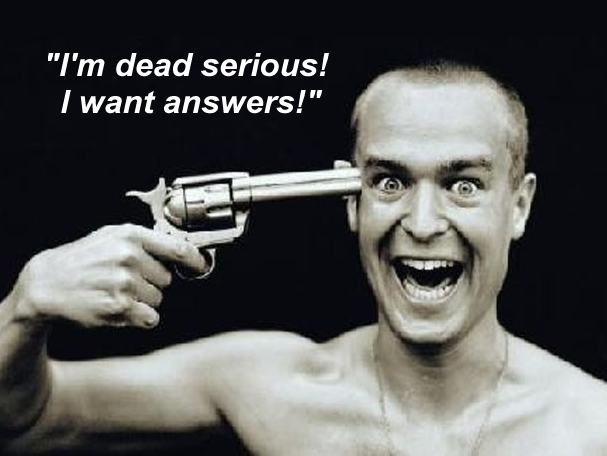
I Want Answers 

Language is a funny thing.  It admits for all sorts of sins.  At the same time, it offers lush alternatives when making and rationalizing important decisions.  Naturally, we like to hedge our bets, walk a fine line.

We always cover our asses. 

At the same time . . .

Can you be just a little married?
Can you be just a little pregnant?
Can you be just a little upside-down?
Can you be just a little vaporized?
Can you be just a little raped?
Can you be just a little castrated?
Can you be just a little dead?
Can you be just a little extinct?
Can black be just a little black?  If so, what's the rest?  Still black but not black?
Can white be just a little white?  Is the part that's just a little white still white?
Can a 'yes' be both 'yes' but just a little 'no'?
Can a 'no' be both 'no' but just a little 'yes'?

Despite the headache you might now be experiencing, often there's more at stake.  Every game is a thing but not everything is a game.

In these instances we need to be a little more precise . . .

s war inevitable?
Is war good or bad?
Does might make right?
Are all humans created equal?
Is good health a basic human right?
Are food and water basic human rights?
Does a woman have the same rights as a man?
Can an individual be owned by another individual?
Do property rights take precedence over human rights?
Can any man claim life or death authority over another man?
Does the law of a higher power take precedence over human law?
When a person surrenders autonomy to the state, can he take it back?
Is freedom a natural and absolute fact or an artificial and relative artifact?
Are citizens answerable to governments or governments answerable to citizens?

How about this? . . .

Can humankind survive if there's a limited nuclear war?

Assuming we're in favor of the survival of the human species . . .

How much nuclear war is just the right amount?

Humans are very smart creatures.  We know this from telling it to ourselves all the time.

World-War-3 

So to figure out how much nuclear war the "good guys" should inflict on the "bad guys", factoring in the carnage that will inevitably be experienced by a number of people who don't precisely fit in either the 'good guy' camp or the 'bad guy' camp -- these indeterminate types are sometimes called 'collateral damage' or more descriptively 'innocent victims' -- using cost/benefit analysis and predictive models, we can fairly accurately determine exactly what level of nuclear war, rationally looking at the big picture, is most efficacious and productive.

You know . . . the right balance.

Fine tune it.  Don't go overboard.

Just a little . . . nuclear war.

Is my sarcasm showing?
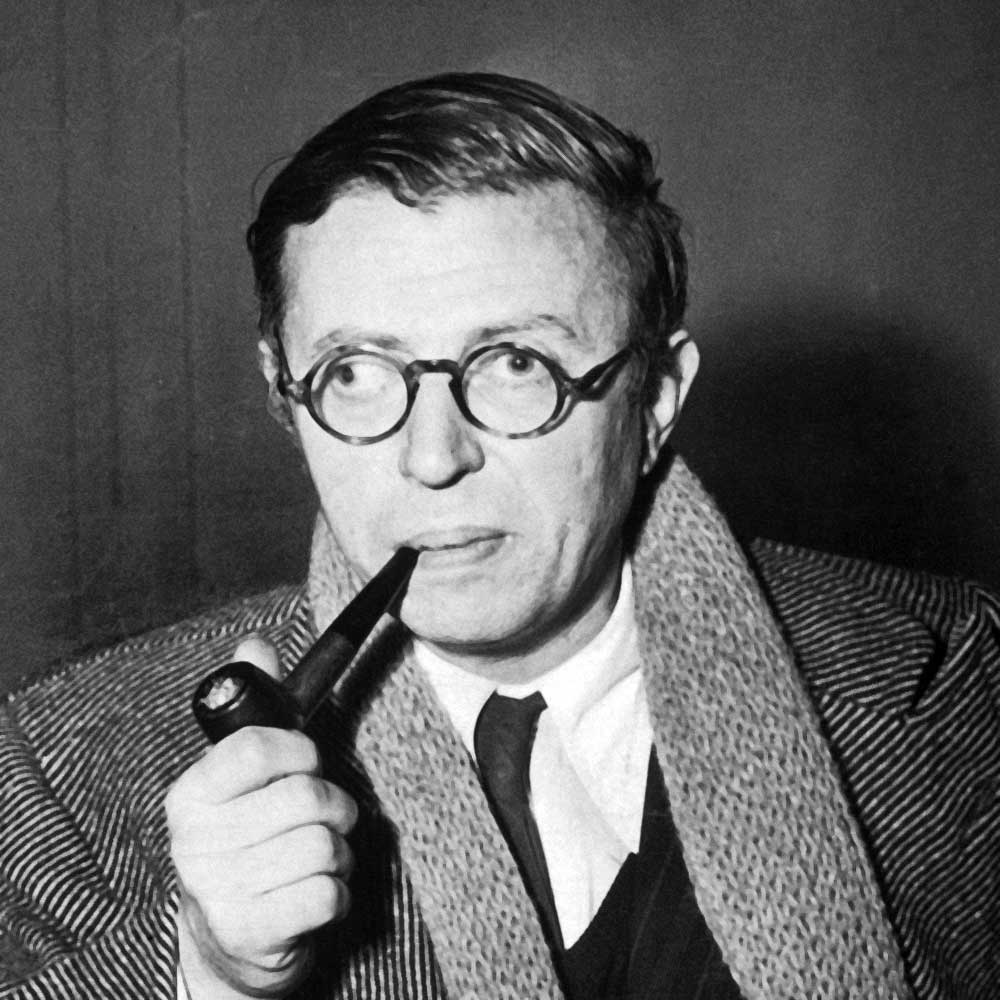
Jean Paul Sartre 

It's easy to scoff at my asking questions like these, then commending them as some sort of pseudo-philosophical exploration.  You might judge this as a thinly-disguised exercise in self-promotion, an attempt to portray myself as some deep thinker.  You might feel my frustration and empathize with my isolation and relative impotence, yet still dismiss all of this as the nonsensical ruminations of a confused and deluded faux-intellectual -- a Jean Paul Sartre wannabe.

You might have decided that this whole business of blogging is an unflattering display of infantile neediness, that the urgent, aching lust for attention, which has lingered on from early childhood, being unflattering and obnoxious even back then, but now nauseating at best and infuriating at worst -- I'm not sure I can put up much of a defense against any of these insinuations -- is both pathetic and pathological, in spite of being a common feature of our selfie-driven, self-obsessed times.

Or more innocently . . .

You may think that I have way too much time on my hands.

Frankly, I think time is running out.

Granted, some of the above are mental exercises.

But others are arguably very important questions.

Existential questions!

Am I so off-base?


We need answers!

Do you have the time?

Just a little?


[ This originated at the author's personal website . . . http://jdrachel.com ]


Just a little . . .

Wednesday, September 17, 2014

Conscious . . . Conscience

 
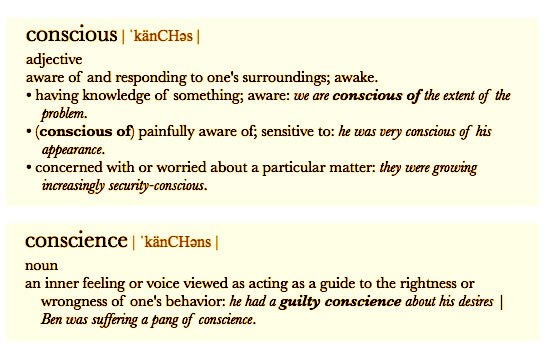
According to the Merriam-Webster dictionary, being 'conscious' means being "awake
and able to understand what is happening around you."


And 'conscience' is defined as "the part of the mind that makes you aware of
your actions as being either morally right or wrong."


People who have no conscience because they are unconscious due to no fault of
their own can hardly be criticized for their lack of morality __ e.g. the brain dead, 

coma victims.

People who are fully conscious but have no conscience are often referred to as sociopaths.

People who are fully conscious but choose to have no conscience might be categorized 
as full-blown psychopaths.

My quandary is how do we deal with people who are fully conscious,
basically stable and mentally sound, have a conscience, but who ignore
what that conscience is saying to them.


# Native Americans slaughtered and dispossessed of their land:  Tens of thousands.

# Vietnamese killed in unnecessary and unsuccessful Vietnam War:  882,000

# America soldiers killed in unnecessary and unsuccessful Vietnam War:  58,220

# innocent citizens killed by death squads of U.S. backed El Salvador government: 35,000.

# innocent citizens killed by death squads of U.S. backed Guatemala government: 60,000.

# Iraqi children starved to death by U.S. sanctions 1993-2000:  500,000.

# Iraqi citizens killed in illegal and unjustified Iraq War:  Over 460,000.

# innocent citizens killed in illegal drone warfare (Pakistan, Yemen):  400-600

# innocent people killed (so far) in Eastern Ukraine by U.S. installed coup government, one which includes neo-Nazis:  Almost 2600.

# innocent people about to be killed in Iraq War 3:  To be announced.
 

"No man is an island . . . ask not for whom the bell tolls; it tolls for thee." 

Riiiiight! No man is an island.  Great stuff.  Ha ha.  Totally!  I hear ya, babe!
Boo hoo hoo. Anyone with a violin up for playing "
Hearts and Flowers"?

"Exactly what's your point, John Rachel? . . .

. . . are you in the running for this year's Bleeding Heart Liberal Award?
Mother Theresa and all that cow poop. Maybe you and Bono can do tequila
shots in the back of his limo."


Hmm. What's this about?

Oh, now I remember!

I'm not in a coma.


[ This originated at the author's personal web site . . . http://jdrachel.com ]


Saturday, July 19, 2014

Character Witness


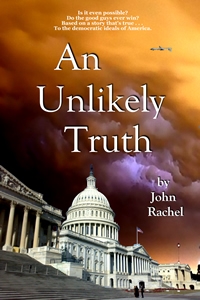
I make no secret of this.  I have a book which was just published this year that I 
hope will change the world.

Two-and-a-half years in the making, it's not just more pulp fiction to add to the
pile. I wrote this with serious intentions of making a difference __ a
huge difference __ in the way America goes about its elections.


The great thing about writing a novel is being able to speak through the characters. 
Martin Truth is my main character for An Unlikely Truth. Martin is a third-party 
congressional candidate making his fourth attempt at ousting a duplicitous, 
blowhard, right-wing incumbent in Ohio's conservative 3rd District. Like many 
__ how about most? __ politicians these days, the incumbent says one thing, then
does the exact opposite. His loyalty is to big campaign donors, corporate
sponsors, and deep-pocketed oligarchs, at the expense of his
well-meaning but gullible constituents. In baffling but predictable
lockstep, people keep voting this guy back in, even though it's
ultimately against their own interests __ sound familiar?


Martin wants to put some integrity back into politics, at least in his
district, and fights an incredibly difficult battle against near
impossible odds and the ruthless tactics and brutal smear campaign of
his opponent, driven by a naive but firm belief in the fundamental right
of voters to be properly represented.


Here is a key passage from the book . . .
"What did Martin Truth stand for?
As the Green Party candidate he obviously believed in protecting the
environment. Something had to be done to stop global warming, if it
wasn’t too late already. We had to end our addiction to fossil fuels,
especially oil. There should be huge private and public investments in
renewable alternative energy sources: wind, ocean, solar. We had to
reverse deforestation. End desertification. Halt the privatization of
water and other basic necessities. Encourage local food production,
promote organic agriculture, and reduce the use of pesticides and GMO
seeds. In general, the world needed to back off corporatizing everything
and return to local production and control. With bold and determined
political leaders on the front lines, it needed to confront and defeat
the multinational corporate juggernaut that was polluting and destroying
the Earth.
As might be expected, Martin’s progressivism extended broadly from his
commitment to environmental causes to a number of co-related social
issues. He categorically took exception to the every-man-for-himself
madness of the right wing and believed that all of us through
representative government should take a greater role in helping others,
especially those who were less able to fend for themselves. This
included the old, the infirm, victims of racism and other forms of
discrimination. And those who had lost their jobs and fallen on hard
times. The poor. The undereducated. Children. Most definitely children!
Without a doubt, Martin would be labeled as a bleeding-heart liberal by
the crass law-of-the-jungle conservatives, who he thought lacked both
compassion and common decency, people who called themselves Christians
but somehow missed the most obvious and critical aspects of Christ’s
teachings: Feed the hungry, clothe the poor, heal the sick, tend to the
needs of the less fortunate.
'For I was hungry, and you gave Me something to eat; I was thirsty, and you gave Me something
to drink; I was a stranger, and you invited Me in; naked, and you
clothed Me; I was sick, and you visited Me; I was in prison, and you
came to Me … Truly I say to you, to the extent that you did it to one of
these brothers of Mine, even the least of them, you did it to Me.'  –  Matthew 25:35/36/40
Hardly what could be called a Bible-thumper, questionably even a Christian at
all by any conventional standards, Martin had used that passage in his
campaign literature last election season. Very few voters seemed to
appreciate its relevance to the progressive ideals he espoused. If they
did, they still managed to forget about him when it came time to vote.
Martin was also deeply committed to human rights, under relentless assault
long before humankind even recognized what they were. It was ironic that
now in many countries which had long had an onerous record of human
rights abuses, there were significant improvements, while in America
itself, allegedly champion of humane and just treatment, fairness, and
respect for all, human rights was suffering dismal setbacks every day.
He was especially concerned about the intrusive levels of officially
unacknowledged surveillance, and the constant push for locking up more
and more citizens. There seemed to be a new mentality taking over which
destroyed any sense of proportion and reason with respect to
incarceration. It certainly was destroying justice and equality before
the law. The operating principle was: If we build it, they will come. Or more to the point: We’ve built a helluva lot of these prisons, now we’ve got to fill them! They were filling the prisons all right. Mostly with people of color.
Admittedly, there was a lot on his wish list, a substantial catalog of action items
which embraced the things Martin thought had to be done immediately to
reverse the downward, self-sabotaging course of the country. It was a
daunting set of tasks requiring the energy of the whole nation working
together, unified and determined in their dedication to rebuild a great
America.
Daunting or not, these were the things which drove him to seek a seat in Congress.
These were the things he thought crucial for a better world."
People love to label others. Somehow this puts them at ease. Once they've put
someone in a box, they feel they can deal with them. Or just dismiss
them and walk away. I full agree with Martin Truth. So what does this
make me? A liberal? A socialist?


I think it just makes me a decent human being.  

If I ever have to stand trial, I hope to call to the stand a character
witness who merely says that. "Like Martin Truth, John   is a decent
human being. He just wants a better world."


An Unlikely Truth has been out since mid-February. Just go here for all  
of the ways to pick up a copy. If the reviews are to be believed, it's a 
good read with a solid message.

I certainly hope your reading it will be as inspiring as it was for me to write it.

Peace.


[ This originated at the author's personal web site ... http://jdrachel.com ]


Friday, July 12, 2013

Online Interview: “Blinders Keepers”


I just completed an online interview in support of my recently published novel, "Blinders Keepers".

I have a set policy for these kinds of situations. Keeping in mind that you never have a second chance to make a first impression, I always give it my best shot and reply from purest chambers of my soul. Honesty is the best policy, even at the expense of clarity.

Understandably, this approach has caused a degree of awkwardness, sometimes outright shame __ which will undoubtedly tarnish my family name for generations. Having said that, this one particular interview I thought came off with uncharacteristic nuance and gravity, as I wrestled with matters of conscience and avoided my usual preoccupations with puerile pre-adolescent piffle. The author site is called The Thursday Interview. Here are their thought-provoking questions and my self-serving but entirely heartfelt responses:

Question #1: “Would you break the law to save a loved one? … why?”

The laws of the land in theory are a reflection of the values and the ethical priorities of a society. Therefore, when they are at odds, moral law trumps the legal system. Whether to save a “loved one” is a moral decision. Do they want to be saved? Is the person worth saving? Maybe the person __ though you love them dearly __ has a habit of kidnapping children, grinding them up and eating them. Saving them, legal or not, wouldn’t be such a good idea, eh? Perhaps the person is dying of cancer and in great pain. I can imagine violating the laws against assisted suicide to “save” such a person by helping them die. This is an instance where certain well-intended but antiquated laws do not work. A person may not wish to be kept alive just to suffer pain and humiliation, so why should the law protect them from the choice of dying? Or during the Vietnam War, when persons were violating the draft law to save themselves. They didn’t want to die in an illegal immoral war, so they saved themselves by defying the law. Morality trumps legislation. Which adds up to this: People need to choose their legislators carefully, but even more importantly be perfectly clear about their own moral beliefs.

Question #2: “What is the difference between being alive and truly living?”

Being alive we all share with bacteria and mushrooms. Truly living is riding in the rear seat on Disneyland’s Space Mountain while eating a hot fudge sundae and having a person you love beside you singing “Gangnam Style” in your ear. Do you see the difference?

Question #3: “What motivates you to write?”

I sign all of my email “Scribo ergo sum.” I know I know. It sounds pretentious. But in its own grandiose and affected way, it sums up what all actions in life are about. We each claim identity by doing. We are because we act. What we choose to do then gives shape and meaning to what would just be sacks of protoplasm moving randomly through space.

Question #4: “Why do human's want children?”

Humans are programmed by the biological necessity of propagating the species to mate and spit out likenesses of themselves. This also feeds their self-esteem, since most people fail at achieving their dreams and in fact are not good at anything. They can point at junior and say proudly, “By golly, I made that!” No rational person not in the insidious clutches of the biological imperative to reproduce would have children. As babies, children smell bad and trick you into loving them by making nonsensical but endearing sounds. Then when they turn 16, they wreck the car and send your auto insurance rates through the roof.

Question #5: “What was the biggest challenge in creating your book Blinders Keepers?”

Blinders Keepers resulted from a suggestion made by a movie exec type, who really liked my previous novels, 11-11-11 and 12-12-12. This person suggested I try to come up with a screenplay. Of course, those books are twisted and highly multilayered. The movie would have been 18 hours long and a bore. So I got to work. I combined the stories, chopped the plotline to the bare bone, and wrote a screenplay. THAT was the the most difficult thing I’ve ever done. Writing a screenplay is as different as badminton and baseball. Anyway, after I tore all of my hair out, bit my nails down to the first knuckle, and threw all of my furniture through the window of my study, I finished the script. Then I wrote the book. Foolishly, I thought converting the screenplay into a book would be a walk in the park. It was __ Jurassic Park! But I got it done and now I am seriously thinking about making a baby. They’re so cute! And I figure if my book and screenplay don’t sell, I can point at junior and say, “By golly, I made that!”

Question #6: “What's the most important thing you've learned in life so far?"

Sunblock doesn’t help when you fall into a vat of molten iron. But the most important bit of advice I’ve ever received is actually tattooed on the inside of my rib cage. I haven't a clue how it got there. I had elective arthroscopic surgery to pin stripe my pancreas a couple years ago and the surgeon told me that written on my abdominal lining is the following: “Don’t look a gift horse in the mouth without headgear.” I think that’s Aristotle.

Question #7: “How did you come up with the title Blinders Keepers?”

I had quite a list of commercial titles going. Among those which I thought would really sell were The Bible, Eat Pray Love, Shades of Grey, and The Da Vinci Code. Then I found out those titles were already bestsellers and decided that people would think it was a cheap trick to use them. So one day I was playing around with words and phrases, and I recalled that singsong thing we used to say as kids when we found something, “Finders keepers, losers weepers!” It morphed into Blinders Keepers, because my book is about people going through life with blinders on and refusing to acknowledge the realities around them. One of my bylines for the book is: “Blinders Keepers, the blind leading the blind and the rest of us directing them to the nearest cliff.” The blind are, of course, the clueless political fools we currently look to for ideas and leadership.

Question #8: “How do you handle personal criticism?”

No one has ever criticized me because I’m perfect. I realize that my answer to this has to be 30 words minimum. How am I doing? Only 28? How about now?

Question #9: Why should people read your book?”

I never said people should read my book. They should BUY my book. If they then actually bother to read it and have a highly developed sense of humor (i. e. an appreciation for wit, as opposed to slapstick and fart jokes), relish sophisticated satire, are aware of the Code Blue state of America, are concerned but calm enough to lean back a little and look at the big picture, they will have an enjoyable read. It's not for everyone. Blinders Keepers is dark, tastefully demented satire, an occasionally giddy spoof on current events and the kind of people who perpetuate the ongoing comedy of errors. It's my way of entering the national dialogue and sharing what I think is a unique perspective. I believe that when life becomes unbearable, you can either laugh or cry. To appreciate what’s possible and snatch hope from the jaws of despair, I think we need to laugh. That’s all I’m offering with this novel, the chance for a good belly laugh in the midst of chaos and collapse.

Question #10: “Why is there something rather than nothing?”

Are you talking about my something ... or your something? My something is everything. Your something is nothing. But you probably think your something is everything and my something is nothing. I guess we’ll just have to agree to disagree on this __ even though I’m right.


[ This originated at the author's personal web site . . . http://jdrachel.com ]