Wednesday, April 15, 2020

Life In Japan: A Morning at the Clinic

The clinics here vary in size. Some are like a doctor’s office. Some are facilities attached to hospitals. When you need medical attention, unless it’s an emergency, you go to a clinic.
I rarely have problems with my health. But I’ve been a permanent resident here now for over eight years, and I have used medical services in Japan a few times. One time a very bad fall from my bike required some very extensive care. I broke my collar bone — I don’t recommend it as it’s very painful — which involved several sessions with an orthopedic doctor and physical therapist. Other occasions were more typical: one time I had an extremely sore throat, another time a kidney infection. Common types of things.
People back in the U.S. are always asking me what it’s like to have universal “socialized” medical care. They’ve been fed all the propaganda by the inefficient but certainly very profitable health care industry there: expect long waits, impersonal care, low standards, lousy doctors, etc. These stories, of course, are generated by the insurance companies, the for-profit clinics and hospitals, the mega-wealthy specialists, rock-star surgeons, all the vested interests who are beneficiaries of the windfall of hard cash that the current system in the U.S. generates for them, and who selfishly but predictably want to keep things the way they are.
I have one story that accurately represents how it works here, straight from my perspective as a patient. Let me say up front, I’m completely blown away by health care in Japan, but I’ll let you judge for yourself the merits of centrally organized and controlled health care.
My wife, Masumi, and I were planning on spending three weeks in the U.S. starting the last week in July. We’d be visiting some of my friends back there, staying at a couple B&Bs, camping at the national parks, even couchsurfing with a retired music teacher in Seattle.
About two months before we were to leave, I started noticing tightness in my chest, and a feeling like my lungs were being compressed. Not a good sign. Red flags immediately went up! What if I have a serious problem while we’re on vacation? I have no health insurance in the United States. And I had serious doubts about the availability of emergency services, based on the stories I regularly hear about the inadequacies and outright failures of health care back in America. Scary!
As the symptoms persisted for a few days, I became certain my discomfort had something to do with my heart. Back in 2010 when I had my back surgery in Seoul, South Korea, they discovered one of my ventricular valves was only functioning at 68% efficiency. Maybe it had fallen apart and was now flapping like bedsheets in a summer breeze!
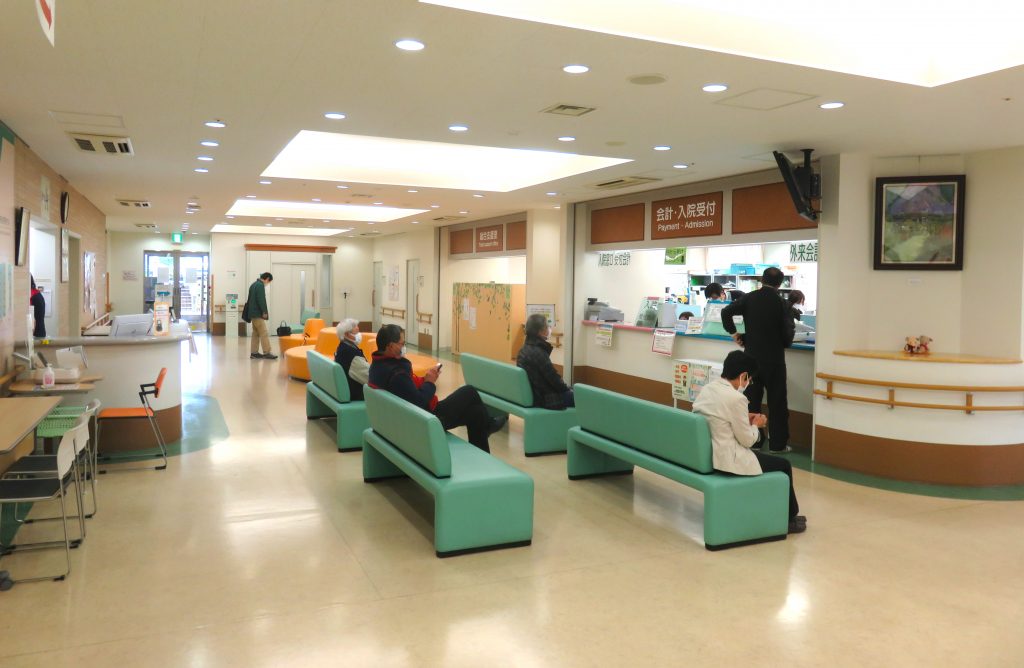
I decided to take action. The best place for this was a ten-minute bike ride from my house.
Front of Building
Are you ready for my harrowing tale? Because here’s exactly what happens when you have to depend on “socialized” universal health care.
I showed up at 8:45 am with no appointment, bearing a note in Japanese describing my symptoms and suspicions. Twenty minutes later I was interviewed and examined by a heart specialist. He scheduled testing.
Another fifteen to twenty minutes later, I was taken to a special room and wired up for an electrocardiogram. My heart was monitored both as I rested, and as I did “stress testing”. That meant going up and down a small set of steps, which made my heart work harder. The entire procedure took maybe twenty minutes.
I went back to the waiting area for maybe ten or fifteen minutes. Then I was taken into another special room where using ultrasound echocardiography, they observed my heart function in real time, its rhythm, contraction, the operation and efficiency of the valves. This was put on video. After being edited by Stephen Spielberg, scored by Hanz Zimmer, it is now available on Netflix. Okay okay . . . I made up that last part. But the ultrasound of my beating heart was recorded and entered into the system as part of my medical record.
Back to the waiting area. Within no more than thirty minutes, I was escorted back to the office of the heart specialist. He had a printout of my electrocardiogram spread out on the desk before him and was watching my ultrasound as it played on his computer monitor.
Would I need an artificial heart? A transplant? Or maybe it was simply too late!
Actually, my heart was in great shape. The doctor explained there was absolutely nothing that I should be worried about. This, in fact, turned out to be accurate. Whatever the weird symptoms were that I had been experiencing went away after a few days — maybe I’d been eating too many marshmallows or my t-shirts had shrunk — and since then I’ve never had any problems with my heart. Knock on wood, as they say.
Now . . . the part that can often truly give a person a heart attack.
[ Cue dark tremulous scary cello and trombone music. ]
THE BILL FOR MEDICAL SERVICES RENDERED!
Summarizing . . .
At least twenty minutes consultation with a heart specialist. A complete electrocardiogram including a stress test with a nurse. A recorded ultrasonic echocardiography session with a nurse and a technician. I’d been in their clinic for over two hours.
OMG! Will I have to get a job? Get a second mortgage on the cat?
I heard my name called and walked with great trepidation to the payment window and was handed my invoice . . . 3600 yen . . . 3600! THREE THOUSAND SIX HUNDRED YEN!
Why that’s . . . that’s . . . $33.
Unbelievable, eh?
$33 for the entire thing.
No appointment. No waiting. Qualified heart specialist. Comprehensive testing.
$33. No tipping.
Any folks out there who want to offer an estimate of what this would cost in the U.S.?
One last side note on the horrors of socialized medicine. When I tell Japanese people that an ambulance trip in the U.S. can cost $2,000-5,000 . . . they look at me in total shock. Ambulances here are completely free.



[ This originated at the author's personal website . . . https://jdrachel.com ]


Life In Japan: A Morning at the Clinic


Thursday, April 9, 2020

Life In Japan: Highway Service Areas


There are highway service areas in Japan so elaborate and well-outfitted that families pay the pricey highway toll just to visit them and spend the day. For these folks, going there is the same as going to a park or a shopping mall to hang out and have fun.
Highway service areas in Japan are what we in the U.S. call ‘rest areas’.
Years ago, I used to spend a lot of time traveling the entire Eastern half of America by car. This was roadwork for my music business activities, initially as a musician, then later as a band manager and music producer. Trust me, I’m very familiar with rest areas. While I hear that these days there are some very fancy ones — with restaurants, shops, showers, and the like — this is how I remember them. Since this is a current, there are obviously still many which conform to this basic design.
US 01
There are simple, basic highway service areas in Japan. However, they tend to be atypical. Even these rudimentary iterations provide more than just a restroom and a picnic table. Want to take a break from driving to do some fishing? Or feed some ducks?
Most of Japan’s service areas offer abundant opportunities to shop, eat, relax and play. They are more stop and play than gas and go.
We have a highway service area about 15 minutes from our house, which we visit with my step-daughter, Azusa, and her dog Ji Ji — because it has a dog run! We access it from a small road behind the service area grounds, which runs parallel to the tollway. So actually we visit this highway service area without even going on the highway.
Nishiki Service Area 01


So I won’t be accused of cherry picking a few exemplary but unrepresentative examples, here are just some of the highway service areas within 100 kilometers of my home town.
Others 01


How do I explain how things work here? I guess it suffices to say that Japanese excel at taking everything to a logical and elegant extreme. They have extremely high standards and are perfectionists. This even shows in something as routine as setting up a place to pull off the road to take a break from driving.


[ This originated at the author's personal website . . . https://jdrachel.com ]


Life In Japan: Highway Service Areas


Wednesday, April 8, 2020

Life In Japan: Public Restrooms


Japanese folks will wonder why in the world am I writing about public restrooms. They take it for granted that when you gotta go, you just go. Restrooms are plentiful, clean, safe, well-maintained and open to the public everywhere here.
I can explain why this is a big deal. I’ll answer with a question: Have you ever tried to pee in New York City?
Without checking into a hotel?
Without sitting down to a meal at a restaurant?
Without buying an ensemble you didn’t need at a department store?
Or let’s say you do happen to stumble on one of the extremely scarce public toilets.
If you don’t encounter a homeless family who have set up housekeeping . . .
. . . if you don’t see a junkie shooting up over in the corner . . .
. . . if you don’t have to step over dead body or two . . .
. . . if you don’t find perverts having sex through a glory hole between adjoining stalls . . .
. . . then the stench will drive you out, because the place hasn’t been cleaned since they laid off some janitorial city worker six months ago to give tax breaks to Wall Street execs.
Let me be clear.
I consider peeing-on-demand a basic human right. Like breathing, going to the bathroom is not a lifestyle choice.
Japan completely respects the inevitability and the all-too-often urgency of nature’s call.
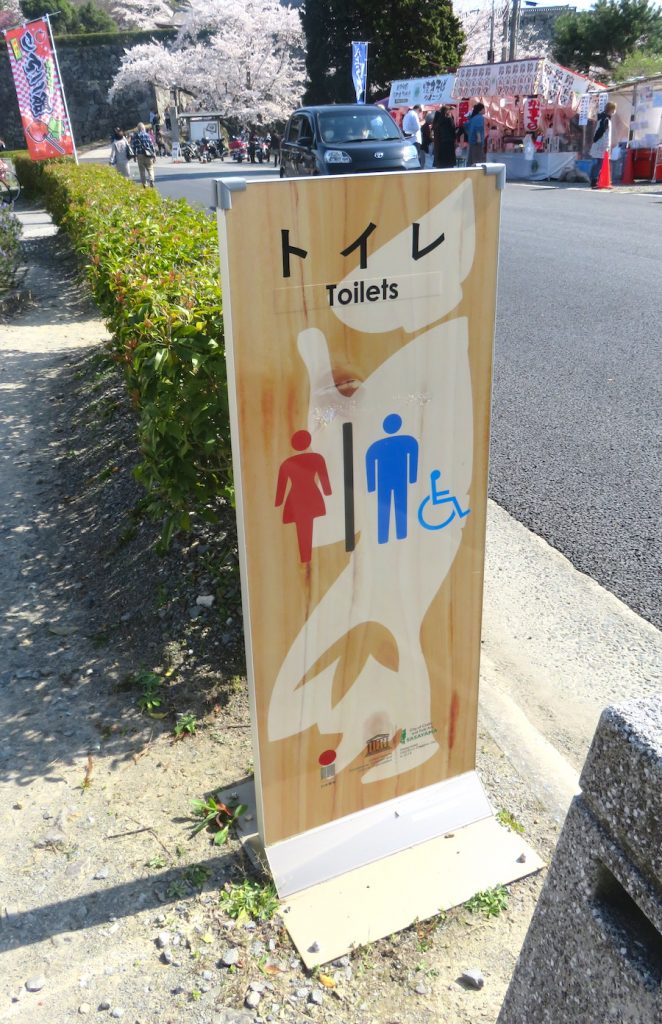
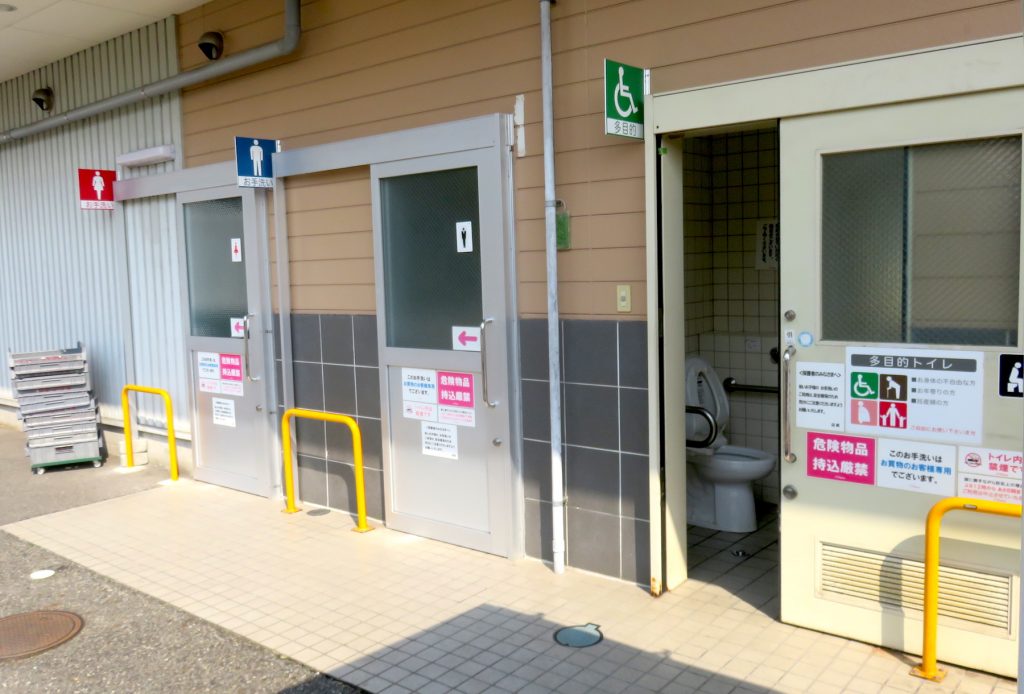
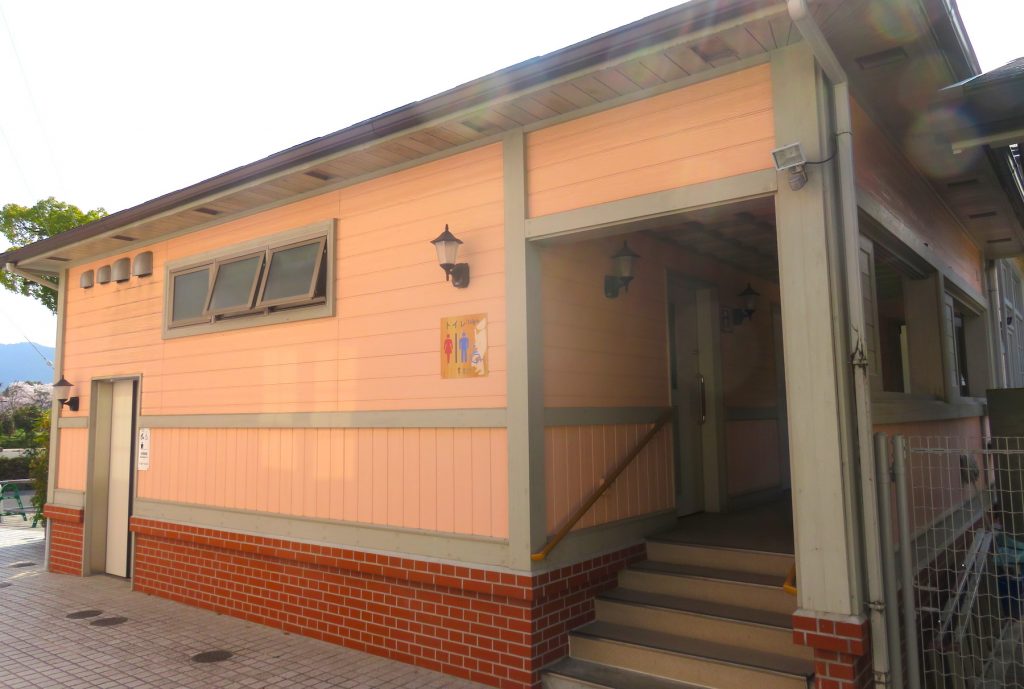
Here in my hometown of Tambasasayama, in the eight or ten block area which comprises the center of our town, I counted no less than four public toilet facilities. As restrooms go, they’re fine. Nothing fancy. But clean, properly kept up to the high standards and hygienic expectations of the citizens here.
Public Toilets 01


Additionally, there are restaurants, temples, public buildings, stores which have toilets. I’ve never seen a ‘Restrooms For Customers Only’ sign anywhere in Japan.
Along with the four public toilets downtown is an outdoor one at a supermarket . . .

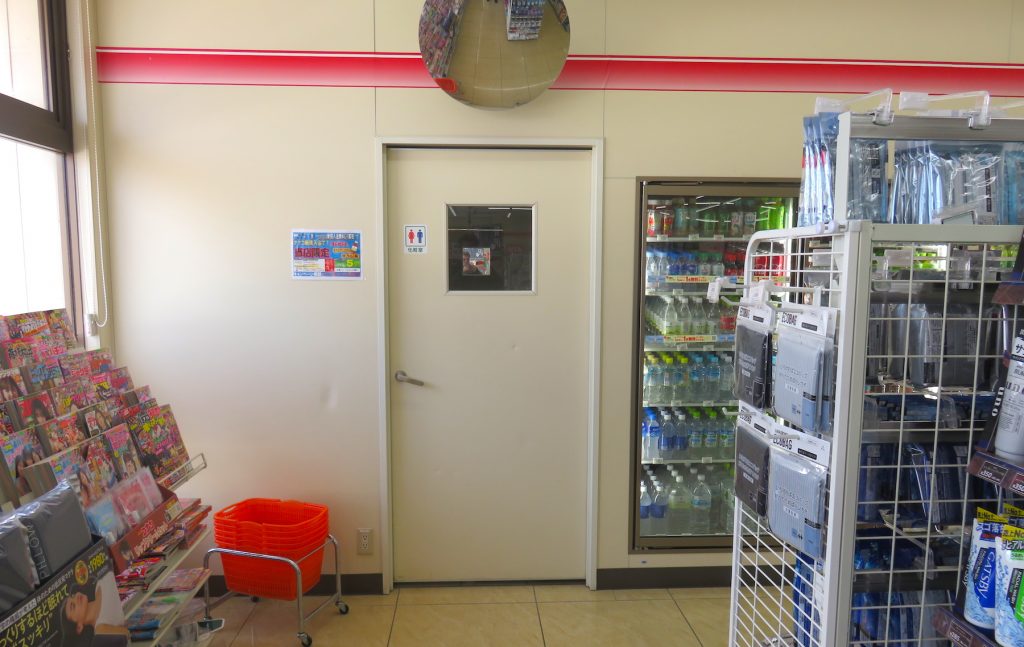
. . . another at a 7-11 convenience store . . .

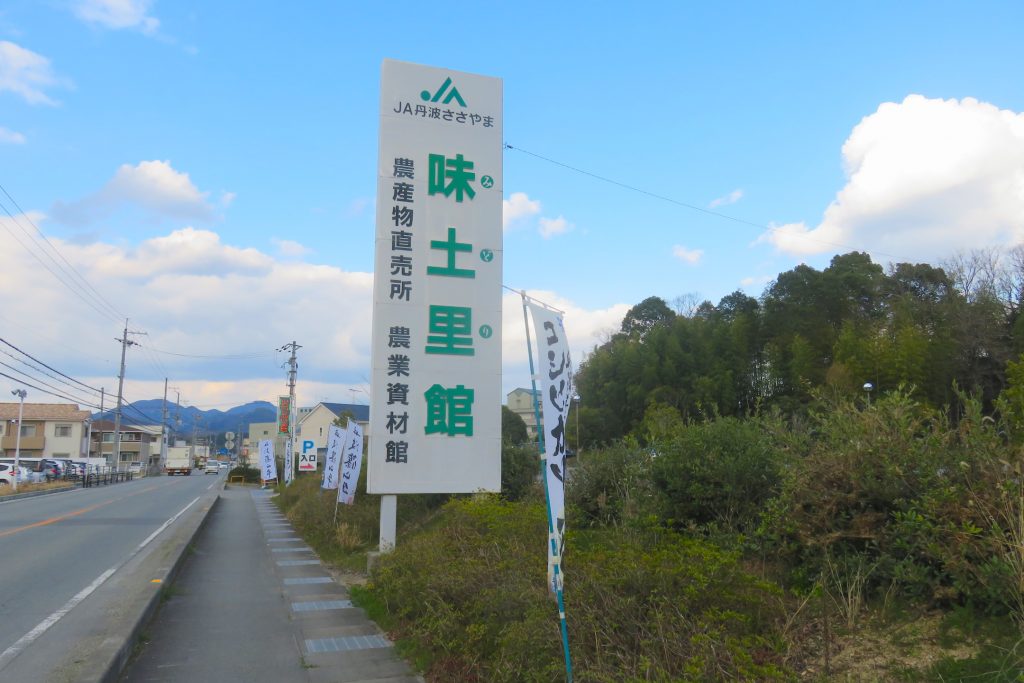
. . . and yet another at a curios shop/restaurant.

Could relief be any more accessible? Adult diapers? (Ugh!)
Granted, there are those who might accuse me of focusing too much here on the mundane. Come on! Toilets?
Just remember. Sometimes it’s taking care of the little, simple things in life, which makes the much bigger, more complex things possible. Try to enjoy that stroll through Greenwich Village or taking in the sites at Times Square when you’ve had to hold it in for four hours.

[ This originated at the author's personal website . . . https://jdrachel.com ]


Life In Japan: Public Restrooms


Thursday, April 2, 2020

Life In Japan: JA


JA stands for Japan Agriculture.
JA is a huge, sprawling organization, with hundreds of stores, facilities, and offices across the entire country. But . . .
It’s not a corporation.
It’s not a government facility, branch, or department.
It’s a cooperative — or more accurately, this from an article on Wikipedia, a “national group of 694 regional co-ops in Japan that supply members with input for production, undertake packaging, transportation, and marketing of agricultural products, and provide financial services.”
They of course have commercial outlets which make available local farm products. Here is our main store in town.
JR Store 01


But because JA provides so many services within the hundreds of communities it serves, it also has numerous offices, some large and imposing complexes. The ‘JA’ logo adorns quite a few buildings right here in Tambasasayama.
JR Facilities 01


Did I mention that JA is a cooperative? Of course I did!
Why is this important?
Because it’s set up as a cooperative, it’s not subject to government bureaucracy, political influences, or the whims and wishes of whoever is politically in power at any given time. Even more importantly, it doesn’t have to answer to a corporate board of directors, it isn’t beholden to shareholders, and doesn’t measure its success in terms of “profitability”.
JA is there exclusively to serve its members and the needs of the community.
What a concept!


[ This originated at the author's personal website . . . https://jdrachel.com ]


Life In Japan: JA


Tuesday, March 31, 2020

Life In Japan: Shoes!

Japanese DO NOT wear their shoes inside their homes.
I can’t begin to tell you how difficult this was for me to understand and adjust to when I initially arrived.
Frankly, at first I thought the whole country was OCD, in the throes of some obsessive clean disorder, or perhaps all cult foot fetishists.
This led to some moments of intense embarrassment. I would tromp into someone’s house in my loafers and as politely as they could manage, be greeted with a look of total horror! No one wanted to offend me but I might as well be dumping a bucket of monkey entrails onto their floor. Their reaction was entirely reflexive. My reaction was oafish: “Uh, sorry about that.” I definitely didn’t get what a hygienic faux pas I had just committed . . . at least for a while.
Growing up in different cultures, we are each conditioned in different ways. I had never thought about it. Shoes were shoes. They go on the feet and they go where the feet go.
Then I did start to think about it.
Most homes in the U.S. are carpeted, at least the living and sleeping areas are. Recognizing that dust, dirt, hair, skin, pet fur, drool, eyelashes, belly button lint — whatever — tends to drop and accumulate, we regularly vacuum. Then once a year, every other year, or when it finally dawns on us “it’s time”, we either rent a carpet shampooing machine or we hire a professional carpet expert to give our floors a thorough wash.
But . . .
Have you ever looked at the wash/rinse water in the tank of a carpet shampooing machine after the job is done? It’s unbelievable! Disgusting! Horrible! Scary!
You see, regular vacuuming just gets the surface. And all sorts of truly ugly abominations, particles, chips, flakes, and strands sink into the nap and settle at the bottom in the woven base. Now, think about it. We Americans lay on the carpet, rest our hands on the carpet, let the baby crawl on the carpet, maybe even make love on the carpet, fractions of an inch from all sorts of unimaginable filth.
How does all this debris accumulate? Some comes from us and our pets, or from our own bodies. But a lot is brought in on the soles of our shoes. All day we walk around on dirty surfaces, streets, sidewalks, where dogs have pooped, cars have driven, people have spit, worms have crawled, birds have deposited droppings — I could go on but you get the picture — then track all this into our beautiful American homes. Not very smart if you think about it, eh?
Maybe the Japanese are onto something!
Back to my awakening. When I refer to my initial cluelessness about wearing shoes inside, I’m talking about only my first few months here. Rather quickly, I changed my habits, in the process turning my thinking around a full 180º about shoes and cleanliness. Now I’m fully rehabilitated from my Western ways, wondering why I never questioned them before.
No, Japanese are not pathologically obsessed with cleanliness — well . . . maybe a little — but merely prudent and protective of the sanctity and hygiene of their homes.
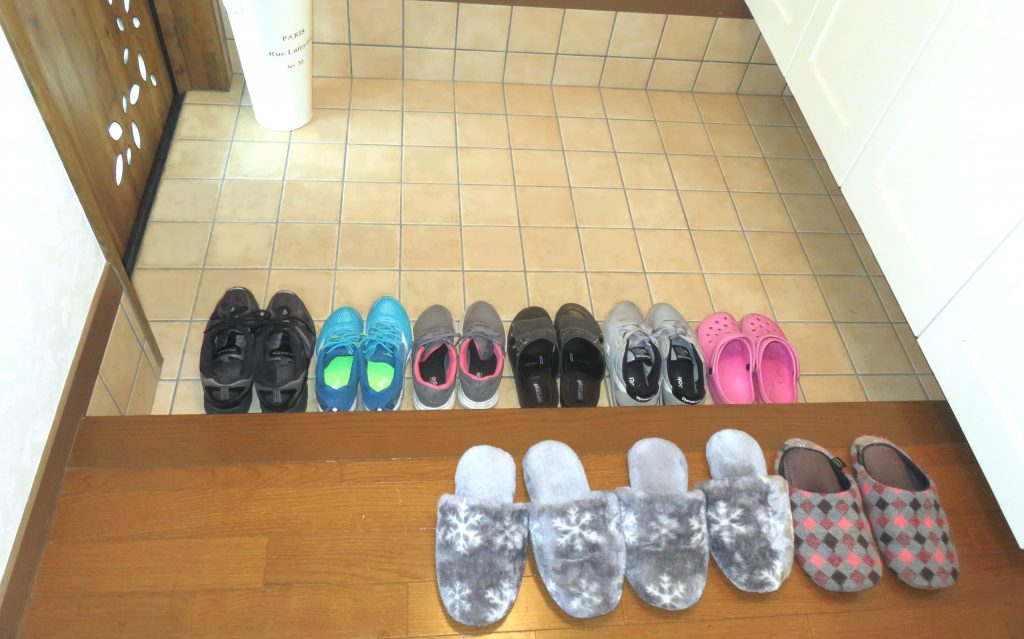
By the way: Notice the slippers in the photo at the beginning of this article. Every Japanese household provides slippers for their guests to wear after they’ve removed their shoes. For me personally the only problem is, most standard slippers are much too small and quite uncomfortable for me to try to squeeze into. But I do appreciate the gesture. Nice touch!
I’m sitting here in my living room writing this. I’m in my stocking feet. Those are my black sneakers in the photo of our foyer. I wouldn’t have it any other way.


[ This originated at the author's personal website . . . https://jdrachel.com ]


Life In Japan: Shoes!


Monday, March 30, 2020

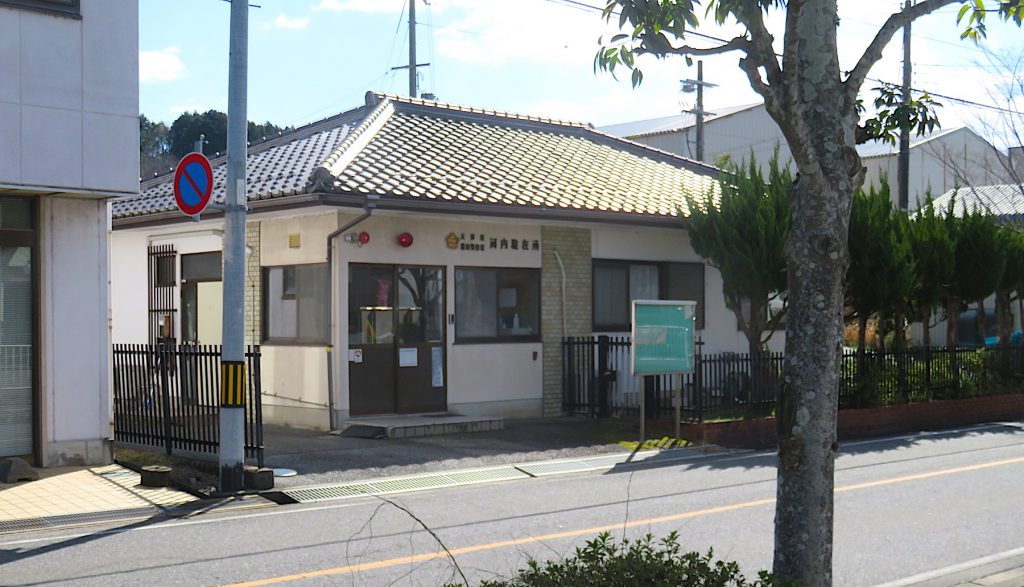
Life In Japan: Koban

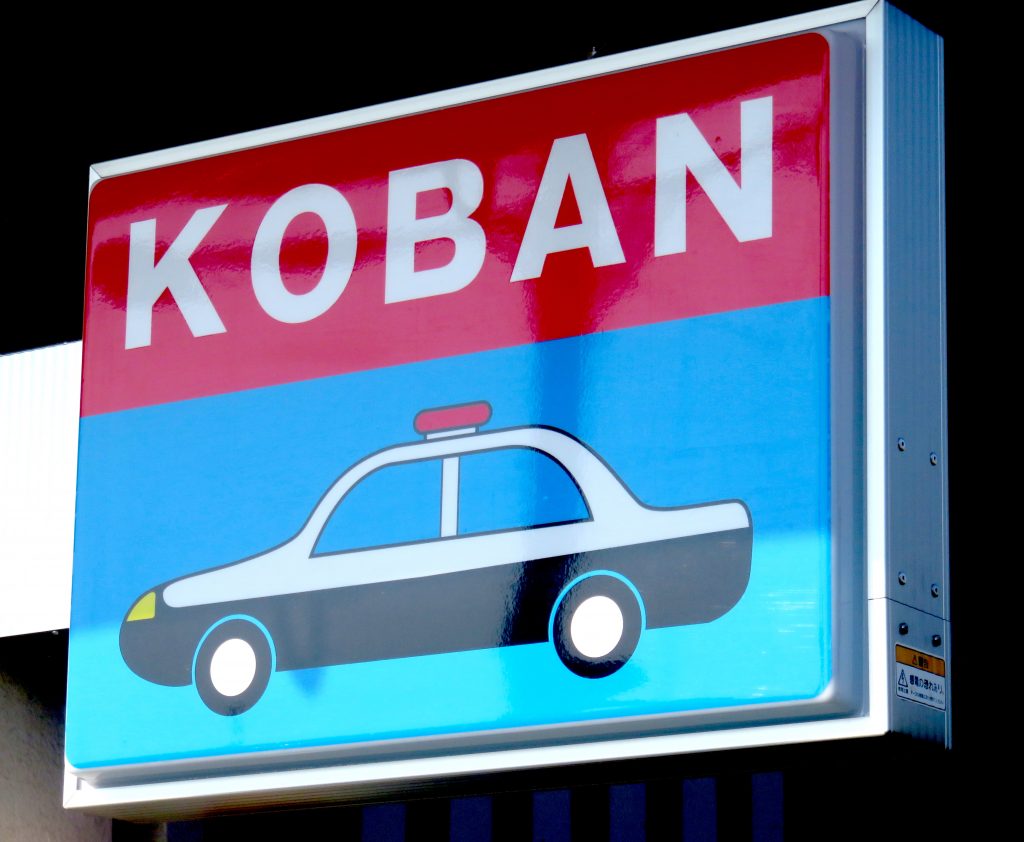
The Koban is the heart of community policing in Japan.
Remember community policing?  Yes, it was a big buzzword in the U.S. during the 90s, a decade that featured a brutal police beating of Rodney King, an unarmed black man, which sparked riots in Los Angeles.  The idea was to have policemen be participating members of a neighborhood, an integral part of community life. This would promote good relations between citizens and the men in uniform, acquaint the police with the citizens and unique activities of the people living near the community policing stations, giving them first-hand familiarity with the “players” there, good and bad. People would see police as humans just like them, police would experience citizens on a personal level. Moreover, if there were a problem requiring their attention, the police would be in the vicinity right on the scene.
It turned out to be more of a PR stunt in most cities in the U.S. and the approach finally buckled under the tensions it created, fueled by suspicion, lack of real trust, the sense that the cops weren’t there to help but to spy on the locals, using their insertion in the locale to better subject the everyday citizens to the strong-arm tactics and “establishment” bullying law enforcement is often rightly accused of. 
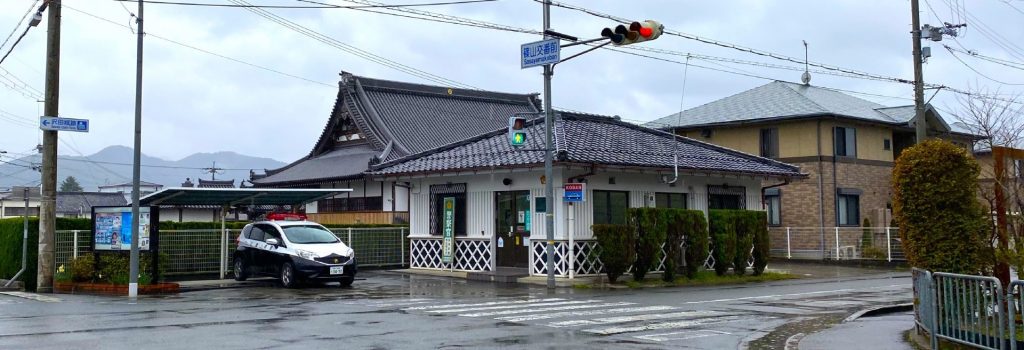
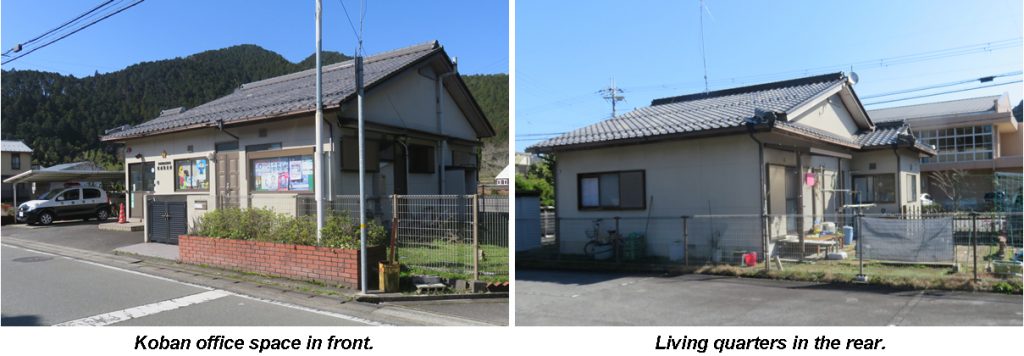
Community policing is not just a PR campaign here in Japan. It’s a reality. If there’s a problem and it’s not an emergency, you turn to the officers at the local Koban to get help. They truly are members of the community, living in the housing usually at the rear of the building, often with their own families.
There are a number of these in my home town here, and thousands all across Japan. Even in the big cities. I’ve seen them in Osaka and Tokyo.
Let me tell a story to see how this approach actually functions here. And please understand that I’m not trying to portray myself as some hero. What I did in this situation is exactly what 99.999% of all of the folks living here would do.
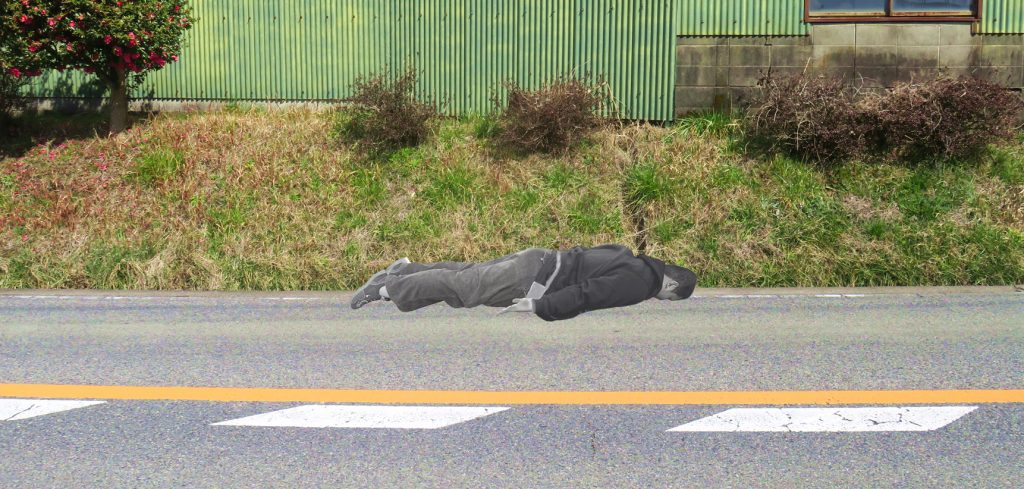
Masumi and I were on our way to a nearby town, if I recall, to visit her mom. It was a nasty day, rainy and windy, visibility was poor. I was driving. We approached an intersection and as I slowed down, I looked out the side window of her Mazda. This is what I saw.
Obviously, that was not the woman. I Photoshopped the pic to illustrate what happened.
I immediately braked, signaled to the car behind me to stop. Then I went over to the body laying in the road.
It was an elderly woman, probably in her 80s, and she was conscious, laying exactly as you see in the above pic, just staring straight into to cold, wet pavement.
The man in the car which was following me came over. We talked to the lady and helped her to her feet. She was fine. Just confused and lost.
There was a Koban not more than 100 meters away, around the corner of the intersection.
We walked the lady there, sat her down. The police officer on duty got a blanket, probably one of his own from the private quarters, and it greatly helped the lady warm up. It was a cold, miserable day.
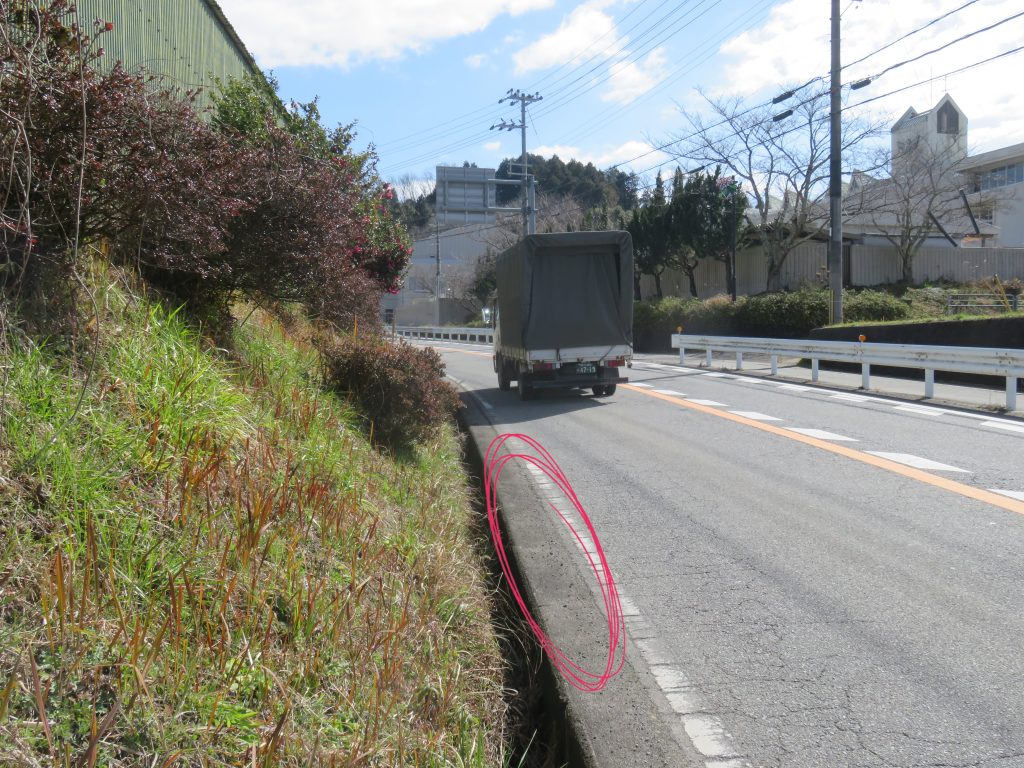
Before I go on, let me show you the tiny strip on this narrow street where she was laying.
It was a miracle she wasn’t run over! As I already mentioned, the day this happened was gray and cloudy, it was raining, visibility was very poor. And this is a well-traveled road. To make things even more precarious, she was dressed in a long overcoat a color that almost matched to pavement.
The police officer tried to get some basic information from her. Sadly, I think she was a victim of severe dementia. But . . . because he was right there in the community, he knew exactly who to call. Yes, there’s a nursing home nearby. One phone call later, the staff at the nursing home confirmed a lady fitting her description was missing. They sent someone over and took her back to the comfort of her residential care facility.
See how easy this works? No calls to central headquarters, checking databases for missing persons, trying to piece together a narrative to explain and identify this lost woman. Being right there in the neighborhood cuts through a lot of red tape and guesswork.
The officer interviewed Masumi and I, as well as the other driver, got all the details, filled out the requisite paperwork — Japanese love paperwork! — and thanked us for our service. He was very professional. It was obvious he took his job seriously and liked his work.
Community policing works. Especially if the police are dedicated and honest.

[ This originated at the author's personal website . . . https://jdrachel.com ]


Life In Japan: Koban