Since leaving America August 2006, I have traveled to sixteen countries. A great deal has happened. This site is to share my thoughts, photos, music, writings, travel experiences, and developing political/social commentary with you. I hope you find it interesting and informative.
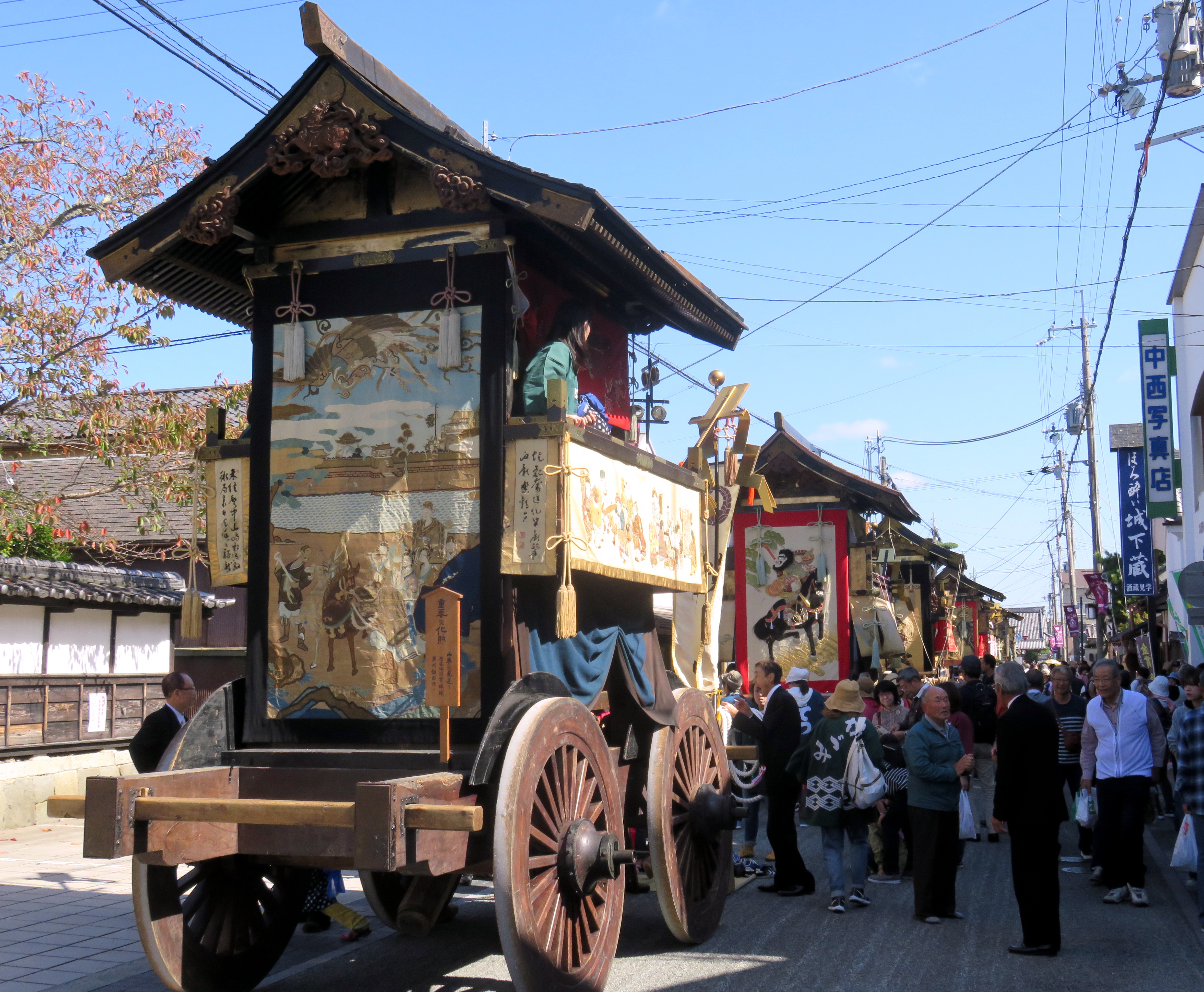
Every year in October, we have here in Sasayama -- my hometown -- the Festival of the Portable Shrines. It's one of my favorites!
It coincides with the black bean harvest. Soybeans are called black beans because if they are left on the vine, they turn black and harden, making them easy to store and use over the coming year.
The town is famous over much of Japan for the quality of its black beans. This means that the weekend of the festival, Sasayama is flooded with tourists.
A gentleman arrived here from Kobe, which is about an hour away. He came to purchase black beans, but when the moment came to pay, he discovered his wallet was missing.
There are no pickpockets here, so obviously he had dropped it somewhere in town.
He went to the nearest Koban. There are many here in Sasayama, as there are all over Japan. A Koban is a mini-police station. In the U.S. there is much lip service given to community policing, having friendly cops in the neighborhood to address problems which come up in the local area. In Japan, it's a reality and an integral part of a functioning community.
The policeman on duty -- considering Kobans are, despite being extremely useful and efficient, very limited affairs, often just a two-room building with one parking space for a patrol car, there was probably only one or at the most two officers there -- took a report, then got on the phone. He called all the other Kobans in the immediate area, anywhere close to where the gentleman had parked his car, then walked into the main part of town.
He passed along the man's name and a description of the wallet.
Now get this . . .
While he was on the phone with another Koban, someone walked in with the wallet and handed it to the policeman on duty there.
The gentleman from Kobe walked the short distance to the other Koban, and retrieved his wallet.
The contents -- credit cards, ID, cash -- were intact. Not a single item had been stolen.
I'm not going to moralize. Draw your own conclusions. Imagine dropping your wallet wherever you live and decide how the story would have ended.
I'll say it again . . . I love Japan!
[ This originated at the author's personal website . . . http://jdrachel.com ]
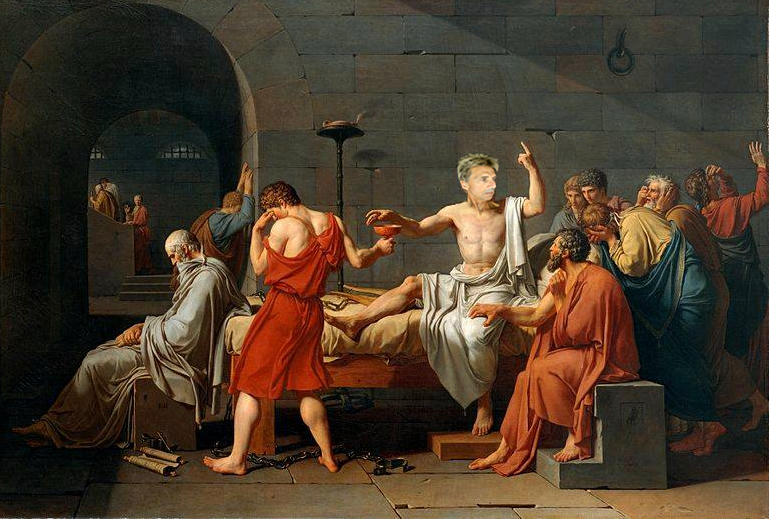
Yes, in the end, she got the best of me. The price for my impatience, my lack of self-control, my smug display of tactlessness, my colossal tactical faux pas in the requisite art of jockeying for advantage – which is really all philosophical discourse is about anyway – was asymmetrical in the extreme, with no room for negotiation, no room for remediation, no recourse or appeal. Philosophers don’t mess around. Especially logical positivists.
My comment was innocent enough.
But what floats frivolously in casual repartee bubbles like the caustic acid of vitriol and mockery on a
page – especially an intra-departmental memo.
What can I say in my defense?
Too much bubbly spirits is sometimes a good excuse. But in this case, a roll of duct tape with the Kölsch pale ale would have helped to mitigate my infantile error in judgment. Hindsight is so powerful but ultimately useless.
I now know . . .
I never should have called Professor Dornberger an insatiable proof sucker searching for the perfect syllogism, if only she could figure out how to deep throat a syllo.
Yes, this was the shameful closing scene of my career as a philosopher . . .
[ This originated at the author's personal website . . . http://jdrachel.com ]
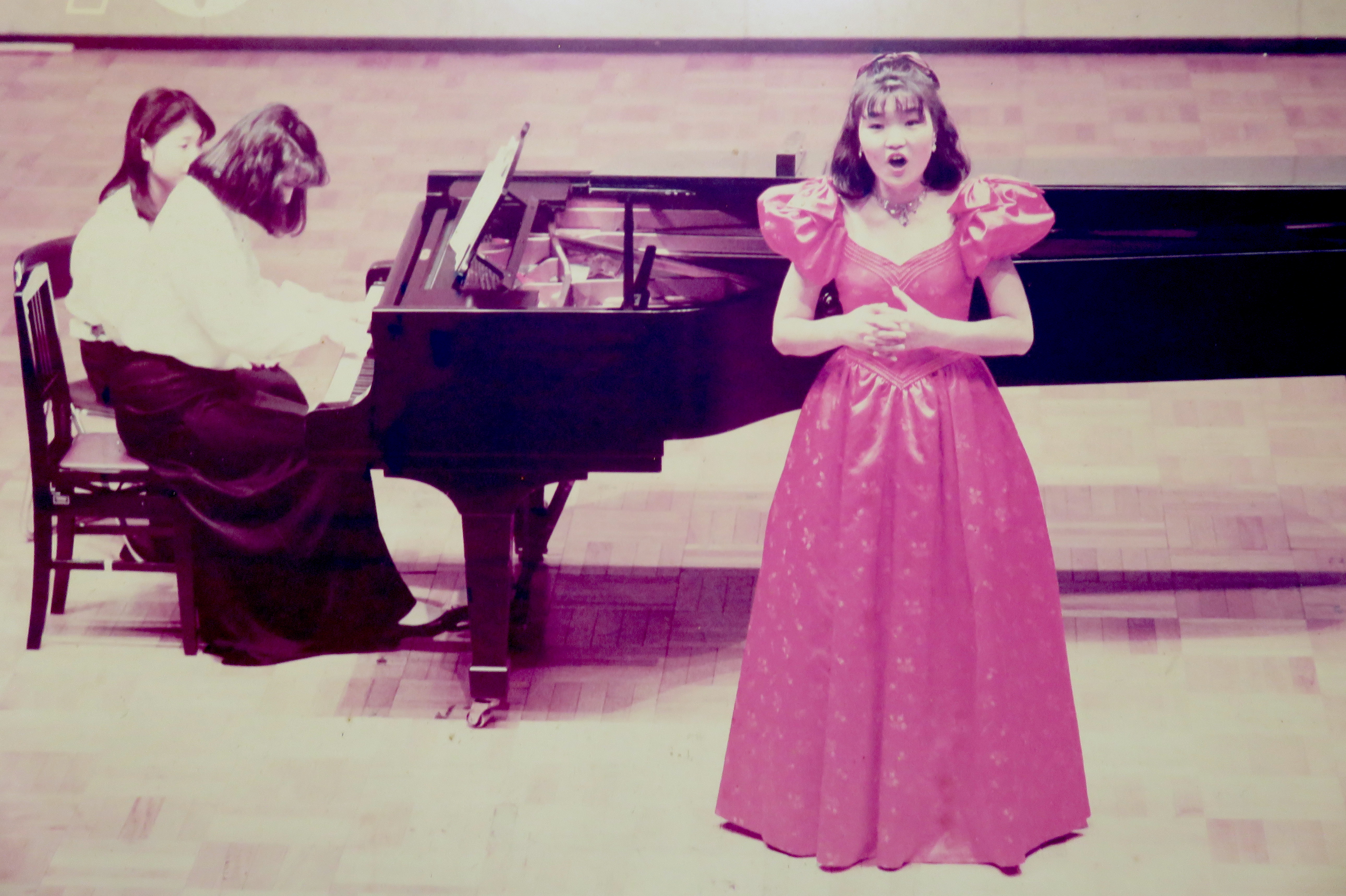
This is a photograph of my wife, Masumi, at age 20 singing Il Bacio by Italian composer Luigi Arditi. She has been singing opera all her life, plays beautiful classical piano, and dances ballet as a pastime.
I find it a fascinating question why Japan is so enamored with Western art forms, not that I've made any progress coming close to a conclusive answer.
Of course, Japan has always been an eclectic culture. It has adopted much from the West, including English letters and words, integrated via Romanji, one of their alphabets. Entire English words were Japanized and have become a part of the ever-evolving vocabulary, e.g. resutoran レストラン (restaurant), aisukurimu アイスクリーム (ice cream). Going way back, certainly quite a bit has been "borrowed" from the Chinese, most notably, Kanji, another of the alphabets in everyday use. And in the 19th Century, Japan replaced its cumbersome numbering system with Western Arabic integers.
All of this is the normal cross-pollination of cultures, which occurs when borders become more permeable, trade encouraged and opportunities for tourism pervasive.
Yet, there are some things that either don't translate well, resist integration, because they are simply entirely incompatible with established social traditions and cultural legacies.
Westerners are touchy-feely, given to open, sometimes histrionic expressions of emotion. Japan is entirely the opposite. I suspect it will always remain so. A respect for privacy in both directions, each individual's large inviolable personal space, shyness and reserve, all are too thoroughly entrenched in the Japanese psyche. Yes, they may dress like Westerners here, but you're not going to see chest-bumping or hugs and kisses at the mall, or simulated sex on the dance floor. It's just not going to happen. Bowing is about as wildly intimate as it gets in public.
That, of course, is an example of steadfast social training.
But I would have suspected that another type of training would be just as determinant. I'm referring to ear training.
The Japanese scales -- actually all Asian scales -- are microtonal. When they don't sound randomly annoying, they sound intentionally grating, at least to my Western ears. I'm just not used to hearing -- literally not trained to hear -- the two or three notes that purposely occur between C and C# or between E and F. I'll admit that in my band days I was often accused of tuning my guitar microtonally but that was just a way of saying I had a really lousy sense of pitch.
Regardless of how much their melodies may torment us Westerners, Asians will swear by the beauty of the music they create and listen to. Their ears are trained to hear, accept, embrace what sounds cosmically wrong to us.
At the same time, Western music and the fundaments for making it have gripped Japan. And in every form: pop, rock, jazz, classical, blues, rap, hip hop.
Recognize that there are Western arts chauvinists who would say this is inevitable. They will make a very convincing argument that Western scales are fundamentally superior, more accessible and natural to the homo sapiens physiological mechanisms involved in processing music.
There is a very appealing mathematics to the Western scale. The 37th key on an 88-key piano is A. It vibrates at 220 cycles per second (Hz). The 49th key is also an A, but it's one octave above, vibrating at 440 Hz. The 25th key is an A that's one octave below, vibrating at 110 Hz. Nifty, eh? This suggests the mathematical foundation underlying the tonal relationships among the notes of the Western 12-tone scale. In fact, this holds together quite nicely until we get to the very bottom and top of the useful musical range. The math has to be adjusted a bit. Pianos tuned to mathematical perfection tend to sound sharp at the very top and bottom, requiring at the extremes that the scale be "stretched" to make the piano sound in tune to the human ear. This is not a flaw in the mathematics. It's a consequence of the physical properties of the strings of the piano, a stiffness which causes inharmonicity at the extremes. Thus this need to "temper" the scale doesn't diminish the essential elegance of the theory.
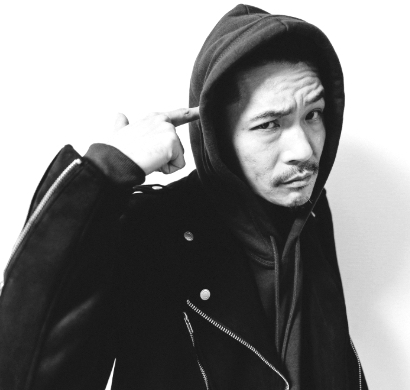
Zeebra, a very popular hip hop artist here in Japan
(Click on pic to see a video.)
So as I say, it's easy for music experts in the West, the ones juxtaposing Fibonacci spiral graphs on the human cochlea, to posit the intrinsic superiority of a viola over a shamisen, an oboe over a hichiriki, or a flugel horn over a horagai, put in the service of playing the Sound of Music.
They may be right. But the bottom line is there's really no way to objectively settle the matter. An anecdotal aside: I mentioned to my wife the other day that one of my English students sings Japanese folk songs to me. The lady is very proud of her voice and the songs she had spent her life mastering. My wife asked me if they were traditional or modern folk songs. I didn't know there was a difference. Turns out that traditional folk songs are the original microtonal versions. Now there are modern versions of those folk songs which make the melodies fit the Western 12-note scale. Think about that! They take these amazing songs from time immemorial and update them -- literally Westernize them musically -- for the prevailing tastes of contemporary Japanese listeners.
This seems to suggest some greater inherent appeal in the mathematically-based music system of the West. But I say it's just a sign of the times. We have Burger King in Beijing, KFC in Kuala Lumpur, McDonald's in Moscow. There are rappers and hip hop artists in every country that has electricity, except maybe Bhutan.
My wife, Masumi, of course continues to teach Westernized music to elementary students in a nearby community here in Japan, as part of the official school curriculum. The kids play recorders, xylophones, accordions, keyboards, snares, bass drums, bongos, congas, and other percussion -- all instruments from the West. And since she still loves singing, she even gives an occasional vocal performance under the auspices of the vocal teacher she's studied with for three decades. Usually she sings opera, though she occasionally helps me out on my original songs, in my informal home recording studio.
Here she is earlier this year in concert at a gathering in Osaka.
[ This originated at the author's personal website . . . http://jdrachel.com ]
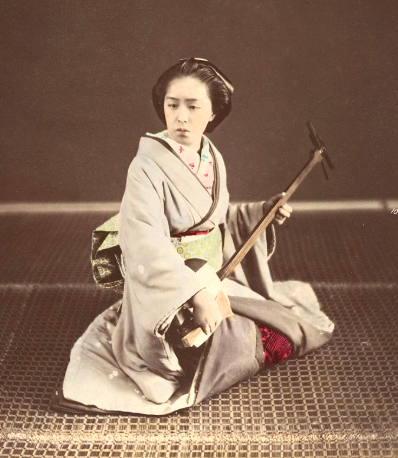
This is not going to be a formal or particularly thorough discussion of Western art forms here in Japan. In fact, it'll be largely anecdotal but nevertheless I believe an accurate portrayal of the odd juxtaposition of the unambiguously Western art forms and styles on a culture with its own unique rich heritage, which not in the least resembles or had been influenced by Euro-America until Japan finally was "opened" to the West 165 years ago. Significant Westernization occurred in two peak periods: From 1868-1900 during the Meiji restoration, and from 1945 until the present following the Allied victory over Japan ending World War II. This resulted in modern Japan, where Kibuki Theater and geishas co-exist with American-style pro wrestling and Japanese hip-hop.
My wife, Masumi, perfectly embodies the contradiction, though unlike most contradictions there are no discernible incompatibilities or anomalies. 'Contradiction' is really the wrong term. Because all that is contradicted are my expectations. I'll get to Masumi in Part 2, as she deserves an entire article of her own.
Long before I ever knew I'd be coming to and then settling in Japan, I received some early inklings about Japan's love affair with the West, meaning not just its superficial courtship of dress and hair styling, but its thorough embrace of both formal and pop arts.
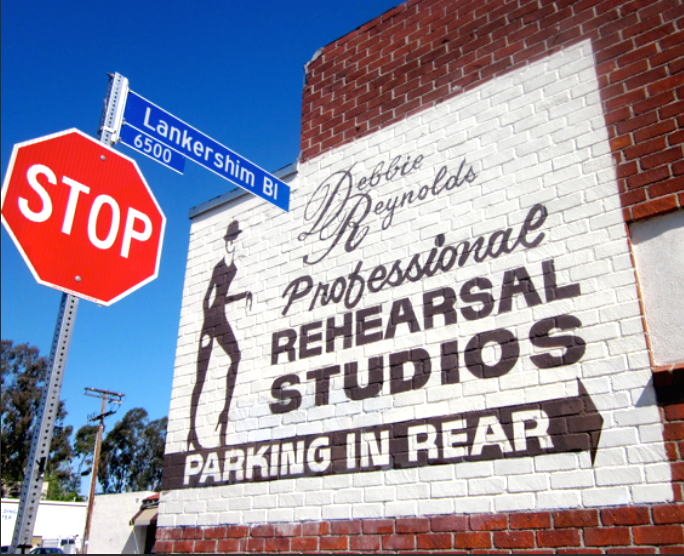
I was taking jazz dance classes at Debbie Reynolds Studios -- yes, that Debbie Reynolds -- in Los Angeles, and one summer a plane load of young Japanese jazz dancers (late teens, early twenties) packed the classes. To put it mildly, I was amazed, stunned, awed! Not only were they physically perfect as dancers -- slender; strong, sinewy muscles; elegant posture; each individually radiating grace and vigor, coupled with a charming shyness -- they could really dance!
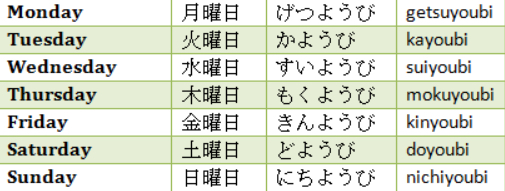
I also wistfully recall one of my favorite dance teachers mentioning that he loved taking on guest teaching positions in Japan, because the students were so fiercely dedicated and disciplined. When he'd return from such an assignment, he'd jokingly count off our dance routines in Japanese: ichi, ni, san, yon! While we thought that was pretty darn cute, I never gave it all that much thought. Japan just wasn't on my radar screen back then.
At the same time, it was no secret that Western performers, in particular pop and rock acts -- everyone from the Beatles, Cindi Lauper, Santana, Carpenters, Michael Jackson, ABBA, Rolling Stones, and Avril Lavigne, to Ozzy Osborne and Bob Dylan -- loved playing Japan. All reported that Japanese audiences were enthusiastic and they felt truly appreciated.
Get this: Even jazz artists like Chick Corea, Art Blakey, Oscar Peterson, Sonny Clark, Miles Davis, Billie Holiday, Bill Evans, and John Coltrane had and often still have impressive fan bases in Japan.
Much more popular and widespread than jazz is classical music. During my first full year in Japan, I was invited to attend a piano recital. I don't know what that sounds like to you but I assumed it would be a bunch of cute kids fumbling their way through simple songs, their adoring parents taking videos for the grandparents. Right. Try concert-level Chopin, Mozart, Brahms, Beethoven. And these were just high school students! Turns out that studying piano from a very young age is pervasive here -- piano lessons with a focus on eventually mastering the legends, for example, those just mentioned. Japan has, of course, already produced a number of widely-acclaimed, world-class musicians and composers, and believe it or not, Tokyo alone hosts "no fewer than eight full-size, full-time, fully professional orchestras, collectively providing more than 1,200 concerts a year."
Getting back to dance . . .
I've been a longstanding fan. I saw my first ballet in high school. Not only did I take some jazz classes for ten years starting in 1985, I even dabbled in both modern and ballet over the years. The great ballet dancers like Baryshnikov, Nureyev, Fonteyn, Markova, have always fascinated me.
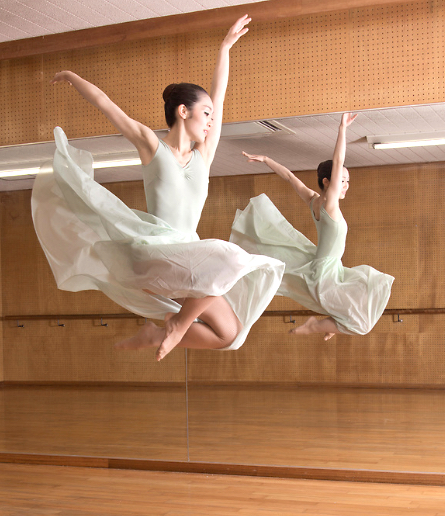
That being the case, about a year ago I became acquainted with a fellow who is not well known in the West, but in my opinion may be one of the best ballet dancers ever! His name is Kumakawa Tetsuya. Born in Hokkaido, Japan, he studied in England and became a principal dancer with the Royal Ballet, before returning to Japan to form his own ballet company. Feast your eyes on a man who seems able to rewrite the laws of gravity . . .
. . . and make challenging moves breathtakingly beautiful and inhumanly effortless . . .
There are two Japanese ballerinas, who despite being in my opinion, among the best in the world, are not exactly741 household names in the West.
Kuranaga Misa . . .
. . . and Nakamura Shoko . . .
Pretty amazing, eh?
If there is an unspoken, but nonetheless dutifully-regarded and rigorously-observed rule in play governing just about every act, action, activity, ambition, and endeavor here, it's this: Whatever the Japanese do, they do well. They are maddening perfectionists. Many would say this is why Japan was able to rebuild so quickly and totally after World War II, eventually becoming the world's third largest economy. Others would attribute Japan's high suicide rate to the extreme pressures of high performance and achievement.
Both would be right.
[ This originated at the author's personal website . . . http://jdrachel.com ]
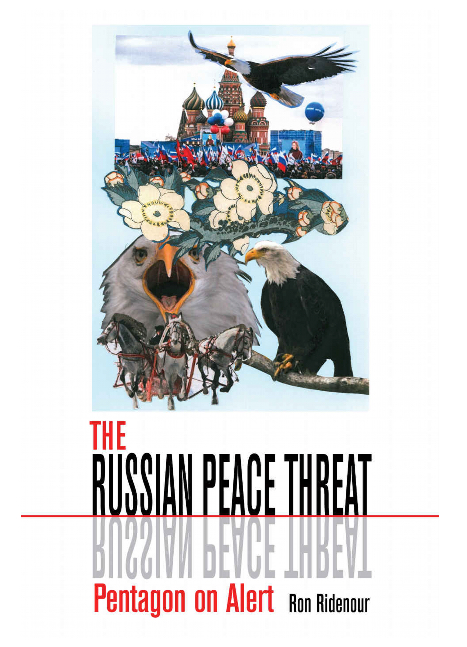
Ron Ridenour’s masterfully-written indictment of U.S. militarism and its take-all-prisoners imperial project is of such breathtaking scope and astonishing depth, it would be hard to exaggerate its value and timeliness, as the foreign policy of the Empire of Chaos now as never before in recorded history, steers the world toward apocalyptic confrontation and puts the survival of the entire human race at risk.
Those readers still in the embrace of the most toxic pile of propaganda ever assembled by a world power, that America is a force of good, spreading democracy, defending human rights, standing with the oppressed and marginalized, should have medics in the room with them to apply emergency procedures as the truth pours off the pages of this book. Ridenour pulls no punches and with meticulous research and documentation, leaves little doubt that his narrative offers nothing less than the explicit and savage truth of over a century of exploits and exploitation. We see brutal, barbaric, merciless application of military and economic power, with the clear and unambiguous goal of world domination — the U.S. as the ultimate empire blessed by God and history and the Fates, exempt from the rules of international law and judgment by anyone who would challenge it. While the focus is Russia, this book covers a lot more ground, offering glimpses into many theaters of confrontation and conflict: China, Japan, Indonesia, Vietnam, of course the Middle East, as well as many countries in its more immediate sphere of influence, Central and South America. With its 800+ bases currently sprawling across the planet, we’re hard-pressed to find anywhere where the heavy foot of American power does not exercise its self-serving prerogative.
Those readers who already are familiar with the scope of U.S. hypocrisy, who understand that behind the smiley face of official beneficence and goodness lies an agenda that serves a ruling elite at the expense of the vast number of everyday citizens, both inside the U.S. and out, will still benefit enormously from this book. Much of it might constitute a refresher course, but I suspect many, myself included, will be pleasantly — or unpleasantly — rewarded with both disturbing factual knowledge and Ridenour’s fresh insights and analysis. It may be for such readers “preaching to the choir” but I’ve never heard a choir that didn’t need to be tuned up from time to time.
Ridenour quotes “The Naked Human”, a poem written by Gustav Munch-Petersen.
I am only a human but I shall one day raise earth’s mountains and let them shake in the ears of those who sleep
I am only a human but I shall one day take the sun down from heaven and light up all the dark holes with merciless white light
I am only a human but I shall one day steal the gods lightning and sweep the earth clean of dust
If I may do some metaphorical borrowing, I’d say that with The Russian Peace Threat: Pentagon on Alert Ron Ridenour has raised some mountains, taken the sun down from heaven, and stolen lightning from the gods. Let’s hope his exceptional scholarship and writing wakes up some people, lights up the dark holes, and sweeps away the dust.
Our survival as a species depends on it.
[ This originated at the author's personal website . . . http://jdrachel.com ]
Japan is a gift-giving culture. There are hardly any occasions for which it is not customary or at least acceptable to proffer a gift. A visit, a lunch at someone's house, health issues, news of even the lightest import -- new pet, new home, new car, new set of dentures, -- knitting socks, harvesting soybeans, a near traffic accident. Yes, I had a lady almost hit me on my bicycle with her car -- she slammed on her brakes and literally stopped with her bumper against my pant leg -- track me down (not very hard since I'm the only elderly Westerner in the area with Rod Stewart hair), and leave a bag of eggplants on my porch. Add this abundance of uniquely Japanese magnanimity to the conventional observances which most modern developed economies share and have duly exploited to nauseating levels of melodrama and sentimentality -- weddings, funerals, graduations, anniversaries, birthdays, Christmas, Mother's Day, Father's Day -- means hefty dividends for anyone heavily invested in industries making gift-wrapping, ribbons and bows.
Amplifying the initial impetus for graciousness and generosity driving the whole gifting frenzy -- evidently hard-wired into Japanese people -- the act of giving a gift triggers a immediate, requisite response, a reciprocation in kind, the product of heart-felt appreciation for the original gesture: The 'thank-you-for-the gift' gift.
"どうもありがとうございました!" (Thank you so very much!)
"どういたしまして!" (You are indeed very welcome!)
It is beyond any dispute: If gift-giving were for some mysterious reason to suddenly come to a halt here, the entire Japanese economy would collapse within hours.
One month after Valentines Day in Japan -- meaning March 14th -- we have White Day.
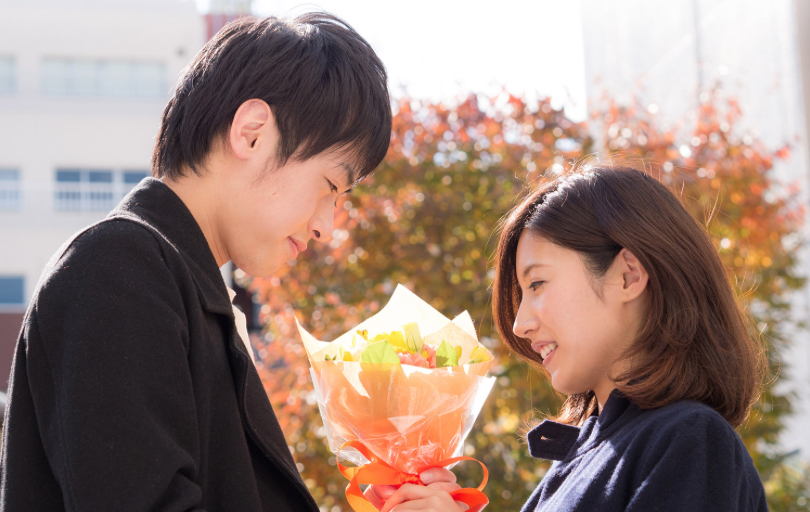
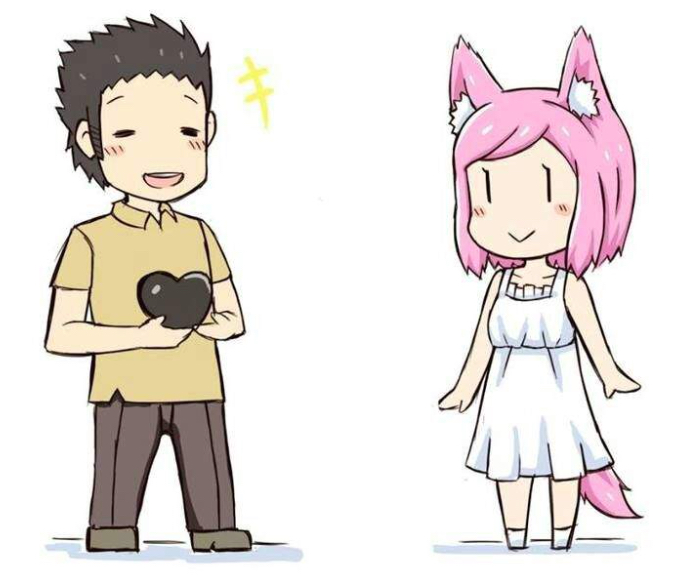
White Day is the occasion for the guys to give to the girls sweet treats and other simple gifts, payback for bestowing on them piles of chocolate and other heart-shaped confections on February 14th.
Is it tit-for-tat? Do guys at least for this simple, rather innocent holiday put their chauvinism on hold, do the expected thing by giving a thank-you-for-the gift' gift?
Some do. Others ignore most of the girls who've been generous with them and just give a White Day treat to the one(s) they're interested in, as in viewing with something remotely resembling romantic interest.
Not that many people worry about the insulinary efficiency of their pancreas on either Valentines or White Day. That would probably be true just about anywhere in the world.
Japan, like most Eastern cultures is very patriarchal, bordering on officially sanctioned misogyny. I could go on and on about why this is so, despite the extreme Westernization and "modernization" of the country. But it would be pure speculation. Certainly, much of it is born out of deep and longstanding traditions generated during the tribalism of pre-history. But I suspect the modern manifestation of male dominance imbedded in male-female relations is now more a product of extreme insecurity and a sense of inadequacy by boys and men -- collectively borne at a very sub-conscious level, of course -- than it is a reflection of the inheritance of rigorous structural societal norms. This probably sounds like extremely superficial pop psychology, masking as a gracious critique. But I'm hardly apologizing for what I observe might be vagina envy or something even more ridiculously unflattering and ultimately embarrassing or pernicious.
Isn't there a homily that goes like this?: We worship that which flatters us, love what we can dominate, ridicule what we find puzzling, lash out at what we don't understand, enslave and torment that which reminds us how pitiful and primitive we ultimately are.
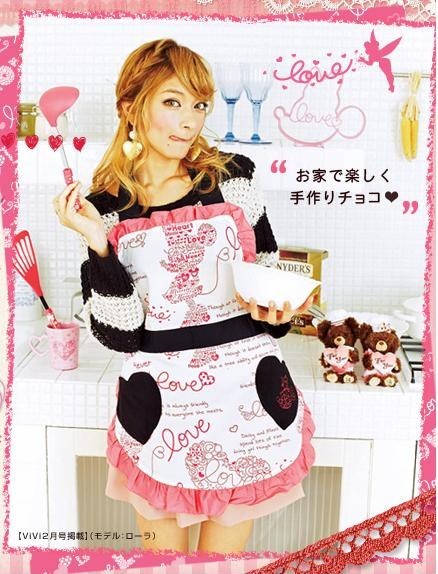
They celebrate Valentines Day here -- it's a distinctly Japanese version of the love holiday -- which like everything else in the U.S. has been turned into just more marketing, churning out of kitsch, and indulging in commodified histrionics. Pumping up the GDP is the only reason for anything and everything, after all. They'll be putting a meter on my love muscle and collecting a surtax any day now.
Right in line with everything that goes on here, especially involving human interaction, there's a sweet innocence to Valentines Day, remindful of a time before my time and thus not something I can duly remember. But think of Frank Capra movies and extrapolate.
It's innocent to be sure, but the guys are still in charge. Yes, on Valentines Day, the guys in Japan just sit back and the girls pile it on -- chocolate, that is. From what I can tell, none of the giving is based on hot passion, hot sex, hot anticipation. Basically, the message is: "I'm a girl and you're a boy and you're not all that bad." Or maybe: "I like you. I think. Call me maybe?"
As an English teacher, I got my share of Valentines chocolates from ladies of all ages. Yes, I mean ALL ages. From 7 years old to 60, 70, and beyond!
And all I was obligated to do was collect it, smile, say ありがとうございました (thank you so very much), then eat it at my convenience.
I almost felt guilty about all of the attention.
Then again . . .
There's a payback. But it's very asymmetrical. It happens exactly one month later.
March 14th is called White Day.
Stay tuned.
[ This originated at the author's personal website . . . http://jdrachel.com ]