Since leaving America August 2006, I have traveled to sixteen countries. A great deal has happened. This site is to share my thoughts, photos, music, writings, travel experiences, and developing political/social commentary with you. I hope you find it interesting and informative.
Language and grammar are dynamic; ever-evolving; adapting to new usage, current trends and fads. There’s no reason to pass judgment on this, as many academics and publishers of dictionaries might presume to do. You can’t set language and punctuation in stone any more than you can declare that the sun will shine every Monday or outlaw oxidation.
While it didn’t really catch on, it did address a gap in our ability to have a final punctuation mark reflect the entire mood and intent of the language that preceded it. It’s a combination of a question mark and an exclamation point, allowing a statement to both act as a query and express awe, amazement, excitement, marvel, wonder, approval, acclaim, shock, and so on.
What in the world is going on with the Catholic Church and organ trafficking?!
Now, I should have been able to put an interrobang at the end of that exclamatory question, but as I said, it didn’t really catch on. At least, I can’t find it on the keyboard of my laptop.
The point is, as useful as something might potentially be for language and grammar, it’s actually impossible to dictate use and guarantee general acceptance.
So now I’m about to attempt the impossible.
Yes, I’ve come up with a new punctuation mark!
And without intending to blow my horn, bring undeserved attention to my genius, or capitalize on your gullibility as a reader of my articles, I’d like to say unequivocally that this innovative punctuation mark, aside from any other merits it might have, completely and thoroughly sums up the current mood — fear? despair? cynicism? resignation? — of a huge segment of the people living on the planet, the ones who have some idea what a horrible mess we as a species are now in.
Here it is . . .
Does it look familiar? It should.
An important question: Will it be useful?
A more important question: How long will it be around?
Maybe a better question to ask: If my new punctuation mark really does work, really captures the zeitgeist of our troubled times, how long will we be around to use it?
(Sure wish I had that damn interrobang on my computer. I could have used it at the end of that last question.)
Why should this come as a surprise? The ruling elite has over five decades contributed millions of dollars, tens of thousands of hours, gone to great lengths to take our democracy apart, skew the laws to maximize their profits, marginalize and silence opposition, reduce the voice of everyday citizens to a pathetic whimper, perhaps worst of all, promoted war and ecological destruction, bringing us face-to-face to possible human extinction. And we should expect to undo all of this with an article here and there, a few comments, and some Twitter and Facebook posts?
I don’t mean to criticize or mock anyone. But I get this all of the time and every time I’m truly astounded that well-meaning, concerned progressives think there’s some quick and easy defense to the wrecking ball taken to the building blocks of our “democracy” and the value system that underpins it, and to repair the colossal damage already done by the oligarchs to our current quality of life and potential for a decent and harmonious future.
Yes, ladies and gentlemen and everything in between, there’s a lot of work to be done. And with some reservations, I’m inspired by the enormous amount of energy and time devoted by the few sane activists among us.
Unfortunately, almost all of that energy and time is completely wasted. It isn’t going anywhere and never will without some serious rethinking and creative strategizing.
Change is impossible without “the people” and the vast majority of people are pretty much left scratching their heads at BLM, woke, cancel culture, Antifa, QAnon, Proud Boys, build back better, and especially the incapacitating, binary weaponizing of everything into left vs. right, Republican vs. Democrat, and all related iterations: liberal vs. conservative, Trump vs. Biden/Sanders/Clinton.
Here’s the main problem as I see it. People vote against their own interests because they’re overwhelmed, confused, misdirected, brainwashed. They step into the voting booth thinking they’re voting for one thing and end up getting the opposite. The science of messing with people’s minds has surpassed quantum physics in sophistication. Soon we’ll all be implanted with neural interfaces and directly turned into clueless, obedient drones. But that’s for another article.
What I try to do is introduce issue-by-issue some genuine clarity. Remove any possible ambiguity or misinterpretation. If you want this, then do that. To the point of this article, if you want to know if the candidate you’re voting for is truly on your side, then perform a simple, straightforward, sensible test. You can and will know. The result will be a clear and unambiguous ‘yes’ or ‘no’.
That in a nutshell is the whole idea behind the electoral strategy I’ve been talking about for ten years. Another topic for yet another piece, as if I hadn’t already written three books and hundreds of such articles already. But for now let me quickly reiterate, the candidate contract electoral strategy represents issue-by-issue clarity and real choice. A candidate is either for the proposed change, or against it. He or she signs on the dotted line making their commitment crystal clear. If they sign, we know where they stand. If they don’t sign we know where they stand. In either case, we as voters know exactly what to do.
Why don’t current activist demands for real change ever make a difference?
Two reasons . . .
FIRST: They are directed at the wrong people. They are directed at those in power who are not listening, will not act, will never listen, will never act favorably. We only need to look at the record to know this is true. Very legitimate, extremely popular reforms simply NEVER GET DONE. Do I need to mention a few?
• Decent good-paying jobs
• Fair, equitable, livable wages
• Health care reform (Medicare4all)
• Serious attention to climate change
• Election reform (getting $$s out of politics)
• Law enforcement and comprehensive prison reform
• Ending the wars (reversing military expansion)
• Comprehensive immigration reform
Mind you, there are huge consensuses on these and similar issues. How do we know what these areas of agreements are? There’s no mystery. Poll after poll, year after year, point to pretty much the same things. Without exception, concerns about the economy are at the top of the list. People now more than ever are struggling. The American Dream is fading and prospects for the future are becoming increasingly bleak.
SECOND: Many activists are personally committed to a cause, feel enormous passion for that cause, can’t imagine a world without it, can’t imagine any decent, aware human being being opposed to that cause.
Unfortunately, they’re often wrong and despite their best efforts, nothing changes, nor will it ever change. Either the object of their devotion is unpopular and/or it simply doesn’t even get noticed. There’s not sufficient public awareness, perhaps little enthusiasm, for whatever they’re promoting. Such niche issues are important and can be addressed when we have a Congress and White House listening to and on the side of the people. But until we put in power who actually represent the interests of the vast majority of citizens — NOT those of the ruling elite, Wall Street, the MIC, big banks and big corporations — NOTHING WILL GET DONE for the people. PERIOD!
These two undercurrents are intertwined and synergistic . . . in the worst possible way. Making impassioned pleas to our elected officials when they’re not listening is a non-starter and enormous waste of energy and resources. Focusing on issues which have little popular support ends up discrediting activists and knee-capping more promising activism, all too often turning the majority of citizens off. This not only drives away support, but infects the citizenry with cynicism about anything positive ever getting done. Predictably, resignation and apathy sets in. Just look around. Look at the comments we see on articles like this. Hopelessness is growing. Surrender is the new pandemic.
The system is rigged … AGAINST US, WE THE PEOPLE.
It’s certainly foolhardy to think that the people who benefit from the rigging are going to unrig it. They will continue to do what they’ve been doing. Serving themselves. Ignoring us. They will thrive. We will suffer.
Maybe naively I believe we can refocus, unite, change things. Maybe foolishly I believe we can rock the boat enough to get the scoundrels on board into the drink, without sinking the ship.
But I don’t think so.
We can fight this but we have to work together.
So what do we do?
First, we apply the Ultimate Wedge Issue Test. What is that? There are certain issues which are crucial to the survival of our nation as a democracy which “promotes the general welfare.” The test determines who is in favor of a nation that works for everyone, not just a privileged elite, and who is too selfish, myopic or misinformed to want what is the foundation of our society … equality, justice, peace, harmony, opportunity.
This is the wedge. Either you’re for working together as a society . . . or you’re for continuing on the road to oligarchy, tyranny, fascism. This applies both to citizen voters and candidates for office.
I sincerely believe that the majority of citizens want a country that works for everybody.
Issue-by-issue we find out what we as citizens think is important, then issue-by-issue we see which candidates are willing to commit to getting the job done.
We only vote for those candidates who are on the side of the vast majority of Americans.
No excuses. No compromise. No exceptions.
While applying the “wedge test”, we always keep in mind, this has nothing to do with party or label or ideology. It’s strictly about where candidates come down on those items which the vast majority of citizens have targeted as essential — in most cases things we’ve needed all along — things across the board that haven’t been getting done.
As I said, we all already know what these issues are. And we know those now in office have not nor will they ever support us in promoting and instituting the necessary reforms, such that WE THE PEOPLE get what’s long overdue . . . a fair stake in the vast wealth, blessings, and opportunities of the allegedly richest country in history.
Not just talk about it. Not just say pretty words and make empty campaign promises. Not just continue to spew out sound bites and pleasant-sounding word salad so we will again trust them, fall for their shallow rhetoric, and vote these hypocrites back into office.
It’s that simple. I didn’t say easy. No way will this be easy. But it’s certainly simple.
It starts with us no longer being gullible fools. Those in power will continue to lie to us, continue rigging the system in their favor and that of their patrons, the privileged elite, if we let them.
But we can stop this right now. By getting serious about installing a government of the people, by the people, for the people. By electing “people’s candidates” who have proven themselves worthy of our vote.
I didn’t give it much thought. Of course, I was extremely glad that Masumi, my wife, had time off from teaching school, and we could spend the entire day together. Moreover, a major typhoon was heading our way, so we were preoccupied with preparing the house and garden for a combative assault by Mother Nature.
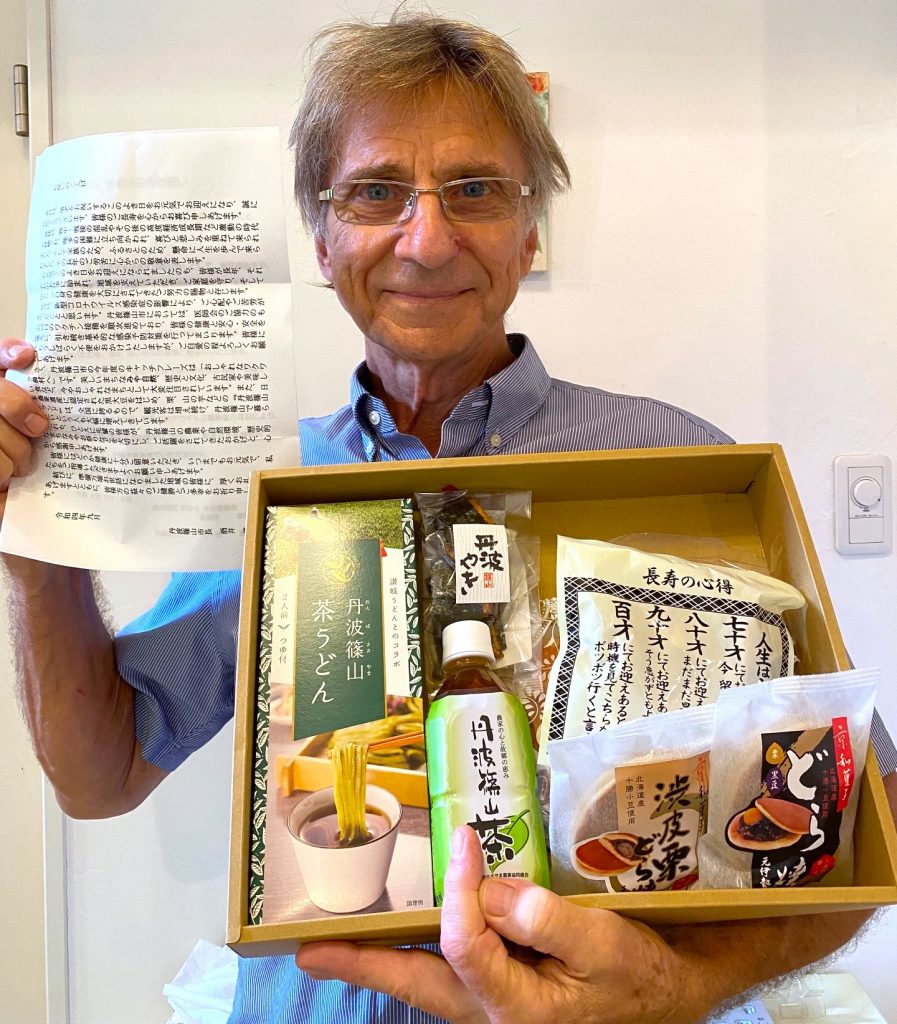
Then the doorbell rang. I answered it and there stood a gentleman from my local village. He handed me the gift package pictured above. Then it hit me . . .
As I’ve explained before, national holidays here in Japan are by Western standards rather unique. Overall they are not nationalistic. They are more cultural. But they’re not like Mother’s Day or Father’s in the West, which are more like National Cat Day or National Talk in An Elevator Day, which aren’t official holidays at all. These national holidays, which celebrate everything from coming of age (turning 20) to mountains and children, are official holidays! The banks, post offices and most businesses are closed.
Now get this! Because yesterday was Respect for the Aged Day, every person in my small city of about 50,000 people who was 75 or over, received a gift package from the city. Let that sink in!
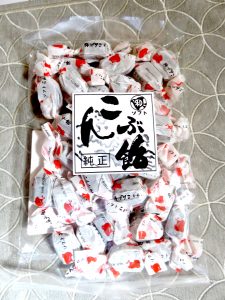
The package consisted of Japanese tea, and various treats. There were a couple cakes that were scrumptious! But I admit that I find some snacks here a little odd. In this package, there were seaweed crackers, pancakes filled with red bean sauce, green tea flavored udon (noodles). What you see on the right is kelp candy. No, that’s not a typo. It’s chewy candy made from kelp, harvested from the sea. It’s like munching on licorice that has no flavor.
As they say, it’s the thought that counts. And the thought here is one of extraordinary generosity and kindness.
By the way, there was a special letter included in the box. It conveyed a charming message of appreciation. Paraphrasing, it said: “You’ve lived many years, faced difficult challenges in your life, struggled against adversity. The people of Tambasasayama want to thank you for your hard work and your dedication and service to others. May you continue in good health and live a long and happy life.”
As ‘racism’ is discrimination based on race, in the West, ‘ageism’ is discrimination based on age. Someone is elderly, thus they are not accorded the same rights and courtesies as someone younger. They are dismissed personally as less able, and socially as less worthy. But here in Japan, ‘ageism’ — if there is such a thing — has the opposite effect. Ageism here accords an elderly person greater respect, preferential treatment, additional courtesies and admiration based on their advanced age.
What a completely different, and for me at 76, awe-inspiring attitude! Getting older may be inevitable. But in Japan, it doesn’t equate to being “disappeared” or forced to live in the margins of someone else’s life. The kids here don’t shuttle mom and dad off to some convalescent home when they get old, then visit them once a month, if they’re not too busy. The kids here make a room for them in their own home and they all live together again as a family.
The holdup has been . . . well, life on this chaotic planet during these turbulent times.
Let me explain.
Before a novel becomes available to the public, it’s released to a select group of readers. They are given advance reader copies — ARCs — to provide a number of things to us. First, any constructive criticism of the book is welcome, i.e. glaring inconsistencies in characters or plot; typos; mistakes and anomalies the editor may have missed; did the book meet whatever expectations the reader might have had? Second, suggestions for improvements are always helpful. Did the story drag in parts? Is the cover unappealing? Should the book be longer? Shorter? Third, in the hope that the reader found the novel delightful, exciting, moving, eye-opening, life-changing, whatever, positive comments, preferably short and catchy, are much appreciated. These will appear on the inside cover as “blurbs” when the book is finally published. I’m sure you’ve seen them before. Here’s an example of one I already received for Love Connection . . .
“One of the most distinctive and enjoyable aspects of Rachel’s novel is his voice, which travels confidently between the serious and humorous. It’s a good balance, and the writing itself is lively from start to finish, which is no easy thing.” – David Joiner
Thanks, David!
But here’s my problem, and what’s been holding up the book.
Over twenty ARCs were sent out in February. Sadly, we’ve only gotten feedback from five folks. We like to have at least 12 to 15, not just for the blurbs, but to get a range of opinion and feedback on the story, writing, presentation. People are simply not available.
I understand. I don’t think it’s the fault of the book. Like I said, it’s life . . . Covid-19, war, inflation, lockdowns, bankruptcies, all of the craziness we’ve been subjected to for over two years now. Who has time to read a novel? Who can concentrate?
Here’s my offer to you, which will hopefully lead to a solution for us. If anyone out there is interested in reading this book, let me know. I can send either a paperback to hold in your hands, or a PDF to read on your computer, tablet, or book reader. I’m shooting for fifteen more folks to dive into my story, take the ride, have fun, and then tell me what they think.
By the way, and this is important . . .
Love Connection, despite the sub-title, IS NOT A ROMANCE. Not in the traditional sense. I don’t want to give too much away, because a major part of the appeal of the story is the suspense. In fact, it’s more of a “true crime” suspense novel than a romance.
Plus there are many changes of scene. Though it mainly takes place in Japan — and you’ll get a healthy dose of what Japanese people are really like and what it’s like to live here — there’s some serious globe trotting: to Germany, France, Morocco, Nigeria, Uganda, and Kenya. Trust me, you won’t be bored. And the ending! I think when you discover where this whole convoluted adventure eventually ends up, you’ll be quite shocked. Amazingly, this aspect of the storyline is based on real events which have taken place here in Japan.
Hey! What have you got to lose? A few hours? I know it’s not easy with all the distractions and turmoil to sit down and read a book. But look at it as an opportunity to get away from all the distractions and turmoil.
If you’re interested, let me know. It’s first come, first serve. Limited at most to 20 more people. Folks who agree with Groucho Marx when he said . . .
“Outside of a dog, a book is man’s best friend. Inside of a dog, it’s too dark to read.”
Email me at john@jdrachel.com or leave a message with an American Embassy near you.
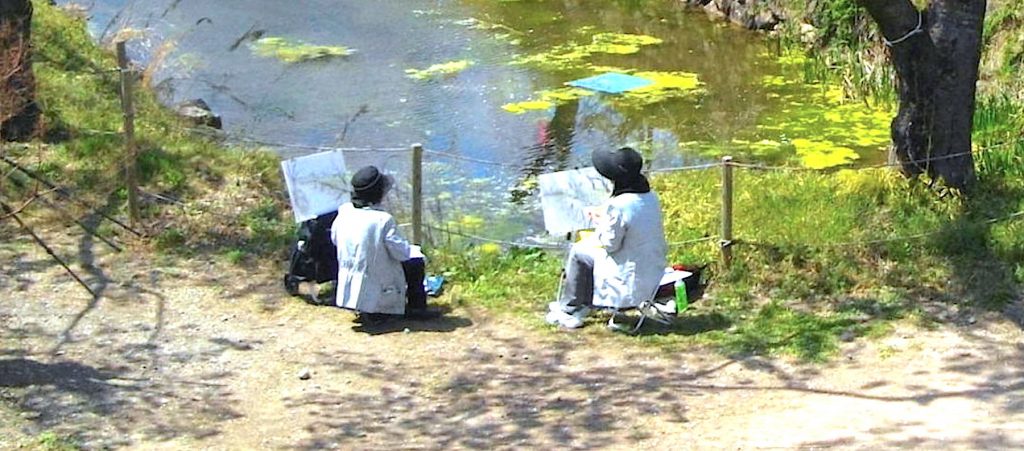
Artists next to Sasayama Castle capturing the beauty of the moat and all that lives in and around it.
I realize that ‘artistry’ is a sloppy choice for a title. It’s a broad stroke which embraces many activities, from musical performance to jewelry making. But here, I’m using it in the narrowest sense, referring to painters, capturing with deft strokes what and how they see their world.
It might silly on the most superficial level to be “celebrating” something as anachronistic as painting. Ages ago, it was the only way to give a permanent visual record of a person’s appearance, a still life, a landscape, a battlefield, a coronation, a vision. But things have dramatically changed.
Now we have smart phones and digital cameras, technologically cranked up to always take perfect photos. We have dash cams, body cams, Go-Pros that capture everything in real time, not as stop-action stills but as streaming visual records of reality, as it happens.
Better yet — from some perspectives — we have software that can take all that imagery and transform it. Take a photo of that basket of fruit on your table. Process it and you end up with a Rembrandt or Van Gogh or Monet. Want a Titian? Import some angels and naked bathers into the photo you took at the dog park. Add Jesus or Mary or the Twelve Apostles. Looking for a Jackson Pollock? Easy. Just do your own digital drip painting while riding the Tilt-A-Whirl at Six Flags.
Congratulations! You’re an artist!
Want celebrity status? Photoshop yourself having dinner with Angelina Jolie or playing poker across from Christopher Walken in Las Vegas.
This creative “flexibility”, of course, applies not just to visual arts but across the board. There are apps for writing stories or entire novels. Apps for composing music. Apps for making up jokes, pick-up lines, compliments on your grandmother’s new hairdo.
What a wonderful world we live in, eh? Everyone is a creative genius, a star, the life of the party, admired by . . .
Uh . . . well, somebody. Anybody?
Is anyone paying attention?
You really have to wonder where this ends up. If everybody is capable of doing everything at the highest level, no one will stand out. No one will be special. No one will be admired for anything. Except maybe the huge variety of apps they have on their Galaxy or iPhone. And if someone gets a jump on you, hey, no problem. Just go to the app store, do a quick search, put in your credit card and voilà . . . you’re the new Beethoven or Hemingway.
Meaning . . . it’s not about what you actually do. It’s about what you can get done.
In a revealing aside, let’s look at the world’s glamor stage of wealth. There are a few names which are constantly in the news. Elon Musk, Jeff Bezos, Bill Gates, Steve Jobs and Apple Corporation. Elon Musk is the wealthiest person on the planet. He didn’t design, engineer, or make anything which created his fortune. Jeff Bezos doesn’t make anything either. He sells stuff. Bill Gates didn’t invent the computer or any of the software which runs on the PC. He didn’t even invent the graphic user interface which made him famous. He stole the “windows” GUI, the concept and code. Steve Jobs certainly didn’t invent the telephone. To be fair, he was the driver behind the smartphone revolution. But the technological breakthroughs — the grunt work — the actual design and building, were performed as work for hire by his employees. None of the “big names” actually innovated anything. What they did is create the entrepreneurial conditions for the innovations they are credited with. To be blunt about it, they are heralded as geniuses, on the world stage, for one reason. They each amassed huge piles of money. You have to ask: Is this what achievement looks like now? Is merit no longer related to talent, but purely a function of net worth?
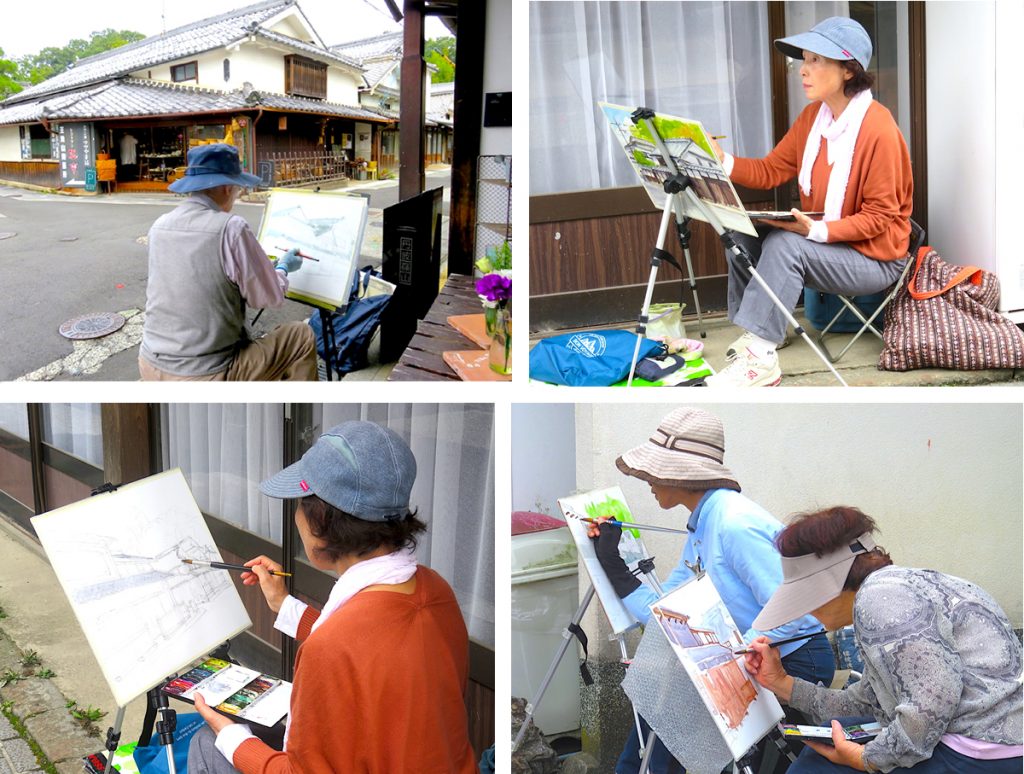
So look at these members of my home town. Is it possible they somehow don’t know about all of the wonderful innovations we have at our fingertips? Are they stuck in some world that’s centuries old?
What's wrong with these people?
When the weather is nice, this is a common sight around Tambasasayama.
I’ll tell you what’s right with these folks. They understand that it’s what you do, not what you own or can buy, that’s fulfilling. That it’s the journey, not the destination, that sustains the soul and adds value to life.
There’s always a surge of excitement when a new face appears on the scene. My village in Hyogo, Japan is no exception to this universal rule.
Yes, there’s a new kid in town. Her name is Mei, and we affectionately — already she has been accepted and embraced with an easy familiarity and an outpouring of love — call her Mei-chan. I have to say right up front, she’s a real charmer.
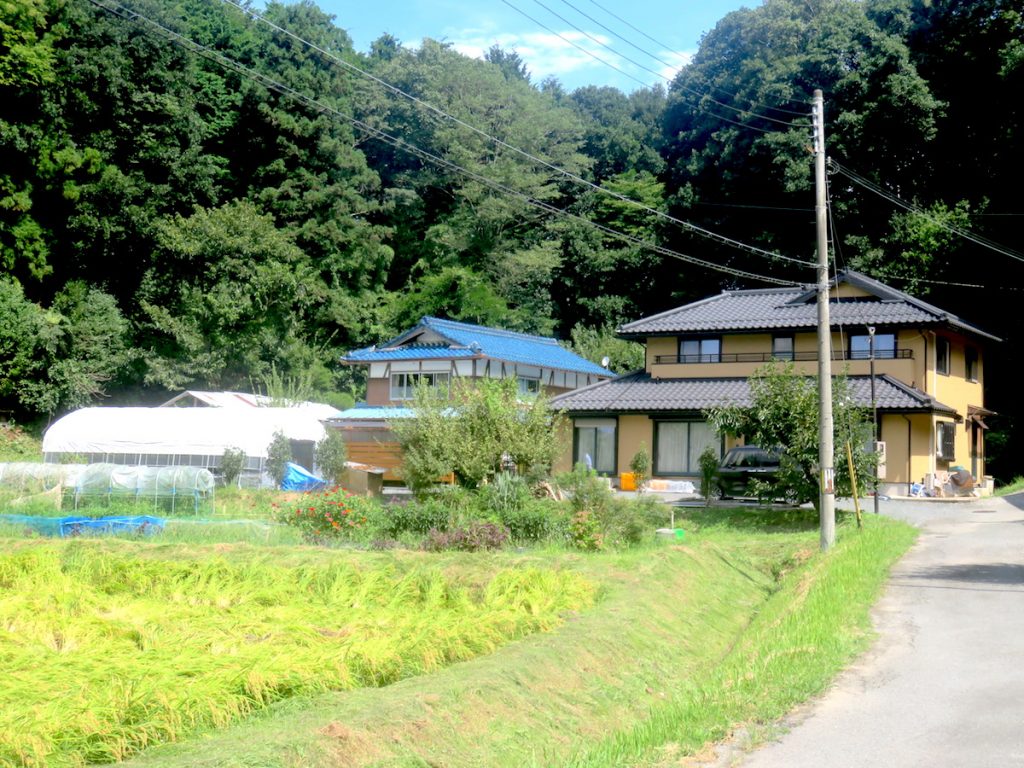
The home where she lives is quite close by. The houses here in the country are certainly not on top of one another. But it’s an easy walk from my front door to my neighbor’s home. Here is a photo taken from in front of my house of Mei’s new digs.
It’s a pretty typical Japanese home, traditional elements with lots of modern mixed in. Since my neighbor is a farmer, there are additional structures to house equipment, seeds, hay, tools, etc. That’s his rice field growing right in front of his house, quickly approaching the time for harvest. Farming is, of course, demanding work, to put it mildly. It’s certainly good to have extra hands on deck to help with the chores. I’m sure Mei will do her part to keep things running smoothly.
Now, without further ado, let me introduce you to the new kid on the block.
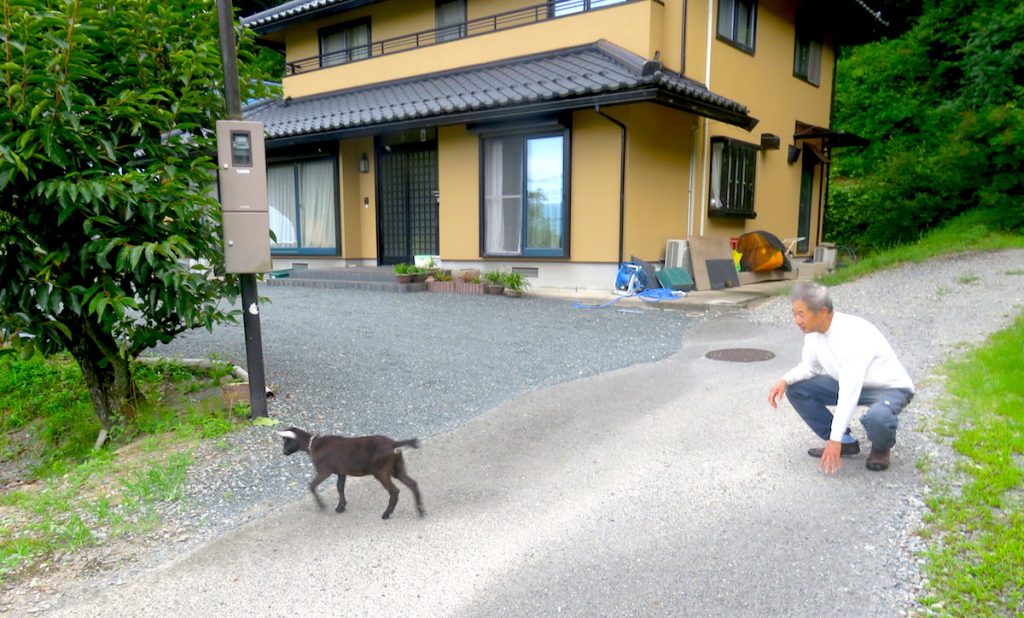
Mei-chan, a baby goat that speaks better Japanese than I do.
New kid? Get it? Ha ha ha ha! Okay. Not all that funny. But I’ve always been a compulsive kidder. The most repeated question I get is: “Are you serious?” As if I would know.
My neighbor has his hands full at this point. Of course, goats eat everything. Which is what makes them useful for weed control and clearing debris. But their omnivorosity — yes, I made up that word — embraces just about anything that will fit in their mouths, which can result in unintended destruction of everything less rugged than titanium. Right after this next photo was taken, Mei tried to gulp down the flowers in front of the house.
But how can anyone get upset? She’s just so darn cute! I’m reminded of this about twenty hours a day, when Mei declares her joy at just being alive, not that I’m privy to the nuances of goat speak. “Be-he-he-he! Be-he-he-he!” fills the airwaves morning, noon, and night. But she’s far enough away, I don’t find this especially annoying. In fact it’s pleasant in some odd fashion. It sure beats “Cock-a-doodle-doo!” or “Oink oink!”
I wish I had something profound to add here. As you know from reading my other writing, I usually like to close on a cosmic note, concluding with some epic morsel of wisdom.
I guess I’ll just settle for this elocution tip: ‘Mei’ is pronounce like the month of May.
They claim proof in this video that age is a state of mind. Well, I’m not quite convinced of that. If a toddler just had a different attitude, he could start using chopsticks or master the Argentine Tango? When your heart stops beating or your kidneys quit functioning, it’s because you’re looking at things wrong? I don’t think so.
At the same time, state of mind is important in achieving a balanced, healthy perspective on age, whatever the number turns out to be. That’s the real message and it’s a good one.
At my advanced age, I love Japan, and Asia in general, because here they don’t demote or disappear people just because they were born a long time ago. The youth culture — should I say ‘youth-worshipping’ culture? — of most Western countries requires that old people be written off as persona non grata, once they get crows feet, or most certainly when they are no longer reproductive-capable. Or as my now deceased friend, British TV character actor David Rayner, liked to say: “We become invisible.”
Morita-san here is in his 70s, his parents in their 90s. They lived with him until they passed away, a few years after I took this photo.
By contrast, older folks here are respected, often revered, assigned a special, important place in their communities and families. Where it’s standard protocol in the West to get gramps and grannie into a retirement home or elderly care facility — out-of-sight out-of-mind — as soon as the old codgers agree to live in a pre-death camp, here it is extremely common for the oldest members of the family to live with their sons and daughters and their spouses until they die. I had an English student in his 70s whose parents, both pushing 100, lived with him and his wife until they passed away. This is customary.
At 84.67 years, Japan has the second-highest life expectancy in the world, right behind Hong Kong. This is largely attributed to diet and an excellent health care system. I’m sure “state of mind” plays some role. First, Japanese expect to live a long time. Second, they do not let age hinder them from fully participating in society, at whatever level makes sense. Many refuse to retire and work into their 70s, 80s, 90s. I wrote back in November 2020 about Silver-san, aka Jinzai Centers. Jinzai — 人材 — means human resources. But what makes these work centers special is they only employ people over 65.
Then again, it’s not just about work. Contrary to stereotypes about Japanese people, they do like to have fun. Which brings me to the central topic of this piece . . . Japan Pom Pom!
As you already suspect, this is a cheerleading squad. But what makes it unique is all of the ladies in it are over 55, the average age being 70. Their nickname is ‘The Cheerleading Grannies’. It’s the brainchild of Fumi Takino, an 85-year-old resident of Tokyo, who wolfs down pizza, and drinks beer and Coke like a 16-year-old high school exchange student.
The video at the top tells the entire story. I really have nothing to add, except this: If you’re feeling old and thinking about just surrendering to deterioration, convinced that your “old age” has condemned you to hopelessness and inevitable decline, watch the Cheerleading Grannies. If you don’t find it a shot of inspiration or a strong case for unfettered optimism, I’m confident you’ll at least enjoy a smile.
Bonus video: If you’re really in need of a good jaw-dropping, check out this performance by 94-year-old Johanna Quaas, from Germany — the oldest active gymnast in the world!
Age is a state of mind? Only if your state of mind is ageless.