Sunday, November 27, 2022

Life In Japan: Kogenji Temple

I’ve commented several times before about the temples and shrines here in Japan. Some context would be helpful.

For six years, as a young boy, I went to Catholic school. Every day we filed into the church for Mass. Then, of course, as required to be good Catholics and in good standing with the Lord, we went to Mass on Sundays. Six days a week I sat through the most uninspiring, boring, frankly meaningless ritual imaginable. Back then, the Mass was in Latin. So I didn’t have a clue what was being said, and certainly didn’t care. Ugh!
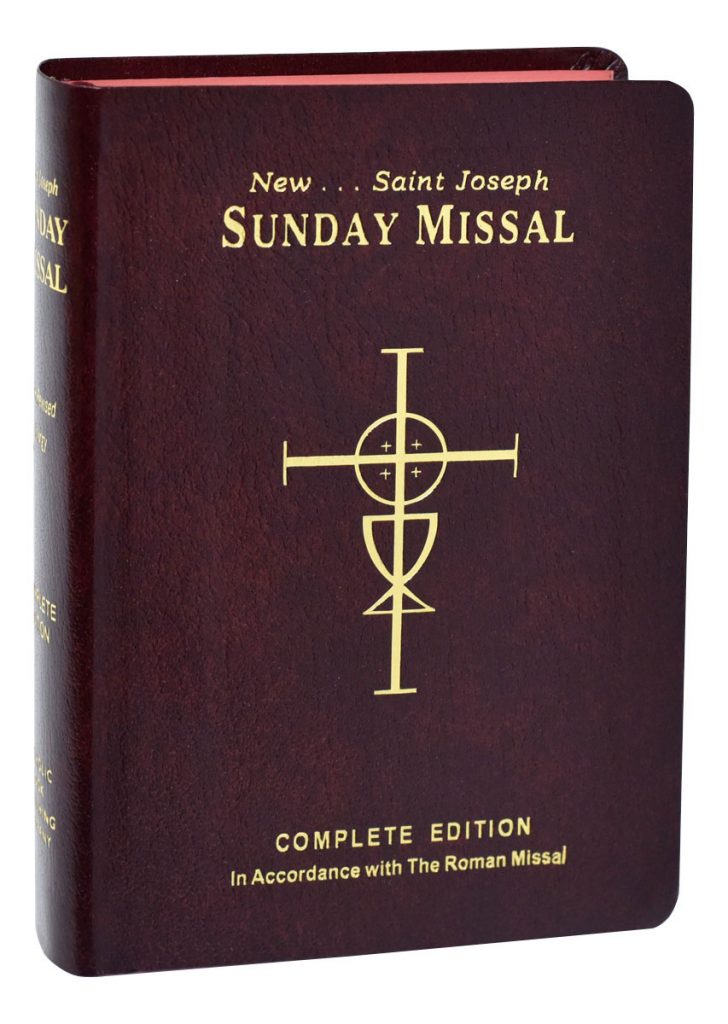
It’s easy to understand that because of this forced “spiritual” exercise — which was about as spiritual as doing calisthenics — I eventually completely soured on religion, at least as it was practiced in much of the West. When the summer I turned 15 came around, I couldn’t handle priests, nuns, Sunday Missals, rosaries, confession, communion, churches, hymns, Masses, Heaven, Hell, Purgatory . . . NONE OF IT. I left the Catholic Church and never looked back.

I pretty much avoided churches from that point on. Of course, there was the occasional church wedding and out of respect for the new bride and groom, yes, I inserted myself reluctantly into the house of the Lord. Likewise, out of respect for history and aesthetics, I experienced the unparalleled scale and majesty of a host of cathedrals in Europe, even a couple in U.S., not there to pray but to fill my senses with the glory and awe of inspired architects, artists, and sculptors.

Then in 2006, I started to seriously see the world, much of my travels taking me to Asia. The spiritual vibrations were totally different. Buddhism and Hinduism pretty much set the tone for these countries. I discovered and experienced not just completely different theologies, but a totally unique — to my Western-nurtured sensibilities — psychological space. It was more personal, more introspective, more comfortable, more satisfying.

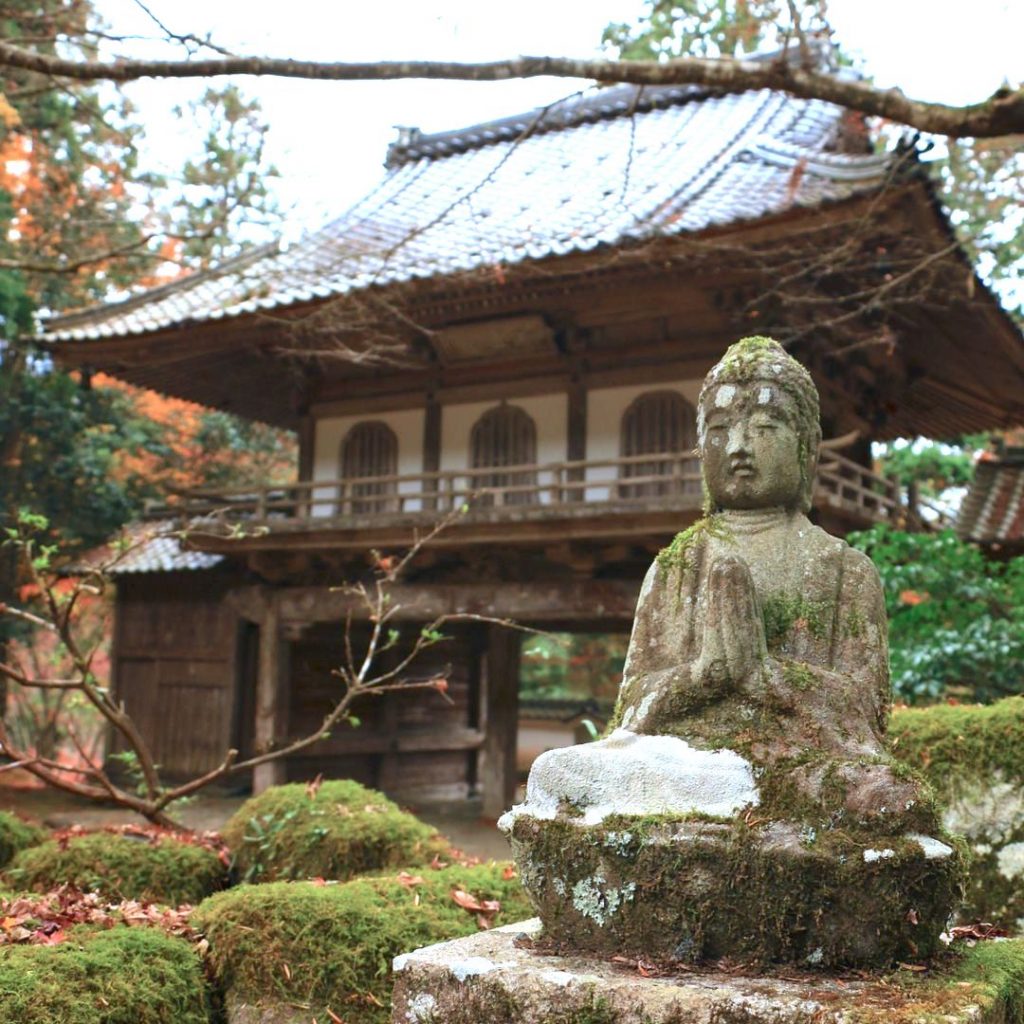
Going to a shrine or temple for me now is one of life’s simple pleasures. So last weekend, we went to Kogenji Temple in nearby Tamba. It’s not a particularly fancy or spectacular temple but it’s very popular this time of year for it’s maple trees.


It’s difficult and probably intellectually sloppy to make generalizations about religions and religious practices. I just know that spiritual sensibilities are extremely different here — about 180ยบ opposite to my “American” religious experience.

Rather than go into a comparative theological exegesis, which would be long, most likely tedious, and risk after an exhaustive trudge being unwieldy or misleading, let me make a point with some very personal observations and stories.
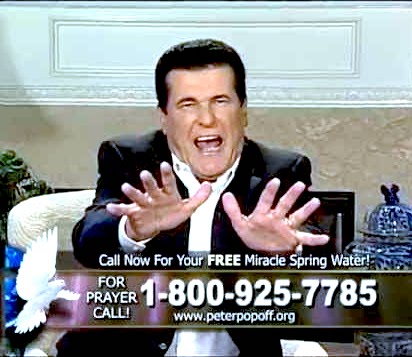
When I was in Los Angeles working as a recording engineer and music producer, I became obsessed with watching televangelists. I don’t have to say more. You know what that scamming is all about. “Just put your hands on the TV screen and feel the power of the Lord. Then write me a check. God will make sure it comes back to you tenfold. So the more you give me, the more you get back from the bounteous blessings of the Savior!” There was on guy in particular I loved to watch. Peter Popoff was fantastic! He got busted but I guess he’s still at it. He’s a millionaire many times over. “It is easier for a camel to pass through the eye of a needle than for a rich man to get into Heaven.” Hmm. Who said that? David Copperfield?

Going way back . . .

I can’t say what things are like now. But when I was a boy, I remember that the Sunday services ALWAYS included collecting donations. At a point about 2/3rds of the way through the Mass, ushers would shove these collection baskets aisle-by-aisle in front of every congregant, unmistakably signaling it was time to pony up. Of course, the requisite sermons at each service also always included appeals for money.
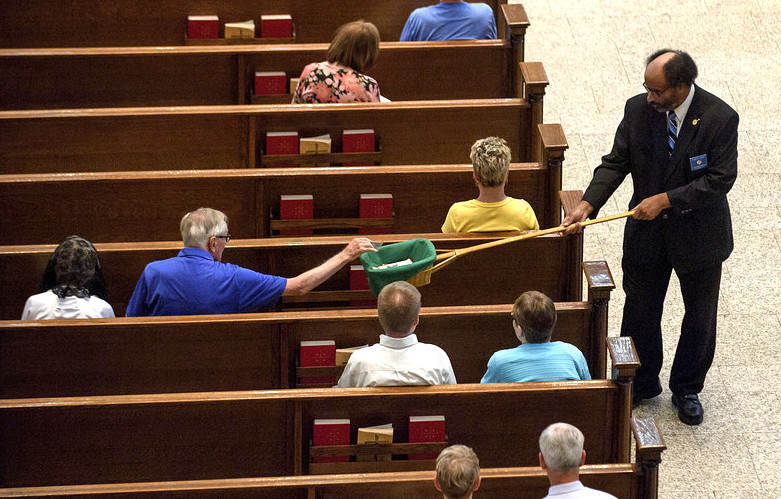
“You think holy water grows on trees? Come on, you cheap bastard!”

I have to say, the final straw for me was my father’s funeral. My mother had died 2 1/2 months earlier. I was still in shock. 14 years old. Both parents dead. As if I didn’t already have a lot of grief to bear, I sat and listened to the priest give the eulogy. You’ve seen this in the movies. Coffin at the front. Holy man in robes trying to give comfort and meaning to the tragedy. Well, the priest at my dad’s funeral decided to use the opportunity — since he had a nice captive audience, trembling, crying, with their defenses down — to talk about the renovations they had planned for the church. And guess what? They needed money! Yes, a great way to pay tribute to the corpse sealed up and ready to bury — we’d go from there to the cemetery in a procession of cars with little funeral flags on their antennas — was to spring for a nice donation to the current Building Fund Drive. I can’t describe how much I hated the man.

Okay, enough of all that “context”. Now we set our time machine to ‘The Present’ . . .

While there are donation boxes in the Buddhist temples and Shinto shrines in Japan, making it easy to give financial support to their care and upkeep, NEVER does a monk solicit money. There are fees attached to, for example, them coming to your house to perform some ritual. But the rituals themselves don’t reference such material matters. Even Jesus preached (I’m paraphrasing) rendering unto Caesar what is Caesar’s and to God what is God’s. Spirit is spiritual. Money is material. If Christians knew about His teaching, then somewhere along the line, it was forgotten. Or buried. Maybe it’s in my father’s coffin.


[ This originated at the author's personal website . . . https://jdrachel.com ]


Life In Japan: Kogenji Temple | John Rachel


Monday, November 7, 2022

Life In Japan: Sweet Potatoes

Having grown up in a major city — beautiful Detroit, Michigan — I never experienced the agricultural cycle, the annual rotation of planting, growing, harvesting. We of course had seasons, rather dramatic seasons since Michigan is so far north and has some very cold winters. But the whole “growing food” thing was a blank slate.

Since living in rural Japan, not only have I discovered the overall cycle but am further educated in the idea of seasonal crops. Everything doesn’t grow at the same time, nor does it become available for human consumption at the same time.

I know what you’re thinking: DUH! Don’t laugh. I helped to rebuild an 8-cylinder Ford engine when I was in high school. I just never never got to around to planting tomatoes or corn, much less soybeans or rice.

Moving on to my big announcement, we just harvested the most recent item to appear on Mother Nature’s Day-Timer — or maybe she has an iCalendar these days, who knows?

Yes . . . [ drumroll ] . . . we just dug out of the ground our crop of SWEET POTATOES!

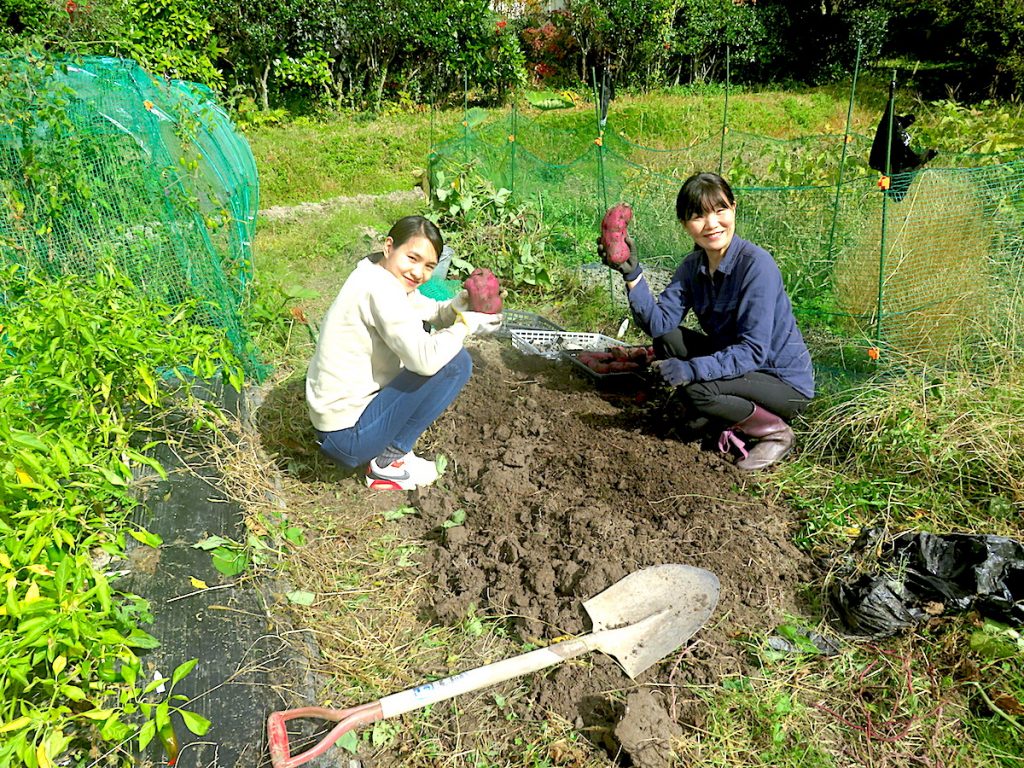
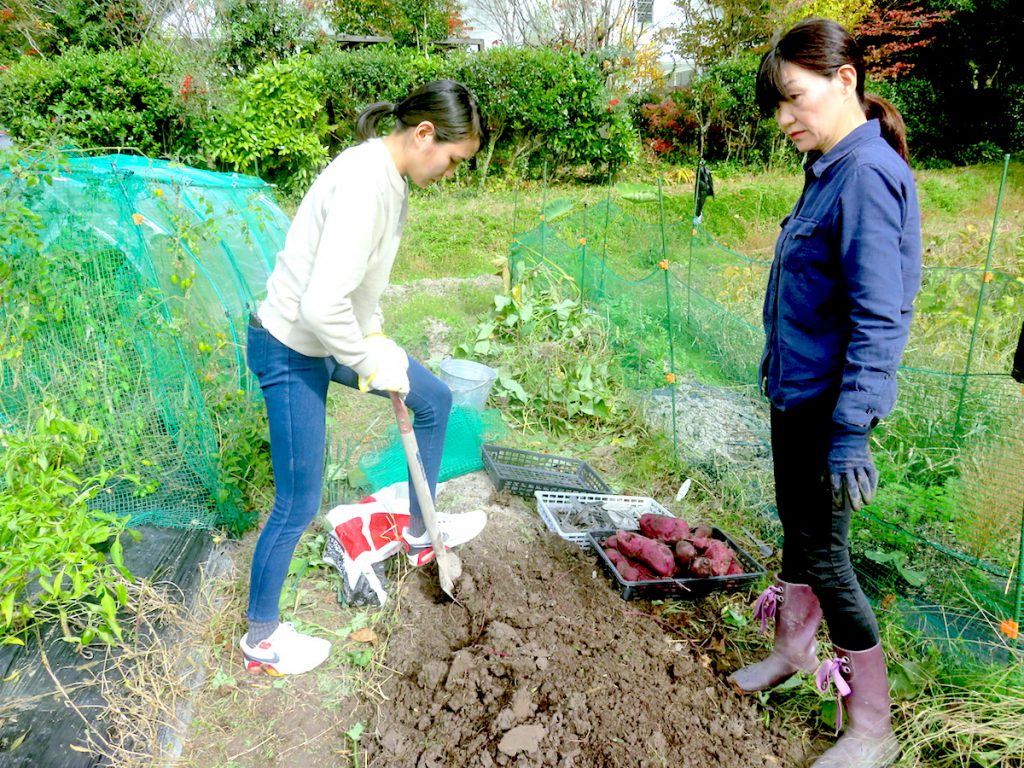
I say ‘we’ but that’s a stretch of the truth. I’m afraid that inserting a shovel into the soft earth and removing the sometimes huge tubers is above my pay grade. I did other grunt work while my wife Masumi, and her daughter Izumi, did the precision extraction. Here they are at work . . .

Knowledge is power. Fertilizer helps a lot too.

Nothing more to say. I don’t want you readers to get overexcited by my earthshaking news.

Wait! Actually, I’ll add one final comment, something that surprised me. We don’t wash the newly exposed sweet potatoes. Yes, we leave a coating of dirt on them. Apparently, they can last a very long time, not decaying or rotting, if a fine coat of soil remains on their surface. Thinking back on how as a boy, growing up poor, I only took a bath once a week, despite always being covered with a fine layer of dirt. I now see the wisdom of my very lax standard of personal hygiene.


[ This originated at the author's personal website . . . https://jdrachel.com ]


Life In Japan: Sweet Potatoes | John Rachel


Tuesday, November 1, 2022

No Excuse For Ignorance

I’m well aware of the deluge of lies, misinformation, disinformation, historical amnesia, ideological bias, and pure tribal hatred for Russia and Vladimir Putin, which saturates the media, with any mention of Russia, Ukraine, NATO, and the EU, by politicians, celebrities, commentators, every talking head who gets shoved in our faces via TV and the internet.

I’m going to make an audacious, totally irrefutable, unequivocal statement about all of this: There is absolutely no excuse for the ignorance which has become new normal for our fake thought leaders and authorities. Moreover, there is no excuse for any thinking person, any citizen who can read at a high school level or above — any of us everyday folks — to be taken in by the current phony narrative about Russia and its relationship to the U.S.

It is degrading and insulting to the intelligence and common decency of anyone with a functioning brain to be so callously manipulated, so frightened, so stampeded into the group-think which unabashedly promotes hatred, suspicion, divisiveness, fear; requires unwavering agreement, silencing anyone from even asking sensible, obvious questions; which embraces perpetual war, even casually talks about nuclear war; which demands absolute, unbending loyalty and obedience, our bowing down to leaders and self-anointed authorities who are provably either clinically insane or colossally incompetent . . . or both.

The good news is we don’t have to go along with this charade.

Finding out the truth is simple. It will require: 1) turning off your TV, and taking a healthy break from social media, internet news, Twitter, chat groups, YouTube and its numerous spinoffs; and 2) reading three books.

These three books are not difficult to read. They are extremely well-written, accessible, full of vital facts, information, and explanations. They are not ponderous academic works. Read with genuine curiosity and open-mindedness, they are pleasurable reading.

I do have to caution you. Because much of what you’ll discover will not fit the “official narrative” — which last time I checked was 99 and 44/100 percent pure fabrication — you’re going to have your eyebrows raised quite a few times; you might occasionally get upset — because discovering people you trusted have been lying through their teeth is never pleasant; you will probably, and justifiably so, have a lot of thinking and rethinking to do. But trust me, it will be worth every minute of it. I believe much of what now troubles and puzzles you, what now leaves you confused and stressed about current crises and the prospects for major war, your understandable fears about the coming economic meltdown and what are the real causes for such a catastrophe, questions about who runs our country and what drives its current self-destructive policies, will finally get some sensible answers. At least you’ll understand why we’re in the mess we’re in, and have a good idea what needs to be done . . . for your own good and that of your family and community.

Here are the three books:

Just today I finished the late Stephen F. Cohen’s War With Russia? Sadly he passed away a little over two years ago. This was his last book. It’s an incredible work. He could have written it yesterday, because everything he says is totally relevant today, perhaps even more so. From the publisher: “Prescient and even more relevant than when originally released in 2019, this Memorial Edition of War With Russia? provides keen perspective to help readers understand the current Ukraine crisis. Are we in a new Cold War with Russia? Does Vladimir Putin really want to destabilize the West? War With Russia? answers these questions and more.”

Dan Kovalik is a dedicated peace activist, and has been a labor and human rights lawyer since graduating from Columbia Law School in 1993. He has represented plaintiffs in ATS cases arising out of egregious human rights abuses in South America. He received the David W. Mills Mentoring Fellowship from Stanford Law School, and has lectured throughout the world. The Plot to Scapegoat Russia is part of a series of excellent books which exposes the underbelly of U.S. foreign policy: The Plot to Attack IranThe Plot to Control the WorldThe Plot to Overthrow Venezuela, and No More War: How the West Violates International Law by Using ‘Humanitarian’ Intervention to Advance Economic and Strategic Interests.

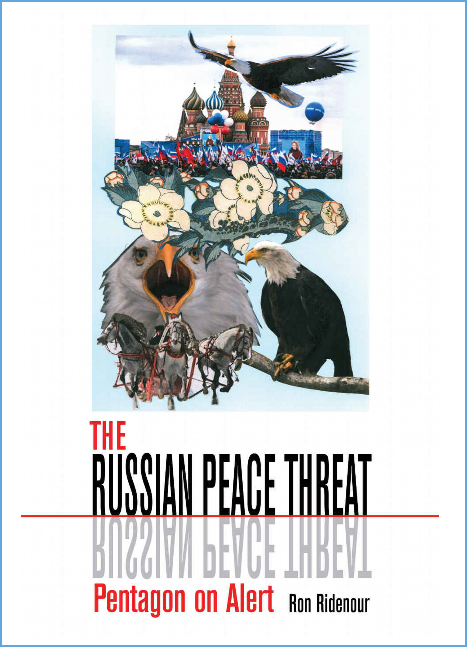
Ron Ridenour was born in the US Military Empire, 1939. After four years in the Air Force, in 1961 he rejected the American Dream, and has since acted as an anti-war, anti-racist and solidarity radical activist (Long Hot Summer, 1964, in Mississippi; Wounded Knee AIM 1973; anti-Vietnam war coordinator in Los Angeles). He has lived in many countries and worked as a journalist-editor-author-translator for five decades, including for Cuba’s Editorial Josรฉ Martรญ and Prensa Latina (1988-96). His The Russian Peace Threat: Pentagon on Alert is truly a seminal work, a must read for anyone who wants a solid understanding of how Russia became “the enemy”, plunging us into a second Cold War, the ugly fruits of which we now see in Ukraine.

We often heard it said that truth wins out. Yes, the truth will set us free.

That’s true. But only if we can get to it. In an age of false flags and fake news, psyops like MKUltra and Operation Gladio, coupled with the wholesale capture of “official” media — e.g. the New York Times and Washington Post — by the national security agencies, it most certainly isn’t always easy. At least in terms of the accelerating hostility and potential hot war between the US and Russia, I’ve tried to make it much easier.

If these books make you angry, that’s a good sign. It means you’re a rational, sensible, caring, morally sound person.


[ This originated at the author's personal website . . . https://jdrachel.com ]


No Excuse For Ignorance | John Rachel


Sunday, October 30, 2022

Another 5-Star Review: Blinders Keepers

People are still reading Blinders Keepers!

Just got another 5-star review posted all over the book-o-sphere. Here it is on Amazon, showing up four days ago:

“Noah is on the run after becoming the innocent suspect in a terrorist bus bombing in a dystopian, extremely near, future US, in which society is on the verge of political, economic (and astronomical) implosion. Noah is an everyman and you see the world through his trusting and rather loving eyes as he races across the country through communes, bee farms, burning man, the hacker-saboteur political underground, and eventually winds up face to face with the highest reaches of deep state power, which turn out to be all too intimate and familial. It’s all very serious, and occasionally quite dark. Except it’s funny as hell. Rachel is an immensely witty and readable writer, whose verbal flights are always aimed at evocation (I’ve never read as vivid a description of burning man) and laughter. It’s a comic political picaresque, equal emphasis on comedy and politics, without a single dull page.  Why haven’t you heard of it? Because it’s too good and too much fun, that’s why.” – brecht (reviewer)

Mind you, I wrote this book almost seven years ago. Specific incidents aside, as whacky and outrageously funny as it apparently is, I think it’s astonishing how well it captures the absurdity and circus-like environment of our current politics.

If you want a good laugh to dispel some of the anxiety and pessimism which saturates the media and political landscape, take it for a spin.

I think you’ll like it a lot!

Kindle ebook from Amazon (US) . . . amzn.to/1IiodLp
Kindle ebook from Amazon (Canada) . . . amzn.to/1RQxrRW
Kindle ebook from Amazon (Great Britain) . . . amzn.to/2IjFWmm
Nook Book from Barnes & Noble . . . bit.ly/1mPC6a5
iBook from the Apple Store . . . apple.co/1JmzENg
Ebook from Scribd . . . bit.ly/37xgdos
Ebook from Kobo . . . bit.ly/2qStRw4
Ebook from Kobo Indigo (Canada) . . . bit.ly/1OET2qg
Every popular ebook format at Smashwords . . . bit.ly/1kb5Axk
Paperback from Amazon (US) . . . amzn.to/1Ohf9T7
Paperback direct from the printer . . . bit.ly/1krvHQM


[ This originated at the author's personal website . . . https://jdrachel.com ]


Another 5-Star Review: Blinders Keepers | John Rachel


Sunday, October 23, 2022

Life In Japan: Excellence

Whether you like, love or hate classical music, please watch at least one of the videos below. I have things to say about them which I think will astonish you. So fasten your seat belts, sit back, and let the music flow through you like cannabis oil aroma therapy.

Okay. Ready? Here’s the scoop …

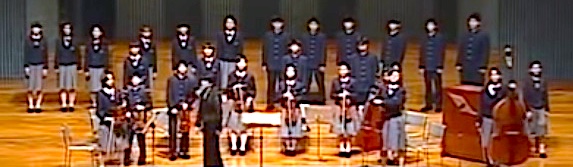
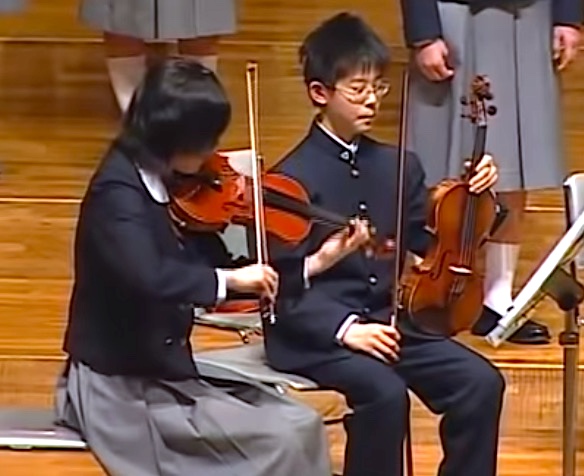
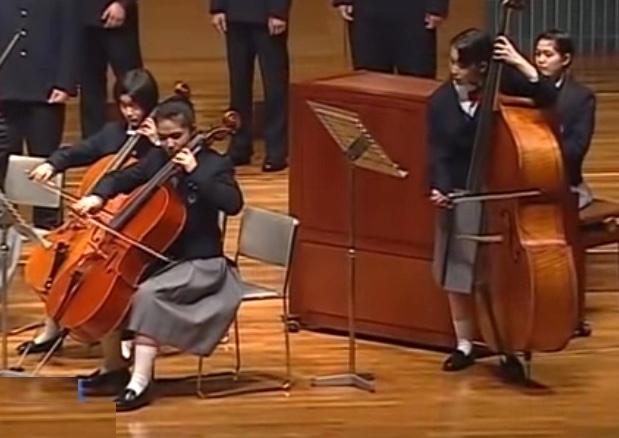
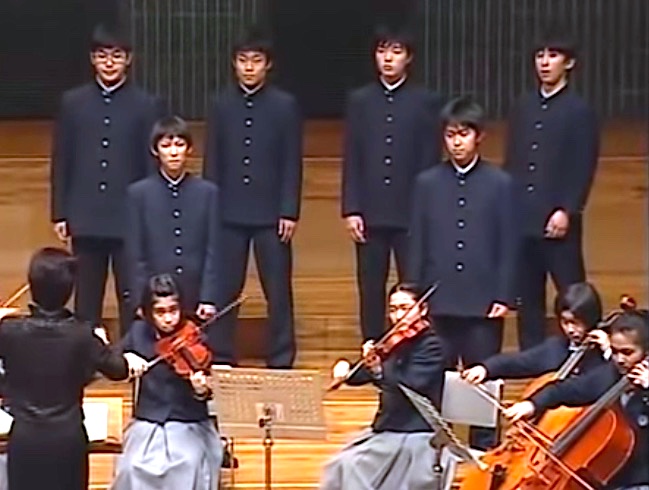
These are junior high school students, at a school in Fukushima. Yes, that Fukushima, where the massive earthquake in 2011 caused the nuclear reactors to melt down. But that’s not what I’m here to talk about.

Instead, let me get to what I want you good folks to wrap your heads around. First …

Being junior high school students, everyone except the conductor is 13-15 years old. Not seasoned adults. Not college graduates. Young adolescents! What talent, eh?

It gets better: This is not a special school for music or any other area of study. It’s not some private school for rich kids — yes, we have exclusive, private schools here in Japan just like practically every other developed country. This particular school is no such uppity institution. No folks . . . THIS IS A PUBLIC SCHOOL!

And here is, what in my mind is the most jaw-dropping aspect of this tale: Participating in this choral orchestra is not part of the official school curriculum. This is not a music class. The students are not getting any credit for this. Everything, the individual mastering of the instruments, the hours of practice, the orchestra and vocal rehearsals, the concert performance, is purely voluntary. It’s an AFTER-SCHOOL CLUB!

I recall my school had a French Club, Photography Club, a Glee Club, an Astronomy Club. It’s just like that. Only these junior high kids, as members of this club, are performing — at a sophisticated level — Mozart and Bach.

What do you think? Honestly? Aren’t you a bit impressed?

I have to admit: I’m awestruck! Almost at a loss for words . . . but not quite.

Here are my final thoughts: The world is going through some very strange and difficult times. Technology, political turmoil, economic crises, environmental crises, leadership crises. We can’t keep up with it all. Unfortunately, young people get totally blindsided by all of this. They’re dropped into a world not of their making, facing catastrophes that were in the works before they were in the womb. Supposedly, societies do what they can to bring the young up to speed and equip them to take the reins when their time comes.

U.S. schools are a more relaxed
educational environment.

Here are my final thoughts: The world is going through some very strange and difficult times. Technology, political turmoil, economic crises, environmental crises, leadership crises. We can’t keep up with it all. Unfortunately, young people get totally blindsided by all of this. They’re dropped into a world not of their making, facing catastrophes that were in the works before they were in the womb.

Supposedly, societies do what they can to bring the young up to speed and equip them to take the reins when their time comes. In the U.S., as with every highly-developed Western nation, it is the public education system which provides the basic skills and knowledge needed to function in the world.

Now, I’m hardly in a position to judge the current state of public schools in the U.S., which by far the majority of young people there attend for 12+ years at minimum. True, I went to public school for 6 years but that was around 200 years ago, give or take a few decades. Moreover, as you probably know, I haven’t lived in the U.S. for sixteen years. Meaning, I can’t overcome either the generational gap or the geographical gap. So I’ll let you folks be my eyes and ears on this.

Here’s a straightforward question for you American readers: How are things going there?

Is anything resembling what you see in the above videos occurring there?

I know I have trouble imagining it. But that’s just me.


[ This originated at the author's personal website . . . https://jdrachel.com ]


Life In Japan: Excellence | John Rachel


Wednesday, October 19, 2022

Life In Japan: Festival of the Portable Shrines 2022

It seems like here in Japan we're always having some holiday or festival. There sure is a lot going on to keep the smiles fresh and the video cameras rolling.

I've written before -- in fact feature it in LIVE FROM JAPAN! -- about the festival we just had this past weekend. This year, it was slightly scaled down from what has been held in the past, presumably because of Covid-19. We don't really have much of a crisis over the dread bioweapon but Japan plays on the side of cautious.

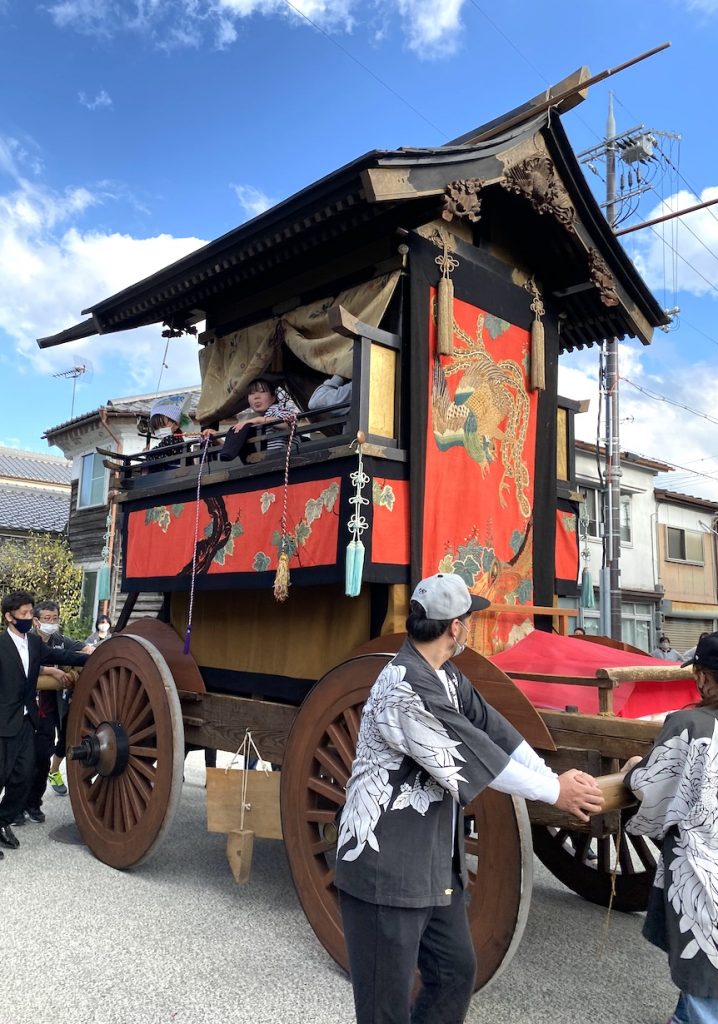
We spent most of our time on what's nicknamed "Merchant Street", a narrow and extremely charming roadway which looks the way it did a century ago, especially since the city last summer buried all of the electrical and communication cabling underground. Wheeled portable shrines (as opposed to ones carried by twenty to thirty inebriated celebrants) paraded up and down the street. In the carriage on top, children played flutes, chimes and various rhythm instruments. Since the vehicles have no steering mechanism -- true to a design that must go back a few centuries -- they have to be elevated and rotated by hand to change direction.

Rather than try to describe this unorthodox procedure, it'll be much easier to just show you.


After rolling up and down Merchant Street, the seven or eight wheeled shrines then headed toward the center of town, where they similarly paraded the greater length of our main street. People were in town from all over, both for the festival and to buy soybeans, an item Tambasasayama is famous across Japan for.

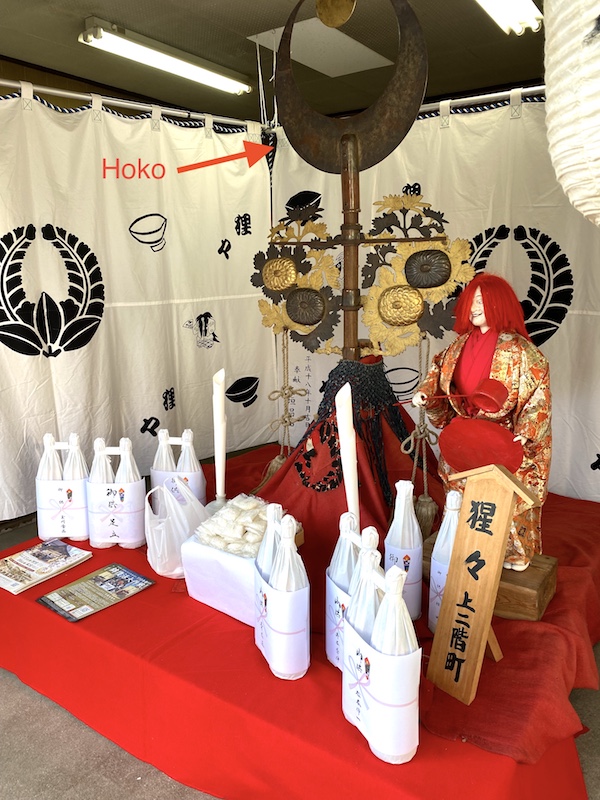
One final aside. Because the main street in town still has electrical wires criss-crossing its entire length, there is a tall crown which must be removed from the portable shrines. They are called 'hoko' and are displayed in storefronts along the way. They look like the one pictured here.

So that's it for now . . . until next year!


[ This originated at the author's personal website . . . https://jdrachel.com ]


Life In Japan: Festival of the Portable Shrines 2022 | John Rachel


Sunday, October 2, 2022

The Ultimate Punctuation Mark

Language and grammar are dynamic; ever-evolving; adapting to new usage, current trends and fads. There’s no reason to pass judgment on this, as many academics and publishers of dictionaries might presume to do. You can’t set language and punctuation in stone any more than you can declare that the sun will shine every Monday or outlaw oxidation.

Do you remember the interrobang?

While it didn’t really catch on, it did address a gap in our ability to have a final punctuation mark reflect the entire mood and intent of the language that preceded it. It’s a combination of a question mark and an exclamation point, allowing a statement to both act as a query and express awe, amazement, excitement, marvel, wonder, approval, acclaim, shock, and so on.

What in the world is going on with the Catholic Church and organ trafficking?!

Now, I should have been able to put an interrobang at the end of that exclamatory question, but as I said, it didn’t really catch on. At least, I can’t find it on the keyboard of my laptop.

The point is, as useful as something might potentially be for language and grammar, it’s actually impossible to dictate use and guarantee general acceptance.

So now I’m about to attempt the impossible.

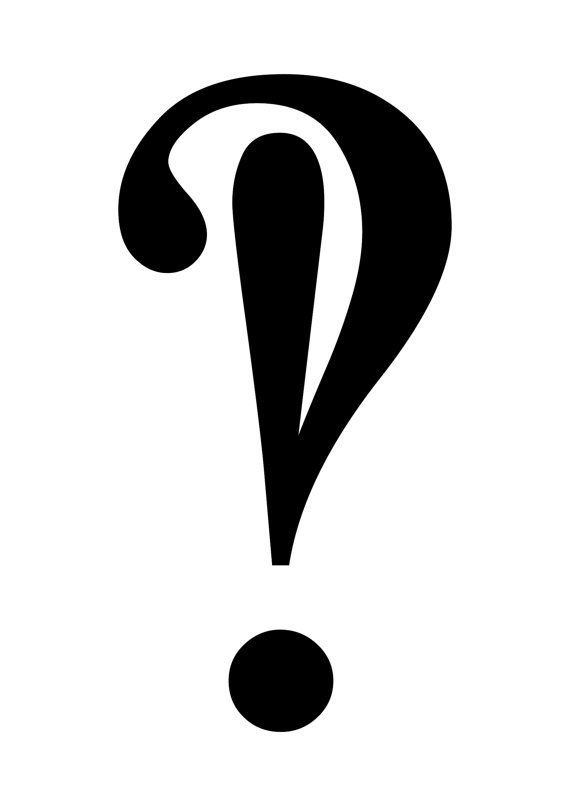
Yes, I’ve come up with a new punctuation mark!

And without intending to blow my horn, bring undeserved attention to my genius, or capitalize on your gullibility as a reader of my articles, I’d like to say unequivocally that this innovative punctuation mark, aside from any other merits it might have, completely and thoroughly sums up the current mood — fear? despair? cynicism? resignation? — of a huge segment of the people living on the planet, the ones who have some idea what a horrible mess we as a species are now in.

Here it is . . .

Does it look familiar? It should.

An important question: Will it be useful?

A more important question: How long will it be around?

Maybe a better question to ask: If my new punctuation mark really does work, really captures the zeitgeist of our troubled times, how long will we be around to use it?

(Sure wish I had that damn interrobang on my computer. I could have used it at the end of that last question.)


[ This originated at the author's personal website . . . https://jdrachel.com ]


The Ultimate Punctuation Mark | John Rachel